Pizza Steel vs Stone in 2026: Pick One That Fits Your Oven
Pizza steel vs stone in 2026: how thickness, mass and rack clearance change your crust — plus picks sized for standard 30-inch home ovens.
Reader-supported: we may earn a commission from links on this page, at no extra cost to you. It never affects our picks. Learn more.
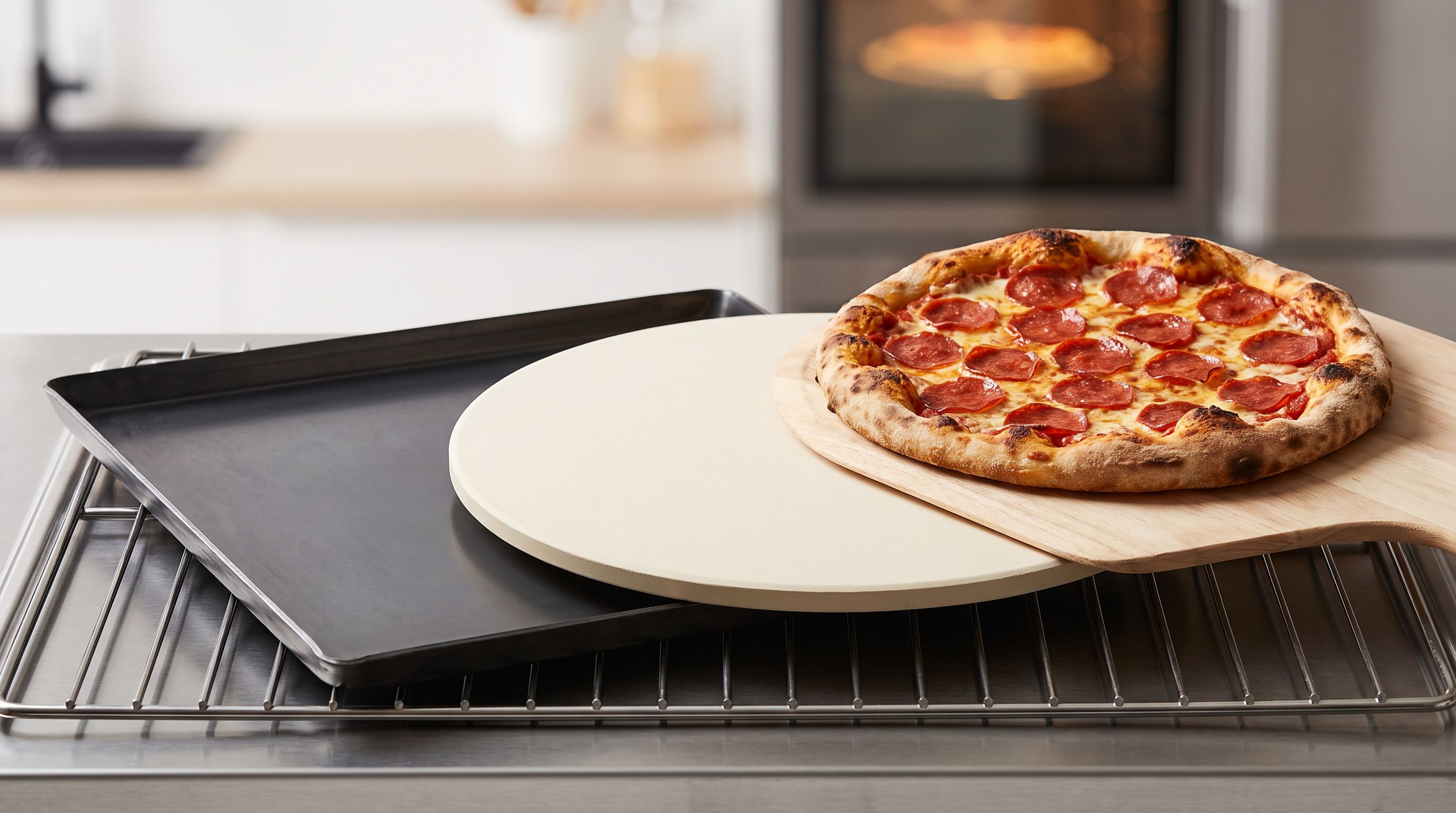
Most pizza-surface advice stops at "steel conducts heat faster than stone." True, and useless on its own — because the slab that transforms your crust also has to physically fit a rack, leave room for air to circulate, and be liftable when it's 550°F. A 16 x 16-inch, 1/2-inch steel is a magnificent piece of gear and a genuinely bad idea in a 24-inch apartment oven.
So this guide sorts the pizza steel vs stone question the way it actually plays out in a home kitchen: by thickness, by mass, and by how much rack you have to give.
The short version: what each material actually does
Steel has far higher thermal conductivity than ceramic. It dumps stored heat into wet dough much faster, which is why a steel gives you dramatic oven spring and a browned, blistered underside in a fraction of the time a stone takes. Reviewers and manufacturers alike cite conduction rates many times that of stone — Baking Steel's own claim is roughly 18x faster heat transfer. The practical upshot: a New York–style pie that takes 8–10 minutes on a stone often lands in 5–7 on a steel at the same temperature.
Steel is also effectively indestructible. No cracking, no thermal shock, no "don't put it in a cold oven" ritual. It will develop surface rust if you store it damp, which a wipe of oil prevents.
Stone (usually cordierite, sometimes ceramic or clay) is porous and conducts more gently. That sounds like a weakness, and for Neapolitan-adjacent pizza at max oven temp, it is. But gentler conduction is a feature for anything that needs time: long-fermented sourdough boules, pan pizza, focaccia, par-baked crusts, bread with a thick crumb. Stone also wicks a little surface moisture, which can give bread a drier, crisper bottom crust. The tradeoff: it cracks. Thermal shock from a wet dough, a cold stone in a hot oven, or a dropped corner ends its life.
The honest summary: if you make thin-crust pizza more than anything else, get steel. If you bake bread as often as pizza, or you want a round surface for under a third of the money, a stone still earns its rack.
Thickness and mass: the number that actually matters
Thickness governs thermal mass — how much heat the slab banks during preheat and how much it can give up before it stalls. This is where most buying mistakes happen.
| Surface | Typical thickness | Rough weight (14–16" piece) | Preheat at 500–550°F | Best for |
|---|---|---|---|---|
| Steel, thin | 1/8" – 3/16" | 8–14 lb | 30–40 min | Small ovens, single pies, easy handling |
| Steel, standard | 1/4" | 15–23 lb | 45–60 min | The sweet spot: pizza, bread, back-to-back bakes |
| Steel, heavy | 3/8" – 1/2" | 28–45 lb | 60–75 min | Pizza nights for a crowd; serious ovens only |
| Stone, standard | 1/2" – 5/8" | 7–12 lb | 45–60 min | Bread, pan pizza, budget builds |
| Stone, thick | 3/4" + | 12–18 lb | 60+ min | Sustained high-heat baking, multiple loaves |
| Cast iron round | ~1/4" + ribs | 8–12 lb | 25–35 min | Dual-purpose, small ovens, grills |
Two rules worth internalizing:
- Thinner steel beats thicker stone for pizza. A 1/4-inch steel at 1/4 the thickness of nothing in particular still transfers heat faster than a 3/4-inch cordierite slab, because conductivity dominates.
- More mass is not better past the point you can lift it. A 1/2-inch steel recovers faster between pies, but it also takes over an hour to charge, weighs as much as a bag of flour times four, and is miserable to pull from a hot oven. Unless you're making six-plus pizzas in a session, 1/4-inch is the right answer.
Measure your oven before you measure anything else
Pull a rack out and measure the interior width and depth. Then subtract.
- Leave at least 1 inch of clearance on all four sides. Air has to move around the slab or your oven's thermostat and convection pattern go haywire, and the back of the pizza cooks slower than the front.
- Standard 30-inch freestanding ranges usually have about 24–25 inches of interior width and 19–20 inches of depth. A 14 x 16-inch steel fits comfortably; a 16 x 16 is doable but tight.
- 24-inch and apartment-size ovens often have 18–20 inches of width. Stay at 14 x 16 maximum, and consider a 13–15 inch round or a compact rectangle.
- Wall ovens vary wildly — some are deeper than they are wide. Measure, don't assume.
- Check the rack's weight tolerance if you're eyeing anything above 30 pounds, and check that your rack sits on rails rather than a flimsy wire shelf.
Position matters as much as size. For pizza, put the surface on the second rack from the top so the broiler can finish the cheese while the base crisps. For bread, go middle or lower.
Our picks, sorted by what your oven can take
Baking Steel Original (1/4", 14 x 16") remains the default recommendation in 2026 for good reason. It's carbon steel — which heats faster than stainless and takes abuse better — at the thickness that balances charge time against recovery. It fits a standard 30-inch range with clearance to spare, it will outlive the oven, and the pre-seasoned surface means you can flip it over and use it as a griddle for smash burgers. If you buy one pizza surface for the rest of your life, buy this one.
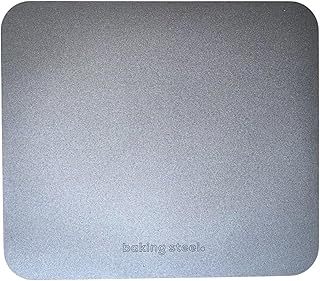 Best overall · Baking Steel Original (1/4 thick, 14 x 16) — Check price on Amazon →
NerdChef Steel Stone Standard (1/4") is the pick if you're going to be lifting the slab in and out regularly rather than leaving it in permanently. Same quarter-inch conduction, a smoother machined finish, and a footprint that's a touch easier to maneuver around a hot oven door. Reviewers consistently rate its surface finish among the best for sliding pies off.
 Best for lighter handling · NerdChef Steel Stone Standard (1/4 thick) — Check price on Amazon →
Hans Grill Pizza Stone XL with Wooden Peel is the sensible budget entry point. Cordierite handles high heat without the cracking risk of cheap ceramic, the rectangular shape uses rack space better than a round, and the bundled peel means you're not improvising launches with a cutting board. It's the right buy if you bake bread and pizza in roughly equal measure, or if you're not yet sure pizza night is going to stick.
 Best budget stone · Hans Grill Pizza Stone XL with Wooden Peel — Check price on Amazon →
Unicook Pizza Stone 15 x 12-inch Rectangular Cordierite is the small-oven answer. The compact rectangle leaves airflow in tight cavities where a 16-incher would choke the chamber. It's also light enough — well under what a steel of the same area would weigh — to store vertically in a cabinet without wrecking your back.
 Best small-oven stone · Unicook Pizza Stone 15 x 12 Rectangular Cordierite — Check price on Amazon →
Lodge Pro-Logic Cast Iron Baking Pan / Pizza Pan (14 inch) is the sleeper option. Cast iron sits between steel and stone for conduction, preheats faster than either because there's less mass, handles thermal shock, and does double duty as a griddle, a cornbread pan, or a grill surface. In a cramped oven where a full slab is impractical, it's the most versatile thing you can own.
Care, in one paragraph each
Steel: wipe with a damp cloth while warm, dry fully, rub a thin film of neutral oil on the surface. Don't soap it, don't soak it, don't store it in a damp cabinet. Baked-on cheese comes off with a bench scraper after a hot cycle.
Stone: never wash with soap — porous ceramic absorbs it and you'll taste it. Scrape, brush, let stains be. Stains are seasoning, not failure. Always preheat the stone from cold with the oven, never slide a cold stone into a hot one, and keep raw dough's moisture off its edges.
FAQ
Can I leave the steel or stone in the oven all the time? Steel, yes — many people do, and it stabilizes oven temperature. It will slow preheat for everything else by a few minutes. Stone, also yes, but it reduces airflow on the bottom rack and can affect roasting.
Does a steel work for bread? Very well for flatbreads, baguettes and anything you want an aggressive bottom crust on. For large boules, some bakers prefer stone's gentler conduction so the base doesn't darken before the crumb sets — or use a Dutch oven instead.
How long should I really preheat? Longer than the oven's beep. Plan 45–60 minutes at full temperature for a 1/4-inch steel or a standard stone. An infrared thermometer is the cheapest upgrade you can make to your pizza, full stop.
Is a thicker steel worth the extra money? Only if you're baking pizzas back to back for a group. For one to three pies, a 1/4-inch slab recovers plenty fast and is far easier to live with.
Round or rectangular? Rectangular, almost always. It uses more of the rack, gives you a landing zone to one side when you launch, and handles bread sheets better. Round is for people who want a serving surface too.
Our picks
Baking Steel Original 14x16 | Pre-Seasoned Pizza, Bread & Sourdough Steel
The reference-standard 1/4-inch carbon steel slab: fast conduction, near-indestructible, fits most standard racks.
NerdChef Steel Stone - High Performance Pizza Baking | Made in USA (14.5" x 16" x 1/4") - (.25" Thick - Standard)
Same quarter-inch conduction as the heavyweights, with a smoother finish and slightly easier footprint to maneuver.
Hans Grill Rectangular Pizza Stone with Peel, 15 x 12 Inch Cordierite Stone
Cordierite stone in a large rectangular format, bundled with a peel so you can launch on day one.
Unicook Pizza Stone for Oven Grill, 15" x 12" Rectangular Cordierite Stone
Thermal-shock-resistant cordierite in a compact rectangle that leaves airflow room in tight 24-inch ovens.

Lodge BOLD Pre-Seasoned Cast Iron Pizza Pan with Handles, 14 Inches
Cast iron round that preheats fast, doubles as a griddle, and shrugs off thermal shock a stone wouldn't survive.
Get the best kitchen gear deals in your inbox
Join the PrepDeck newsletter for hand-picked kitchen gear deals and new buying guides. No spam, unsubscribe anytime.
Related reads
Countertop Oven vs Wall Oven in 2026: A Baker's Call
Countertop oven vs wall oven for baking in 2026: cavity size, rack spacing, heat recovery, and real installed cost compared, plus four ovens worth buying.
Baking Steel for Bread in 2026: Fit It to Your Rack First
A baking steel for bread lives or dies on fit. Measure your rack, pick a thickness your oven can preheat, and see which 2026 steels suit sourdough and pizza.
Grain Mills in 2026: Stone vs Impact, and Which Mills Faster
Stone vs impact grain mills compared for 2026: throughput, noise and fineness. Find the best grain mill for home flour, from NutriMill Classic to Mockmill 200.