Espresso Machine Water in 2026: Stop Scale Before It Starts
Espresso machine water filter hardness explained: how to test GH and KH, pick resin filters vs. remineralization packets, and match water to your boiler type in 2026.
Reader-supported: we may earn a commission from links on this page, at no extra cost to you. It never affects our picks. Learn more.
Scale is the single most common cause of death for home espresso machines. Not a failed pump, not a cracked group gasket — limescale, slowly narrowing boiler passages and insulating heating elements until something overheats or clogs. The frustrating part is that it's almost entirely preventable, and the fix usually costs less than a bag of good coffee per month.
This guide explains what "water hardness" actually means for espresso, how the common filtration options differ, and — crucially — which approach suits your machine's boiler design. Thermoblocks, single boilers, dual boilers and heat exchangers do not all fail the same way.
The two numbers that matter: GH and KH
Most people say "hard water" and stop there. For espresso you need to separate two measurements:
- GH (general hardness) — total calcium and magnesium. This is what precipitates out as scale when water is heated, and what most test strips report.
- KH (carbonate hardness / alkalinity) — bicarbonate content. This buffers acidity. High KH mutes brightness and makes coffee taste flat and chalky; very low KH makes it taste sour and thin, and in extreme cases leaves water aggressive toward metal.
The widely cited target for espresso sits around 50–70 ppm as CaCO₃ (roughly 3–4 grains per gallon) of general hardness, with alkalinity lower than that figure. The SCA's long-standing brewing water guidance lands in a similar neighborhood. Scale formation accelerates sharply above roughly 100–120 ppm, and by the time you're at 200 ppm — normal for much of the UK, the US Southwest and the Midwest — an unprotected machine can show meaningful buildup within a year.
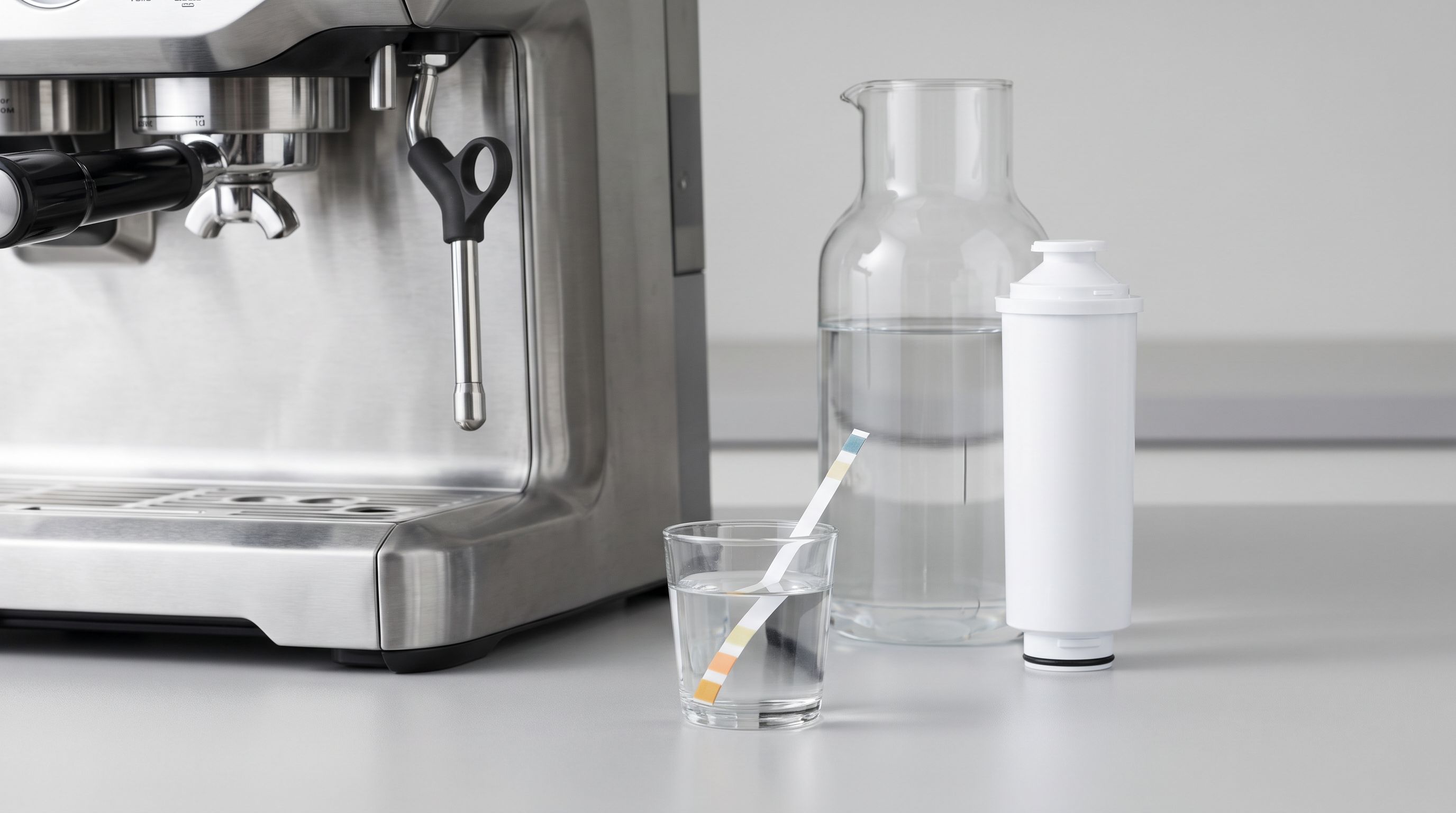
Step one is always testing. A strip pack like the Hach 2745650 Total Hardness Test Strips takes thirty seconds and tells you whether this article is urgent or academic for you. Your municipal water quality report also publishes annual hardness, though it's an average across a system and can drift seasonally.
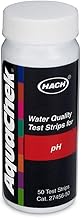 Best first step · Hach 2745650 Total Hardness Test Strips — Check price on Amazon →
Why Brita (and most pitcher filters) won't save your boiler
This trips up a lot of people. Standard pitcher cartridges — including Brita Pitcher Replacement Filters — are built around activated carbon for chlorine, taste and odor, with only a small amount of ion-exchange resin. They improve how your coffee tastes. They do not meaningfully reduce hardness, and the hardness reduction they do provide fades fast within a cartridge's life.
 Most overrated for scale · Brita Pitcher Replacement Filters (Standard) — Check price on Amazon →
If you live somewhere soft (under about 70 ppm), a pitcher filter plus occasional descaling is genuinely enough. If you don't, it's a false sense of security. That's why it's listed here as the most overrated option rather than left out — it's the thing most new owners buy, and it's the wrong tool for scale.
Four real approaches, compared
| Approach | What it does | Best for | Watch out for |
|---|---|---|---|
| Carbon pitcher filter (Brita standard) | Removes chlorine/taste; minimal hardness reduction | Already-soft tap water | No real scale protection above ~70 ppm |
| Ion-exchange cartridge (BWT bestmax PREMIUM V) | Swaps calcium for magnesium, cuts carbonate hardness; adjustable bypass | Plumbed machines and hard-water tanks; set-and-forget | Needs sizing to your hardness; cartridges expire by volume |
| Distilled/RO + mineral packets (Third Wave Water) | Builds water from scratch to a known recipe | Very hard water, prosumer machines, anyone chasing consistency | Per-gallon cost; never run pure distilled alone |
| Descaling (Urnex Dezcal) | Dissolves scale that's already formed | Every machine, periodically | Reactive, not preventive; harsh on some aluminium parts |
Matching water strategy to your boiler
Thermoblock and thermocoil machines
These heat water on demand through narrow channels — the Breville/Sage lineup, most entry espresso makers, and nearly all pod machines. Narrow passages mean small amounts of scale cause big flow restrictions, and they're the hardest components to descale thoroughly. Many of these machines also ship with a proprietary in-tank filter and an aggressive descale reminder.
Do: use softened or remineralized water and still run the manufacturer's descale cycle on schedule. Third Wave Water Espresso Machine Profile is a tidy answer here because it's dead consistent and removes guesswork.
 Best for distilled-water users · Third Wave Water Espresso Machine Profile — Check price on Amazon →
Single boiler and dual boiler machines
Brass or stainless boilers tolerate scale better in the short term but suffer from element scaling and clogged level probes. Dual boilers add a steam boiler that concentrates minerals continuously as water boils off — this is where hardness does the most damage over time, and where an autofill probe caked in scale starts behaving erratically.
Do: aim for that 50–70 ppm GH window with low alkalinity. A BWT bestmax PREMIUM V Filter Cartridge sized to your incoming hardness is the standard answer for plumbed-in machines; many manufacturers specify BWT or equivalent by name in their warranty terms.
 Best plumbed/in-tank cartridge · BWT bestmax PREMIUM V Filter Cartridge — Check price on Amazon →
Heat exchangers
HX machines run a single boiler at steam temperature constantly, so they scale like a dual boiler's steam side. Same advice as above — plus check your machine's manual, because several Italian makers void warranty claims for scale damage outright.
Superautomatics
Bean-to-cup machines from Jura, De'Longhi, Philips and Miele have the most internal plumbing per dollar and the least user access. Their proprietary cartridges are usually ion-exchange resin plus carbon, and they're genuinely worthwhile. If you skip them, run remineralized distilled water instead and keep up with the machine's cleaning prompts.
The distilled water trap
A tempting shortcut: just use distilled water, zero hardness, zero scale. Two problems.
First, water with no mineral content tastes terrible as coffee — it extracts poorly and comes out hollow and sour. Second, many machines use conductivity to sense water level; pure distilled water doesn't conduct, so the autofill never satisfies and the machine either runs dry or refills endlessly. Some brass components also fare poorly with very aggressive, unbuffered water.
The fix is remineralization. Add a measured mineral charge to distilled or RO water — that's exactly what Third Wave Water Espresso Machine Profile does, and it's why the DIY "rpavlis water" recipe (potassium bicarbonate in distilled water) has a cult following on coffee forums. Both give you scale-free water with enough dissolved solids to taste right and read on a probe.
You still need to descale sometimes
Even with good water, trace hardness accumulates, especially on steam boilers. Keep a descaler on hand — Urnex Dezcal Activated Descaler is the common citric-acid-based choice and is safe for most home machines. Check your manual first: a few manufacturers specify their own formulation, and aluminium thermoblocks in older machines can be damaged by stronger acids.
 Best damage control · Urnex Dezcal Activated Descaler — Check price on Amazon →
Rough cadence, based on common manufacturer guidance:
- Filtered hard water (no softening): every 2–3 months
- Properly softened or remineralized water: every 6–12 months, or when the machine prompts
- Plumbed machine with sized cartridge: annually, plus cartridge changes by volume
A practical plan
- Test your water with hardness strips. Write the number down.
- Under ~70 ppm: carbon filtration for taste, descale annually. Done.
- 70–150 ppm: an ion-exchange cartridge sized to your hardness, or remineralized distilled water.
- Above 150 ppm: don't gamble. Remineralized distilled water for tank machines; a properly sized BWT-type cartridge with correct bypass for plumbed machines.
- Retest annually — municipal hardness changes with source and season.
Scale prevention is unglamorous, but it's the difference between a machine that lasts fifteen years and one that needs a boiler replacement at year four.
FAQ
Is bottled water a good option? Usually not. Most bottled mineral waters are harder than tap, and the labels report hardness inconsistently. A few low-mineral bottled waters work, but you'd need to read the analysis for calcium, magnesium and bicarbonate on every brand.
Can I use a water softener's output? Household softeners swap calcium for sodium. That stops scale, but high sodium water tastes salty in espresso and can be corrosive to some components. Softened water generally needs further treatment before it's good brewing water.
How do I know if my machine already has scale? Common signs: slower flow at the same grind, longer heat-up, a steam wand that spits, inconsistent temperature, or rattling from the boiler. A descale cycle that turns the waste water cloudy is a confirmation.
Do in-tank filters from the machine's maker actually work? Mostly yes — they're small ion-exchange cartridges. They're just low-capacity, so they need replacing on schedule (often every 1–2 months with regular use), and on very hard water they get overwhelmed.
Does softer water change how my coffee tastes? Yes. Lowering alkalinity typically makes espresso taste brighter and more acidic. If your coffee suddenly reads sour after a water change, dial the grind finer or raise the dose before blaming the beans.
Our picks
HACH pH Test Strips, 4-9 pH Units, 2745650
Cheap, fast GH strips that tell you whether you have a scale problem at all before you spend anything else.
Third Wave Water Mineral Enhanced Coffee Brewing Water, Espresso Profile, 0.635 oz, presentation vary.
Mineral packets that turn a gallon of distilled or RO water into espresso-friendly water with near-zero scale risk.
BWT Bestmax Premium Filter, Replacement Cartridge - Limescale Protection The Taste Experts, 5 Stage Filtration for Espresso Machines
Magnesium-dosing ion-exchange cartridge widely specified by espresso machine makers for hard-water areas.
Brita Plus Replacement Water Filter, For Pitchers and Dispensers, 2 Pack
Fine for chlorine and taste, but it barely touches hardness — don't rely on it to protect a boiler.
Urnex Dezcal Coffee and Espresso Machine Descaler Activated Scale Remover - 900g Bottle - Fast Effective Descaling Of Boilers and Heating Elements Faucets Spray Heads Milk Systems
Citric-based descaler for machines that already have scale, and for annual maintenance on softened water.
Get the best kitchen gear deals in your inbox
Join the PrepDeck newsletter for hand-picked kitchen gear deals and new buying guides. No spam, unsubscribe anytime.
Related reads
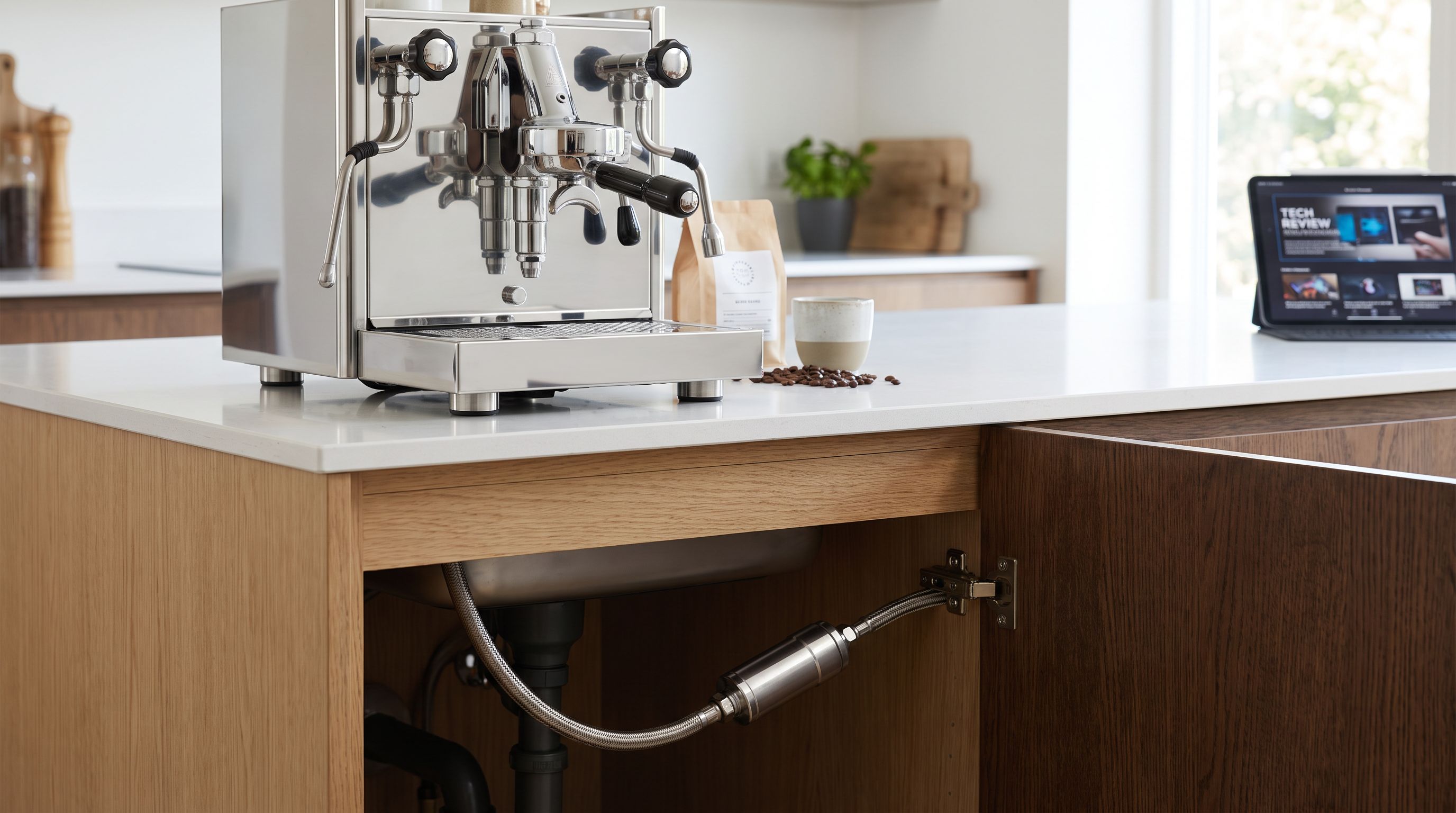
Plumbed In Espresso Machine 2026: What Your Sink Needs
Thinking of plumbing in your espresso machine in 2026? Here's the line pressure, regulator, filtration and machine compatibility you actually need under the counter.
PID Espresso Machines in 2026: 5 Picks by Temp Stability
A PID espresso machine holds brew temperature steady shot after shot. We compared 5 single-boiler and heat-exchanger machines by boiler mass, recovery, and real owner feedback.
Dual Boiler Espresso Machines in 2026: 5 Picks by Tank Size
A 2026 guide to dual boiler espresso machines, ranked by water reservoir size and plumbing options — who needs one, who doesn't, and which models hold up.