PID Espresso Machines in 2026: 5 Picks by Temp Stability
A PID espresso machine holds brew temperature steady shot after shot. We compared 5 single-boiler and heat-exchanger machines by boiler mass, recovery, and real owner feedback.
Reader-supported: we may earn a commission from links on this page, at no extra cost to you. It never affects our picks. Learn more.
Espresso is unusually sensitive to temperature. A swing of two or three degrees Celsius at the puck changes extraction enough to turn a balanced shot sour or ashy. That's the problem a PID espresso machine solves: instead of a mechanical thermostat that lets the boiler overshoot and undershoot in a sawtooth pattern, a PID (proportional–integral–derivative) controller reads a temperature sensor many times a second and feeds the heating element just enough power to park the boiler at a setpoint.
But PID is not magic, and this is the part most buying guides skip. A PID controls the boiler, not the water touching your coffee. What actually determines shot-to-shot consistency is the combination of PID accuracy, thermal mass in the brew path (boiler metal, group head, portafilter), and how the machine recovers after steaming. We compared machines on those terms, using manufacturer specifications, independent review testing, and patterns in long-term owner feedback — we don't physically test units ourselves.
How We Ranked These
Four criteria, weighted roughly in this order:
- Brew-path thermal mass. A heavy brass boiler or E61 group buffers temperature far better than a thin thermoblock, even if the thermoblock's PID is nominally more precise.
- Independence of brew and steam. Single-boiler dual-use machines force you to wait between espresso and milk. Dual boilers and dual thermoblocks don't.
- Recovery time. How quickly the machine returns to brew setpoint after a steam cycle or back-to-back shots.
- Serviceability and owner-reported longevity. Gaskets, seals, and boiler scaling matter more at year five than at week one.
The Comparison
| Machine | Boiler type | PID scope | Brew group | Best for |
|---|---|---|---|---|
| Profitec Go | Brass single boiler | Brew + steam setpoints | E61-style, heated | Enthusiasts wanting prosumer stability in a small footprint |
| Rancilio Silvia Pro X | Dual stainless boilers | Independent brew + steam PID | Saturated-style group | Milk drinkers who hate waiting |
| Ascaso Steel Duo PID | Dual thermoblock | Separate brew + steam PID | Compact aluminum group | Fast heat-up, tight counters |
| Gaggia Classic Evo Pro | Aluminum single boiler | None stock (PID-ready) | 58mm commercial portafilter | Tinkerers and upgrade paths |
| Breville Bambino Plus | ThermoJet (thermocoil) | Yes, brew temp | 54mm | Small kitchens, beginners, milk drinks |
 Best compact starter · Breville Bambino Plus — Check price on Amazon →
 Premium pick · Ascaso Steel Duo PID — Check price on Amazon →
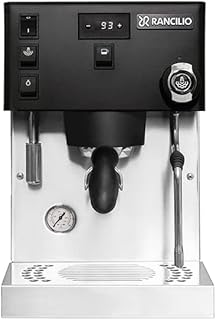 Best dual boiler under prosumer prices · Rancilio Silvia Pro X — Check price on Amazon →
 Best budget base (PID-ready) · Gaggia Classic Evo Pro — Check price on Amazon →
Profitec Go — Best Overall
The Go is the machine most reviewers now point first-time enthusiasts toward, and the reasoning is sound. It pairs a brass single boiler with an E61-derived brew group, so there's real metal in the water path holding temperature steady. The PID lets you set brew and steam temps separately, and the display is legible rather than buried in a button-hold menu.
The tradeoff is the single-boiler compromise: you brew, then switch to steam, then wait for the boiler to come back down before the next shot. Owners report the Go handles this gracefully — the "cooling flush" discipline that older single boilers demanded is largely automated away — but if you're making four cappuccinos in a row for guests, you'll feel it.
It's also the pick that makes sense with a plumbed-in future or a serious grinder upgrade, because nothing in the brew path becomes the limiting factor.
Rancilio Silvia Pro X — Best Dual Boiler for the Money
The original Silvia was a single-boiler workhorse with no temperature control at all; temperature surfing was a required skill. The Pro X fixes that properly rather than partially. Two separate stainless boilers, each with its own PID, mean brew temperature doesn't move while you steam, and you can pull a shot immediately after frothing.
Thermal mass is good, build is Rancilio-commercial, and parts availability is excellent — a genuine factor if you expect to keep a machine a decade. Owner feedback over several years consistently flags it as reliable and serviceable, with the usual prosumer caveats: it's heavy, it's warm-up-and-leave-on hardware, and the steam wand has a learning curve.
Pick this one if milk drinks are more than half your output.
Ascaso Steel Duo PID — Premium, Compact
Ascaso takes a different route to independence: dual thermoblocks, one dedicated to brew and one to steam, each PID-controlled. Thermoblocks have less thermal mass than a brass boiler, which is theoretically a stability disadvantage — but Ascaso compensates with aggressive PID control and a short water path, and the practical benefit is enormous: heat-up measured in a couple of minutes rather than twenty-plus.
That makes the Steel Duo PID the right answer for people who drink one or two coffees a day and don't want to leave a machine idling. It's also the best-looking machine on this list by a wide margin, available in several finishes, and it fits under standard cabinets. Back-to-back volume is where it's weakest; this is a two-to-four-shot-per-session machine, not a dinner-party workhorse.
Gaggia Classic Evo Pro — Best Base to Build On
The Evo Pro is the only machine here without PID from the factory, and it's on the list deliberately. It gives you the two things that cost real money — a thick aluminum boiler and a 58mm commercial portafilter — in the cheapest package available, and it has the deepest aftermarket of any home espresso machine.
Adding a PID kit (several well-documented third-party options exist) turns it into a legitimately stable single boiler for a fraction of what a factory-PID machine costs. The honest caveat: this means soldering or at minimum careful wiring, voiding warranty, and an afternoon of your time. If that sentence made you tense, buy the Profitec Go instead.
Stock, the Evo Pro is still a capable machine — the Evo revision improved the brew path over earlier Classics — but its thermostat-driven temperature wanders, and you will notice it on light roasts.
Breville Bambino Plus — Best Compact Starter
The Bambino Plus uses a ThermoJet-style heater with PID control, reaching brew temperature in roughly three seconds. It has almost no thermal mass, which sounds disqualifying until you realize the PID is managing a tiny volume of water in real time rather than trying to hold a large one steady. Independent testing consistently rates its in-cup temperature consistency as strong for the price.
Its limits are structural: a 54mm portafilter, plastic-heavy construction, limited pressure profiling, and a brew group that doesn't preheat the same way a metal one does. The automatic milk texturing is genuinely good and the reason many people buy it.
Buy it if counter space or budget is the binding constraint. Don't buy it expecting it to grow with you — it doesn't, and that's fine.
Which One Should You Actually Buy?
- One or two shots a day, mostly black: Ascaso Steel Duo PID or Profitec Go.
- Milk drinks for a household: Rancilio Silvia Pro X.
- Enjoy modifying gear and want maximum value: Gaggia Classic Evo Pro plus a PID kit.
- Small kitchen, first machine: Breville Bambino Plus.
And one piece of advice that outranks all of the above: a PID machine paired with a bad grinder is a waste of money. Grind consistency affects extraction more than a two-degree temperature swing does. If your total budget is fixed, shift money toward a burr grinder before you shift it toward a fancier boiler.
FAQ
Does a PID actually improve espresso taste? It improves consistency, which is what lets you taste the difference between a good shot and a bad one. On medium and dark roasts the effect is subtle. On light, dense, modern roasts — which need higher, steadier brew temps — it's clearly audible in the cup.
Is a heat exchanger better than a PID single boiler? Not automatically. A classic HX machine brews and steams simultaneously but requires a cooling flush, and its brew temperature depends on how long you flush. A PID single boiler like the Profitec Go gives you a repeatable number instead of a technique. If you need simultaneous steam, a dual boiler is the cleaner modern answer.
Can I add PID to any espresso machine? Practically, no. The Gaggia Classic family is uniquely well supported because of its simple wiring and large community. Attempting it on other machines is usually not worth the risk.
How long does a PID machine take to warm up? Thermoblock machines like the Ascaso and the Bambino Plus are ready in seconds to a couple of minutes. Brass-boiler E61 machines need 20–30 minutes for the group head to fully saturate with heat, regardless of what the display says.
Does PID eliminate temperature surfing? On a properly implemented machine, yes. On a stock Gaggia Classic Evo Pro, no — that's the main argument for the PID mod.
Our picks
Profitec Go
Brass single boiler with PID and E61-style brew group — the most stable shot-to-shot temps in its class.
Gaggia RI9380/49 Classic E24 Espresso Machine, Thunder Black, Small
Heavy aluminum boiler and a commercial 58mm portafilter; the most mod-friendly platform for adding PID.
Rancilio Silvia Pro X Espresso Machine, Black
Two stainless boilers with independent PID control — brew temp holds while you steam.
Ascaso Steel DUO PLUS Espresso Machine | PID | Programmable | Volumetric Controller | Dual Thermoblock | 120V | (Stainless Steel)
Dual thermoblock with separate PID for brew and steam, near-instant heat-up, compact footprint.
Breville BES500BSS Bambino Plus Espresso Machine, Brushed Stainless Steel
ThermoJet heater with PID control hits temp in seconds; ideal for small kitchens and milk drinks.
Get the best kitchen gear deals in your inbox
Join the PrepDeck newsletter for hand-picked kitchen gear deals and new buying guides. No spam, unsubscribe anytime.
Related reads
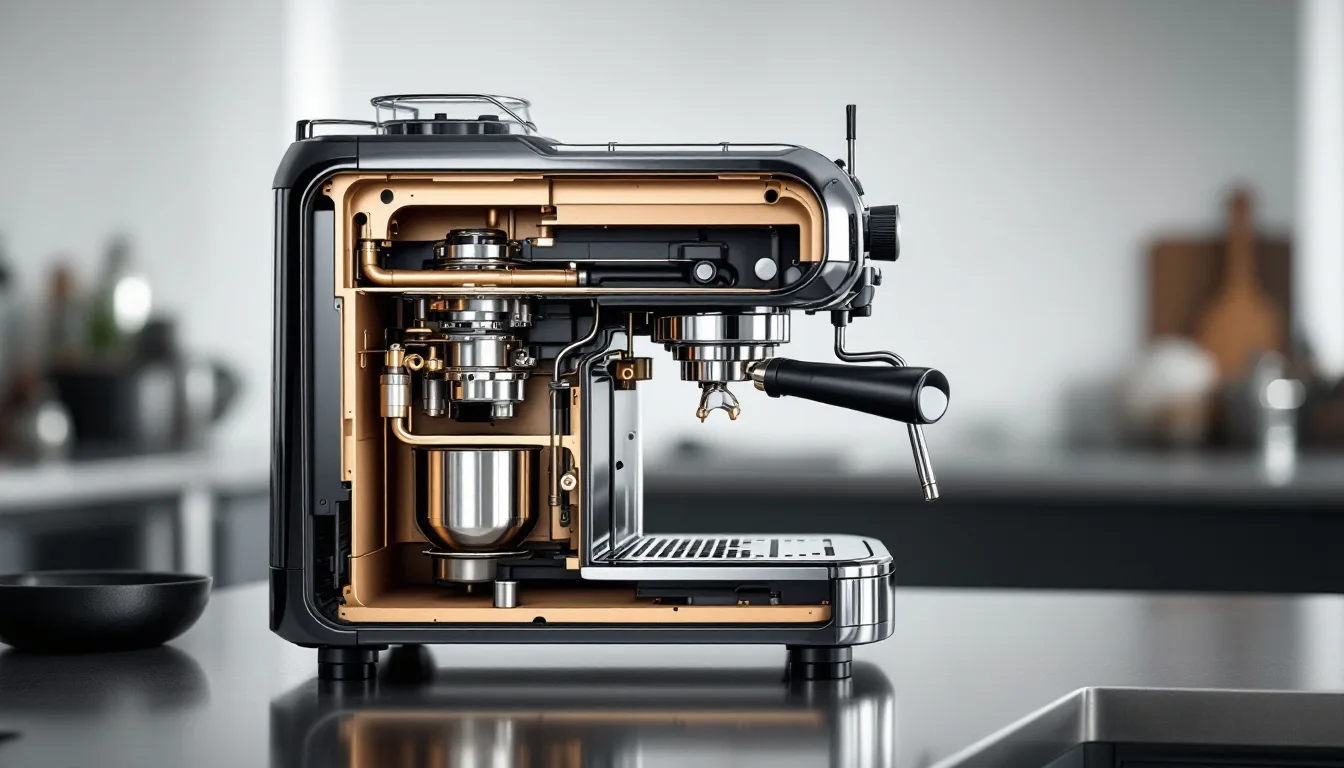
Espresso Boilers in 2026: Single, HX, or Dual, Explained
Single boiler, heat exchanger, or dual boiler? How each design actually handles back-to-back shots and milk steaming — and what that means for buyers in 2026.
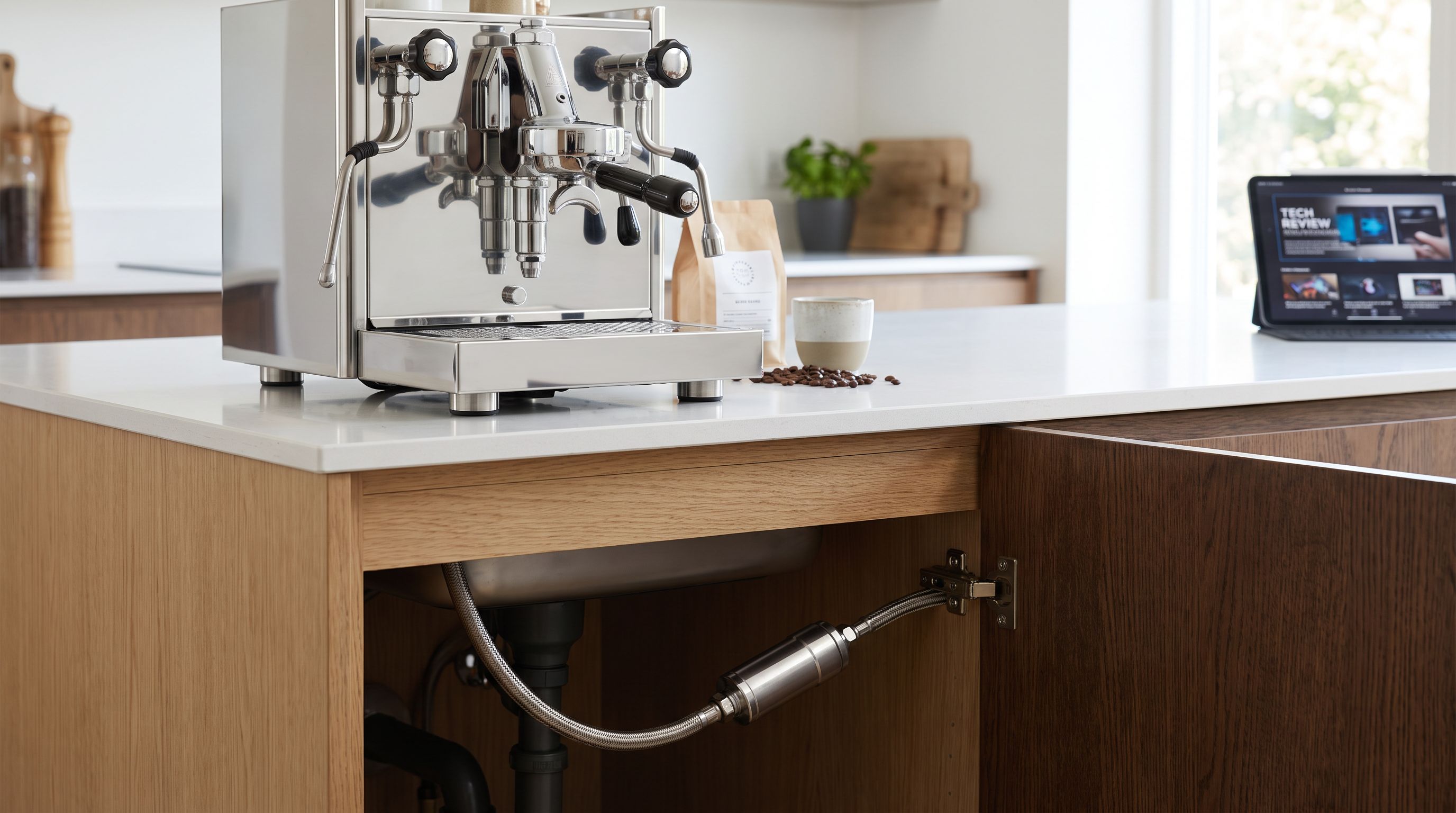
Plumbed In Espresso Machine 2026: What Your Sink Needs
Thinking of plumbing in your espresso machine in 2026? Here's the line pressure, regulator, filtration and machine compatibility you actually need under the counter.
Dual Boiler Espresso Machines in 2026: 5 Picks by Tank Size
A 2026 guide to dual boiler espresso machines, ranked by water reservoir size and plumbing options — who needs one, who doesn't, and which models hold up.