Espresso Accessories Kit 2026: Buy by Counter Depth
An espresso accessories kit guide sorted by counter depth — knock box height, WDT tools, scales and mats that fit 14, 20 or 26 inches of space.
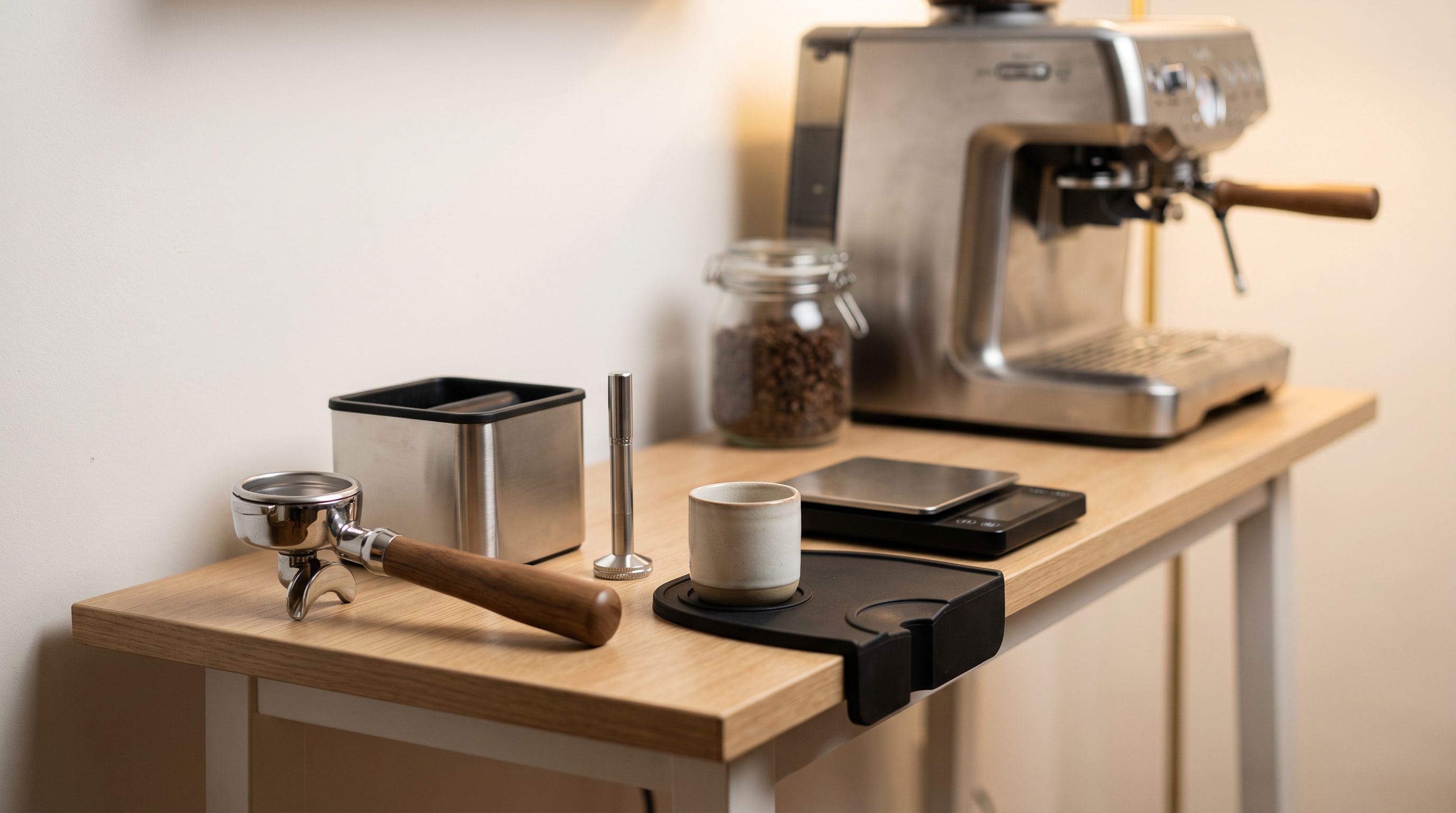
Reader-supported: we may earn a commission from links on this page, at no extra cost to you. It never affects our picks. Learn more.
Most espresso accessory guides are written as if you have a café bar to fill. In reality, the limiting factor for almost every home setup is the strip of counter between the backsplash and the front edge — usually 24 to 25 inches of depth, minus whatever the machine itself eats, minus the 2–3 inches you need to actually swing a portafilter.
So this guide is sorted differently. Instead of ranking gadgets by novelty, we've grouped a working espresso accessories kit by how much counter real estate it consumes: a 14-inch minimal strip, a 20-inch comfortable workflow, and a 26-inch full bar. Buy the tier your counter can actually support, and skip the rest.
Measure before you buy: the three numbers that matter
Before shopping, take three measurements.
1. Usable depth. Measure from the backsplash to the counter edge, then subtract your machine's depth including the water tank handle and any rear clearance the manual specifies (many machines want 1–2 inches at the back for airflow or tank removal). What's left is where accessories go — usually beside the machine, not behind it.
2. Knock box height vs. portafilter arc. This is the measurement people get wrong. A knock box needs to be short enough that you can knock down into it without smacking the spout on the rim, and tall enough that the bar sits well below the basket. Low-profile boxes in the 3–4 inch range suit under-cabinet setups; drawer-style boxes slot under the machine but need front clearance to pull out.
3. Drip tray clearance for a scale. If you want to weigh shots in the cup, measure from the drip tray grate to the underside of the portafilter spouts. Many compact machines offer only around 3 inches. Slim scales exist for this reason — and if yours doesn't fit, you weigh beside the machine and pour across, which works fine but adds a step.
Tier 1: The 14-inch strip (bare minimum that still improves the shot)
If you have roughly a foot of free counter, buy three things: a distribution tool, a scale, and a knock box that stores somewhere else between sessions.
The highest return per square inch is the Normcore V2 WDT Tool. Weiss Distribution Technique — stirring the dry grounds with fine needles before tamping — breaks up clumps from the grinder and is the most reliable fix for channeling in a home setup. The 0.4mm needles are thin enough to move through fine espresso grinds without dragging, and the magnetic stand keeps it upright in a tiny footprint. Nothing else at this size changes extraction consistency as much.
 Best distribution tool · Normcore V2 WDT Tool — Check price on Amazon →
For weighing, the Timemore Black Mirror Basic 2 is the sensible default: 0.1g resolution, roughly one-second response, and a footprint small enough to park beside the machine when it won't fit under the spouts. Espresso rewards weighing both dose in and yield out; guessing by cup level is the fastest way to inconsistent shots.
 Best value scale · Timemore Black Mirror Basic 2 — Check price on Amazon →
Knock box at this tier: pick a compact round one like the Normcore Knock Box V2 and store it in a cabinet between sessions. It's aluminium-bodied with a replaceable silicone knock bar and a grippy base, so it doesn't skate when you hit it hard.
Tier 2: The 20-inch workflow (where it gets genuinely pleasant)
With around 20 inches you can leave everything out and build a real sequence: dose into a cup, WDT, tamp on a mat, lock in, pull onto a scale.
Add a tamping mat. The MHW-3BOMBER Espresso Tamping Mat is thick food-grade silicone with a raised corner that cradles the portafilter, so you're not pressing 30lb of tamp force into a quartz counter or chipping a stone edge. It also corrals loose grounds, which quietly halves your cleanup.
 Best tamping mat · MHW-3BOMBER Espresso Tamping Mat — Check price on Amazon →
Add a dosing cup sized to your basket diameter (51mm, 54mm or 58mm — check your portafilter, not your machine's brand). Grinding into a cup rather than directly into the basket lets you WDT in a contained space and dose more accurately.
Add a calibrated tamper matched to your exact basket size. A 58mm tamper in a 58.5mm basket leaves an untamped ring; the mismatch is a common cause of side channeling. Calibrated models click at a set pressure, which mostly matters for consistency rather than any magic number of pounds.
Tier 3: The 26-inch bar (full kit, no compromises)
At this depth you can run a dedicated scale that lives on the drip tray, a knock box that stays out permanently, a puck screen and cleaning caddy, and a milk pitcher rack.
This is where the Acaia Pearl S earns its place. Its fast response and flow-rate display let you watch the shot build in real time and adjust grind by what you see rather than by stopwatch guesswork. It's genuinely more scale than most people need — but if you're dialing in daily and have the space, it's the reference everything else gets measured against.
Round the bar out with a bottomless portafilter (brutal, honest diagnostic feedback on your puck prep), a puck screen, and a group-head brush with a backflush detergent. Cleaning gear is the accessory category people skip and then regret when shots taste hollow and stale.
Footprint comparison
| Accessory | Typical footprint | Counter tier | What it fixes |
|---|---|---|---|
| WDT tool + stand | ~2 x 2 in | 14 in | Clumping, channeling |
| Compact scale | ~4 x 4 in | 14 in | Dose and yield consistency |
| Round knock box | ~5–6 in diameter | 14 in (stowable) | Puck disposal, counter mess |
| Dosing cup | ~2.5 in diameter | 20 in | Accurate dosing, contained WDT |
| Tamping mat | ~6 x 8 in | 20 in | Counter protection, grind spill |
| Calibrated tamper | ~2.5 in diameter | 20 in | Even, repeatable tamp |
| Flow-rate scale on tray | ~5 x 5 in | 26 in | Live shot diagnosis |
| Bottomless portafilter + puck screen | Stored | 26 in | Prep diagnosis, cleaner puck |
What to skip
Pre-bundled 20-piece kits. The cheap all-in-one sets that pair a tamper, distributor, mat and brush usually hit one or two items well and pad the rest. The tamper is often uncalibrated and slightly undersized; the "distributor" is a spinning leveler, which flattens the surface but does not break up clumps the way WDT does. If you buy a kit, buy it for the storage stand and expect to replace the tamper.
Palm tampers and levelers as a WDT substitute. They're a different job. A leveler smooths the top; a WDT tool fixes the whole bed. If you only buy one, buy the WDT tool.
Oversized drawer knock boxes on shallow counters. They look tidy in product photos but need pull-out clearance in front, and that clearance is exactly the space you need for the portafilter swing.
Bottomless portafilters before you have a grinder you can adjust finely. They diagnose problems you can't yet fix.
A sensible build order
- Scale (Timemore Black Mirror Basic 2, or Acaia Pearl S if space and budget allow)
- WDT tool (Normcore V2 WDT Tool)
- Correctly sized tamper
- Knock box (Normcore Knock Box V2)
- Tamping mat (MHW-3BOMBER Espresso Tamping Mat)
- Dosing cup, puck screen, cleaning kit
- Bottomless portafilter
Each step solves a specific, identifiable problem. If you can't name the problem an accessory solves on your setup, it's counter space you're renting out for nothing.
FAQ
How deep should a knock box be? Deep enough that the knock bar sits well below the rim — roughly 3–4 inches of internal depth for a low-profile box — so pucks drop in cleanly rather than bouncing out. Under low cabinets, prioritise a short box you can knock into without clipping the shelf above.
Do I need a WDT tool if my grinder is good? Most single-dosing home grinders still produce some static clumping, especially with light roasts. WDT is cheap insurance and the most commonly recommended fix for channeling in home setups, regardless of grinder quality.
Can I just use my kitchen scale? Only if it reads to 0.1g and responds quickly. Most kitchen scales average over a second or more, which is too slow to catch a 25-second shot accurately, and many auto-off after a short idle — mid-shot shutdown is a real annoyance.
What size tamper do I need? Match the basket, not the brand. Common sizes are 51mm, 53/54mm and 58mm, and many 58mm baskets actually suit a 58.5mm tamper. Measure the inside diameter of your basket before ordering.
Is a puck screen worth it? It keeps the shower screen cleaner and can help with even water distribution on some machines. It's a minor, nice-to-have improvement — buy it after the scale, WDT tool and tamper, not before.
Our picks
Normcore Knock Box V2
Low-profile aluminium body with a replaceable silicone bar and a rubber base that stops it walking across the counter.
Normcore WDT Distribution Tool V2-9 Prong Espresso Distribution Tool - Needle Espresso Stirrer I 0.3mm Thick Spring Wires - Espresso Coffee Stirrer - Anodized Aluminum Handle
0.4mm needles on a weighted magnetic stand — the single highest-impact sub-$30 upgrade for channeling.
Acaia Pearl S
Fast-response brew scale with flow-rate readout; the reference point most espresso scales get compared against.
TIMEMORE Coffee Scale Basic 2.0 Electronic Espresso Scale with Water Flow Rate and Timer Function, Digital Scale for Kitchen/Baking/Cooking, Black
0.1g resolution, ~1s response and a small footprint that still fits under most drip trays.
MHW-3BOMBER Espresso Tamping Station, 4 in 1 Walnut Espresso Organizer Box with Magnetic Drawer for Storage 51-58mm Espresso Tamper,Distributor,Portafilter and Espresso Accessories, CH6622
Thick food-grade silicone with a raised portafilter corner — protects stone counters and contains grind mess.
Get the best kitchen gear deals in your inbox
Join the PrepDeck newsletter for hand-picked kitchen gear deals and new buying guides. No spam, unsubscribe anytime.
Related reads
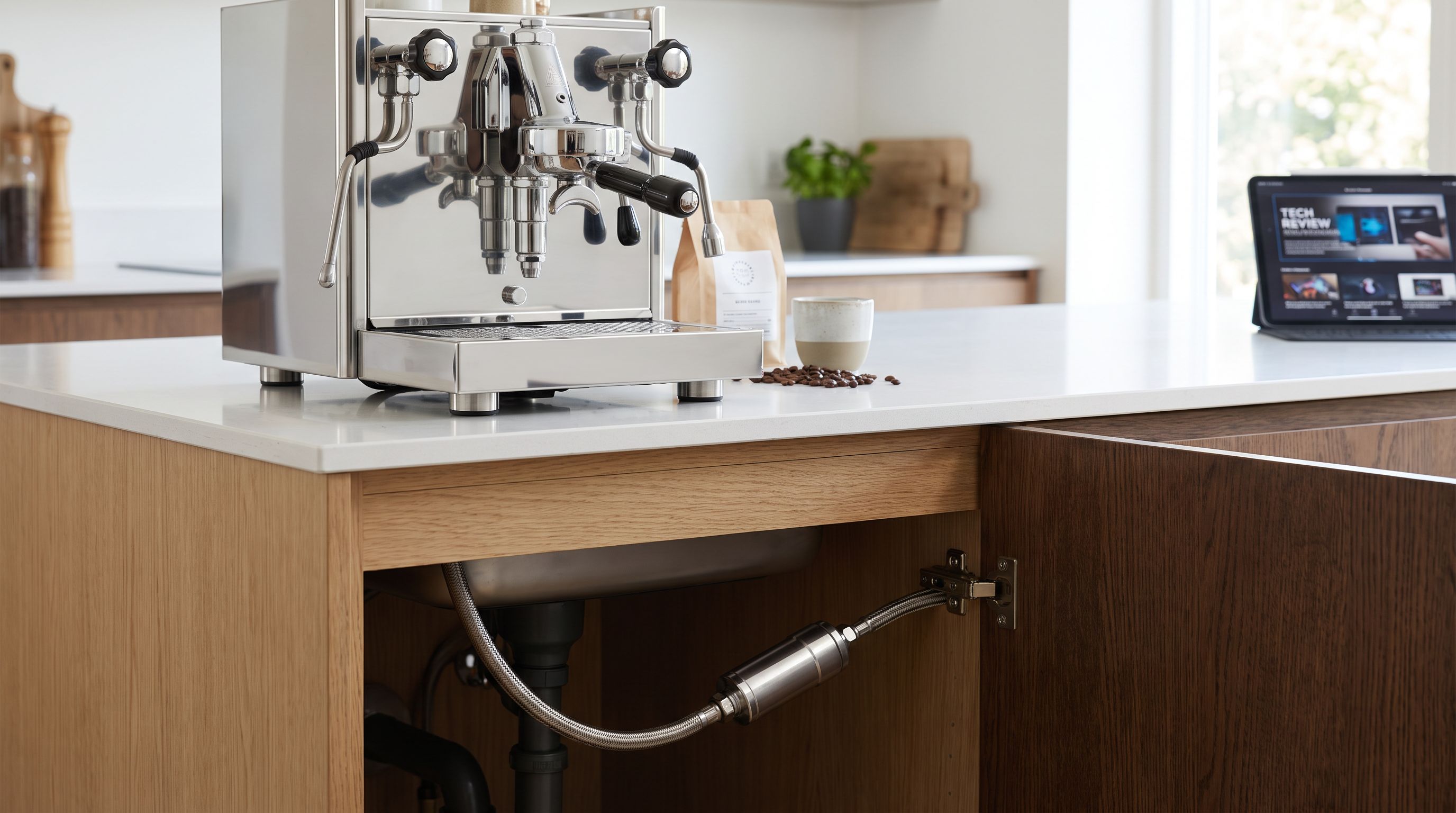
Plumbed In Espresso Machine 2026: What Your Sink Needs
Thinking of plumbing in your espresso machine in 2026? Here's the line pressure, regulator, filtration and machine compatibility you actually need under the counter.
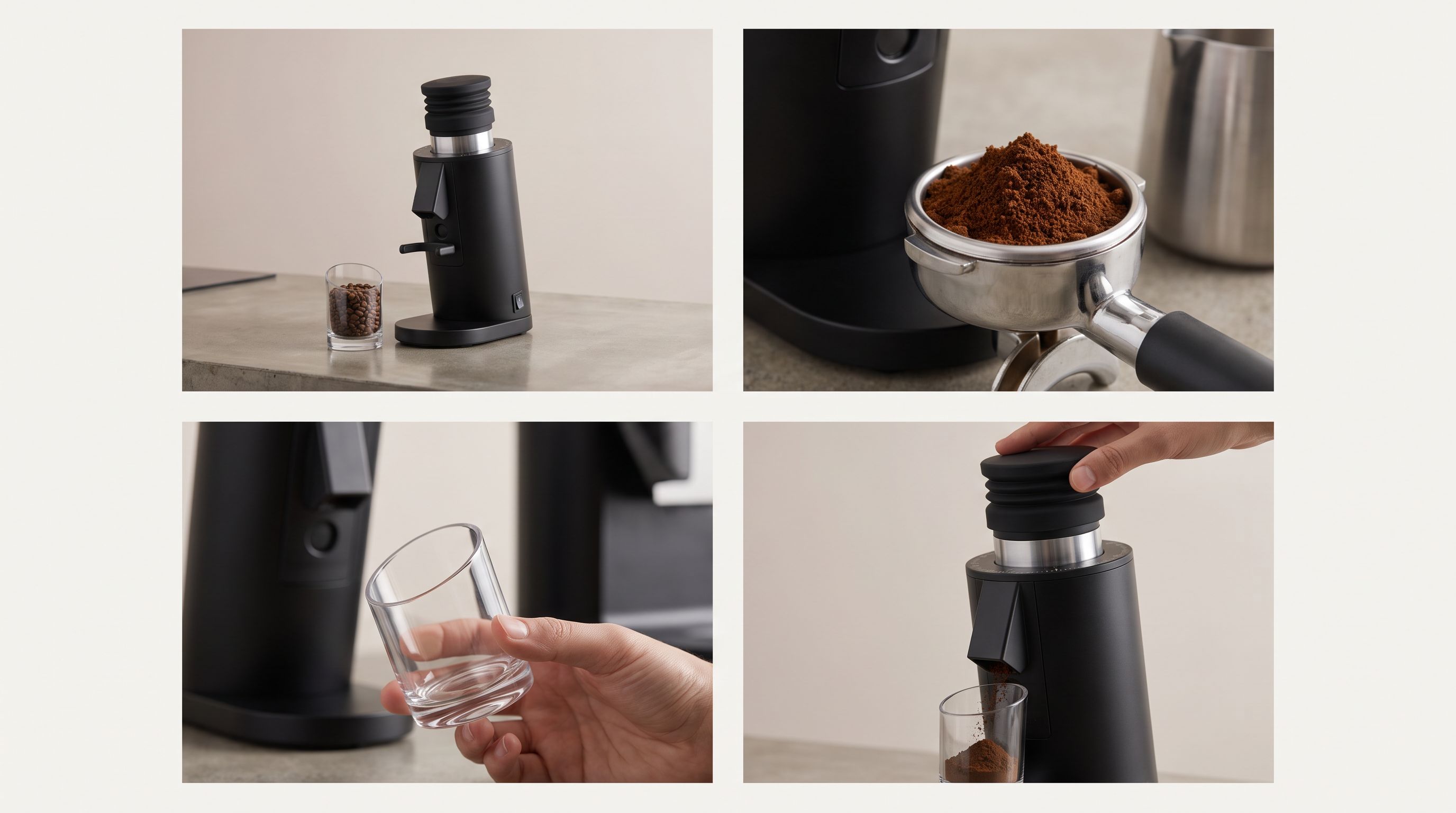
Single Dose Coffee Grinder 2026: Ranked by Retention
We compared single dose coffee grinders for 2026 on grounds retention, burr size and bellows design — picks from $250 to $900 for home espresso.
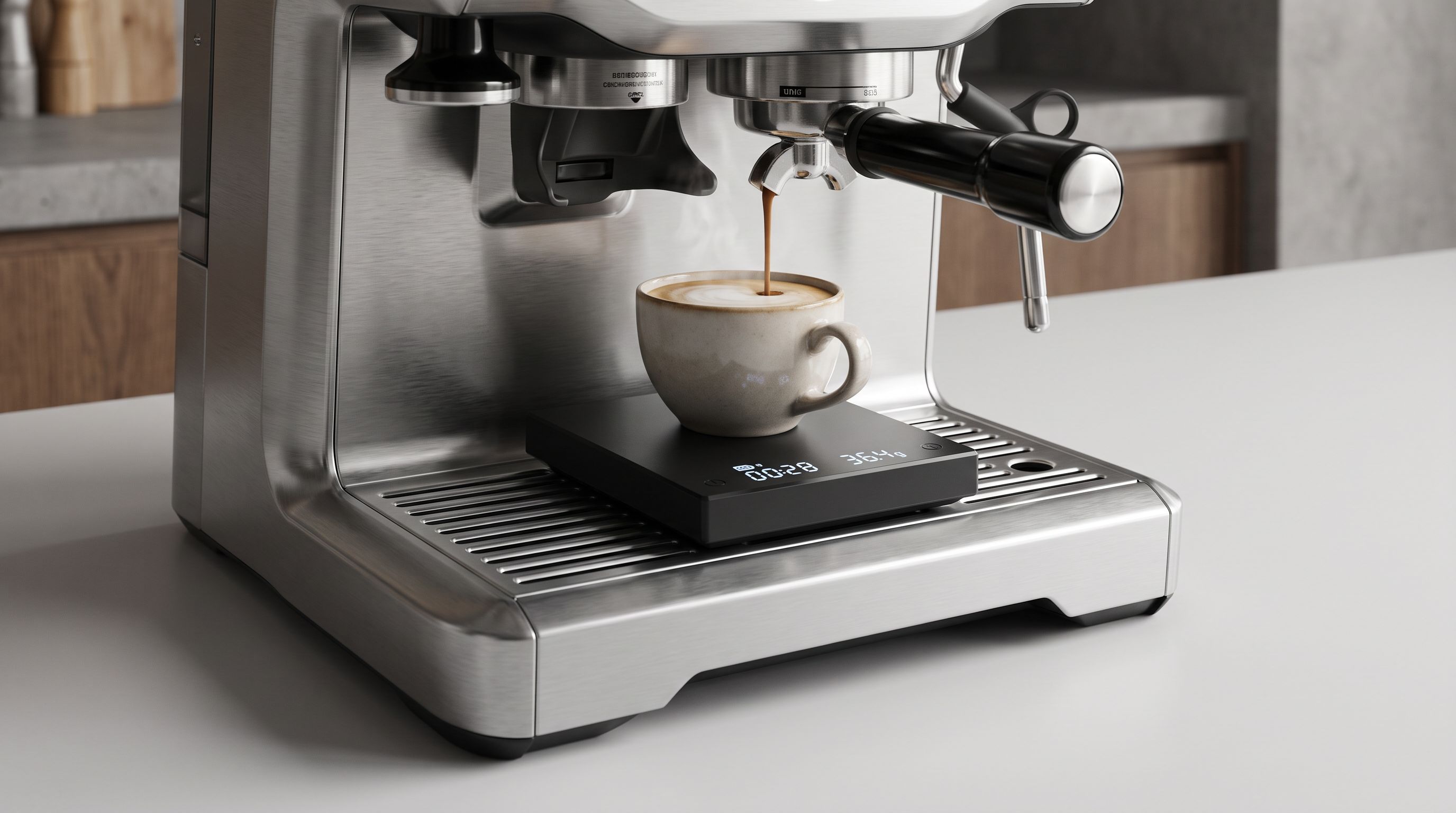
Espresso Scale Buying Guide 2026: Fit Under the Portafilter First
An espresso scale is useless if it won't fit your drip tray. Compare footprint, height, response speed and water resistance across the best 2026 picks.