Whetstone Grit Guide 2026: The Two Numbers That Matter
A plain-English whetstone grit guide for 2026: what 400, 1000, 3000 and 6000 actually do, soaking vs splash-and-go, and the two-stone combo most kitchens need.
Reader-supported: we may earn a commission from links on this page, at no extra cost to you. It never affects our picks. Learn more.
Grit numbers are the most over-discussed, least understood spec in knife care. Walk into the topic cold and you'll find people running five-stone progressions and arguing about 8000 versus 12000 while their chef's knife is still dull. Here's the honest version: for a home knife drawer, two grits do roughly 95% of the work, and a third one earns its keep only if you break things.
This guide explains what each grit range actually removes, why soaking versus splash-and-go matters more than you'd think, and which combination to buy once rather than three times.
What the grit number means (and why brands disagree)
Grit is a measure of abrasive particle size. Lower number = bigger particles = faster steel removal and a coarser scratch pattern. Higher number = finer particles = slower removal, finer scratches, more refined edge.
Two complications worth knowing before you shop:
- Grit scales aren't universal. Japanese water stones (JIS) and most European/American stones (FEPA) number differently. A Japanese 1000 is roughly comparable to a European 600–800 in practical feel. This is why a "400 grit" from one brand can cut noticeably faster or slower than another's. Treat numbers as a guide within a brand, not across brands.
- Binder matters as much as grit. A soft, muddy 1000 and a hard ceramic 1000 remove steel at different rates and feel completely different under the blade. Harder stones last longer and stay flatter; softer stones cut faster and are more forgiving of a wobbly angle.
The four grit ranges, in plain terms
Under 400: repair only
This is the realm of broken tips, big chips, and reprofiling a thick factory bevel into something thinner. It eats steel. If your knife doesn't have visible damage, skip it entirely — you'll just shorten the blade's life.
400–800: coarse sharpening and chip removal
The grit you reach for when a knife is genuinely blunt, when there's a rolled or chipped section, or when you're thinning a cheap stamped blade. Most home cooks touch this once or twice a year, not every sharpening. The Naniwa Chosera 400 is the one to own here if you've got knives that have been through a dishwasher or a glass cutting board.
1000: the one stone that matters
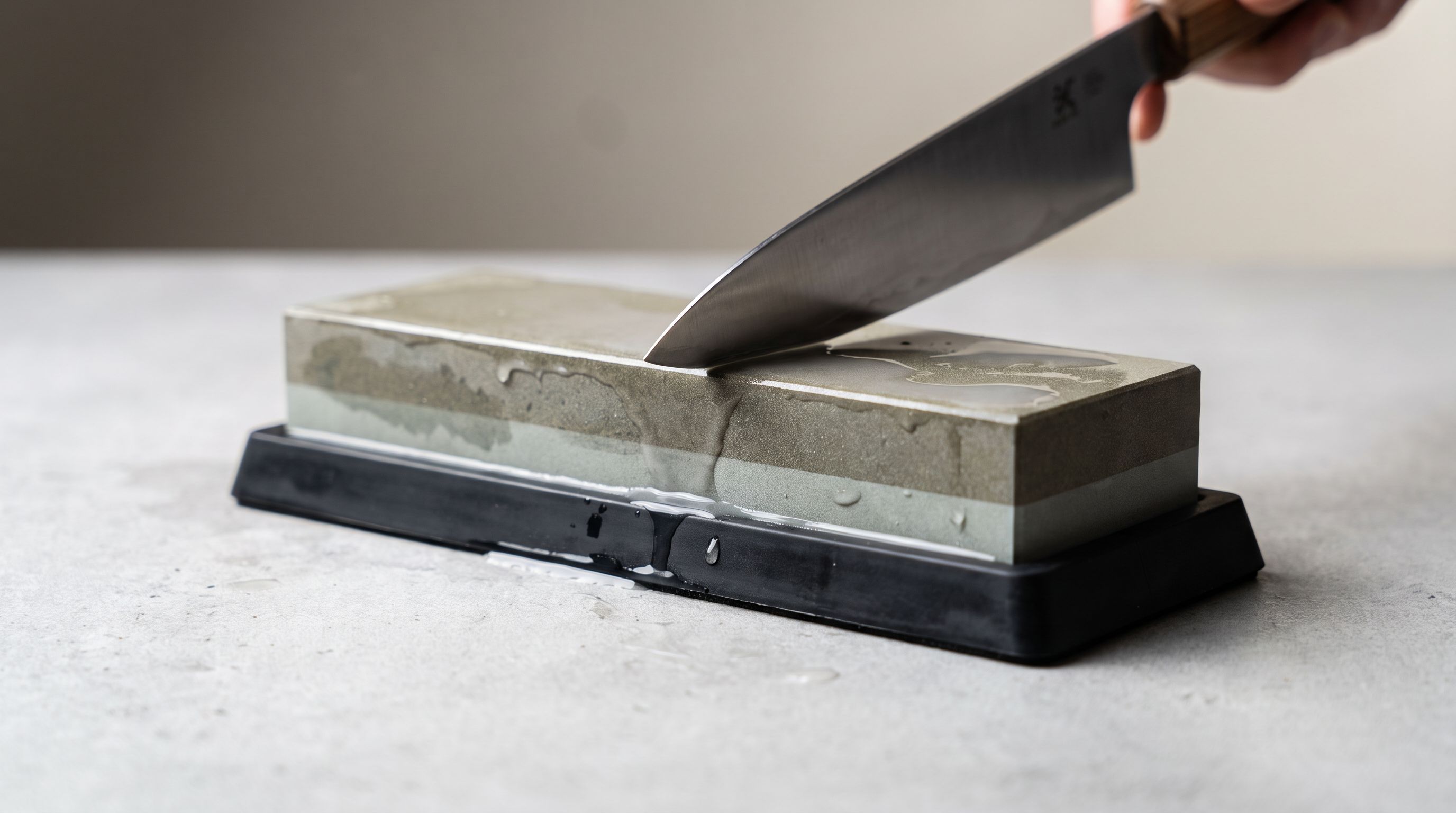
If you buy a single grit, buy 1000. It sets a fresh apex on a dull knife in a few minutes, leaves an edge that's genuinely sharp — tomato-skin sharp, paper-slicing sharp — and it's the grit every sharpening tutorial assumes. Multiple grit guides and Japanese knife retailers converge on the same advice: start with #1000 and don't buy a five-stone set.
3000–6000: finishing and polishing
Here you're refining the scratch pattern rather than removing meaningful steel. A 3000 gives a clean, toothy-but-smooth edge that's arguably ideal for a general-purpose gyuto or chef's knife. A 6000 produces a polished, very keen edge that excels on push cuts, raw fish, and soft produce — but it also slides a little on tomato skin and fibrous vegetables compared with a 1000-grit finish.
8000 and up: optional, specialist
Beautiful on a single-bevel yanagiba. Largely cosmetic on a German chef's knife that spends its life cutting onions. Plenty of experienced sharpeners find a 3000–5000 stone more useful as a deburring and touch-up surface than as a true polishing step.
Soaking vs splash-and-go
This is the practical decision that affects whether you actually sharpen your knives or let the stone live in a drawer.
Soaking stones (King, many traditional Japanese water stones) need 5–15 minutes submerged before use. They're typically softer, cut fast, build a slurry that helps polishing, and cost less. Downsides: the wait, the mess, and the fact that some soaking stones shouldn't be stored permanently wet — in freezing conditions or with certain binders they can crack.
Splash-and-go stones (Shapton Kuromaku, Naniwa Chosera/Professional) need only a spritz of water and are ready in under a minute. They're harder, hold flatness better, and make a 90-second touch-up genuinely realistic on a weeknight. They cost more per stone.
If you sharpen quarterly and like the ritual, soaking is fine. If you want to maintain edges in short, frequent sessions, splash-and-go wins — the friction of a 10-minute soak is the single biggest reason stones go unused.
Which combination should you actually buy?
| Setup | Grits | Best for | Water routine | Notes |
|---|---|---|---|---|
| King KDS 1000/6000 Combination | 1000 / 6000 | First stone, most home kitchens | Soak ~10 min | The default beginner recommendation for a reason; soft, fast, forgiving |
| Shapton Kuromaku 1000 | 1000 | Frequent quick touch-ups | Splash-and-go | Hard ceramic, stays flat, case doubles as a stand |
| Naniwa Chosera 400 | 400 | Chips, thick bevels, neglected knives | Splash-and-go (brief wet) | Pair with a 1000; not a standalone sharpener |
| Sharp Pebble 1000/6000 Set | 1000 / 6000 | Lowest-cost entry with accessories | Soak | Includes base and flattening stone; softer, dishes faster |
| Atoma Diamond Plate 140 | 140 (flattening) | Keeping stones true | Use wet | Not for knives — for stones |
 Best overall · King KDS 1000/6000 Combination Whetstone — Check price on Amazon →
The two-stone answer most people need: a 1000 and a 3000–6000. That's it. Buy it as a combination stone like the King KDS 1000/6000 and you've spent once. If your knives are in rough shape — chipped tips, edges that reflect light along their length — add the Naniwa Chosera 400 and you have a complete three-grit kit that covers everything short of a snapped blade.
The upgrade path: if you find yourself sharpening often, replace the 1000 side with the Shapton Kuromaku 1000. Being able to sharpen without planning ahead changes how often you do it.
The accessory nobody mentions until it's too late
Stones dish. The centre wears faster than the edges, and a concave stone puts a convex, inconsistent bevel on your knife no matter how good your technique is. Soft soaking stones dish fastest; hard ceramics dish slowest, but they all do it.
A flattening plate — the Atoma Diamond Flattening Plate 140 is the standard reference — fixes this in under a minute. Pencil a grid on the stone face, lap until the grid disappears, done. Flatten every few sharpening sessions with soft stones, less often with hard ones. Cheap combo sets like the Sharp Pebble include a small flattening stone, which is better than nothing but wears out.
A realistic sharpening sequence
- Flatten the stone if it's been a while.
- Soak or spritz as required.
- Raise a burr along the full length on one side at 1000 grit (roughly 15° per side for Japanese knives, 20° for German). Feel for it with a fingernail dragged off the edge.
- Repeat on the other side.
- Move to 3000/6000, light pressure, alternating sides, to refine and remove the burr.
- Strop on the edge of a cutting board, denim, or leather. A few passes is enough.
Most failed sharpening attempts aren't a grit problem — they're a burr problem. If you never raised one, no amount of 6000-grit polishing will produce a sharp knife.
FAQ
Do I need an 8000-grit stone? Only if you own single-bevel Japanese knives or enjoy polishing. For Western chef's knives and most gyutos, a 3000–6000 finish is the practical ceiling for kitchen work.
Is a 400/1000 combo better than a 1000/6000? It depends on your knives. If they're damaged or very dull, yes. If they're decent knives that have just gone soft, 1000/6000 is the better first purchase.
How often should I sharpen? With moderate home use, a full stone session every 2–6 months per knife, with honing or a quick 6000-grit touch-up in between. Sharpen when the knife stops biting into tomato skin, not on a calendar.
Can I use a whetstone on serrated or ceramic knives? No for serrated (needs a tapered rod), and ceramic knives require diamond abrasives — standard water stones won't touch them.
Does oil work instead of water? Not on water stones. Oil clogs the binder permanently. Water stones get water; oil stones (like Arkansas or India stones) get oil. Don't mix them.
Our picks
King KW65 1000/6000 Grit Combination Whetstone with Plastic Base
The classic soaking combo stone: a fast 1000 side for real sharpening and a 6000 side for polish.

Shapton Ha No Kuromaku Ceramic Whetstone (A-set) Medium Grit (#1000) + Fine Grit (#5000)
Hard ceramic stone that works after a 30-second spritz, with a storage case that doubles as a base.

Naniwa Chosera Whetstone SS-400 Grit 400
Fast, splash-and-go coarse stone for reprofiling, chip removal and badly neglected edges.

Sharp Pebble Whetstone Knife Sharpener – 1000/6000 Grit Sharpening Stone
Inexpensive combo stone that ships with a bamboo base, non-slip holder and flattening stone.
Atoma Diamond Flattening Plate 140 Grit
Keeps your stones dead flat — the accessory that quietly determines how well everything else works.
Get the best kitchen gear deals in your inbox
Join the PrepDeck newsletter for hand-picked kitchen gear deals and new buying guides. No spam, unsubscribe anytime.
Related reads
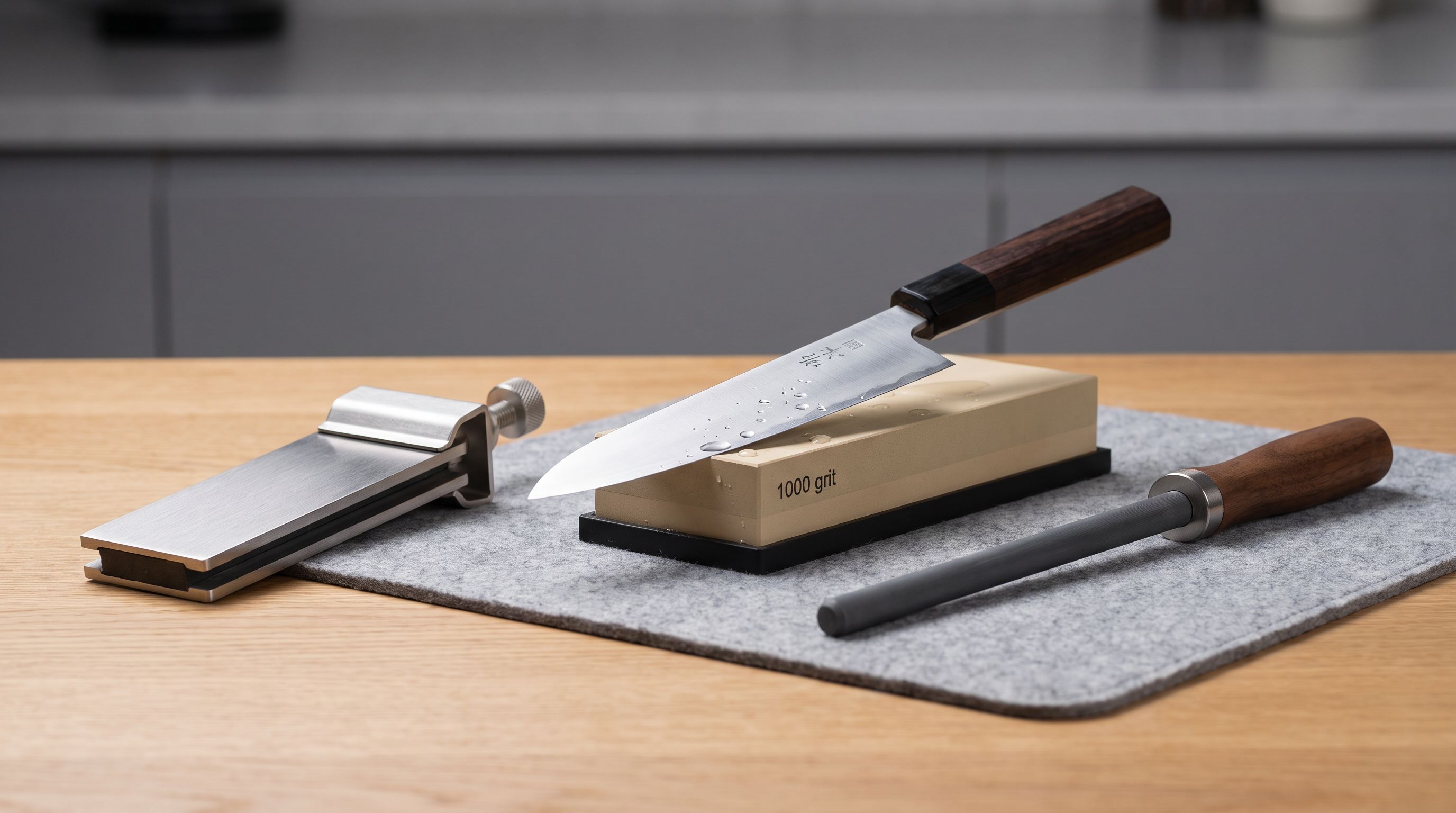
Knife Sharpening Systems in 2026: Stones vs Guided Rigs
Whetstones, guided-angle rigs, or electric? We compare grits, edge angles for Japanese vs German knives, and how much steel each method costs you long term.
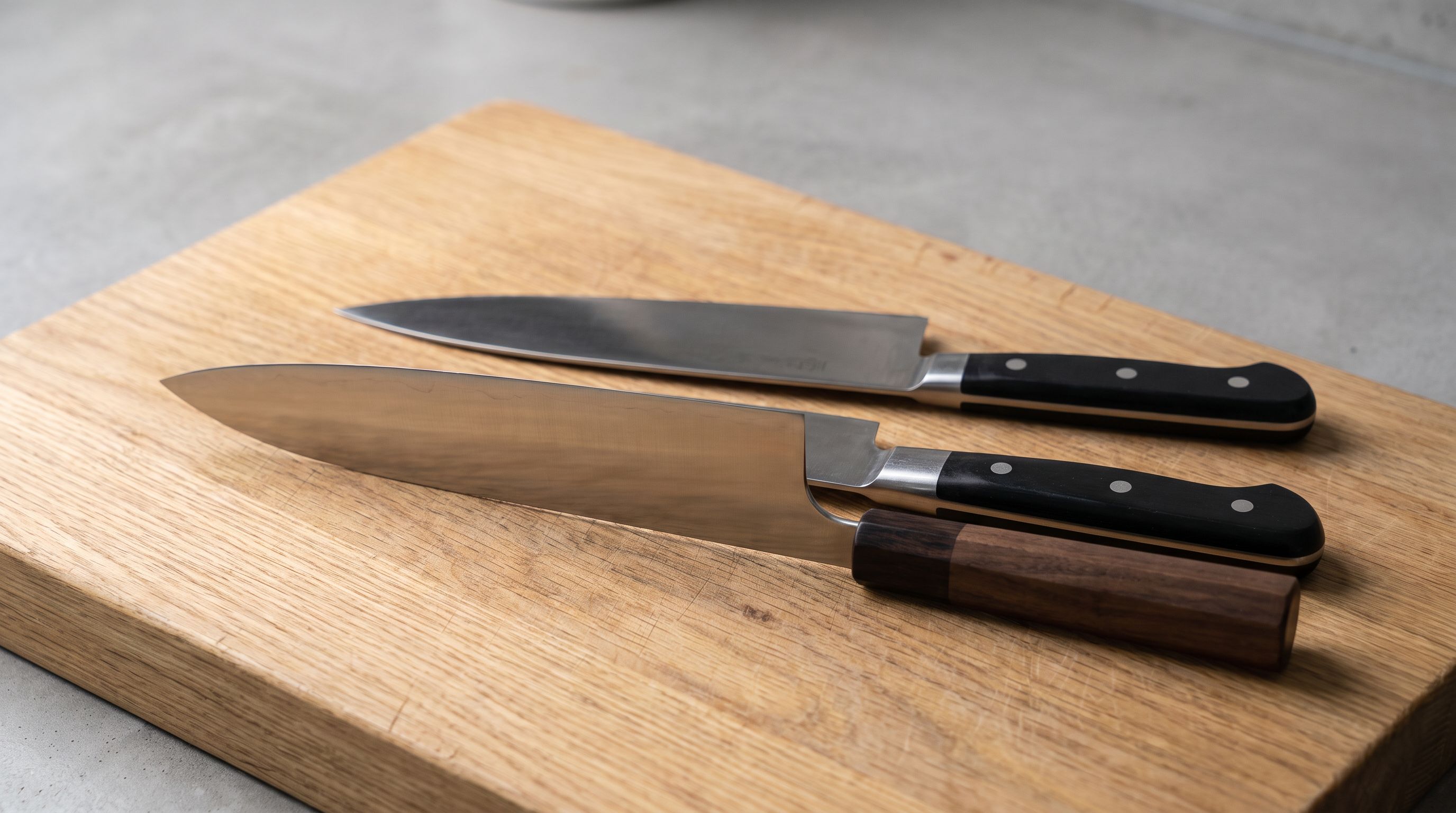
Japanese vs German Chef Knife: Which Fits Your Hands in 2026
Japanese vs German chef knife, compared on edge angle, steel hardness, blade geometry and upkeep — plus four knives worth buying as your first serious blade in 2026.
VG-10 vs AUS-10 vs S35VN: The Best Chef Knife Steel in 2026
VG-10, AUS-10, S35VN and X50CrMoV15 decoded. Learn which chef knife steel matches your cooking style, hardness, edge retention and chip risk in 2026.