What Actually Lasts: Nonstick vs. Cast Iron vs. Carbon Steel
Nonstick coatings wear out, cast iron outlives you, carbon steel splits the difference. Here's what actually destroys each pan — and the honest trade-offs in 2026.
Reader-supported: we may earn a commission from links on this page, at no extra cost to you. It never affects our picks. Learn more.
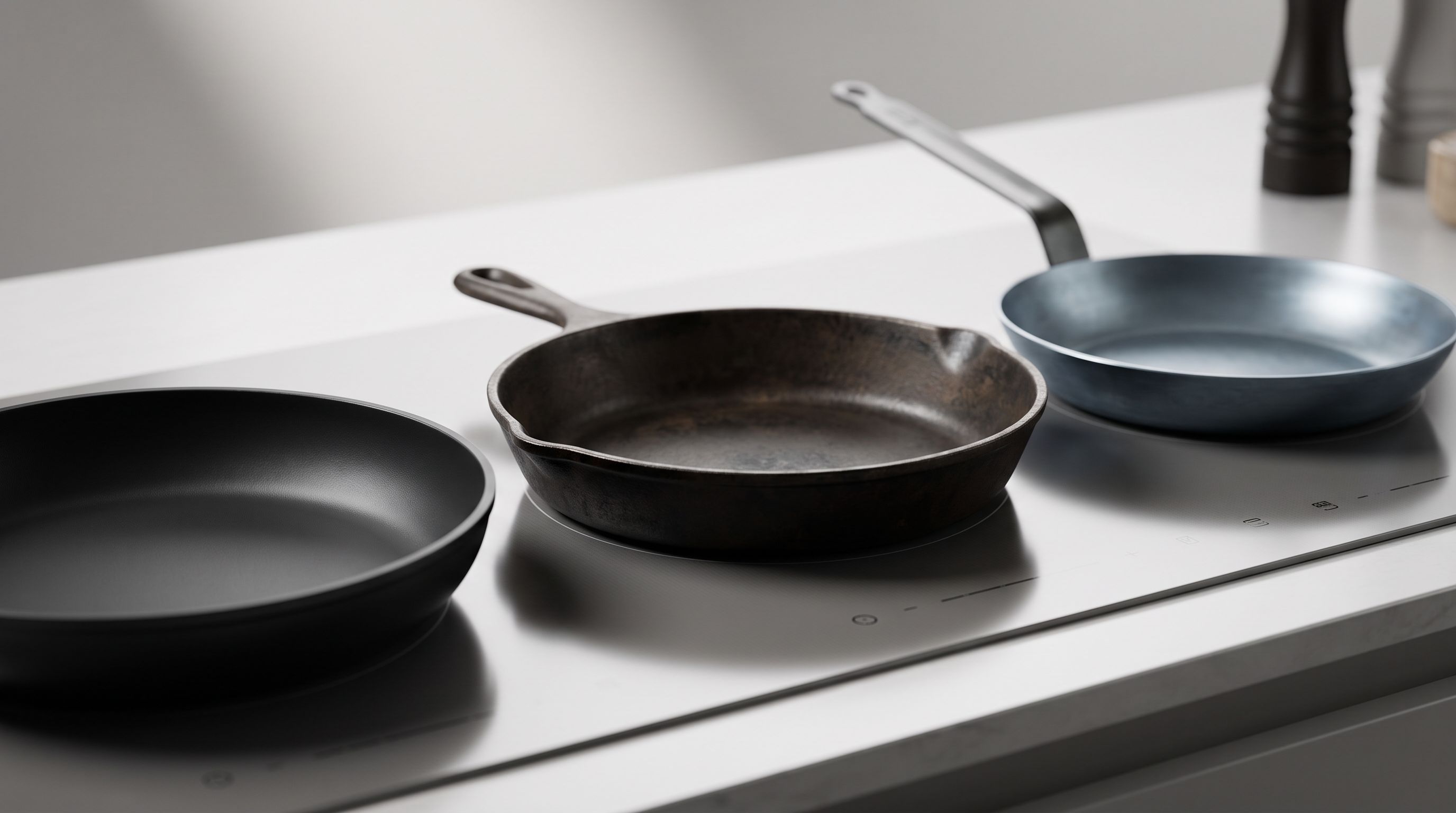
There's a strange asymmetry in cookware. A cast iron skillet made in 1930 is still sitting in somebody's kitchen, doing eggs on Sunday. A nonstick pan bought eighteen months ago is already flaking at the rim and heading for the bin. Both were sold as "frying pans." Only one of them was ever designed to last.
That gap — not price, not brand — is the single most useful thing to understand before you spend money on a skillet. Nonstick, cast iron, and carbon steel aren't three flavors of the same product. They're three fundamentally different bargains: convenience rented by the year, versus performance you have to earn and maintain. Here's what actually wears out, what actually kills each one, and where the marketing language quietly stops being true.
What's Actually Happening Now
The conversation around pans has shifted hard in the last few years, and carbon steel is the reason. It used to be restaurant-supply gear — the thing line cooks used because it was cheap, light, and replaceable. Now it's mainstream, and enthusiast coverage routinely frames it as the "undersung hero" of pans: more durable than nonstick, lighter than cast iron, capable of lasting a lifetime. That framing is broadly fair, with caveats we'll get to.
At the same time, nonstick has been under scrutiny on two fronts. One is health and chemistry — PFAS-related concerns pushed a wave of "ceramic" (sol-gel, silica-based) nonstick onto shelves, marketed as the safer alternative. The other is honesty about lifespan. Community discussion is unusually clear-eyed here: PTFE pans are genuinely slicker than ceramic ones but less durable in the sense that the coating is soft and scratchable, while ceramic coatings tend to lose their release properties faster even when they look intact. Both wear out. Neither is a lifetime purchase, no matter how the box is worded.
The practical result in 2026 is a three-pan kitchen becoming the default recommendation rather than a single do-everything skillet. One cheap-ish nonstick you expect to replace, one cast iron or carbon steel you expect to keep, and often a stainless piece for sauces and acidic work.
What Actually Destroys Each Pan
Understanding failure modes matters more than understanding features, because every one of these pans dies in a specific, predictable way.
Nonstick dies from heat and abrasion. PTFE coatings degrade at high temperatures — this is why manufacturers put stovetop and oven limits on them, and why "preheat empty on high" is the fastest way to ruin one. Metal utensils, stacked storage without pan protectors, and aggressive scrubbing scratch the surface; once the coating is breached, food starts grabbing and the failure accelerates. Dishwashers speed it up too. Ceramic nonstick doesn't scratch quite the same way but loses slipperiness through thermal cycling and polymerized oil buildup, and there's no realistic way to restore it. Honest expectation: one to three years of good performance for most people, longer if you're genuinely disciplined about low-to-medium heat and soft utensils.
Cast iron essentially doesn't die — it gets neglected. The seasoning (polymerized oil bonded to the surface) can be stripped by long soaks, harsh detergent marathons, boiling acidic sauces for extended periods, or a run through the dishwasher. But stripped seasoning is a reversible problem: scrub, dry, re-season, carry on. The real failure mode for cast iron is physical. It's brittle. Drop it on tile, or thermal-shock it by dunking a screaming-hot pan into cold water, and it can crack. That's rare. Barring that, the lifespan is measured in generations.
Carbon steel lasts like cast iron but breaks less. It's the same basic proposition — bare iron alloy, seasoned surface, re-seasonable forever — with a different physical profile. Carbon steel is less brittle than cast iron, so there's less risk of it cracking if you drop it. It's thinner and lighter, which means faster heating and better responsiveness, but less heat retention: drop a cold steak into a thin carbon steel pan and the temperature sags more than it would in heavy cast iron. It's also more prone to warping on a fierce burner, and it rusts faster if you leave it wet. Well cared for, coverage consistently describes carbon steel as a pan whose years turn into decades — the kind you hand down rather than replace.
The Honest Comparison
| Nonstick (PTFE/ceramic) | Cast iron | Carbon steel | |
|---|---|---|---|
| Realistic lifespan | ~1–3 years of good release | Decades to generations | Decades, with care |
| Kills it | High heat, metal utensils, dishwasher, scratches | Dropping it, thermal shock; neglect strips seasoning | Rust, warping on very high heat; neglect strips seasoning |
| Repairable? | No | Yes — re-season | Yes — re-season |
| Weight | Light | Heavy | Moderate |
| Heat retention | Low | Highest | Moderate |
| Best at | Eggs, delicate fish, low-fat cooking | Searing, cornbread, oven work | Searing, sautéing, stir-fry, oven work |
| Acidic food | Fine | Brief contact only | Brief contact only |
The Real Players and Shipping Products
Cast iron's mainstream reference point remains Lodge, whose pre-seasoned skillets — the 10.25-inch and 12-inch being the workhorses — are the reason "cheap cast iron" is a viable category at all. They arrive with a factory seasoning that's functional rather than glassy, and improve with use. The trade-off is weight and a comparatively rough casting surface versus boutique smooth-milled iron.
On the carbon steel side, De Buyer's Mineral B line is the widely cited benchmark — French-made, beeswax-coated from the factory (which you strip before seasoning), and built thick enough to resist warping. Lodge also sells carbon steel skillets at a lower price point for people who want to try the format without committing.
For nonstick, the useful mental shift is to stop shopping for permanence. Tramontina's Professional aluminum nonstick line is the classic example of the "buy well, expect to replace" approach: restaurant-style construction, NSF-oriented build, priced so that replacing it every couple of years isn't painful. That's a more honest framework than paying premium money for a coating that will wear out anyway.
What It Means If You're Shopping Today
If you own exactly one pan and it's nonstick, you're using a consumable as a core tool. Add one bare-metal pan — cast iron if you want maximum heat retention and don't mind the weight, carbon steel if you want something lighter and more responsive that still sears hard.
If you already own cast iron and find yourself not using it because it's heavy, carbon steel is the upgrade path, not another skillet in the same category.
And if you're replacing nonstick every year, the problem is probably heat, utensils, or the dishwasher — not the brand. Dropping to medium heat and using silicone or wood tools genuinely extends coating life, according to nearly every manufacturer's own care guidance.
What to Watch Next
Three things are worth tracking. First, PFAS regulation — ongoing restrictions in the EU and various US states will keep reshaping which nonstick chemistries are sold, and ceramic/sol-gel coatings will keep improving under that pressure. Second, smooth-milled and lighter cast iron from smaller makers, which narrows the weight gap that pushes people toward carbon steel. Third, induction adoption: thin carbon steel and induction hobs can be an awkward pairing on very high settings due to warping, and it's worth watching how manufacturers adjust gauge and base construction in response.
The underlying logic won't change, though. Coatings are consumables. Bare iron is furniture.
FAQ
Is carbon steel just thin cast iron? Functionally similar, metallurgically different. Both are iron-carbon alloys that rely on seasoning, but carbon steel has lower carbon content, is formed rather than cast, and is less brittle — so it tolerates drops better while retaining less heat.
Can you ever restore a nonstick pan? No. Once PTFE or ceramic release degrades, there's no consumer-level fix. Sprays and "restorer" products don't rebond the coating.
Does soap ruin cast iron seasoning? Modern dish soap won't strip properly polymerized seasoning from quick washing. Long soaks, dishwashers, and harsh degreasers will.
Which is better for eggs? Nonstick, honestly. A well-seasoned carbon steel pan can do eggs, but it's less forgiving. That's the one job worth keeping a consumable pan around for.
Our picks

Lodge Pre-Seasoned Cast Iron Skillet with Hot Handle Holder, 10.25 Inches
Pre-seasoned, re-seasonable forever, and the reference point for affordable cast iron.

de Buyer MINERAL B Carbon Steel Fry Pan - 12.5” Diameter, 9” Cooking Surface - Ideal for Searing, Sauteing & Reheating - Naturally Non-Stick Finish - Made in France
French-made carbon steel: lighter than cast iron, less brittle, seasons into a lifetime pan.
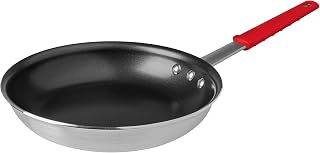
Tramontina Professional 10-Inch Non Stick Frying Pan
Restaurant-style nonstick priced so replacing it every couple of years doesn't sting.

Lodge Pre-Seasoned Carbon Steel Skillet, Long Handle, 12 Inches
A low-commitment entry point if you want to test the carbon steel format first.
Get the best kitchen gear deals in your inbox
Join the PrepDeck newsletter for hand-picked kitchen gear deals and new buying guides. No spam, unsubscribe anytime.
Related reads
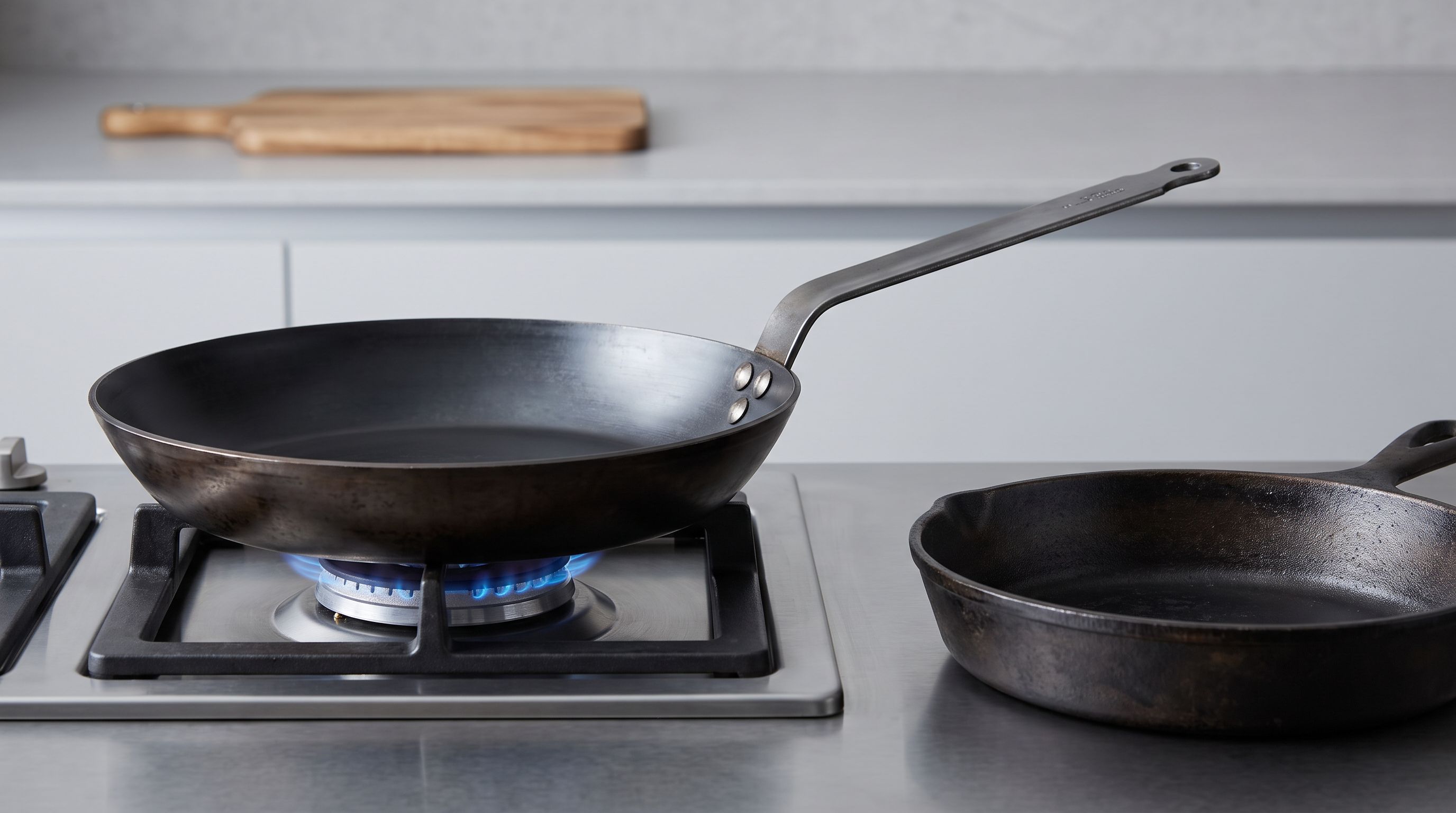
Carbon Steel Pans in 2026: 5 Picks by Weight and Gauge
The best carbon steel pan depends on gauge, weight and handle angle. We compare de Buyer, Made In, OXO, Matfer and Merten & Storck for real kitchens in 2026.
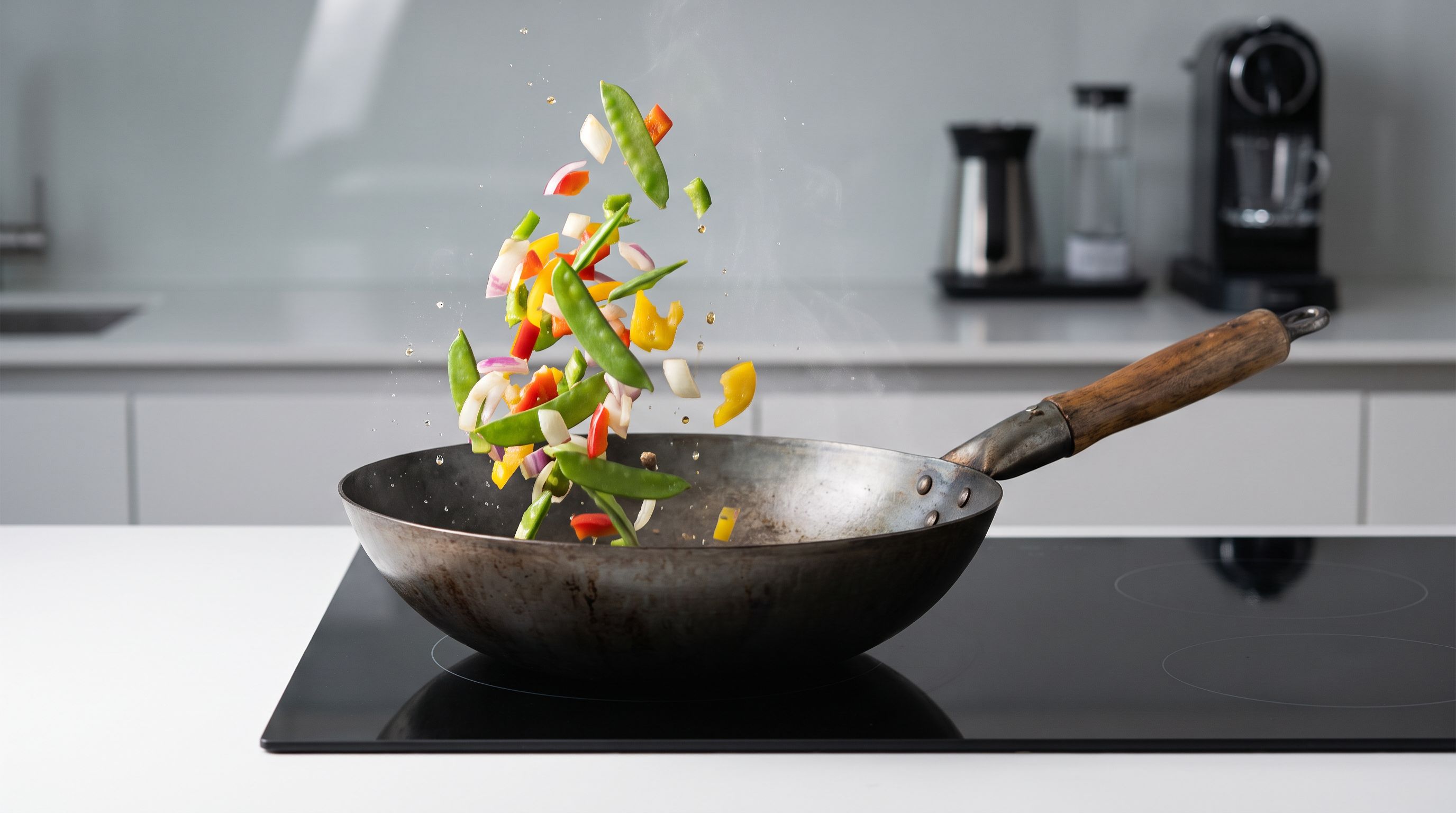
Which Wok Should You Buy in 2026? Flat vs Round Bottom
The best wok for induction cooktop use is flat-bottomed carbon steel — here's how gauge, diameter and handle type change your stir-fry, with 2026 picks.
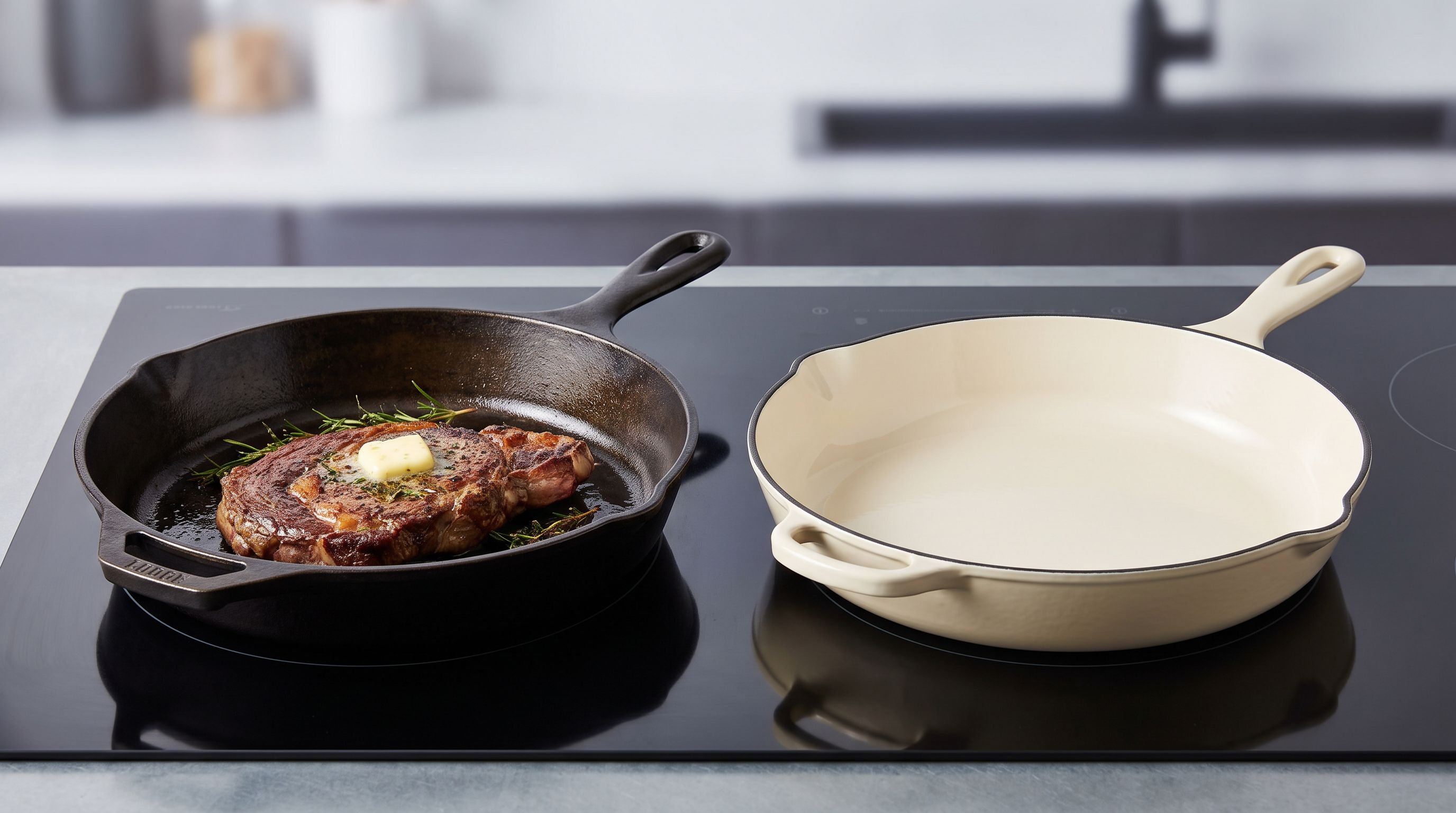
Enameled vs Bare Cast Iron Skillet: Which Wins in 2026?
Enameled vs bare cast iron skillet, settled: how each handles searing, acid, induction and 10+ years of wear — plus the skillets worth buying in 2026.