VG-10 vs AUS-10 vs S35VN: The Best Chef Knife Steel in 2026
VG-10, AUS-10, S35VN and X50CrMoV15 decoded. Learn which chef knife steel matches your cooking style, hardness, edge retention and chip risk in 2026.
Reader-supported: we may earn a commission from links on this page, at no extra cost to you. It never affects our picks. Learn more.
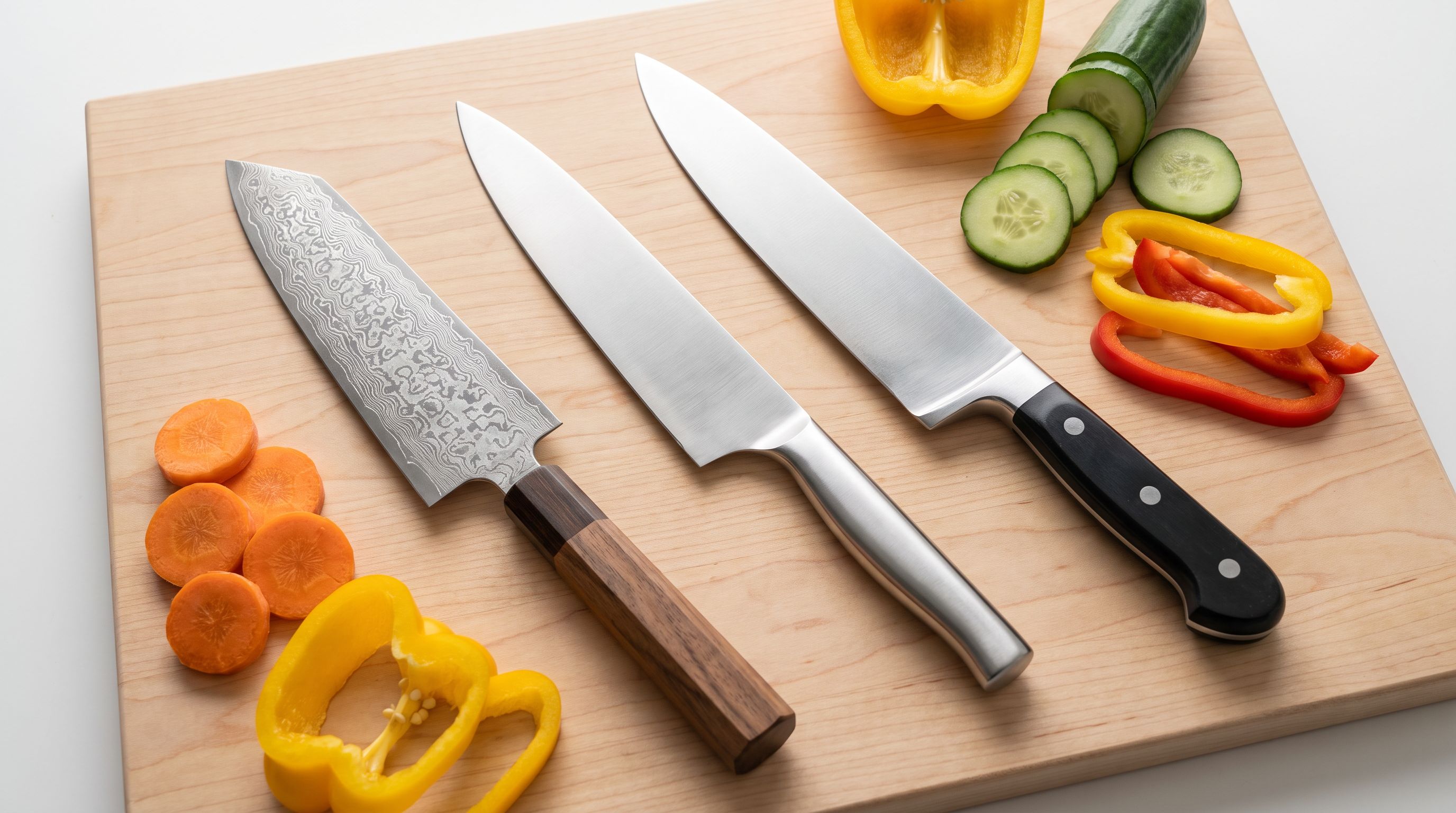
Blade steel is the most argued-about and least understood spec on a chef's knife. Marketing copy throws around "67 layers of Damascus" and "high carbon Japanese steel" as if those phrases mean something precise. They mostly don't. What actually determines how a knife feels on your board is a short list: the steel's alloy content, the heat treatment the maker applied to it, and the geometry they ground into it.
In the $100–$300 range — where almost every serious home cook ends up — you'll run into four steels again and again: VG-10, AUS-10, S35VN, and German X50CrMoV15. Here's what separates them, and how to pick the one that matches the way you actually cook.
The three properties that matter
Every knife steel is a compromise between three things:
- Hardness (HRC) — resistance to deformation. Higher hardness holds a thin, crisp edge longer but makes the steel more brittle.
- Edge retention — how long the knife cuts well before it needs honing or sharpening. Driven largely by hard carbides (vanadium, chromium, molybdenum) distributed through the steel.
- Toughness — resistance to chipping and micro-fracture. This is the property that gets ignored in marketing and remembered when a corner of your edge disappears into a squash.
You cannot maximize all three. A steel run at 61 HRC with a thin 15° edge will outcut a 57 HRC German knife for weeks — and it will also chip if you twist it in a chicken joint or scrape your board with the edge instead of the spine.
VG-10: the default premium Japanese stainless
VG-10 is a Takefu Special Steel alloy with roughly 1% carbon, 15% chromium, plus cobalt, molybdenum and a little vanadium. Makers typically harden it to around 60–61 HRC. It has been the standard for Japanese production knives for two decades for a good reason: it takes a very fine edge, resists rust well, and sharpens without a fight on decent whetstones.
The two most common ways to buy VG-10 are a clad-and-decorated version or a plain one. The Shun Classic 8-Inch Chef's Knife is the showpiece version — a VG-10 core sandwiched in 68 layers of Damascus cladding, ground to a narrow edge angle, with a D-shaped PakkaWood handle. It slices beautifully and it looks the part.
 Best VG-10 overall · Shun Classic 8-Inch Chef's Knife — Check price on Amazon →
The Tojiro DP F-808 8.2-Inch Gyuto is the same core steel with two layers of plain stainless cladding and a utilitarian riveted handle. It's the knife experienced cooks quietly recommend when someone asks what to buy before spending more. You lose the Damascus pattern and some fit-and-finish refinement; you keep the cutting performance.
VG-10's weakness is chip resistance. At 60–61 HRC with a thin grind, it is noticeably less forgiving than German steel. Cut on wood or soft composite, never glass or ceramic, and don't use it as a bone saw.
AUS-10: the value alternative
AUS-10 is an Aichi steel with similar carbon content to VG-10 (around 0.95–1.1%) and similar chromium, but it lacks cobalt and generally carries slightly different vanadium levels. Most makers run it around 58–60 HRC.
In practice, AUS-10 and VG-10 are close enough that heat treatment and grind matter more than the alloy label. AUS-10 typically costs less, sharpens a touch more easily, and gives up a modest amount of edge retention. It's a smart choice if you're buying your first Japanese-style knife and expect to learn sharpening on it. Be skeptical of very cheap AUS-10 Damascus knives from unknown brands — the alloy is fine, but a sloppy heat treat or a thick grind will undo everything the steel offers.
S35VN: powder steel with real edge retention
S35VN is a Crucible powder-metallurgy steel developed for knives, with about 1.4% carbon, 14% chromium, 3% vanadium and 2% niobium. The powder process produces fine, evenly distributed carbides — which is why S35VN holds an edge dramatically longer than conventional stainless while staying tougher than older powder steels like S30V.
It shows up in kitchen knives from smaller American makers and a handful of premium production lines, usually at 59–61 HRC. The payoff: you can go months between sharpenings in a home kitchen.
The catch is sharpening. Those vanadium and niobium carbides are harder than standard aluminum-oxide stones. You'll want diamond or CBN stones to sharpen S35VN efficiently; a cheap pull-through sharpener will just polish the carbides and round the edge. If you don't want to own diamond plates, S35VN is the wrong steel for you — not because it's bad, but because a dull premium steel cuts worse than a sharp cheap one.
X50CrMoV15: the German workhorse
German knives use X50CrMoV15 (roughly 0.5% carbon, 15% chromium) at 56–58 HRC. On paper it loses every edge-retention comparison. On a board, it's the steel that doesn't care what you do to it.
The Wüsthof Classic 8-Inch Chef's Knife is the archetype: forged, full tang, a wider edge angle than Japanese knives, and enough toughness that chipping requires genuine abuse. It goes dull faster, but a honing steel brings it back in seconds and a basic whetstone restores it in minutes.
 Best Western steel · Wüsthof Classic 8-Inch Chef's Knife — Check price on Amazon →
The Victorinox Fibrox Pro 8-Inch Chef's Knife runs the same family of steel in a stamped, lighter blade with a grippy textured handle. It's the knife that shows up in professional kitchens because it's cheap enough not to guard and takes a screaming edge in under a minute. If you cook hard and sharpen often, it's arguably the most rational purchase on this list.
 Budget pick · Victorinox Fibrox Pro 8-Inch Chef's Knife — Check price on Amazon →
Sitting between the two camps, the Global G-2 8-Inch Chef's Knife uses Global's CROMOVA 18 stainless at a moderate hardness in a seamless one-piece stainless body. It's lighter than German knives, more forgiving than hard Japanese steels, and has no handle seams to trap food.
 Best lightweight all-stainless · Global G-2 8-Inch Chef's Knife — Check price on Amazon →
Steel comparison at a glance
| Steel | Typical HRC | Edge retention | Toughness / chip risk | Sharpening difficulty | Best for |
|---|---|---|---|---|---|
| VG-10 | 60–61 | Very good | Moderate — chips if twisted | Easy on whetstones | Precision prep, vegetables, fish |
| AUS-10 | 58–60 | Good | Moderate | Easy | First Japanese knife, learning to sharpen |
| S35VN | 59–61 | Excellent | Good for a powder steel | Hard — needs diamond stones | Long intervals between sharpenings |
| X50CrMoV15 | 56–58 | Fair | Excellent | Very easy | Heavy daily prep, squash, chicken |
| CROMOVA 18 | ~56–58 | Good | Good | Easy | Lightweight all-rounder, low maintenance |
How to actually choose
Pick VG-10 or AUS-10 if most of your prep is vegetables, herbs and boneless proteins, you cut on wood, and you're willing to touch up the edge on a stone every month or two. Tojiro DP if you want the performance without the premium; Shun Classic if the fit and finish matter to you.
Pick S35VN only if you already own diamond sharpening stones or will send knives out for professional sharpening. The edge retention is real, but the maintenance requirement is non-negotiable.
Pick X50CrMoV15 if you break down whole chickens, hack through winter squash, share your kitchen with people who may or may not respect the knife, or simply don't want to think about it. Wüsthof Classic for heft and longevity, Victorinox Fibrox Pro if you'd rather spend the difference on a stone and a good board.
One last thing worth more than any alloy upgrade: geometry and sharpness. A well-sharpened X50CrMoV15 blade outcuts a neglected S35VN blade every single time. Buy the steel that suits your sharpening habits, not the one with the longest spec sheet.
FAQ
Is "Damascus" steel better? No. Damascus layers are cladding wrapped around a core steel — usually VG-10 or AUS-10. The pattern is cosmetic and does nothing for cutting performance. Judge the knife by its core steel, hardness and grind.
Does higher HRC always mean a better knife? No. Above about 61 HRC, chip risk rises quickly and sharpening gets slower. A 58 HRC knife with a thin, well-executed grind can outperform a 63 HRC knife with a thick one.
Can I put any of these in the dishwasher? Victorinox lists the Fibrox Pro as dishwasher safe, but hand-washing and immediate drying is better for every knife here. Heat, detergent and contact with other utensils dull and corrode edges regardless of the alloy.
How often should I sharpen? With home-level use: X50CrMoV15 every few weeks (honed between), VG-10 or AUS-10 every one to three months, S35VN potentially twice a year. Hone or strop whenever the knife starts sliding off a tomato skin.
Is carbon steel worth considering? Carbon steels like White #2 or Blue #2 take a keener edge and sharpen faster than any stainless listed here, but they rust within minutes if left wet. Only choose carbon if you'll genuinely wipe the blade dry after every cut.
Our picks
Shun Classic 8" Chef's Knife
A VG-10 core clad in 68 layers of Damascus, ground thin at ~16° per side for clean, low-drag slicing.
Tojiro DP F-808 8.2-Inch Gyuto
VG-10 core with a plain stainless cladding and no decorative markup — the enthusiast's default recommendation.
Wüsthof Classic 8 Inch Chef’s Knife,Black,8-Inch
X50CrMoV15 at a forgiving hardness: tough, easy to sharpen, and nearly impossible to chip in normal use.
Victorinox Fibrox Pro 8 Inch Chef’s Knife, Dishwasher Safe, Black
Soft, stamped X50-class stainless that takes a keen edge in seconds and survives abuse no premium steel would.
Global Chef's Knife-Granton, 8", Silver
CROMOVA 18 at moderate hardness in a seamless one-piece body — light, nimble, and genuinely low maintenance.
Get the best kitchen gear deals in your inbox
Join the PrepDeck newsletter for hand-picked kitchen gear deals and new buying guides. No spam, unsubscribe anytime.
Related reads
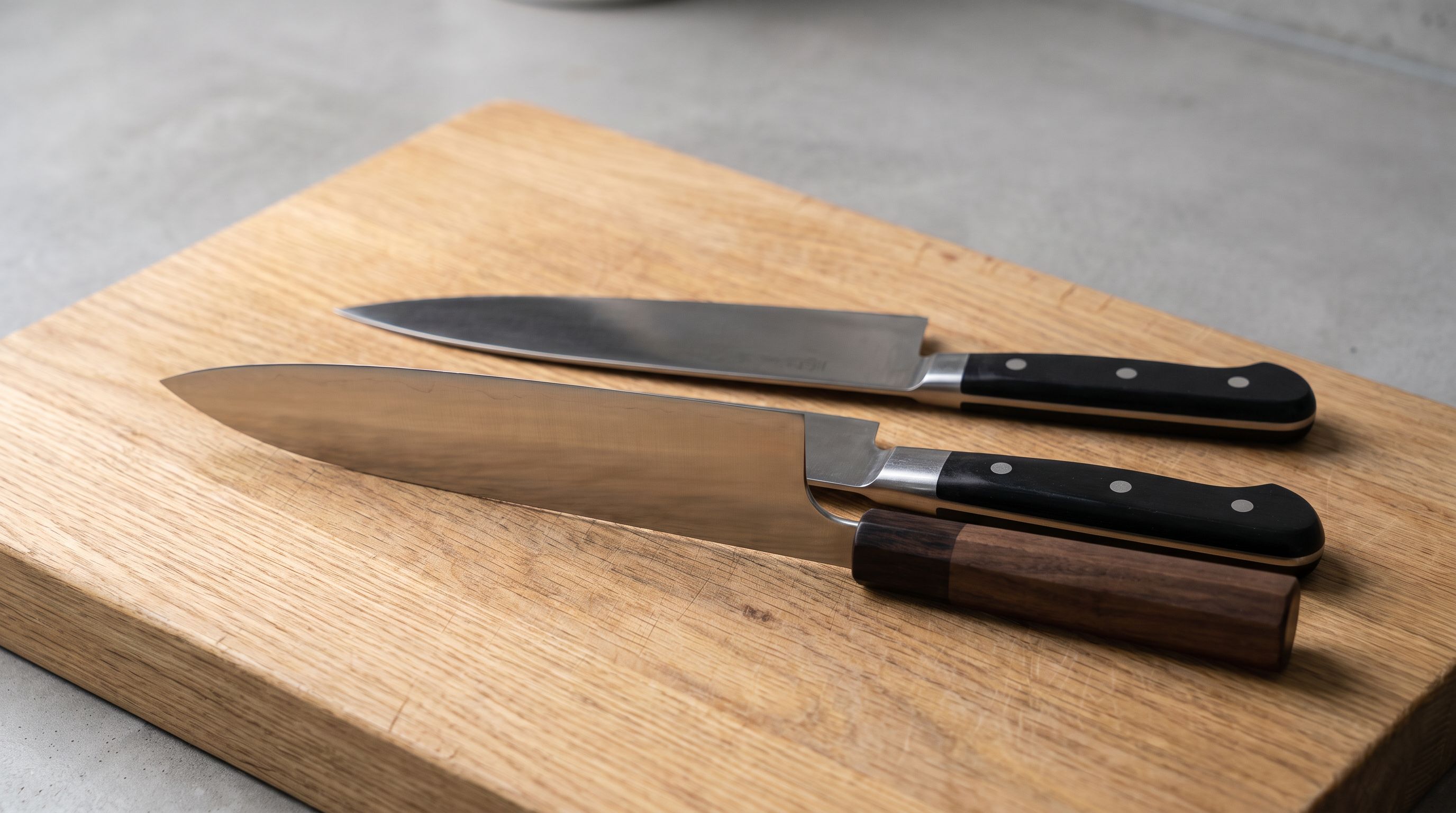
Japanese vs German Chef Knife: Which Fits Your Hands in 2026
Japanese vs German chef knife, compared on edge angle, steel hardness, blade geometry and upkeep — plus four knives worth buying as your first serious blade in 2026.
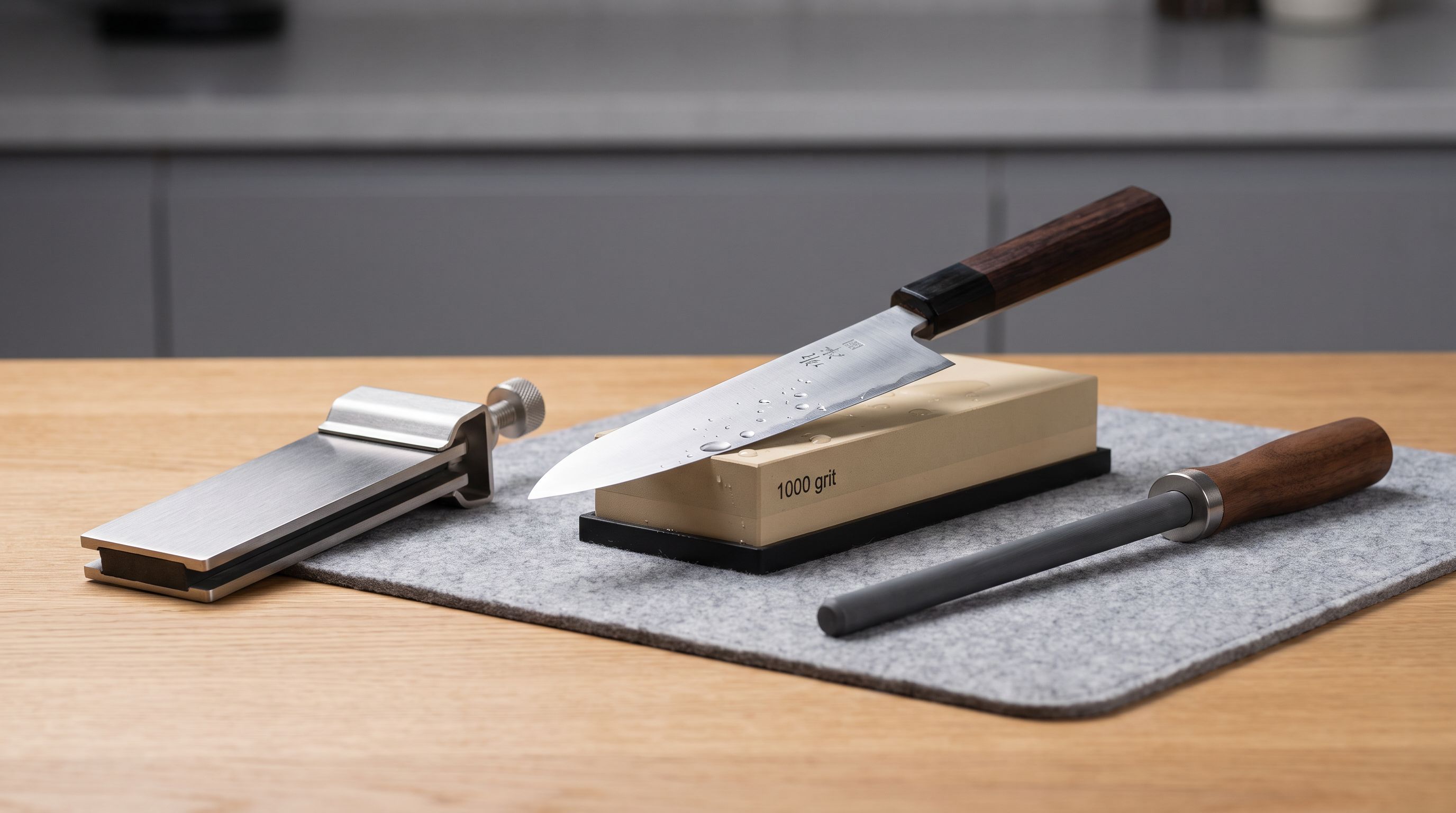
Knife Sharpening Systems in 2026: Stones vs Guided Rigs
Whetstones, guided-angle rigs, or electric? We compare grits, edge angles for Japanese vs German knives, and how much steel each method costs you long term.