Tri-Ply vs Disc Bottom Cookware: Which Survives a Decade?
Tri-ply vs disc bottom cookware, explained: how clad and impact-bonded bases differ on warping, induction response, and 10-year durability — plus 2026 picks.
Reader-supported: we may earn a commission from links on this page, at no extra cost to you. It never affects our picks. Learn more.
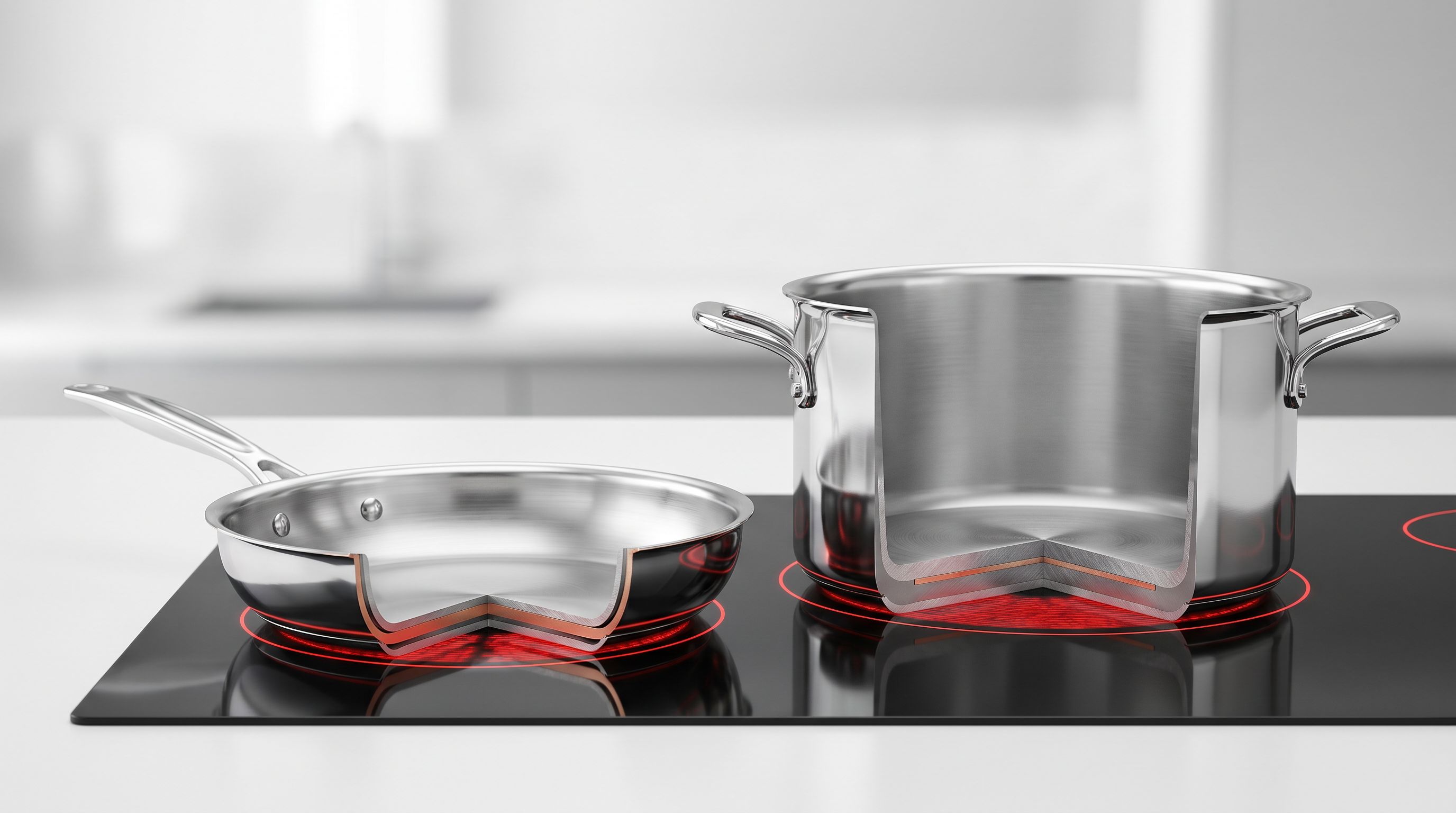
Two stainless pans can look identical on a shelf and cook nothing alike. The difference is usually how the aluminum got in there. One pan is fully clad — a sandwich of stainless-aluminum-stainless rolled and bonded as a single sheet, then formed into a pan so the conductive core runs base to rim. The other is disc-bottom (impact-bonded): a thin stainless vessel with a slab of aluminum, and often a magnetic stainless cap, pressed onto the underside with enormous force.
Neither is a scam. They solve different problems, fail in different ways, and age very differently. Here's what actually changes at the stove.
What "fully clad" and "disc bottom" mean physically
Fully clad (tri-ply, 5-ply): The layers are bonded before the pan is shaped. A 3-ply pan is typically 18/10 stainless inside, an aluminum core, and 18/0 magnetic stainless outside. 5-ply adds a second core layer or a thicker aluminum/stainless stack. Because the core is continuous, heat spreads sideways and up the walls. Total thickness in a good tri-ply skillet lands in the ballpark of 2.5–3 mm, which is thick enough to resist flexing.
Disc bottom (impact-bonded): The pot body is drawn from thin stainless — often 0.6–0.8 mm — and the disc is bonded separately. The disc can be very thick, sometimes thicker than any clad pan's base, which is why good disc-bottom stockpots sear and boil competently. But the walls are just thin steel. Heat stops at the edge of the disc.
That edge is the whole story. As Dan Souza-style cutaway comparisons and cookware forums have documented for years, most manufacturers fit a disc that's noticeably smaller than the pan's footprint, leaving a ring of uninsulated thin steel around the cooking surface. On a 12-inch disc-bottom skillet, that ring can be an inch wide — a cold band where fond doesn't form and sauce doesn't reduce.
Warping: the real difference in year three
Warping comes from differential expansion. Aluminum expands roughly twice as much as stainless for the same temperature rise. In a fully clad pan, the aluminum is locked between two steel layers and the stresses are symmetric — the pan wants to stay flat.
In a disc-bottom pan, the aluminum is bonded to one side only. Heat it hard, hit it with cold water, and the disc and the base want to move differently. The result is the classic spun or rocking bottom. This is why "never shock a hot pan with cold water" is repeated so insistently about budget disc-bottom pots — and why it matters less (not zero, but less) with clad.
Thin stainless walls are the second failure mode. A 0.6 mm sidewall dents on a dropped lid and distorts if you pry a stuck pot off a burner. Clad walls at 2.5 mm shrug that off.
Practical rule: if a pan will see empty preheats, high-heat searing, and oven transitions, buy clad. If it will mostly hold water near a boil, a disc is fine and often better value.
Induction response
Induction only heats magnetic material, then conducts that heat into everything else. Both constructions can be induction-ready — it depends on whether the outer layer is magnetic stainless (18/0 or 430), not on the bonding method.
Where they differ is behavior:
- Disc bottom often feels faster on induction. A thick, flat, wide magnetic disc couples efficiently with the coil and dumps heat into a lot of aluminum. For boiling water, this wins.
- Fully clad feels more even and controllable. The core carries heat up the walls, so a reducing sauce doesn't scorch in a ring where the coil sits. Induction coils are themselves ring-shaped, and clad construction smooths that pattern out.
- Flatness matters more on induction than gas. A slightly warped disc bottom buzzes, rocks, and loses contact. Many hobs will cycle or throw an error.
If you cook on induction and you're buying one pan, clad is the safer purchase. If you're buying a 12-quart pasta pot, a disc bottom like the Cuisinart Chef's Classic Stainless 12-Quart Stockpot is the sensible choice — you're heating water, and the thin walls save weight and money.
Comparison table
| Fully clad (tri-ply/5-ply) | Disc bottom (impact-bonded) | |
|---|---|---|
| Core location | Base and sidewalls | Base only |
| Typical base thickness | ~2.5–3 mm (3-ply), more in 5-ply | Often 4–7 mm total disc stack |
| Wall thickness | Same as base (2–3 mm) | Thin stainless, ~0.6–0.8 mm |
| Edge-to-edge evenness | Even; no cold ring | Cold ring where disc ends |
| Warping risk | Low | Moderate to high on cheap models |
| Induction coupling | Good; very even | Often faster to boil |
| Oven-safe | Usually high (check handle/lid) | Usually, but check thin-wall models |
| Weight | Heavier overall | Lighter walls, heavy base |
| Best for | Skillets, sautés, saucepans, sauciers | Stockpots, pasta pots, large braisers |
| Cost per quart | Higher | Lower |
| Expected 10-year outcome | Still flat, cosmetic wear only | Flat if treated well; disc separation/warp if abused |
What survives a decade of daily heat
Three things decide longevity, and only one is marketing.
1. Bond integrity. Rolled-and-bonded clad sheet has no seam to fail. Impact bonding is genuinely strong when done well — Demeyere's base construction is impact-bonded and is among the most durable cookware made — but a cheap disc can delaminate after repeated thermal shock, usually showing up as a gap at the rim of the disc or a hollow sound when tapped.
2. Wall gauge. Thin walls are the first thing to deform. This is why a budget disc-bottom sauté pan ages badly while a budget disc-bottom stockpot ages fine: the stockpot never gets ripped empty on high heat.
3. Handle attachment. Riveted stainless handles outlast spot-welded or screwed-on ones. Check this before you check anything else about the base.
How to choose, pan by pan
- 10–12 inch skillet: Clad, no debate. The All-Clad D3 Stainless 10-Inch Fry Pan is the reference point — flat, thick enough to hold heat for a steak, and backed by a lifetime warranty that companies actually honor. If that's more than you want to spend, the Tramontina Tri-Ply Clad 12-Inch Fry Pan is real cladding with a magnetic exterior, and it's the pan most often recommended as the value benchmark.
- Saucepan or saucier: Clad matters most here, because you stir against the walls. The Made In Stainless Clad Saucier 3-Quart has curved walls with the core running up them, which is exactly what disc-bottom pots can't do — a béchamel in a disc-bottom saucepan will set a scorched ring above the disc line.
- Stockpot, 8 quarts and up: Disc bottom. You're not searing; you're boiling. Thin walls mean a pot you can actually lift when full.
- If you sear hard and want one pan for life: The Demeyere Atlantis 11-Inch Proline Fry Pan is the counter-argument to "clad always wins." Its base is extremely thick multi-layer construction, it's near-impossible to warp, and its heat retention on induction is in a different class. It's heavy and expensive, and worth it only if searing is your main event.
 Premium pick · Demeyere Atlantis 11-Inch Proline Fry Pan — Check price on Amazon →
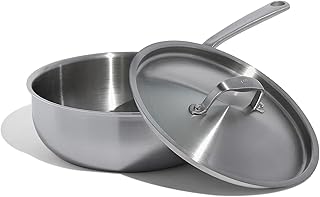 Best clad saucepan · Made In Stainless Clad Saucier 3-Quart — Check price on Amazon →
 Best value tri-ply · Tramontina Tri-Ply Clad 12-Inch Fry Pan — Check price on Amazon →
 Best overall fully clad pan · All-Clad D3 Stainless 10-Inch Fry Pan — Check price on Amazon →
Quick buying checks
- Put the pan on a flat counter and spin it. Any rock is a reject.
- Look at the base from the side: on disc-bottom pans, measure the disc's diameter against the cooking surface. A disc that reaches nearly to the wall is a good sign.
- A magnet should stick firmly and evenly across the base for induction.
- Ignore "5-ply" as a quality claim on its own. A well-made 3-ply pan outperforms a thin 5-ply one; layer count only matters alongside total thickness.
- Riveted handles, flat interior corners, and no visible seam at the base rim.
FAQ
Is tri-ply always better than disc bottom? No. For frying pans, sauté pans, and saucepans, fully clad is the better general-purpose choice because the core continues into the walls. For stockpots and boiling-focused vessels, a thick, well-fitted disc does the important work for less money and less weight.
Does disc-bottom cookware work on induction? Yes, if the outer layer is magnetic stainless — most are, and many couple with induction coils very efficiently. The catch is flatness: a warped disc loses contact and can make the hob buzz or cycle.
Why does my disc-bottom pan have a burnt ring? That's the edge of the disc. Heat conducts out to the disc's boundary and stops, so food just inside that line cooks hot while food beyond it stays cool — or the other way around when liquid reduces.
Will clad cookware warp? It can, with extreme abuse — an empty pan on max heat, then plunged into cold water. But symmetric construction makes it far more resistant, which is why clad pans commonly stay flat for decades.
Is 5-ply worth paying extra for? Only if the total thickness increases meaningfully. Extra layers add weight and cost; the real performance gap is fully clad versus disc bottom, not 3-ply versus 5-ply.
Our picks
All-Clad D3® Stainless Steel 10" Fry Pan with Lid, Made in the USA
The reference tri-ply skillet: flat-staying base, bonded sidewalls, and a repair-friendly lifetime warranty.
Tramontina Boston Tri-Ply Clad Stainless Steel 12-Pc Pots and Pans Set
Genuine full cladding and induction-ready base at a fraction of the premium brands' cost.
Made In Cookware - 3 Quart Stainless Steel Saucier Pan - 5 Ply Stainless Clad - Professional Cookware - Crafted in Italy - Induction Compatible
Curved walls plus a core that runs up the sides — ideal for sauces that scorch in disc-bottom pots.

Cuisinart MCP66-28N MultiClad Pro Stainless 12-Quart Skillet, Stockpot w/Cover
Where disc bases make sense: big water volumes, light walls, thick encapsulated aluminum base.
Demeyere Proline 7, 11 Inch Fry Pan, Helper Handle, 7 Ply Made in Belgium
A 7-layer silvinox base built for searing and induction — proof a thick base can beat thin cladding.
Get the best kitchen gear deals in your inbox
Join the PrepDeck newsletter for hand-picked kitchen gear deals and new buying guides. No spam, unsubscribe anytime.
Related reads
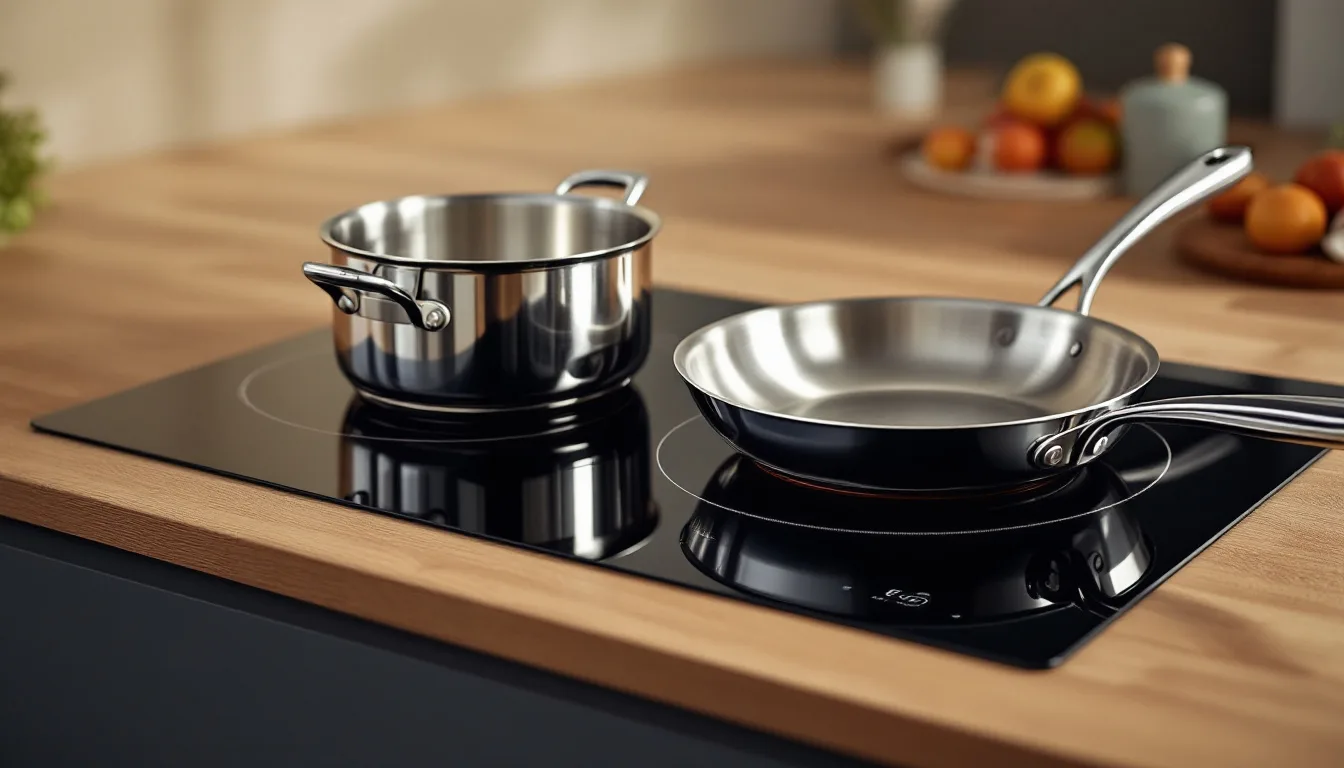
Induction Cookware Sets in 2026: What Passes the Magnet Test
The best induction cookware set for your hob depends on base construction, not marketing. How cladding, disc bases and warping work — plus 4 sets that qualify.
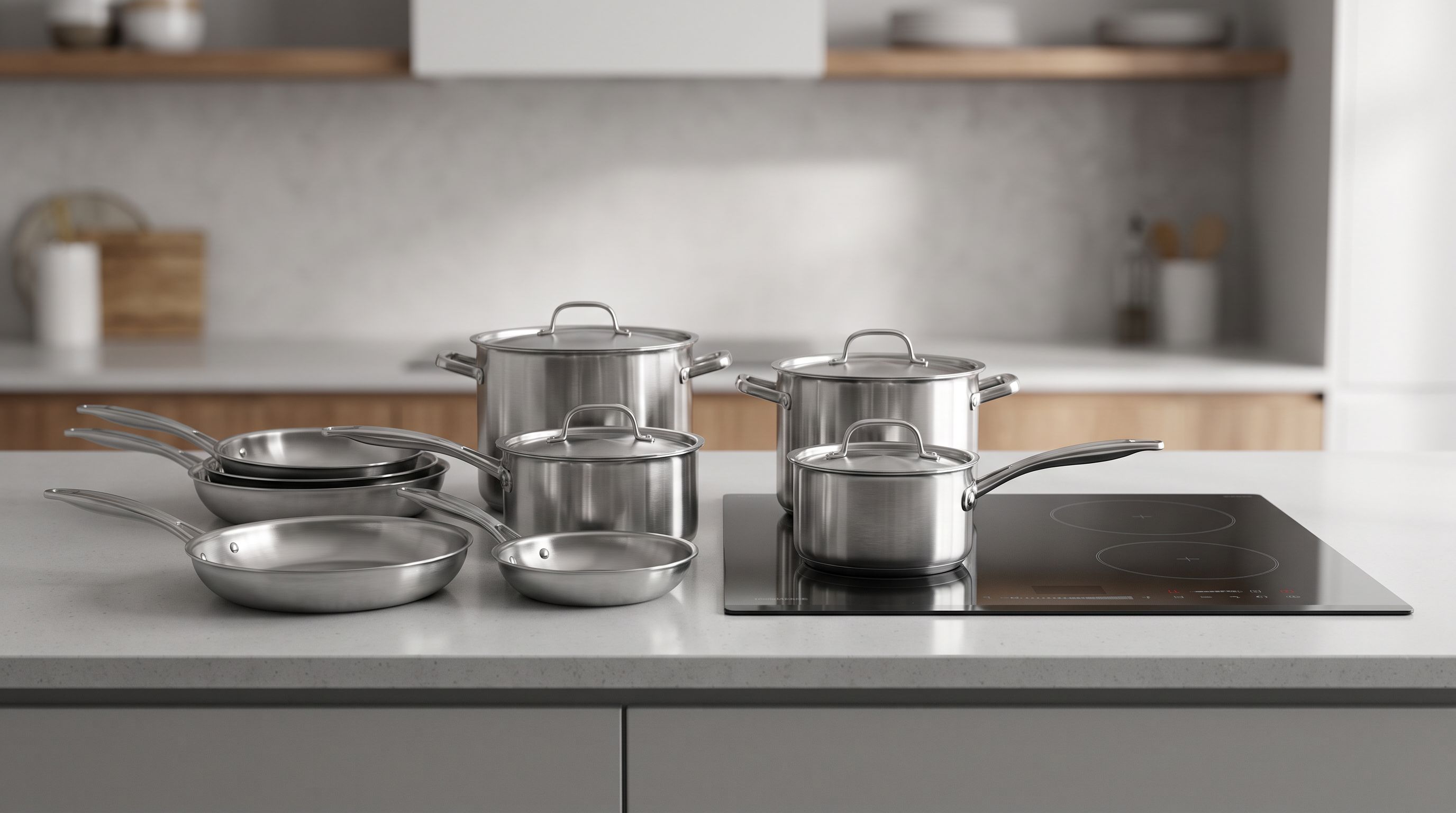
Stainless Cookware Sets 2026: Stop Paying for Lids
The best stainless steel cookware set 2026 picks compared on real usable piece count, handle comfort, oven limits and induction compatibility — not lid math.
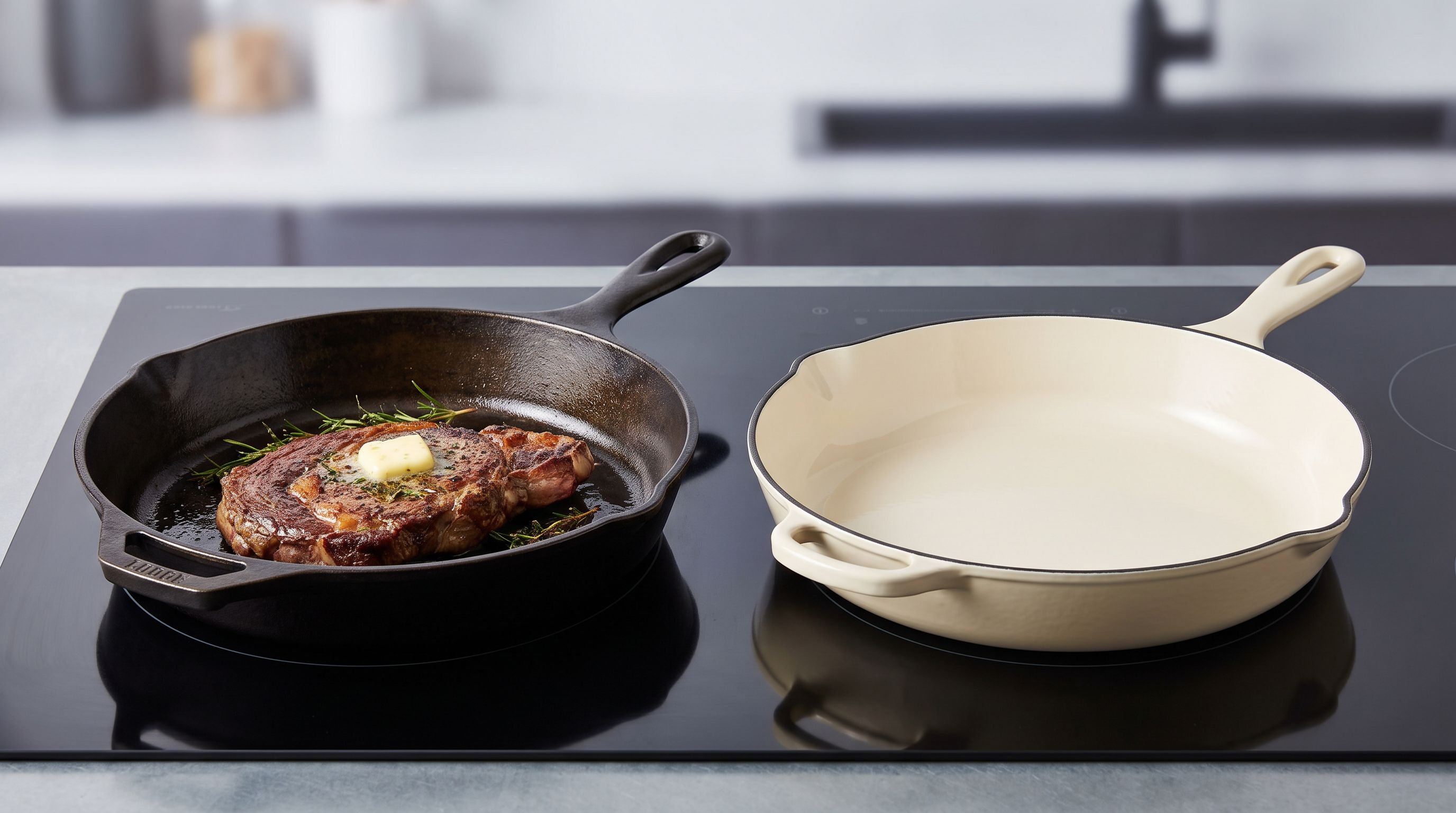
Enameled vs Bare Cast Iron Skillet: Which Wins in 2026?
Enameled vs bare cast iron skillet, settled: how each handles searing, acid, induction and 10+ years of wear — plus the skillets worth buying in 2026.