Stand Mixer Wattage vs. Gearing, Explained
Why a 325-watt KitchenAid can out-knead an 800-watt rival: how gearing, drive type and torque decide dough performance — and what the wattage number really tells you.
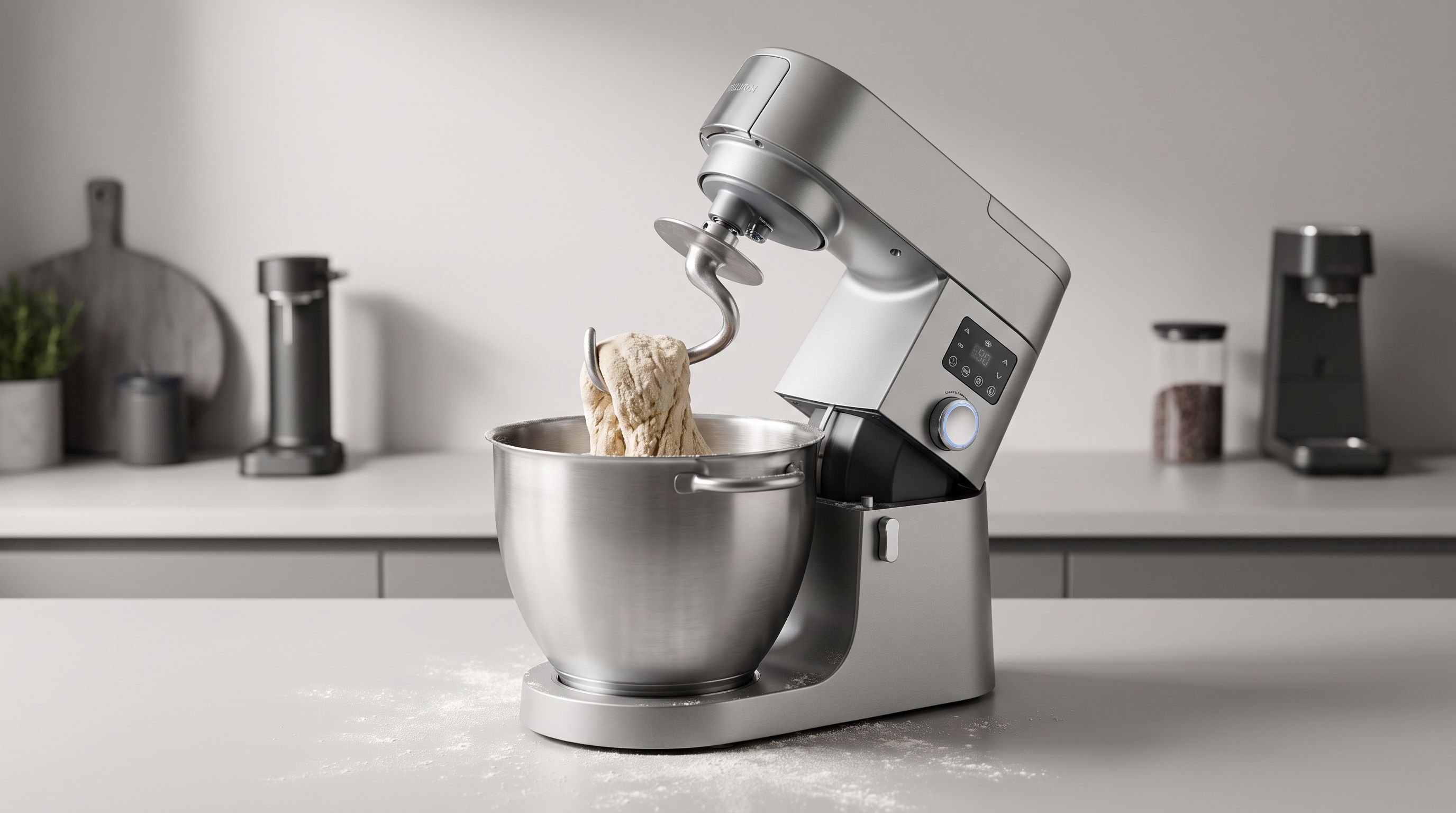
Reader-supported: we may earn a commission from links on this page, at no extra cost to you. It never affects our picks. Learn more.
The number on the box is the least useful thing about your mixer
Stand a KitchenAid Artisan next to a 1,000-watt competitor on a shelf and the marketing writes itself: three times the power, three times the mixer. Except the Artisan is rated at 325 watts, has been the default home bread machine for decades, and regularly out-performs machines with far bigger numbers on the carton when there's a stiff dough in the bowl.
That isn't a paradox. It's a basic misunderstanding of what wattage measures. Watts describe electrical input — how much the motor draws from the wall. What kneads dough is torque at the beater shaft, and torque is the product of motor output after it's been multiplied by a gearbox or reduced by a belt, minus whatever the drivetrain wastes as heat and slip. Two mixers with identical wattage can differ enormously in what actually reaches the dough hook.
Understanding the difference between those two things is the single most useful piece of knowledge you can carry into a stand mixer purchase in 2026, because it's the one spec manufacturers are least eager to print.
What's actually happening now
The confusion is structural. Wattage is cheap to measure, easy to print, and comparable across brands — so it became the headline spec. Gear ratios, drivetrain type and continuous-duty output are harder to explain and harder to compare, so they're generally absent from spec sheets entirely.
Meanwhile the two dominant architectures in home mixers work in fundamentally different ways:
Direct drive with a gear reduction. The motor connects through a gearbox that trades speed for torque. KitchenAid's planetary mixers are the canonical example — the motor spins fast, the gearbox slows it dramatically, and the resulting torque is high relative to input power. Appliance guides covering the question directly note that direct-drive mixers typically need something in the range of 300–500 watts to do the work a belt-driven machine needs 800–1,200 watts to match. The gearbox is doing the heavy lifting the wattage number gets credit for.
Belt drive. A belt between motor and output shaft is quieter, cheaper to build, and forgiving — it slips rather than stripping gears under shock load. But slip is also loss, and belt systems generally need substantially more input wattage to deliver comparable torque. Bosch's Universal Plus, rated at 800 watts, is the best-known belt-driven machine sold to home bakers, and reviewers consistently praise its power and dough capacity while noting it's bulkier to store. That 800 watts isn't a sign it's 2.5× stronger than a 325-watt Artisan; it's a sign it's built differently.
There's a third variable that muddies things further: how the wattage is measured at all. Some manufacturers quote peak or stall draw rather than continuous rated output. A number derived from a motor momentarily bogging down is not the number that describes ten minutes of bagel dough.
The real players and what they ship
KitchenAid still defines the category, and its own lineup demonstrates the point neatly. The Artisan Series 5-Quart Tilt-Head, model KSM150PS, is rated 325 watts. Step up to the Professional 600 Series 6-Quart bowl-lift, model KP26M1X, and you get 575 watts. The 7-quart bowl-lift models sit around 500 watts, which is lower than the Pro 600's figure despite a larger bowl and a machine generally positioned as more capable — a detail that surfaces constantly in baking forums and that makes no sense until you accept that wattage isn't ranking capability.
What actually separates those machines is mechanical: bowl-lift models lock the bowl to the base on two arms instead of hinging the head, which resists the flex and hop that a heavy dough induces in a tilt-head. The frame, the gearbox and the bowl mounting are doing more for dough performance than the motor rating.
On the other side of the design divide, the Bosch Universal Plus MUM6N10UC uses a bottom-mounted drive rather than an overhead planetary head, which changes the mechanics of how dough is worked and is why it's favoured by bakers running large or high-hydration batches. Its wide footprint is the trade-off reviewers flag most often.
In the value tier, the Cuisinart Precision Master SM-50 is the machine most shoppers are actually comparing against a KitchenAid — 5.5 quarts, 12 speeds, 500 watts. This is exactly the comparison where wattage misleads: a higher printed number than the Artisan, a different build underneath, and a result that depends on the gearbox and frame rather than the label. Round-up testing of large mixer fields, including one widely cited comparison of 17 machines, tends to surface the same handful of winners regardless of where they sit on the wattage table.
| Architecture | Typical watts | Where the torque comes from | Practical trade-off |
|---|---|---|---|
| Direct drive + gearbox (KitchenAid planetary) | ~325–575W | Gear reduction multiplies motor torque | Louder; gears can be a wear point under abuse |
| Belt drive (Bosch Universal Plus) | ~800W | Higher input power, belt absorbs shock | Needs more watts for the same work; larger footprint |
| Budget planetary (Cuisinart SM-50 class) | ~500W | Varies; often lighter frame and gearset | Printed watts can flatter real dough capacity |
What this means if you're shopping today
Stop comparing wattage across brands. It's only meaningful within a single manufacturer's lineup, and even then imperfectly, as KitchenAid's own 500W 7-quart versus 575W Pro 600 shows.
Instead, read the specs that correlate with dough performance:
- Drive type. Direct drive versus belt tells you how to interpret the wattage figure at all.
- Head style. Bowl-lift geometry resists flex under stiff dough better than a tilt-head hinge. If bread is the main job, this matters more than an extra 200 watts.
- Mass and materials. A heavy die-cast body isn't nostalgia; it's what keeps the machine from walking across the counter while the hook fights the dough.
- The manufacturer's own dough rating. Many brands publish a maximum flour capacity. That's a far more honest performance figure than watts, because it's a claim about output, not input.
- Duty cycle language. If the manual tells you to rest the motor after a few minutes at high speed, that's the real capacity limit.
And be sceptical of the framing in a lot of video content — the "can a cheap mixer beat my KitchenAid?" genre is entertaining, but whipping cream or creaming butter loads a motor almost nothing. Those tasks are speed problems. Bread dough is a torque problem. A mixer can win the first comparison decisively and still struggle with the second.
What to watch next
Two things are worth tracking. First, whether any manufacturer starts publishing continuous-duty output or gear ratio as a marketing spec — it would be a genuine differentiator for anyone with a strong drivetrain, and the absence of it is itself informative. Second, the slow drift toward DC and brushless motors elsewhere in small appliances. Brushless designs deliver torque more efficiently and hold speed better under load, and if they migrate into mixers at scale, wattage becomes even less comparable than it already is, because a brushless motor drawing 400 watts is not doing the same job as a brushed one drawing 400 watts.
Until then, the practical advice is unchanged and unglamorous: buy the frame, the bowl mounting and the gearbox. The number on the box is describing the electricity bill, not the bread.
FAQ
Is a 325-watt mixer really enough for bread? For typical home batches, yes — that rating belongs to a direct-drive geared machine, and guides on the subject put the equivalent belt-drive requirement at roughly 800–1,200 watts. Respect the manufacturer's flour capacity and rest periods.
Why does KitchenAid's 7-quart list fewer watts than the Pro 600? Because wattage describes motor draw, not capability. Bowl size, gearing and frame differ between models; the numbers aren't a performance ranking.
Does higher wattage help with whipping and creaming? Barely. Those are low-load, speed-dependent tasks. Wattage differences show up under sustained resistance — stiff, low-hydration dough — not in a bowl of cream.
Is belt drive worse? No, just different. Belts slip under shock load instead of damaging gears, and the Bosch Universal Plus is well regarded for large dough batches. It simply needs more input watts to deliver comparable torque.
What's the single best proxy for dough performance? The manufacturer's stated maximum flour capacity, combined with head style. Both describe output. Watts describe input.
Our picks

KitchenAid Artisan Series 5 Quart Tilt Head Stand Mixer with Pouring Shield KSM150PS, Mineral Water Bundle with Deco Essentials Exclusive CPS 1 Year Extended Protection Pack
325 watts on the label, direct-drive gearbox underneath — the classic example of low watts, high torque.
KitchenAid Professional 600 Series 6-Quart Bowl-Lift Stand Mixer (KP26M1X)
575-watt bowl-lift build with a sturdier frame and locked bowl — aimed squarely at heavier bread work.
Bosch Universal Plus Stand Mixer (MUM6N10UC)
800-watt belt-driven design with a bottom-drive bowl, built around high-hydration and large dough batches.

Cuisinart Stand Mixer, 12 Speeds, 5.5-Quart Mixing Bowl, Chef's Whisk, Flat Mixing Paddle, Dough Hook, and Splash Guard with Pour Spout, Silver Lining, SM-50BCNAS, Silver Lining
500 watts and a 12-speed planetary head — the value class most wattage comparisons actually involve.
Get the best kitchen gear deals in your inbox
Join the PrepDeck newsletter for hand-picked kitchen gear deals and new buying guides. No spam, unsubscribe anytime.
Related reads
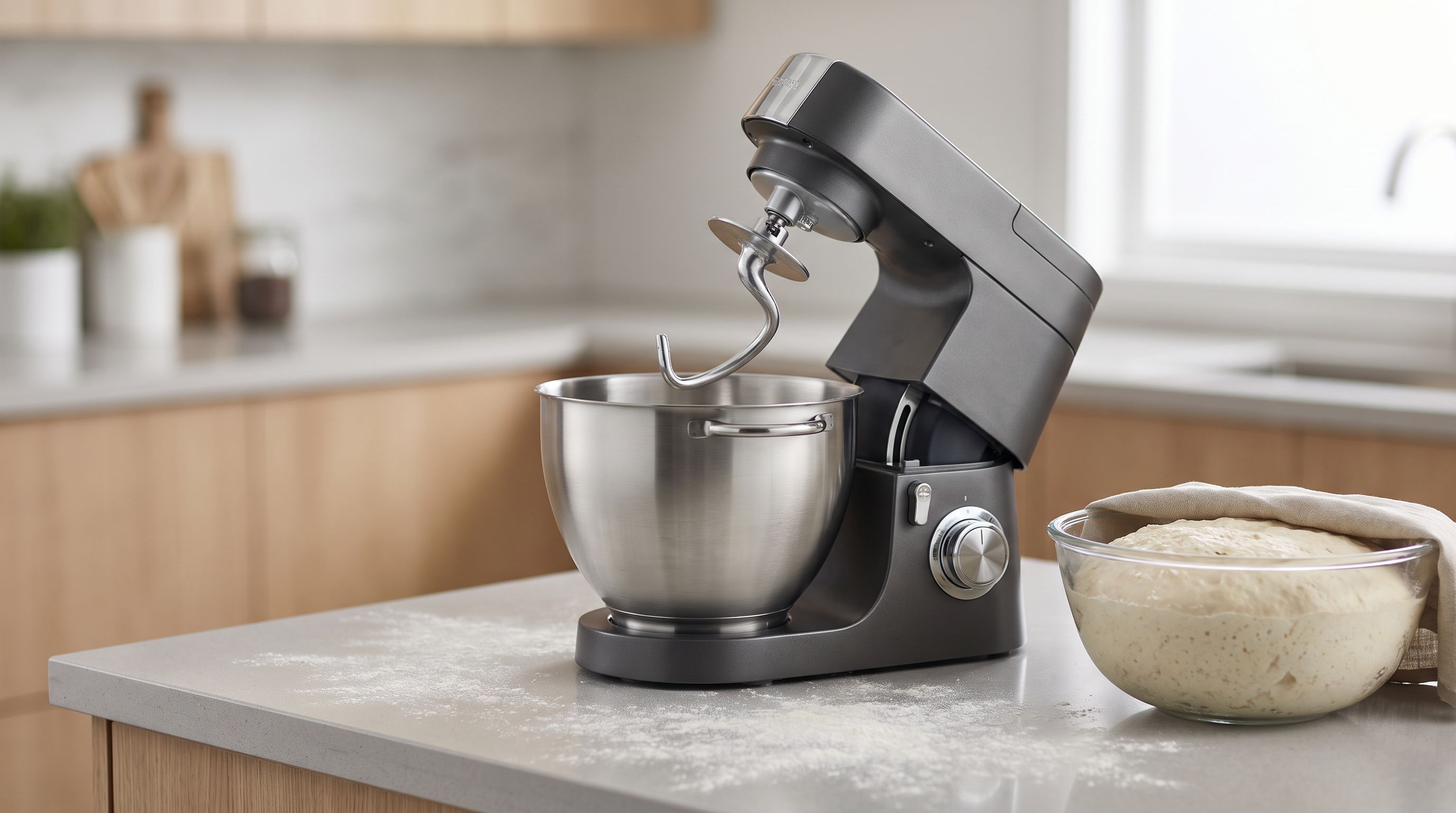
Stand Mixers in 2026: 5 Picks Sorted by Bowl Size
The best stand mixer 2026 guide that matches bowl capacity, motor wattage and attachment ecosystems to how much bread and batter you actually make each week.
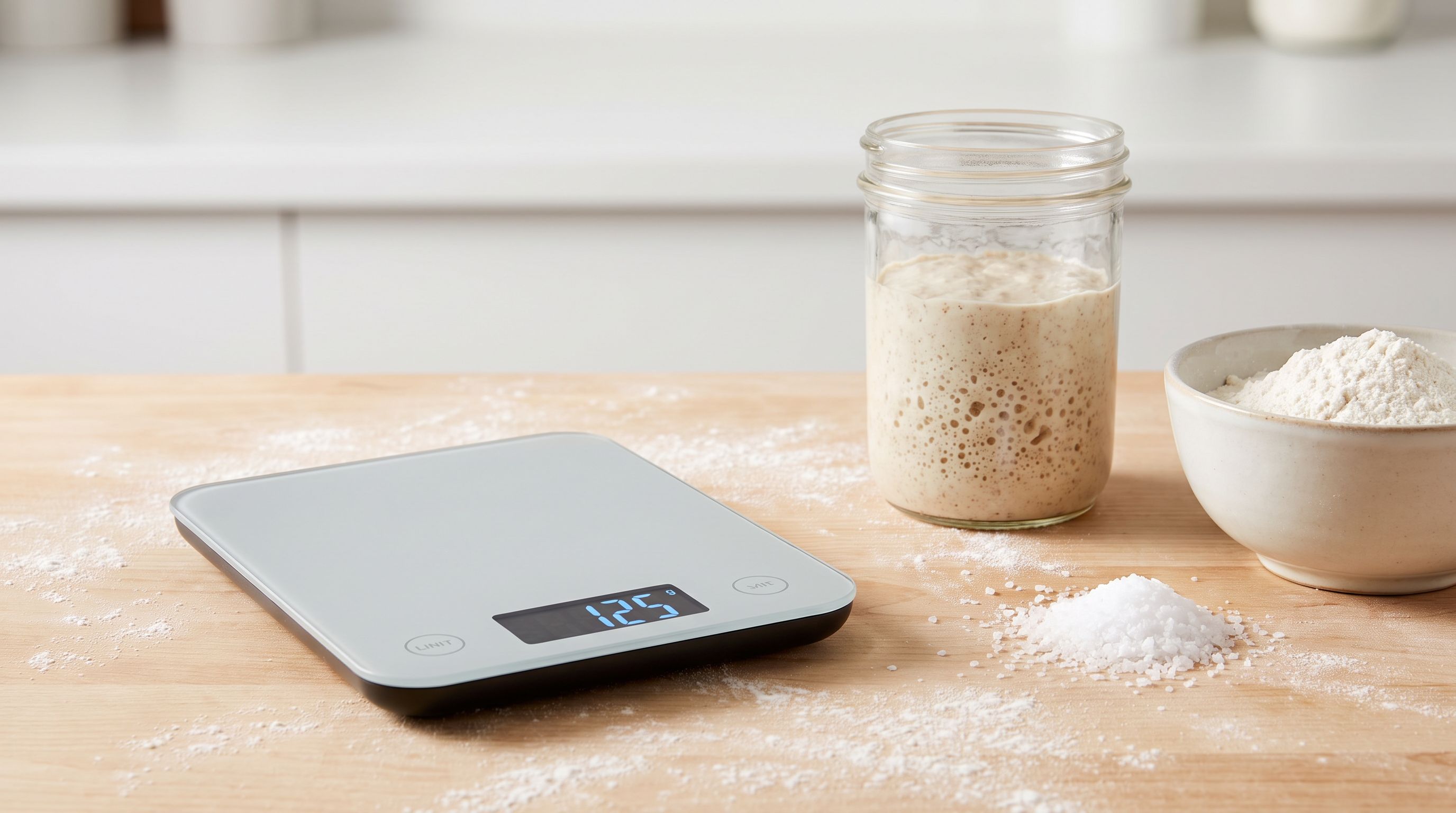
Why 1g Kitchen Scales Fall Short for Bread, Explained
Resolution isn't accuracy. Here's why 1g kitchen scales struggle with salt, yeast and starter in bread baking — and what specs actually matter in 2026.
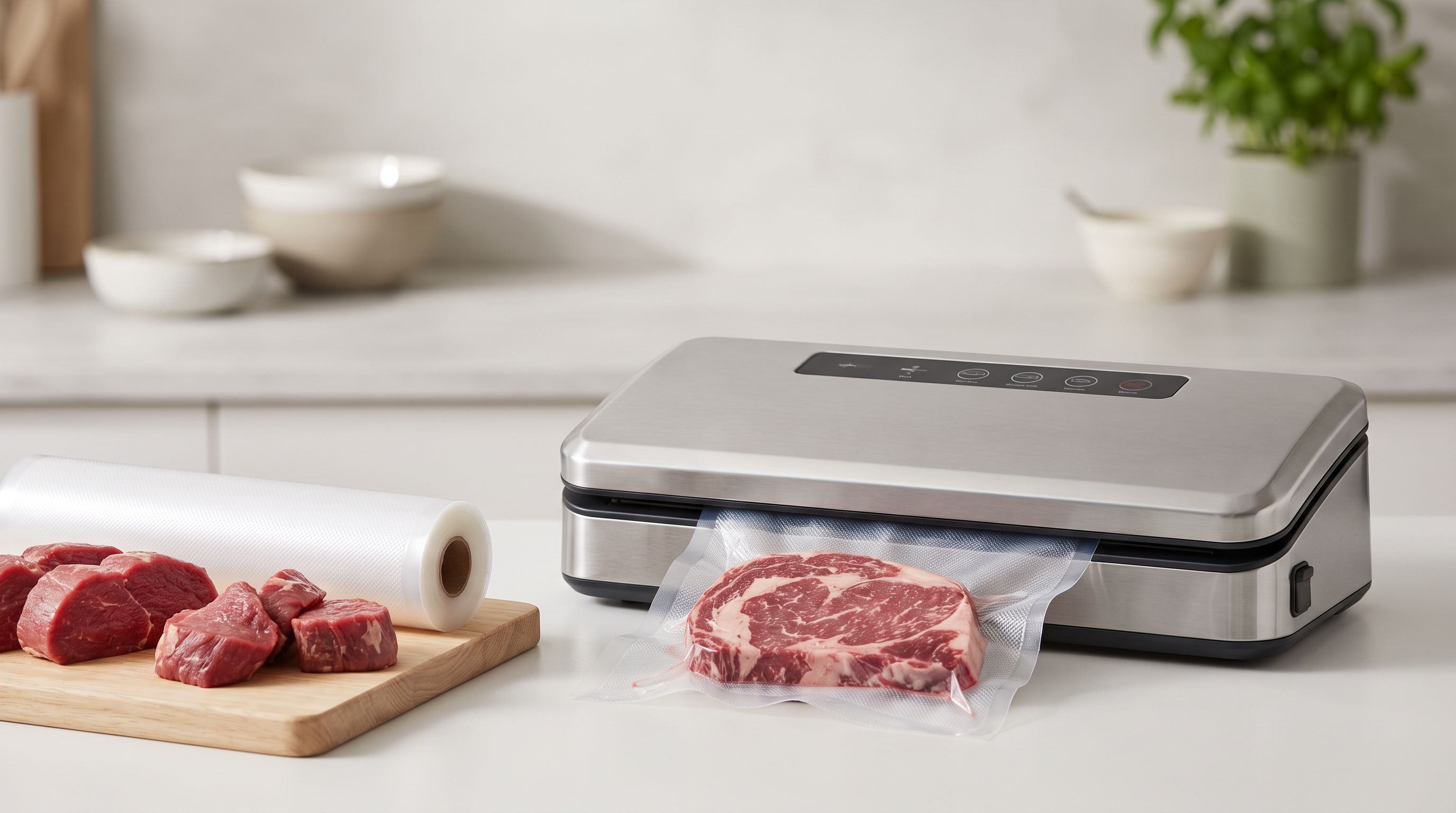
Vacuum Sealers in 2026: 5 Picks by Bag Width and Seal
The best vacuum sealer 2026 guide: chamber vs external machines compared on bag width, seal strength, moist-food modes and long-term bag cost for sous vide and freezer use.