Pour-Over Coffee Setups in 2026: 5 Kits That Actually Work
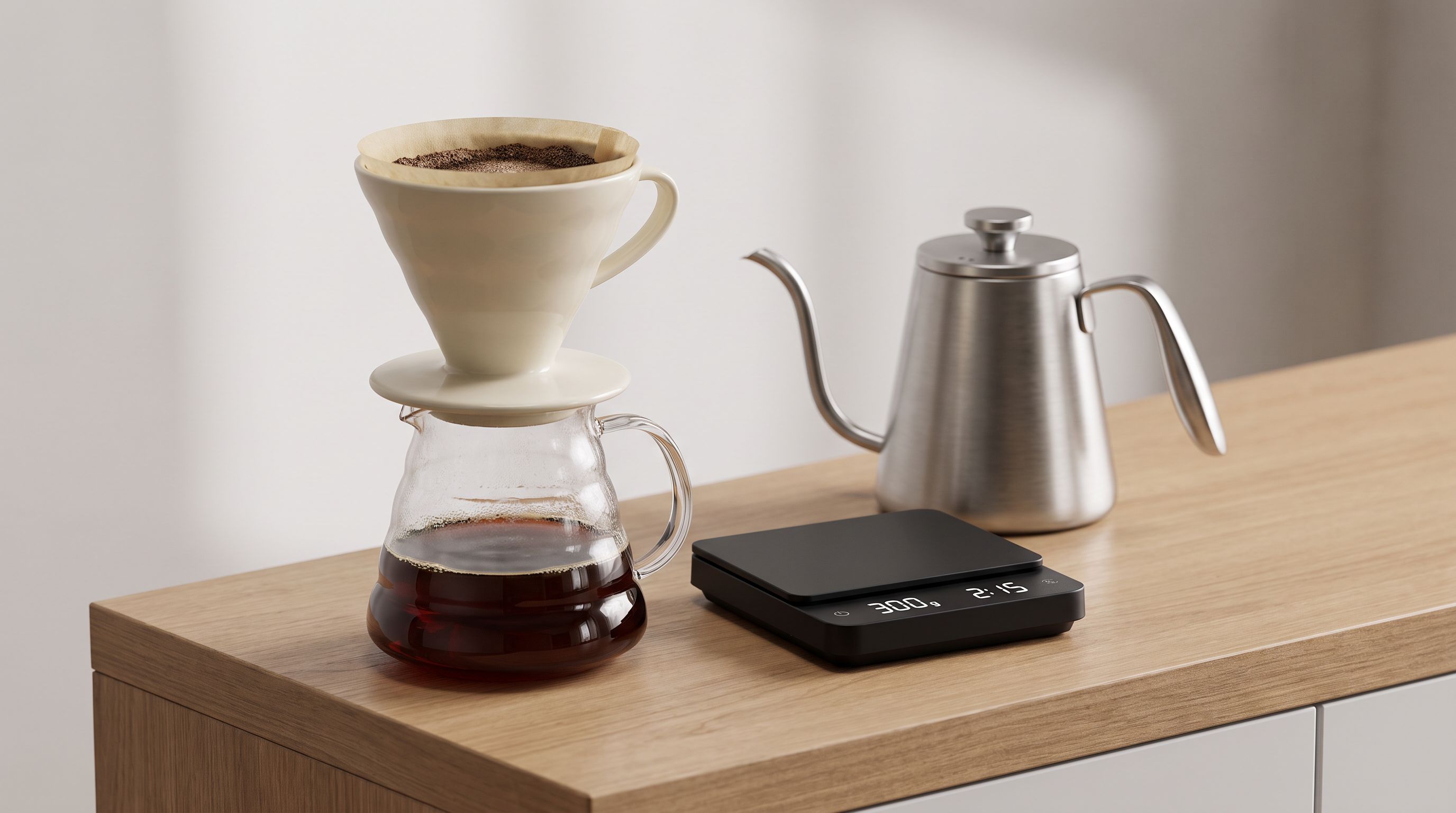
The best pour over coffee setup in 2026 depends on dripper material, filter cost and carafe size. We compare five complete kits, kettles and scales included.
Reader-supported: we may earn a commission from links on this page, at no extra cost to you. It never affects our picks. Learn more.
Pour-over is the cheapest way to make genuinely excellent coffee at home — but only if the pieces fit together. A $60 dripper paired with a stovetop kettle and no scale will lose to a $25 dripper used with a gooseneck and a timer every single morning. The gear that matters is boring: a dripper whose geometry you understand, filters you can actually buy in bulk, a carafe sized to how much coffee you drink, and controlled water flow.
Below are five complete setups, ranked by who they suit. We compared manufacturer specs, independent review results and long-term owner feedback rather than running our own lab, and we've been explicit about where each kit breaks down.
How to choose a pour-over setup
Dripper material changes the cup more than you'd think
The same cone in different materials brews differently, mostly because of heat retention.
- Ceramic holds heat well once preheated and looks the part, but it's heavy, it steals heat from your first pour if you skip the rinse, and it chips.
- Plastic (AS resin) is the quiet favourite of a lot of competition brewers: it reaches thermal equilibrium almost instantly and is nearly unbreakable. It looks cheap; it doesn't brew cheap.
- Glass is a compromise — pretty, moderate heat retention, fragile.
- Stainless steel is indestructible and travel-friendly, but conducts heat away fast, so preheating is mandatory.
If you brew one cup, walk away for three minutes, and come back, material barely matters. If you're chasing clarity in a light roast, plastic or well-preheated ceramic is the safer bet.
Filters are the running cost nobody budgets for
Cone filters for the Hario V60 Ceramic Coffee Dripper Size 02 are among the cheapest and most widely stocked papers in the world, available in bleached (white) and natural (brown) in 100- and 200-count boxes. Kalita Wave filters are a flat-bottom, fluted design that only fits Wave drippers, cost noticeably more per filter, and are harder to find in a supermarket. Chemex bonded filters are thicker and pricier still — that thickness is exactly what produces the famously clean cup, but it's a real line item if you brew daily.
 Best overall · Hario V60 Ceramic Coffee Dripper Size 02 — Check price on Amazon →
Before you commit, ask: can I buy this filter locally at 7 a.m. on a Sunday? For V60 the answer is usually yes. For Wave and Chemex, order in bulk.
Carafe size should match your actual consumption
A size 02 V60 or a Kalita Wave 185 comfortably brews 300–500 ml — one large mug or two small ones. A Chemex Classic Series 6-Cup Pour-Over Glass Coffeemaker holds roughly 30 oz, which is genuinely two to three mugs. Buying the big Chemex for solo brewing means you'll under-fill it, the coffee will cool fast in all that glass, and you'll wash a large awkward vessel daily.
The kettle and scale are not optional accessories
A gooseneck exists to deliver a slow, aimable stream so you can wet the bed evenly and control flow rate. The Fellow Stagg EKG Electric Gooseneck Kettle sets temperature to the degree, holds it, and has the tightest spout control in common circulation — useful because light roasts want near-boiling water while dark roasts taste better pulled back toward 90–93°C. A scale with 0.1 g resolution and a timer, like the Timemore Black Mirror Basic 2 Coffee Scale, turns brewing from guesswork into a repeatable recipe. Most people get a bigger improvement from adding a scale than from upgrading their dripper.
 Best scale · Timemore Black Mirror Basic 2 Coffee Scale — Check price on Amazon →
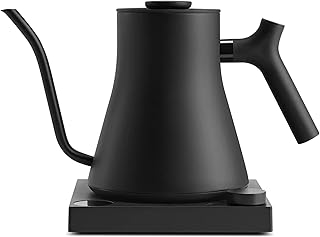 Best kettle upgrade · Fellow Stagg EKG Electric Gooseneck Kettle — Check price on Amazon →
The five setups, ranked
1. The default: Hario V60 ceramic + gooseneck + scale
The Hario V60 Ceramic Coffee Dripper Size 02 remains the reference point in 2026 for the same reasons it has for 15 years: 60-degree cone, spiral ribs, a single large hole, and total control over flow via your pour. That control is also the catch — the V60 has the highest skill ceiling and the lowest floor. Pour carelessly and you get sour, under-extracted coffee.
Paired with the Fellow Stagg EKG Electric Gooseneck Kettle and the Timemore Black Mirror Basic 2 Coffee Scale, it's the most capable sub-$300 brewing system you can assemble. Preheat the ceramic; it's thick enough to matter. Start with a 1:16 ratio (20 g coffee, 320 g water), a 45-second bloom, and aim to finish draining around 2:45–3:15.
2. The forgiving one: Kalita Wave 185 stainless + gooseneck
The Kalita Wave 185 Stainless Steel Dripper has a flat bottom and three small holes, which restricts flow and produces a level coffee bed. Translation: uneven pouring is partly corrected by the dripper itself. Independent reviewers and multiple 2026 roundups name it best overall for exactly that reason — it's the setup least likely to produce a bad cup on a distracted morning.
 Most forgiving · Kalita Wave 185 Stainless Steel Dripper — Check price on Amazon →
Costs: the wave filters are pricier and less available, and stainless dumps heat quickly, so rinse with boiling water before you brew. The 185 size handles roughly 300–500 ml.
3. The dinner-party kit: Chemex 6-cup + gooseneck
The Chemex Classic Series 6-Cup Pour-Over Glass Coffeemaker is a dripper and carafe in one piece of borosilicate glass, with a wood collar and leather tie. Its bonded filters are up to three times thicker than standard papers, trapping more oils and fines for a very clean, tea-like cup. If you like body and chocolate-heavy dark roasts, you may find it thin. If you drink washed Ethiopians, it's a revelation.
It's the right call when you regularly brew for two or more people. It's the wrong call for a single mug, and hand-washing the narrow neck is a chore — a cleaning brush is effectively required.
4. The travel and office kit: Kalita Wave 185 stainless, kettle optional
The same stainless Wave doubles as the setup you throw in a bag. No glass to break, it sits on most travel mugs, and in a pinch a kettle with a narrow spout and a steady hand will do. Keep a sleeve of filters in a zip bag. It won't match a full setup at home, but it reliably beats hotel coffee.
5. The budget starter: plastic V60 + any gooseneck + the Timemore scale
If money is tight, buy the plastic V60 rather than a cheaper no-name ceramic. It brews at least as well as the ceramic version, survives drops, and leaves budget for the Timemore Black Mirror Basic 2 Coffee Scale — which will improve your coffee more than any dripper upgrade. Add the Fellow Stagg EKG later when you're ready.
Comparison table
| Setup | Dripper material | Typical brew volume | Filter type & cost | Forgiveness | Best for |
|---|---|---|---|---|---|
| Hario V60 Ceramic 02 | Ceramic | ~300–500 ml | V60 02 cone, cheap, everywhere | Low — rewards technique | Enthusiasts, light roasts |
| Kalita Wave 185 Stainless | Stainless steel | ~300–500 ml | Wave 185 flat-bottom, pricier | High | Consistency, travel |
| Chemex Classic 6-Cup | Borosilicate glass | ~30 oz | Chemex bonded, thick, priciest | Medium | Two-plus servings, clean cup |
| Plastic V60 02 | AS resin | ~300–500 ml | V60 02 cone, cheap | Low–medium | Budget, durability |
| Fellow Stagg EKG + Timemore scale | — | — | — | — | Any of the above |
What we'd skip
Switch-style hybrid drippers and immersion-dripper combos are genuinely fun, but they're a second brewer, not a first one. Likewise, stovetop goosenecks without a thermometer are a false economy — you'll either scald the coffee or guess. And unless you love the ritual, a very cheap scale without 0.1 g resolution or a timer isn't worth buying twice.
FAQ
Do I really need a gooseneck kettle? For V60 and Chemex, yes — pour rate and placement are most of the recipe. The Kalita Wave is the most tolerant of a standard kettle, but you'll still pour more accurately with a gooseneck.
Ceramic or plastic V60? Plastic brews slightly more consistently because it reaches temperature instantly and won't crack. Ceramic holds heat better across a long brew and looks better on a counter. Both use identical filters.
What grind size should I use? Medium-fine, roughly table salt, for V60 and Kalita Wave; a touch coarser for Chemex because its thick filters slow drawdown. Adjust by drawdown time, not by numbers on a dial.
How much coffee for one mug? Start at 20 g coffee to 320 g water (1:16). Scale up or down proportionally; keep the ratio and adjust grind to control strength.
Bleached or natural filters? Bleached rinse cleaner and impart less papery flavour. Natural filters need a thorough pre-rinse. Either works — always rinse.
Our picks
HARIO V60 Ceramic Coffee Dripper, Size 02, White
The benchmark cone dripper: heat-stable ceramic, cheap filters, and the widest recipe library anywhere.
Kalita Wave 185 Drippers
Flat bed and three small holes even out sloppy pouring, so bad days still taste good.

Chemex Bundle - 6-Cup Classic Series - 100 ct Square Filters - Exclusive Packaging
One-piece glass carafe plus thick filters gives a clean, tea-like cup and holds about 30 oz.
Fellow Stagg EKG Pro Gooseneck Electric Kettle, Brew Timer, 0.9 Liter
Variable temperature to the degree, a hold function, and the steadiest spout control of any kettle here.
TIMEMORE Coffee Scale Basic 2.0 Electronic Espresso Scale with Water Flow Rate and Timer Function, Digital Scale for Kitchen/Baking/Cooking, Black
0.1 g resolution and a built-in timer at a fraction of the price of boutique brew scales.
Get the best kitchen gear deals in your inbox
Join the PrepDeck newsletter for hand-picked kitchen gear deals and new buying guides. No spam, unsubscribe anytime.
Related reads
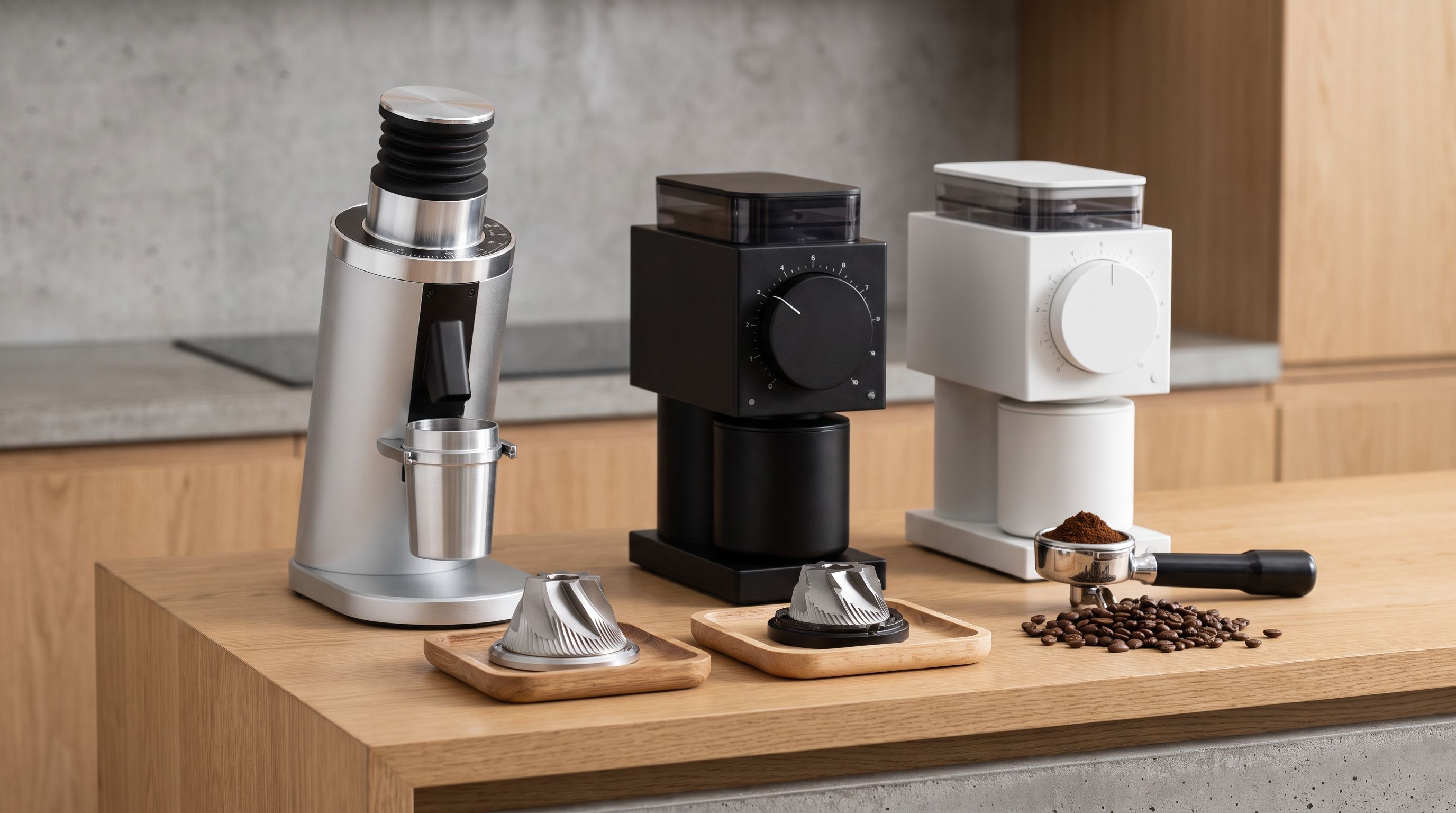
Burr Grinders Under $300 in 2026: Burr Size Decides
The best burr coffee grinder under 300 in 2026, ranked by burr diameter and geometry — plus when conical beats flat for drip, espresso, and everything between.
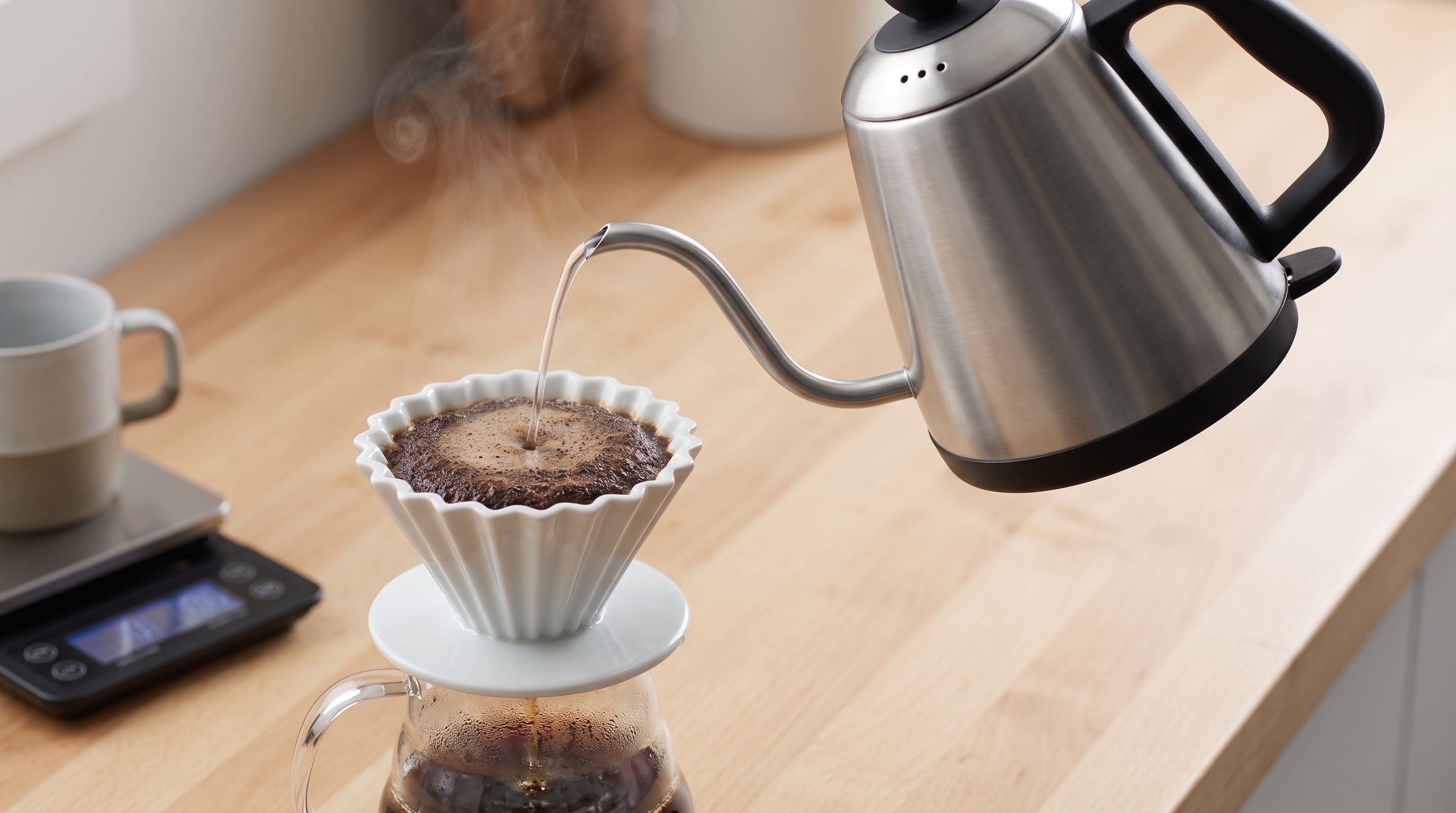
Gooseneck Kettles in 2026: Flow, Temp, and Induction
The best gooseneck kettle in 2026 depends on flow control, hold settings, and induction compatibility. We compare Fellow, OXO, Cosori, Cuisinart and Hario picks.
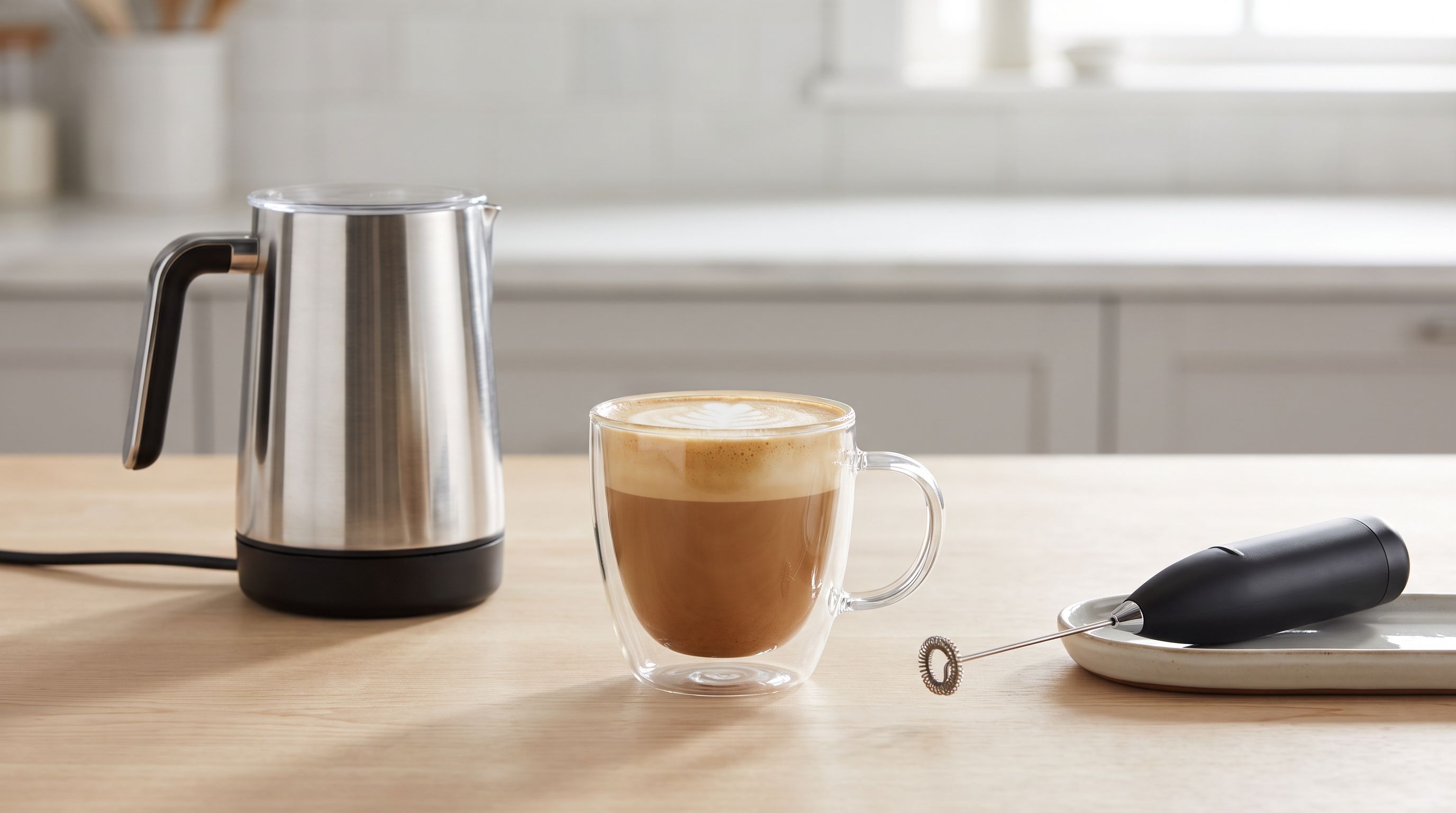
Milk Frothers in 2026: Steam Wand or Automatic Pitcher?
The best milk frother in 2026 depends on whether you want hands-off foam or steam-wand control. We compare capacity, froth texture and dishwasher-safe parts.