Pod Coffee vs Whole Bean Cost in 2026: The Break-Even Math
Pod coffee vs whole bean cost in 2026, broken down per cup and per year — plus how fast a grinder pays for itself by household size, with picks at three tiers.
Reader-supported: we may earn a commission from links on this page, at no extra cost to you. It never affects our picks. Learn more.
Pod machines win on mornings when you have four minutes and a toddler. Whole beans win on flavour and on the spreadsheet. The interesting question isn't which is "better" — it's how many cups a day you have to drink before the grinder you've been eyeing stops being an indulgence and starts being a cost cut.
Here's the math, using real 2026 price ranges rather than invented numbers, plus the honest cases where a grinder never pays for itself.
What a cup actually costs in 2026
Coffee got more expensive across the board in 2025–26 — green coffee futures, shipping, and tariffs all pushed retail up. Current reporting puts home-brewed specialty whole bean at roughly $0.60–$1.00 per cup for a one-cup-a-day habit, which works out to around $220–$365 a year. Supermarket whole bean lands well below that.
Pods are the other end. Published ranges put capsules at roughly $0.40 to $1.10 each depending on brand and whether you buy OEM or third-party. The twist most people miss: a Nespresso Original capsule holds about 5–6 g of coffee, and a K-Cup around 9–12 g. A standard 8–10 oz mug of drip uses roughly 15–18 g.
So when you normalise to cost per gram of coffee, premium capsules frequently cost more than specialty whole beans. A 10-pack of capsules at supermarket pricing can work out to several times the per-gram cost of a 340 g bag of good single-origin.
The per-gram reality check
| Format | Typical dose per serve | What you're really buying | Per-gram position |
|---|---|---|---|
| Nespresso Original capsule | ~5–6 g | Espresso-sized shot | Highest cost per gram |
| Nespresso Vertuo capsule | ~5–12 g | Shot to 8 oz "coffee" | High |
| K-Cup (brand name) | ~9–12 g | 6–10 oz mug | High |
| K-Cup (store brand / refill) | ~9–12 g | 6–10 oz mug | Moderate |
| Supermarket whole bean | 15–18 g | Full mug | Low |
| Specialty whole bean (roaster subscription) | 15–18 g | Full mug | Low–moderate |
Two caveats that keep this honest. First, pods have essentially zero waste — you use exactly what's dosed. Home brewing has stale-bag losses, grinder retention, dialling-in waste on espresso, and the dregs of a carafe nobody drinks. Budget 5–10% shrinkage, more if you're learning espresso. Second, the pod machine itself is often cheap or heavily discounted, while the grinder is the upfront cost you're trying to justify.
The break-even calculation, done properly
The formula is simple:
Break-even (days) = Grinder cost ÷ (daily pod spend − daily bean spend)
Plug in conservative numbers. Say a mid-range burr grinder costs a couple hundred dollars, you currently spend about $0.75 per capsule, and good whole bean brings you to about $0.45 per equivalent cup. That's a $0.30 daily saving per cup.
| Household | Cups/day | Daily saving (at $0.30/cup) | Break-even on a ~$200 grinder |
|---|---|---|---|
| Occasional solo drinker | 1 | $0.30 | ~22 months |
| Daily solo drinker | 2 | $0.60 | ~11 months |
| Two-person household | 4 | $1.20 | ~5.5 months |
| Family / home office | 6 | $1.80 | ~4 months |
And on a budget grinder in the $100 range, those timelines roughly halve. A four-cup household can pay off an OXO Brew Conical Burr Coffee Grinder in a single quarter.
 Budget pick · OXO Brew Conical Burr Coffee Grinder — Check price on Amazon →
The forum consensus that "a grinder pays for itself in no time" is therefore true for multi-cup households and overstated for single-cup drinkers. If you make one capsule a day and buy third-party pods on sale, you may be at near-parity, and the case for grinding is about flavour, not money.
Where the math breaks down
- You already own the pod machine. Sunk cost. Only the per-cup delta counts — but so does the fact you'll need a brewer too, not just a grinder.
- You buy third-party capsules. Compatible Nespresso Original pods from discounters narrow the gap dramatically.
- You drink milk drinks. Milk is the dominant cost in a latte either way. Switching from capsules to beans saves less than you'd think on a 12 oz flat white.
- You buy $30 single-origin microlots. Specialty beans at the top end can meet or beat per-gram capsule pricing. The saving is real only against mid-priced beans.
What to buy at each tier
If you brew drip or press and want the cheapest honest upgrade: the OXO Brew Conical Burr Coffee Grinder. Stainless conical burrs, a simple timed dose, and a grind range that covers drip through press. It's not an espresso grinder and doesn't pretend to be, but it's the lowest price at which you stop fighting the uneven particle size that makes blade-ground coffee taste muddy.
If you want one grinder for drip today and maybe espresso later: the Baratza Encore ESP. It extends the long-serving Encore platform down into the espresso range with 40mm conical burrs, and — crucially for total cost of ownership — Baratza sells replacement burrs and parts individually. A grinder you can rebuild for the price of a few bags of coffee is a different financial proposition from one you replace.
 Best overall grinder · Baratza Encore ESP — Check price on Amazon →
If noise and counter looks matter: the Fellow Opus Conical Burr Grinder. 41 grind steps, notably quieter than most at this price, and it covers everything from espresso-fine to cold-brew coarse. It's the one to pick if the grinder lives on an open counter in a small apartment.
 Best for drip and French press · Fellow Opus Conical Burr Grinder — Check price on Amazon →
If you're actually replacing a capsule machine's output: pair a grinder with the Breville Bambino Plus. It heats in a few seconds, uses a standard 54mm portafilter, and automates milk texturing — which is the feature most ex-pod owners actually miss. Be realistic: espresso has a learning curve and a dialling-in cost in wasted beans. Give it a couple of bags before judging.
 Best pod-machine replacement · Breville Bambino Plus — Check price on Amazon →
If you drink more than two cups a day: honestly, skip espresso. The OXO Brew 8-Cup Coffee Maker is SCA-certified, brews a full carafe in one go, and delivers the lowest cost per cup of anything in this article. Batch brewing is where whole bean economics are overwhelming rather than marginal.
 Best batch brewer · OXO Brew 8-Cup Coffee Maker — Check price on Amazon →
The non-financial column
Capsules are sealed under inert gas and taste identical on day 400. Whole beans taste best 5–21 days off roast and noticeably flatter after about a month open. If you're a one-cup-a-day drinker buying 340 g bags, you'll finish a bag in roughly three weeks — fine. Buy 1 kg to save money and you'll be drinking stale coffee by the end.
Waste is the other column. Aluminium capsules are recyclable in principle but require brand-specific mail-back or bagged collection schemes; plastic K-Cups mostly aren't recycled in practice. Spent grounds go in compost. If that matters to you, it's a thumb on the scale no spreadsheet captures.
The verdict
Buy a grinder if your household drinks three or more cups a day — the payback is months, not years, and the flavour upgrade is free after that. Buy a grinder for flavour reasons if you drink one or two, but don't pretend it's a savings plan. And if you genuinely value four-minute, zero-cleanup mornings above all else, keep the pod machine and buy better capsules — that's a legitimate choice, not a failure of discipline.
FAQ
Are whole beans always cheaper than pods? Per gram of coffee, almost always. Per cup, usually — but discount third-party capsules against premium specialty beans can land close to parity.
How long until a grinder pays for itself? Roughly 4–6 months for a two-person household on a mid-range grinder, under three months on a budget model, and 18–24 months for a single one-cup-a-day drinker.
Is a blade grinder good enough to save money? It'll save money but cost you the flavour benefit. Blade grinders produce wildly uneven particles, giving simultaneously bitter and sour extraction. If budget is tight, a hand grinder beats a cheap electric blade unit.
Do I need an espresso machine to quit pods? No. Most pod drinkers are making long coffees, not true espresso. A good burr grinder plus a drip brewer or French press replicates that for far less money.
Does milk change the comparison? Yes. Milk dominates the cost of a latte regardless of format, which compresses the bean-versus-pod saving on milk drinks to a fraction of what it is for black coffee.
Our picks
Baratza Encore ESP Coffee Grinder ZCG495BLK, Black
A 40mm conical burr grinder that handles both drip and espresso ranges, with cheap, available replacement burrs.
Fellow Opus 2 Conical Burr Grinder – Electric Coffee Grinder for Home Use, 48 mm Burrs, Stepless Grind Adjustment, Espresso to Cold Brew Range, Anti-Static, Auto Stop, Black
Quiet, 41-step conical burr grinder with a wide range from espresso-fine to cold brew coarse.
OXO Brew Conical Burr Electric Coffee Bean Grinder - 12 Oz, Silver
The cheapest grinder we'd actually recommend for drip — stainless conical burrs and a simple timed dose.
Breville BES500BSS Bambino Plus Espresso Machine, Brushed Stainless Steel
Fast-heating 54mm espresso machine with automatic milk steaming — the realistic upgrade from a capsule machine.
OXO Brew 8-Cup Coffee Maker - Single-Serve, Thermal Carafe, Stainless Steel
SCA-certified drip brewer that makes a full carafe cheaper per cup than any pod machine can.
Get the best kitchen gear deals in your inbox
Join the PrepDeck newsletter for hand-picked kitchen gear deals and new buying guides. No spam, unsubscribe anytime.
Related reads
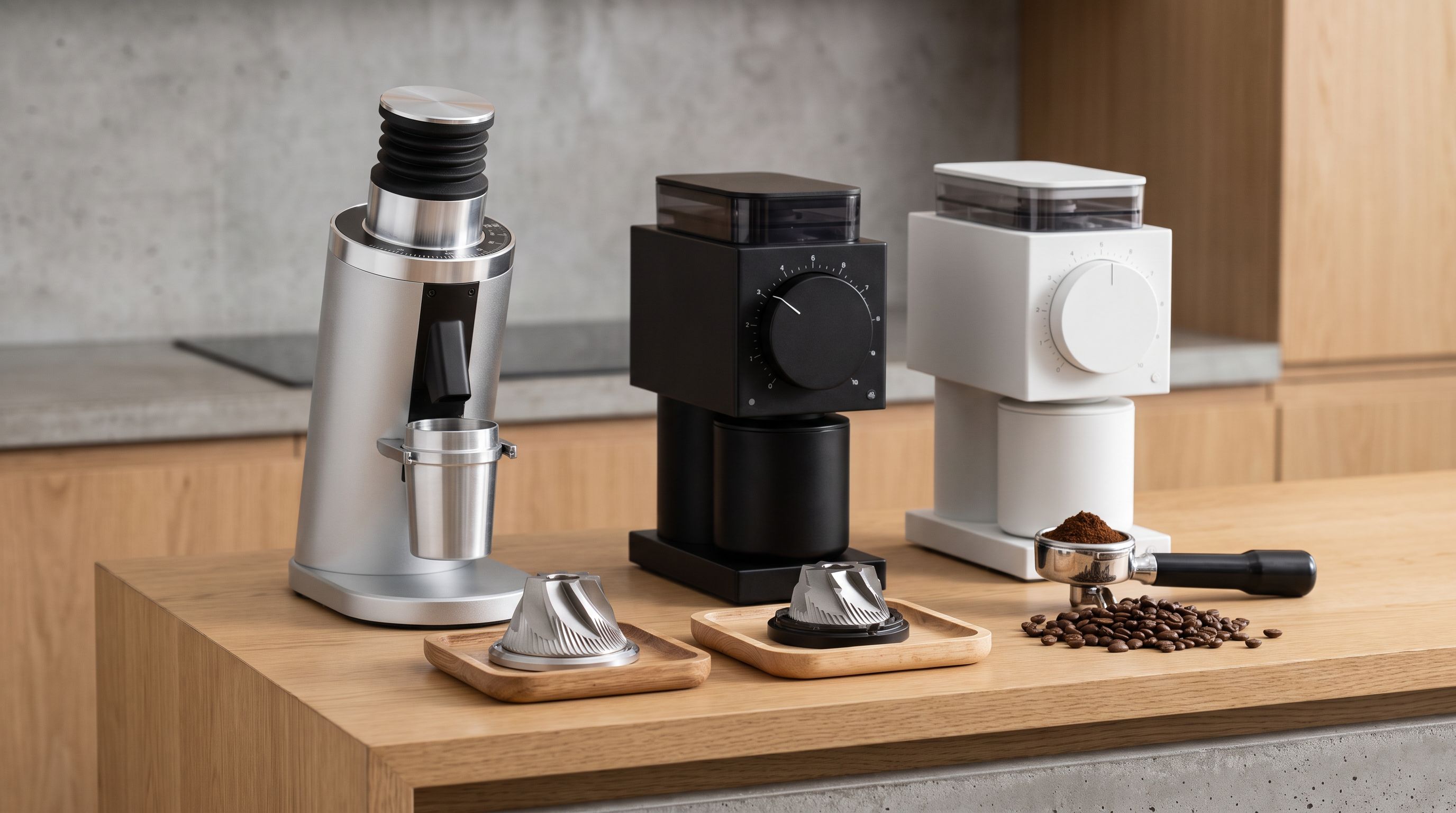
Burr Grinders Under $300 in 2026: Burr Size Decides
The best burr coffee grinder under 300 in 2026, ranked by burr diameter and geometry — plus when conical beats flat for drip, espresso, and everything between.
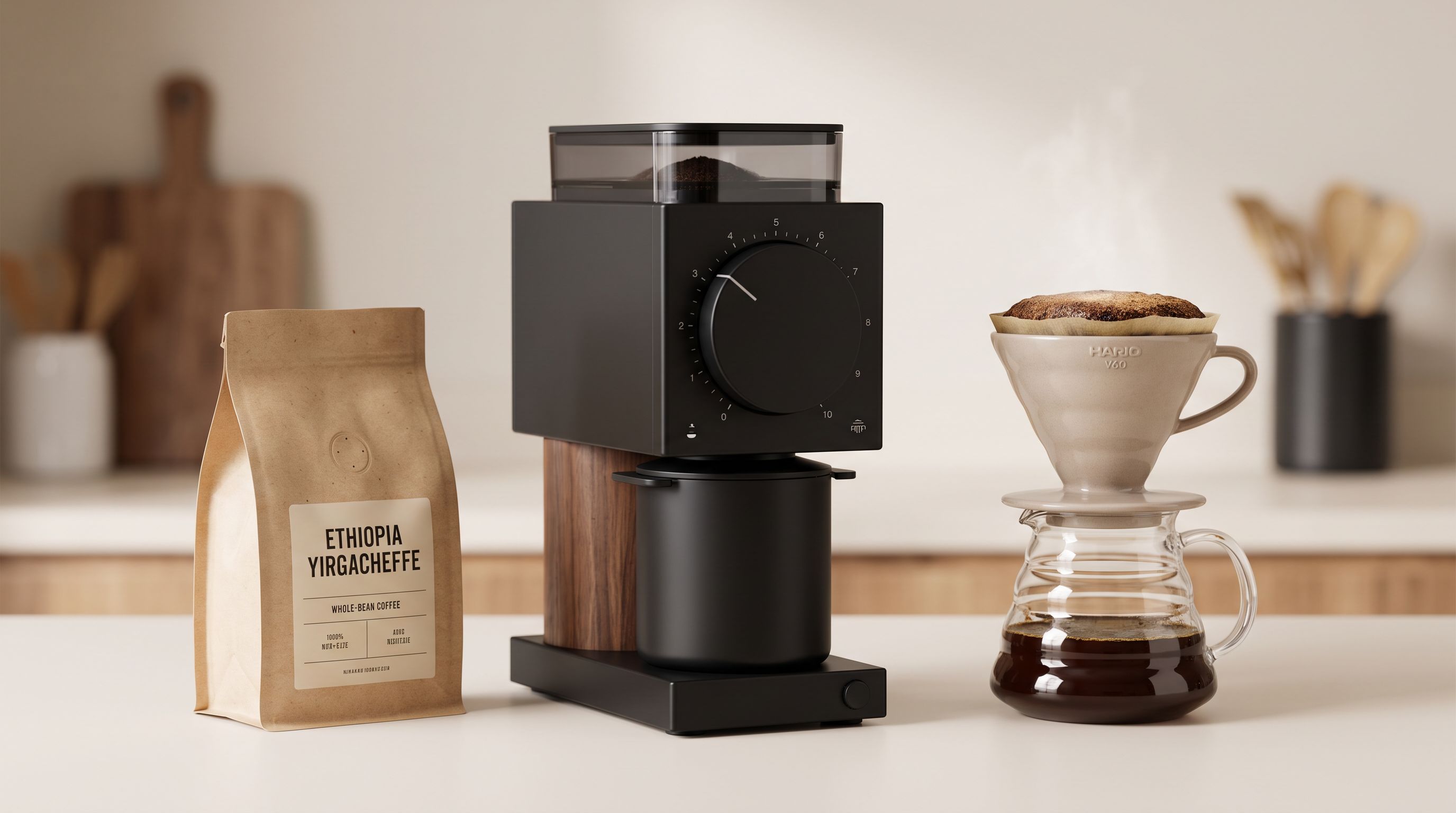
Skip the Coffee Subscription: Buy a Grinder in 2026
A coffee subscription won't fix stale, uneven grounds. Here are the burr grinders worth buying in 2026, from a $100 workhorse to single-dose espresso machines.
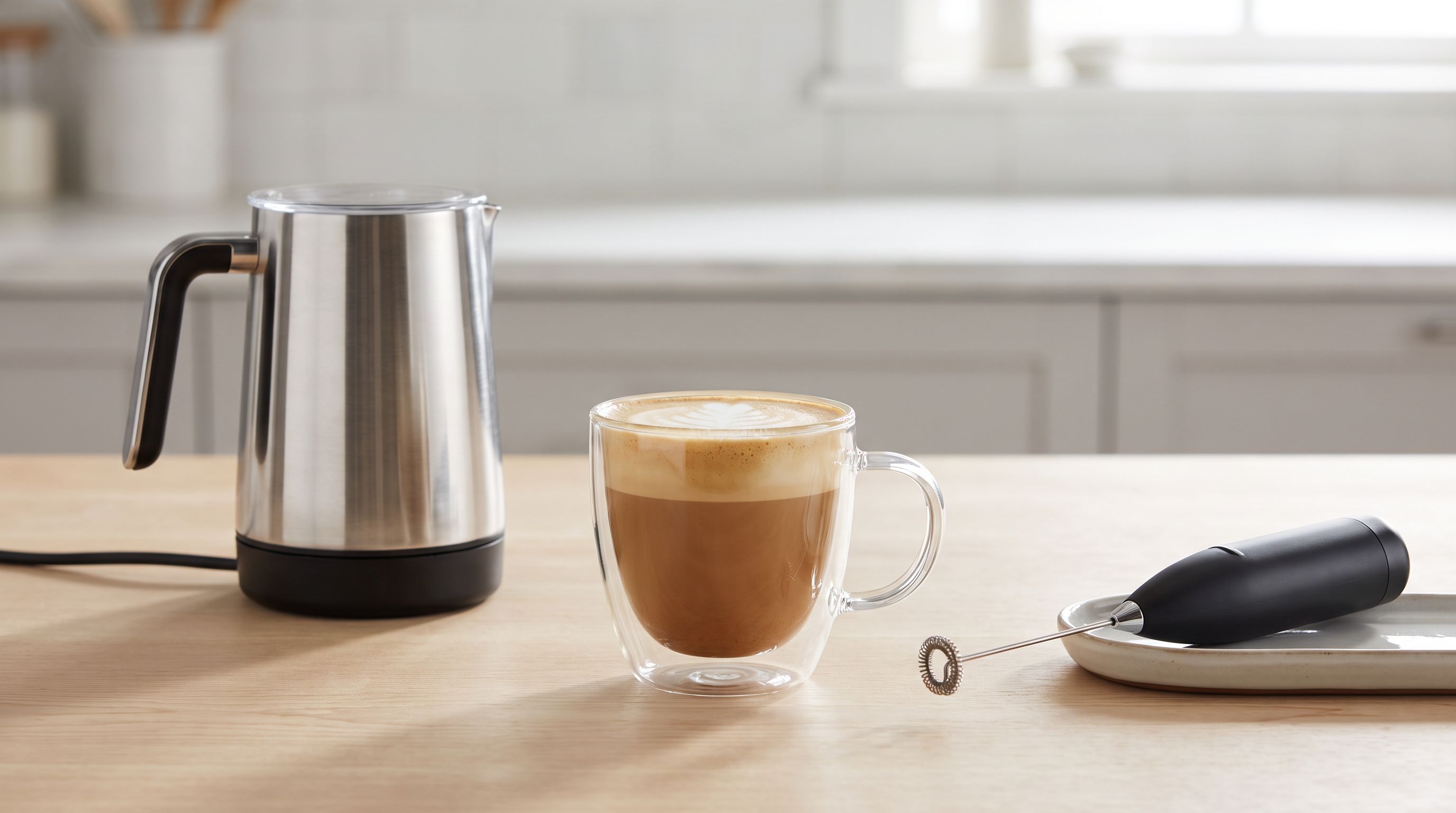
Milk Frothers in 2026: Steam Wand or Automatic Pitcher?
The best milk frother in 2026 depends on whether you want hands-off foam or steam-wand control. We compare capacity, froth texture and dishwasher-safe parts.