Pizza Oven Temperature, Explained: Why 900°F Matters
What actually changes between 700°F and 950°F in a pizza oven, why Neapolitan dough needs the top end, and which fuel — gas, wood or pellets — reliably gets there.
Reader-supported: we may earn a commission from links on this page, at no extra cost to you. It never affects our picks. Learn more.
The number on the thermometer is doing more work than you think
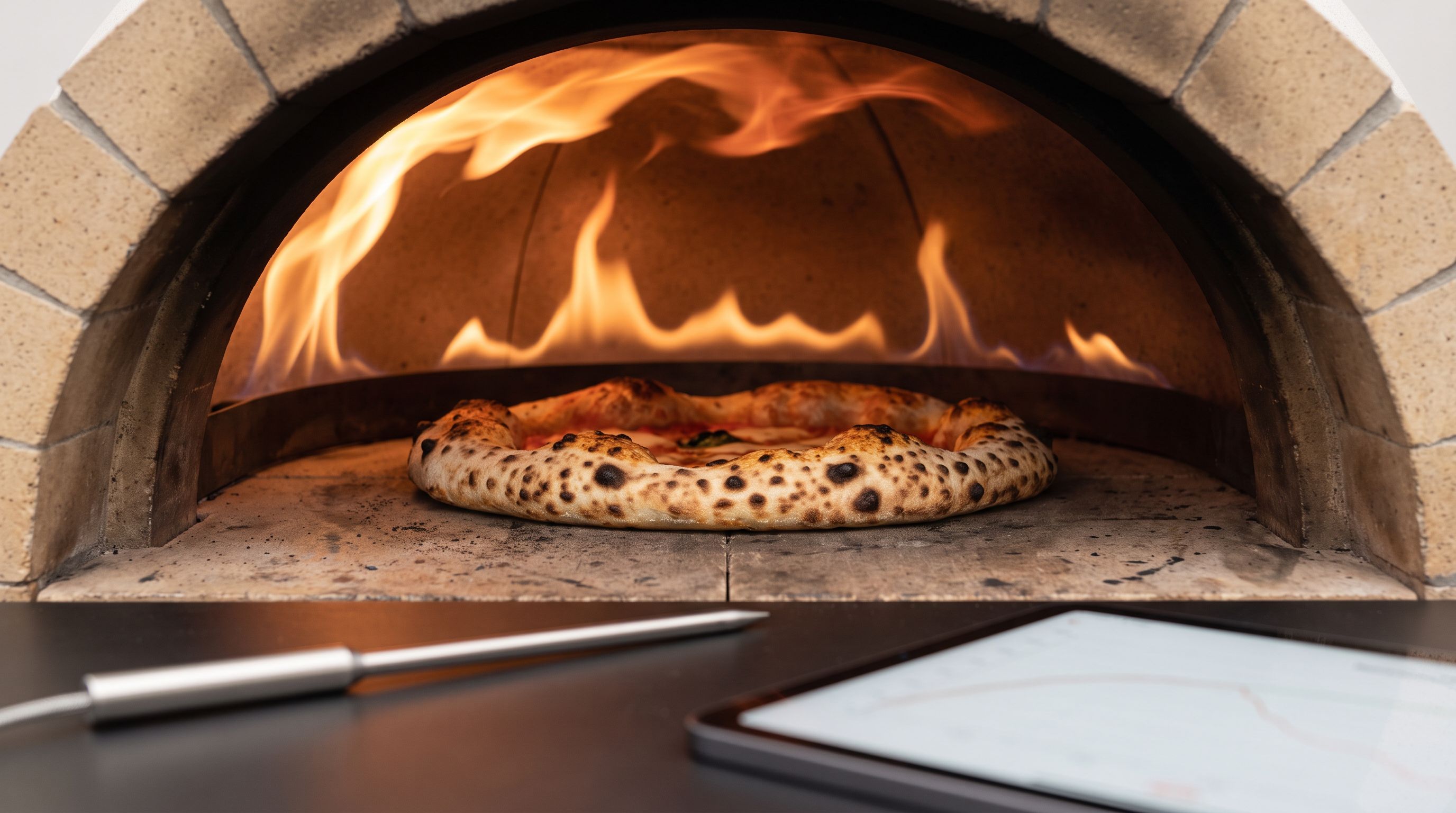
Pizza is the rare dish where temperature isn't a setting — it's the recipe. Shift a steak from 400°F to 500°F and you get a slightly faster, slightly more aggressive cook. Shift a Neapolitan pizza from 550°F to 900°F and you get a structurally different food: different crumb, different moisture, different char, different mouthfeel. One widely shared side-by-side comparison made exactly this point with two pizzas made from identical dough, one baked at 550°F and one at 850°F — same ingredients, two completely different results.
That's why "900°F" has become the headline spec on every outdoor pizza oven box since the category exploded. It's also why the number gets abused. Peak dome temperature, stone temperature and air temperature are three different readings, and manufacturers aren't always careful about which one they're quoting. Understanding what actually changes across the 700°F–950°F band is the difference between buying an oven that makes the pizza you want and buying one that makes a very fast, very ordinary pizza.
What actually changes between 700°F and 950°F
The core mechanism is simple: the hotter the floor and dome, the shorter the bake, and the shorter the bake, the less water leaves the dough.
Below roughly 700°F stone temperature, a pizza needs three to five minutes. In that time, steam keeps escaping the crumb, the rim dries as it rises, and you end up with a crust that's crisp but comparatively dense and bready. It can be excellent pizza — New York and bar-style pies live happily here — but it isn't Neapolitan. As one high-temp discussion put it bluntly, the longer you bake, the more you're baking the water out.
Around 800°F–900°F, bake time collapses to roughly 60–90 seconds, which is the window Neapolitan pizza is built around. At that speed the oven spring is violent: trapped gases expand faster than the crust can set, the cornicione balloons, and the interior stays custardy and moist because there simply isn't time for dehydration. Surface sugars and proteins char into leopard spotting before the inside overcooks. Pizzeria operators notice the difference at surprisingly fine resolution — owners of wood-fired ovens have reported that at 800°F their pizzas are noticeably less light and airy than the same dough at 900°F.
Above about 950°F stone temperature, you cross from "fast" to "unmanageable." The floor scorches the base before the top sets, especially with sugar- or oil-enriched dough. A widely circulated home-pizza method recommends launching when the stone reads around 900°F and staying below roughly 950°F — which is a useful way to think about it: 900°F isn't a ceiling to chase, it's a target with a narrow band on either side.
| Stone temp | Typical bake | Crust character | Best suited to |
|---|---|---|---|
| 500–600°F | 6–10 min | Crisp, dry, bready rim | Home-oven pan, Detroit, thick crust |
| 650–750°F | 3–5 min | Sturdy, chewy, light char | New York, Sicilian, high-hydration flatbread |
| 800–900°F | 60–90 sec | Airy, moist crumb, leopard spotting | Neapolitan with 00 flour |
| 950°F+ | Under 60 sec | Burnt base risk, uneven set | Experienced operators, very lean dough |
The real players, and what the fuel actually does
The spec that matters more than peak temperature is recovery — how fast the stone climbs back after a cold pizza pulls heat out of it. This is where fuel and build quality diverge.
Gas is the pragmatic winner for most people. Propane ovens hold a steady flame without tending, which means the dome keeps radiating while you launch pie after pie. Ooni's Koda 16 is the reference point here: an L-shaped burner that wraps flame across more of the cooking chamber, aimed squarely at the problem of one-sided heating that plagues smaller single-burner ovens. Gozney's Roccbox takes the opposite approach to the same goal — more mass and insulation, a heavier stone floor, so the oven coasts through launches instead of relying on burner output alone. On paper and in published reviews, that extra mass is why Roccbox feels less "spiky" between pizzas despite its small footprint.
Wood is the traditional route to the top of the range and the only one that contributes flavor and the rolling flame that licks the top of the cornicione. The trade-off is labor: you're managing a fire, a coal bed and ash while also launching and turning pizzas. Multi-fuel designs exist precisely because most home cooks want both options on different nights — the Ooni Karu 12G runs wood or charcoal out of the box and accepts a gas burner attachment, which is the honest acknowledgment that fuel choice is a mood, not a religion.
Pellets sit in between: wood character with semi-automated feeding, but output that can sag if the hopper or auger stalls, and a narrower flavor profile than split hardwood.
Electric indoor ovens have quietly become the interesting category, but physics caps them. Household circuits limit wattage, so most countertop pizza ovens top out well below the Neapolitan band. Ooni's Volt 12 is designed around that constraint rather than pretending it doesn't exist, and the result is a very capable oven that lives nearer the 800s than 900s depending on the model and preheat.
And your regular kitchen oven? It maxes out around 500–550°F. The honest framing, as one guide put it, is that you'll never hit 900°F indoors — but you can get closer to the behavior of a hot oven by improving conduction. Steel conducts heat far more efficiently than ceramic stone, which is why a slab like the NerdChef Steel Stone shortens bake times meaningfully at the same oven setting. It's a workaround, not an equivalent.
 Best indoor workaround · NerdChef Steel Stone Baking Steel — Check price on Amazon →
What it means if you're shopping today
Three practical filters, in order of importance:
- Ignore peak temperature claims; ask about stone temperature and recovery. An oven that hits 950°F air temp but has a thin stone that drops 150°F after one pizza will frustrate you by pie three. Mass and insulation matter more than burner headline figures.
- Buy an infrared thermometer and treat it as mandatory. Built-in dial gauges usually read dome or air, not floor. The floor is what cooks your base. Without an IR reading you're guessing at the one variable that defines the bake.
- Match the oven to the pizza you actually want. If you love New York-style slices, 900°F is actively unhelpful — you'd be fighting the oven down into the 700s. The 900°F obsession is specifically a Neapolitan requirement, and Neapolitan requires 00 flour, lean dough and a willingness to turn the pizza every 20 seconds.
What to watch next
Two trends are worth tracking through 2026. First, insulation is becoming the competitive battleground now that nearly every outdoor oven can claim 900°F — expect more marketing around stone thickness, dome material and recovery time rather than raw peak numbers. Second, electric ovens keep inching upward as manufacturers optimize element placement and preheat cycles within fixed household wattage; they won't beat propane to 900°F, but the gap between "indoor convenience" and "real Neapolitan" is narrowing more than it did five years ago.
The underlying truth hasn't moved: 900°F isn't a bragging number. It's the temperature at which a 90-second bake becomes possible, and the 90-second bake is the entire reason Neapolitan pizza tastes the way it does.
FAQ
Is 900°F necessary for good pizza? No — it's necessary for Neapolitan pizza. New York, Detroit and pan styles are built for 550–750°F and suffer at the top of the range.
Why does my first pizza come out great and the third one badly? Heat recovery. The stone loses temperature with each launch. Insulated, heavy-floored ovens recover faster; let the oven rest between pies and check the floor with an IR thermometer.
Can a baking steel replicate a pizza oven? Partially. Steel's higher conductivity speeds the base significantly in a 550°F oven, but it can't supply the radiant top heat that chars a cornicione in 90 seconds.
Gas or wood for a first outdoor oven? Gas, for most people — it holds temperature without tending. Multi-fuel models like the Karu line let you add wood later if you want the flavor and flame.
Our picks

ooni Koda 16 Propane Gas Pizza Oven – 16" Gas Powered Outdoor Oven with 28 mBar Regulator and Gas Hose, Gas Powered Portable Pizza Oven - Foundry Black
Propane oven that reaches the 900°F stone range quickly, with an L-shaped burner for even flame coverage.
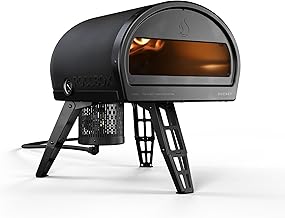
Gozney Roccbox Outdoor Pizza Oven, Portable, Gas & Wood Fired - Black
Heavy insulated body and thick stone floor hold temperature between launches better than thin-shell ovens.
Ooni Karu 12G Multi-Fuel Pizza Oven
Burns wood or charcoal out of the box and accepts a gas burner attachment, so you can switch fuels per bake.
NerdChef Steel Stone - High Performance Pizza Baking | Made in USA (14.5" x 16" x 1/4") - (.25" Thick - Standard)
Conductive steel slab shortens bake times in a 550°F home oven, where stone alone falls short.
Get the best kitchen gear deals in your inbox
Join the PrepDeck newsletter for hand-picked kitchen gear deals and new buying guides. No spam, unsubscribe anytime.
Related reads
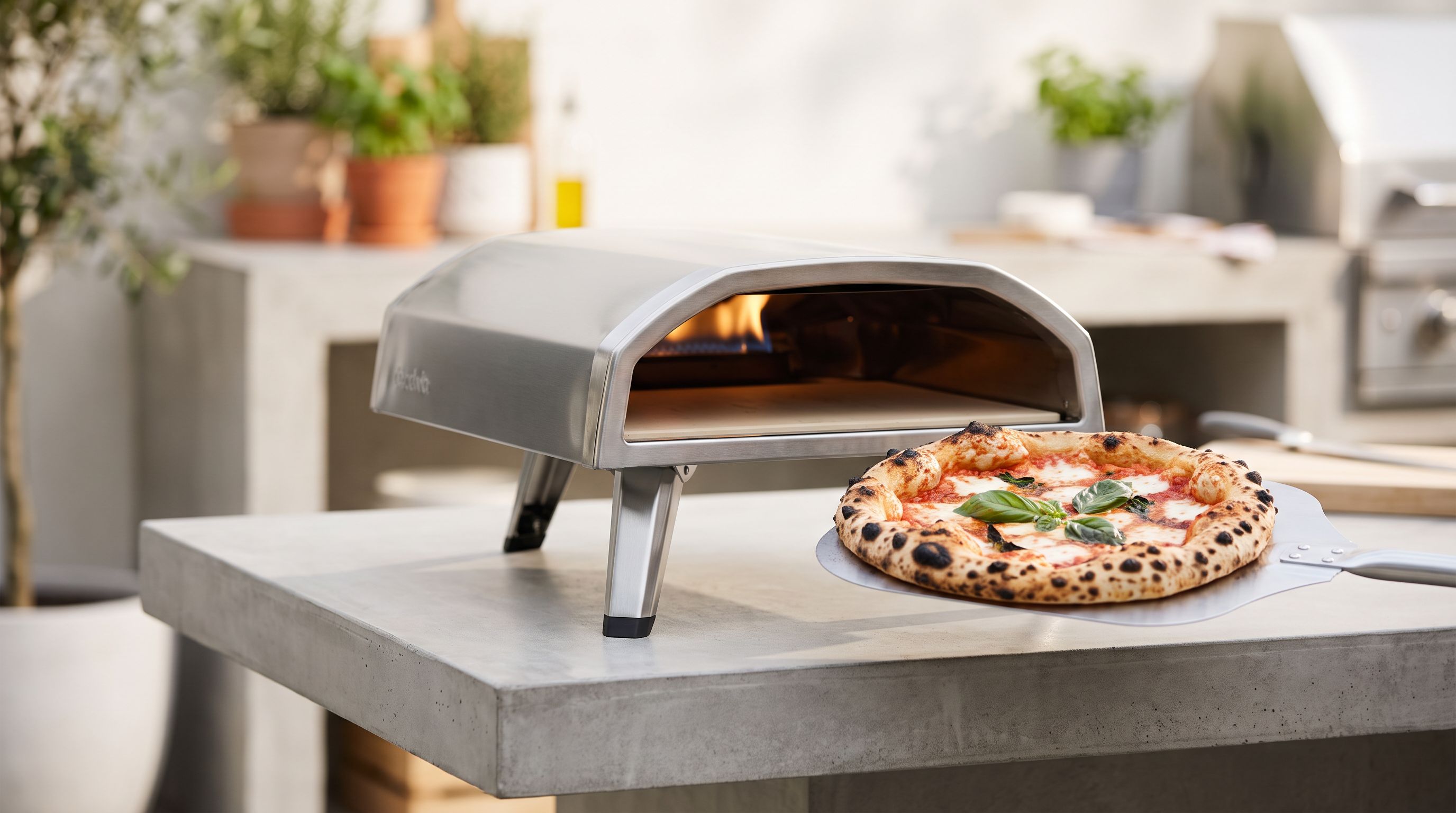
Portable Pizza Ovens 2026: Pick Your Stone Size First
The best portable pizza oven 2026 picks compared by stone diameter, fuel type, preheat time and packed weight — so your oven matches the pie you actually bake.
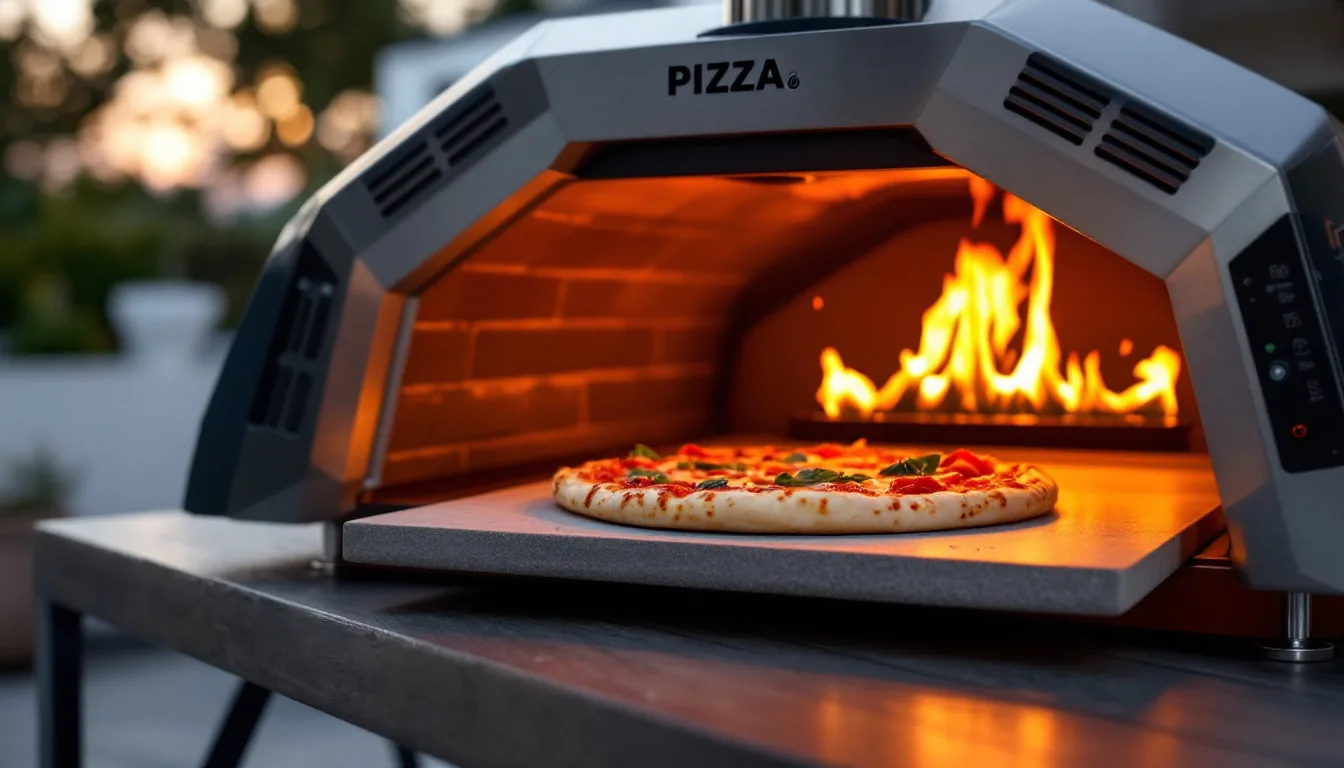
Gas vs Wood: Which Outdoor Pizza Oven to Buy in 2026
Gas, wood or dual-fuel? We compare the best outdoor pizza ovens of 2026 on peak temperature, stone size, recovery time and real-world durability.
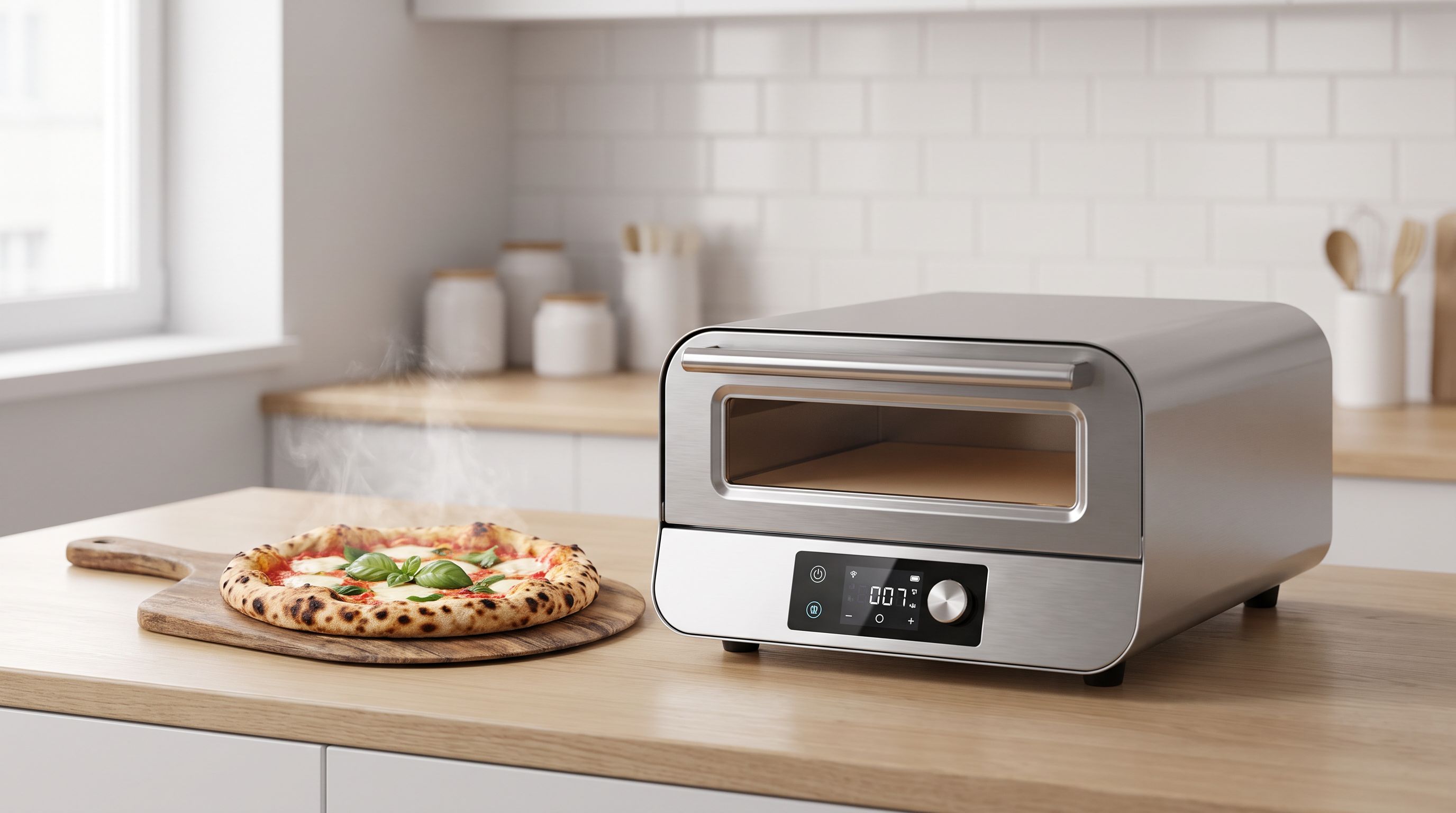
Indoor Pizza Ovens in 2026: 4 Picks for Small Kitchens
The best indoor pizza oven for apartments in 2026, compared by peak temperature, stone size and countertop footprint — from the Ooni Volt 2 to budget picks.