Nugget vs Bullet vs Clear Ice Makers: What to Buy in 2026
Countertop nugget ice maker or a cheap bullet machine? We compare nugget, bullet and clear-cube ice makers on output, noise, drains and counter space for 2026.
Reader-supported: we may earn a commission from links on this page, at no extra cost to you. It never affects our picks. Learn more.
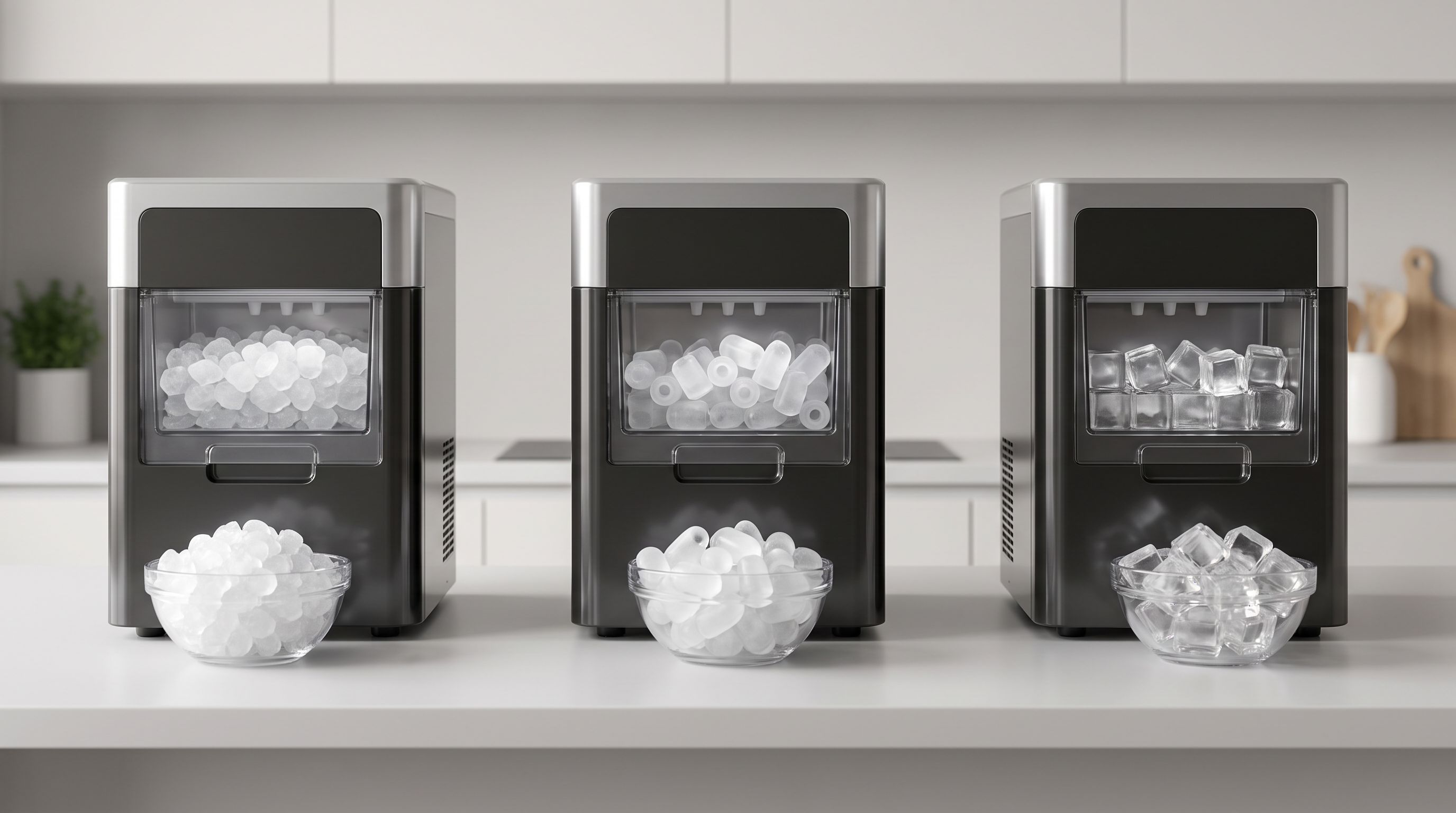
Ice makers are one of the few appliances where the shape of the output changes how you use the thing every day. Nugget ice gets chewed. Bullet ice gets dumped into a cooler. Clear cubes go in a glass of whiskey and stay there. Buy the wrong style and you'll have a $200 machine humming on your counter that nobody reaches for.
This guide compares the three formats countertop machines actually produce — nugget (a.k.a. pebble or "Sonic" ice), bullet (the hollow cylinders from cheap portables), and clear cube — on the things that decide whether a unit earns its counter space: daily output, how water gets in and out, footprint, and noise. We compared manufacturer specs, independent lab reviews, and verified owner feedback; PrepDeck does not physically test units.
The three ice styles, quickly
Nugget ice is made by freezing a thin layer of ice on a chilled cylinder, scraping it off as flakes, then compressing the flakes into soft pellets. That process is why nugget machines are bigger, pricier, slower to first ice, and more maintenance-hungry than the alternatives. It's also why the ice is chewable, absorbs drink flavor, and doesn't water down a soda the way a hollow cylinder does.
Bullet ice is what nearly every sub-$150 portable makes. Metal prongs dip into a water tray, ice forms around them, and a heat cycle drops hollow tubes into a basket. First batch in roughly 6–10 minutes, which is the format's whole selling point. The ice is cloudy, hollow, and melts fast — fine for filling a cooler, coffee shakes, or a party punch bowl.
Clear cube ice comes from machines that freeze water more slowly in a mold or on an evaporator plate, pushing air and impurities out as they go. You get dense, slow-melting cubes for spirits and cocktails. The tradeoff is time: clear-ice machines are the slowest of the three per batch, and "clear" from a countertop unit usually means clearer, not the optical-grade block you'd carve from a Clinebell.
Output, footprint and noise: what the numbers mean
Manufacturers quote a 24-hour output figure, and it's worth translating. A machine rated around 24 lb/day doesn't hand you 24 pounds at once — none of these have freezers. Countertop units make ice into an insulated storage bin, not a freezer compartment, so ice starts melting back into the reservoir as soon as it's made. Practical capacity is whatever the bin holds, usually 2–3 lb, and the 24-hour figure only matters if you're harvesting continuously into a cooler.
For a household of two that drinks iced coffee and seltzer, a nugget machine making roughly a pound an hour is plenty. For tailgates, camping, or a party, bullet machines win on raw throughput per dollar and per cubic inch.
Noise is the underrated spec. Nugget makers run a compressor plus an auger motor plus a water pump, and they cycle all day. Expect a steady grind-and-drop pattern that's noticeable in an open-plan kitchen. Bullet machines are quieter between cycles but make a loud clatter each time ice drops. Clear-cube units are generally the most background-friendly. If the machine lives near a home office or a bedroom wall, this matters more than output does.
Drains, reservoirs and cleaning — the part people regret
Every countertop ice maker recirculates meltwater. That's the design, and it's also why these machines get slimy if you ignore them.
Look for three things:
- A real drain plug, ideally at the bottom and accessible without tipping the unit over a sink. Machines with only a side drain need to be hoisted and angled, which is unpleasant when they're full.
- A removable or top-fill reservoir you can actually reach. Side-tank accessories, like the one on the GE Profile Opal 2.0 Nugget Ice Maker with Side Tank, extend unattended run time considerably — you refill once instead of babysitting.
- A cleaning cycle, and ideally documented descaling instructions. Nugget machines need it most; the auger and chute are exactly where biofilm shows up. Budget a cleaning cycle every couple of weeks with filtered water, more often with hard water.
 Best overall · GE Profile Opal 2.0 Nugget Ice Maker with Side Tank — Check price on Amazon →
Use filtered or distilled-ish water if your tap is hard. Scale on a nugget auger is the single most common cause of "it stopped making ice after a year."
Which format fits your habits
| Nugget | Bullet | Clear cube | |
|---|---|---|---|
| Typical daily output | ~24–38 lb, steady trickle | ~26–44 lb, fast batches | ~25–40 lb, slow batches |
| Time to first ice | Roughly 15–20 min | Roughly 6–10 min | Longest of the three |
| Ice character | Soft, chewable, absorbs flavor | Hollow, cloudy, melts fast | Dense, slow-melting |
| Footprint | Largest; tall and deep | Smallest | Medium to large |
| Noise | Most constant (auger + compressor) | Loud on ice drop, quiet between | Generally quietest |
| Cleaning burden | Highest | Low | Moderate |
| Best for | Iced coffee, soda, everyday chewers | Coolers, parties, camping, travel | Whiskey, cocktails, presentation |
| Typical price tier | Highest | Lowest | Middle to high |
Our picks by use case
If you want nugget ice and you want it to be good: the GE Profile Opal 2.0 Nugget Ice Maker with Side Tank remains the reference point in 2026, and most review outlets land in the same place. The nugget texture is genuinely closer to a commercial Scotsman than the clones, the app handles scheduling and cleaning reminders, and the side tank means you're not topping it off mid-afternoon. It's big — measure your counter depth and the clearance under your cabinets before you commit.
If you want that ice for less: the GE Profile Opal 1.0 Nugget Ice Maker is still sold and still makes the same style of pellet. You give up the smart features, some refinement, and a bit of speed, but the core auger mechanism is the same idea. It's the sensible buy if you don't care about a phone app.
 Best nugget value · GE Profile Opal 1.0 Nugget Ice Maker — Check price on Amazon →
If you want nugget ice in a smaller box: the Frigidaire EFIC237 Countertop Crunchy Chewable Nugget Ice Maker is a compact route to chewable pellets for a dorm, office, or apartment kitchen where the Opal simply won't fit. It's less refined and owners report it's more sensitive to water quality, so filtered water isn't optional here.
If you just need a lot of ice, cheap: the Euhomy Countertop Ice Maker IM-02 does what bullet machines do well — fast batches, small footprint, self-clean cycle, easy to stash in a camper or take to a rental. Nobody buys this for the ice quality. They buy it because it fills a cooler in an afternoon.
If your ice goes in a rocks glass: the NewAir Countertop Clear Ice Maker 40 lb makes denser, slower-melting cubes that don't dilute a spirit in five minutes, and it has a proper drain for end-of-season storage. It's the right answer for people who'd rather have 12 good cubes than three pounds of mediocre ones.
When a countertop ice maker isn't worth it
If your freezer already makes ice you're happy with, and you only need a burst of extra ice twice a year, buy bagged ice and a good cooler. These machines take up real counter space permanently, run a compressor, and need routine cleaning. The buyers who love them are the ones who use ice daily — iced coffee habits, sparkling water habits, kids with water bottles. If that's not you, skip it.
Also skip the very cheapest bullet units under about $70. The compressors are marginal, the pumps fail, and the difference between a throwaway and a machine that lasts a few seasons is small in absolute dollars.
FAQ
Does a countertop ice maker keep ice frozen? No. The storage bin is insulated but not refrigerated. Ice melts back into the reservoir and gets remade. If you need ice to stay frozen, harvest it into your freezer or a cooler.
Do I need a water line? Not for any of these. All countertop models are reservoir-fed — you pour water in. Some nugget models accept an optional side tank to extend run time between fills.
How much maintenance does a nugget machine really need? Plan on a cleaning cycle every two weeks or so with a manufacturer-approved solution or diluted vinegar, plus draining the reservoir if it'll sit unused for more than a few days. Hard water shortens the interval.
Is nugget ice actually clean-tasting? It absorbs whatever's in your water, because it's porous. Filtered water in, better ice out — more noticeably than with bullet or clear machines.
Can these run on an RV or at a campsite? Bullet models are the most practical: light, low draw relative to nugget units, and fast. Check the wattage against your inverter or generator, and let the unit sit upright for several hours after transport before powering it on.
Our picks
GE Profile Opal 2.0 Side Water Tank Accessory for Ice Maker, 0.75 Gal
The benchmark for chewable nugget ice, with app control and a side tank that stretches run time.
GE Profile Opal 1.0 Countertop Nugget Ice Maker
Same nugget texture as the 2.0 in a slightly smaller, simpler machine without the smart features.
Euhomy Countertop Ice Maker IM-02
Fast bullet ice in under 10 minutes per batch, compact footprint and a self-clean cycle.
NewAir Countertop Clear Ice Maker 40 lb
Makes slow-melting clear cubes for spirits, with a drain plug and a roughly 40 lb daily output.

Frigidaire EFIC237 Countertop Crunchy Chewable Nugget Ice Maker, 44lbs per day, Black Stainless
A smaller, cheaper route to chewable nugget ice for apartments and offices.
Get the best kitchen gear deals in your inbox
Join the PrepDeck newsletter for hand-picked kitchen gear deals and new buying guides. No spam, unsubscribe anytime.
Related reads
Air Fryer Toaster Ovens in 2026: 5 Picks by Interior Size
The best air fryer toaster oven 2026 picks ranked by usable interior: what actually fits a 12-inch pizza, a half sheet pan, or a 4-lb chicken.
Countertop Ice Makers in 2026: Picks by Daily Lb Output
How to size a countertop ice maker in 2026 by pounds per day, bin capacity and drain needs — plus nugget vs bullet picks from GE Profile, Euhomy, Gevi and more.
Electric Pressure Cookers in 2026: Pick by Quart Size First
The best electric pressure cooker 2026 guide that sorts multi-cookers by 3, 6, 8 and 10-quart capacity, inner pot material and pressure rating — match your household.