Knife Sharpening Systems in 2026: Stones vs Guided Rigs
Whetstones, guided-angle rigs, or electric? We compare grits, edge angles for Japanese vs German knives, and how much steel each method costs you long term.
Reader-supported: we may earn a commission from links on this page, at no extra cost to you. It never affects our picks. Learn more.
Most home cooks don't have a dull knife problem. They have a maintenance problem: a knife that got dull eighteen months ago, and a drawer gadget that grinds away steel every time it's used to fix that. Choosing the best knife sharpening system is less about which tool gets a blade sharpest on day one and more about which one you'll actually use every few weeks — and how much of your knife it eats in the process.
Below, we compare the three real categories (freehand whetstones, guided-angle rigs, and powered sharpeners) against the thing that actually matters: matching the right angle to your steel, and keeping blade loss low enough that a good knife lasts decades.
First, the number that decides everything: edge angle
Edge angle is usually quoted two ways, and the confusion causes a lot of ruined bevels.
- Per-side angle — the angle between the stone and one side of the blade. A "15 degree" Japanese edge means 15 degrees per side.
- Inclusive angle — both sides added. That same edge is 30 degrees inclusive.
Rough guidance by knife type:
- German/Western knives (Wüsthof, Zwilling, Victorinox): traditionally ground around 20 degrees per side, though most brands have moved toward 15 degrees in recent years. Softer, tougher stainless in roughly the high-50s HRC.
- Japanese double-bevel knives (gyuto, santoku from makers like Shun, Miyabi, Tojiro): commonly 15 degrees or less per side, on harder steel — often 60 HRC and up.
- Japanese single-bevel knives (yanagiba, deba, usuba): ground on one face only, with a flat back. These need freehand work on stones. No clamp rig or electric sharpener handles them properly.
Harder steel holds a thin edge but chips if you overthin it or use an aggressive powered abrasive. Softer German steel tolerates a thin edge fine but rolls faster, which is why a honing rod matters more for those knives than for a hard Japanese blade.
The three approaches, honestly compared
Whetstones (freehand)
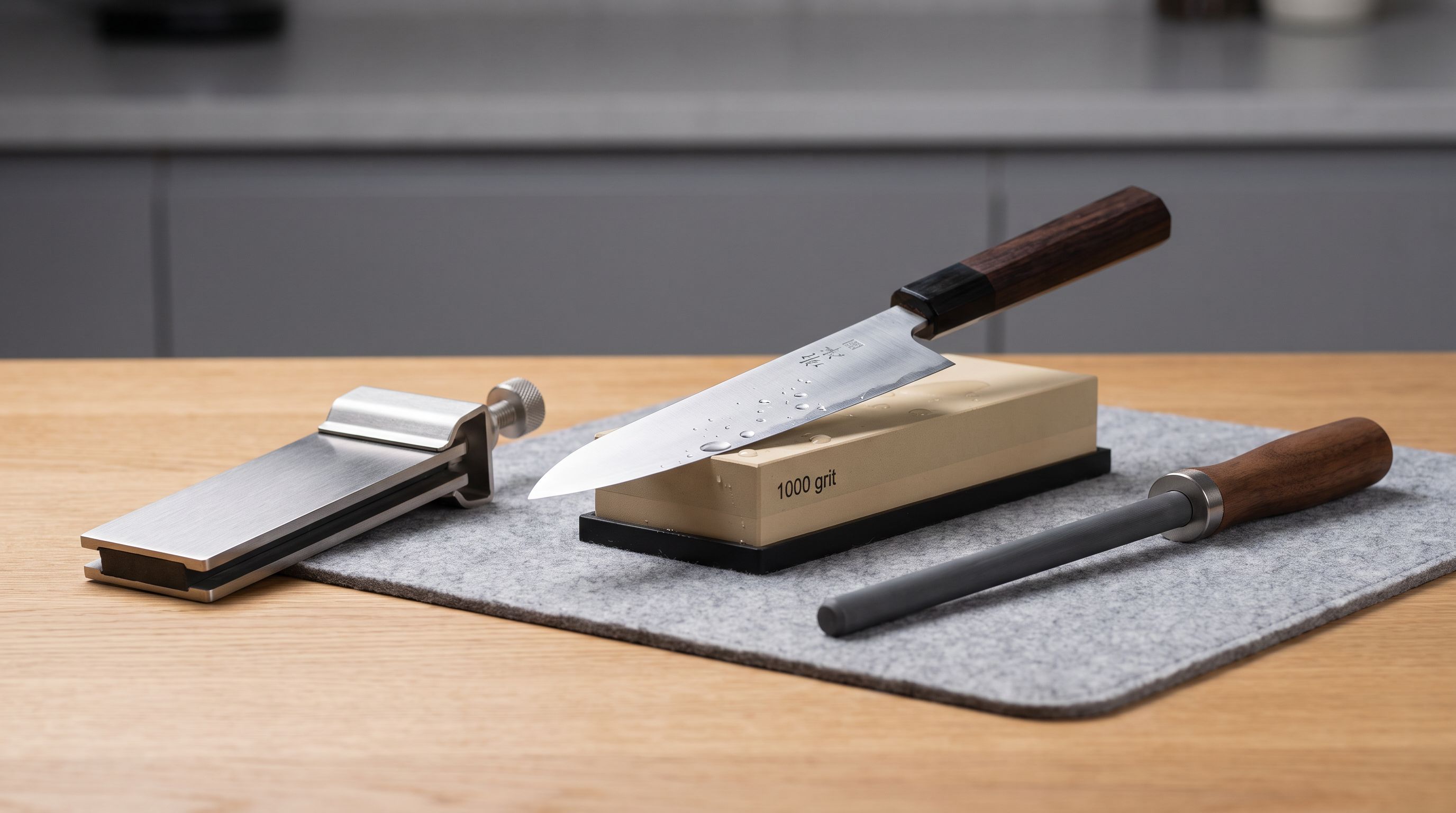
Stones remove the least steel per session in trained hands, work on any geometry including single bevels, and cost the least to maintain. The trade-off is a genuine skill curve — most people need a few hours across several sessions before their freehand edge beats what a guided rig produces in ten minutes.
A practical grit progression for kitchen knives:
- 220–400: repair only. Chips, badly rounded edges, reprofiling. Use sparingly; this is where blade loss happens.
- 800–1000: the workhorse. A Shapton Kuromaku 1000 grit ceramic stone sets a genuinely sharp edge on both German and Japanese steel, and because it's splash-and-go it doesn't need a 15-minute soak before you start.
- 3000–6000: refinement. Worth it on hard Japanese steel; largely wasted on softer German stainless, which won't hold the polish.
- Above 8000: cosmetic for most kitchen use.
If you buy one stone, buy a 1000. Add a 3000–5000 later if you own hard-steel Japanese knives. Add a flattening plate too — dished stones quietly ruin your angle consistency.
Guided-angle systems
Guided rigs clamp the blade (or the abrasive) at a fixed angle so every pass lands identically. They're the most repeatable option, and the results are consistent in a way freehand isn't until you've put in real practice.
The Spyderco Tri-Angle Sharpmaker is the easiest entry point: ceramic rods drop into a base at preset 30 or 40 degree inclusive settings, you hold the knife vertically, and gravity does the angle work. It removes very little steel, which makes it ideal for regular touch-ups — but it's slow to bring back a truly dull knife, and it can't reprofile a 20 degree German edge down to 15.
 Best guided system for beginners · Spyderco Tri-Angle Sharpmaker — Check price on Amazon →
The Lansky Deluxe 5-Stone Controlled-Angle Sharpening System takes the other approach: a clamp on the spine, guide rods through selectable 17, 20, 25 and 30 degree holes, and five hones from coarse to fine. It's the classic budget path to a repeatable bevel. Its limits are real — the clamp position shifts the effective angle on tall blades, and long chef's knives need repositioning mid-sharpen — but for pocket knives and standard 8-inch chef's knives it delivers consistency no beginner gets freehand.
Powered sharpeners
Electric sharpeners trade steel for time. That's the whole bargain.
The Work Sharp Ken Onion Edition Knife & Tool Sharpener is a variable-speed belt system with adjustable guides from 15 to 30 degrees. It's genuinely fast, handles serrations and outdoor tools, and produces a convex edge that's tough and easy to maintain. It also removes a lot of material if you linger, and belt heat is a real risk on thin tips. Use the finest belts and light pressure on kitchen knives.
 Best powered option · Work Sharp Ken Onion Edition Knife & Tool Sharpener — Check price on Amazon →
The Chef'sChoice 15XV Trizor is the set-and-forget option: diamond abrasive wheels that reprofile a 20 degree factory German edge into a 15 degree bevel, then a stropping stage. It's a strong fit for a household with Wüsthof or Zwilling knives and no interest in learning stones. It's a poor fit for expensive Japanese knives, single bevels, or anything you want to keep for 30 years.
Comparison table
| System | Angle control | Steel removed per session | Learning curve | Best for | Weak on |
|---|---|---|---|---|---|
| Shapton Kuromaku 1000 whetstone | Freehand — any angle | Low (skilled) to high (unskilled) | Steep | All knives incl. single bevel; Japanese steel | Requires practice and a flattening plate |
| Spyderco Tri-Angle Sharpmaker | Fixed 30° / 40° inclusive | Very low | Minimal | Frequent touch-ups, serrations, mixed knife blocks | Reprofiling, very dull blades |
| Lansky Deluxe 5-Stone | Clamp guides: 17°–30° | Low to moderate | Low | Repeatable bevels on a budget; pocket knives | Tall blades, long chef's knives |
| Work Sharp Ken Onion Edition | Adjustable 15°–30° | High | Low | Neglected edges, outdoor and shop tools | Thin tips, heat, hard Japanese steel |
| Chef'sChoice 15XV Trizor | Fixed 15° per side | Moderate to high | None | German knives converted to a thinner edge | Japanese/single-bevel knives, long-term blade life |
Long-term blade loss: the part nobody budgets for
A chef's knife has maybe 15–20mm of usable blade height before it stops clearing your knuckles on a cutting board. Every coarse sharpening cycle takes a slice of that.
Rough hierarchy of material removal per full sharpening, worst to best: coarse-wheel electric pull-throughs, belt sharpeners on aggressive belts, coarse stones, guided rigs on medium hones, fine ceramic rods, stropping. A honing rod removes essentially nothing — it realigns a rolled edge rather than cutting a new one.
The practical strategy: hone often, touch up on a fine abrasive before the knife is fully dull, and reserve coarse grits for actual damage. A knife that gets a 60-second pass on ceramic rods every two weeks may never need a coarse stone at all.
How to choose
- You own Japanese knives, or want to learn properly → a 1000-grit stone, plus a 3000–5000 later.
- You want sharp knives with zero skill investment → the Sharpmaker for upkeep, or the Chef'sChoice 15XV if your knives are German and already dull.
- You want repeatable bevels cheaply → the Lansky Deluxe.
- You sharpen hunting knives, shears, and shop tools too → the Work Sharp Ken Onion Edition, with restraint on kitchen blades.
A sensible two-tool setup for most kitchens: one 1000-grit stone for real sharpening, and one low-removal touch-up device you'll actually reach for mid-week.
FAQ
Can I sharpen a Japanese knife on an electric sharpener? You can, but most consumer electrics are built around a fixed angle and aggressive abrasive that doesn't suit thin, hard steel — chipping and excess steel loss are common. Stones or a fine guided system are the safer route.
How often should I sharpen versus hone? Hone before or after most cooking sessions with soft German steel; hard Japanese steel doesn't benefit much from steel rods and prefers a ceramic rod or a light stone pass. Full sharpening is typically every 1–3 months for regular home use, less if you touch up early.
Does a higher grit mean a sharper knife? Not exactly — grit controls edge refinement, not sharpness itself. A well-executed 1000-grit edge cuts better than a sloppy 6000-grit one, and a slightly toothy edge often outperforms a polished one on tomato skin and roast crust.
Do pull-through sharpeners ruin knives? Cheap carbide pull-throughs scrape away steel indiscriminately and leave a ragged edge. They'll make a dull knife cut again, at a real cost to blade life. Fine ceramic pull-throughs are less destructive but still can't match a stone or guided rig.
What about stropping? A leather strop with compound removes the burr and adds noticeable keenness after sharpening, with almost no steel loss. It's the cheapest upgrade to any system on this list.
Our picks

Shapton Ha No Kuromaku Ceramic Whetstone (A-set) Medium Grit (#1000) + Fine Grit (#5000)
Fast-cutting splash-and-go ceramic stone that handles both German and Japanese steels without long soaks.
Spyderco Tri-Angle Premium Sharpmaker Set with DVD and Two Sets of Alumina Ceramic Stones - 204MF OPEN BOX
Fixed 30 and 40 degree inclusive settings, ceramic rods, near-zero learning curve and almost no steel loss.

Lansky Deluxe Knife Sharpening System: 5-Stone Ceramic Knife Sharpener Kit with Honing Oil - LKCLX
Clamp-and-rod kit with five grits and selectable 17 to 30 degree angles for repeatable bevels on a budget.
WORK SHARP Ken Onion Knife Sharpener Tool - Adjustable Knife Sharpening System - For Knives, Scissors, Serrated Blades, & Tools
Variable-speed belt sharpener with adjustable 15 to 30 degree guides; fast on neglected edges, but it removes steel.
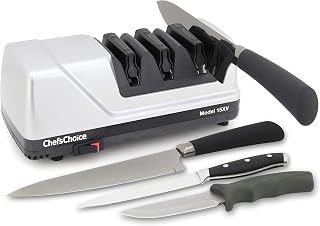
Chef’sChoice 15XV EdgeSelect Professional Electric Knife Sharpener with 100-Percent Diamond Abrasives and Precision Angle Guides for Straight Edge and Serrated Knives, 3-Stage, Gray
Converts 20 degree German edges to a 15 degree bevel with diamond wheels and a stropping stage.
Get the best kitchen gear deals in your inbox
Join the PrepDeck newsletter for hand-picked kitchen gear deals and new buying guides. No spam, unsubscribe anytime.
Related reads
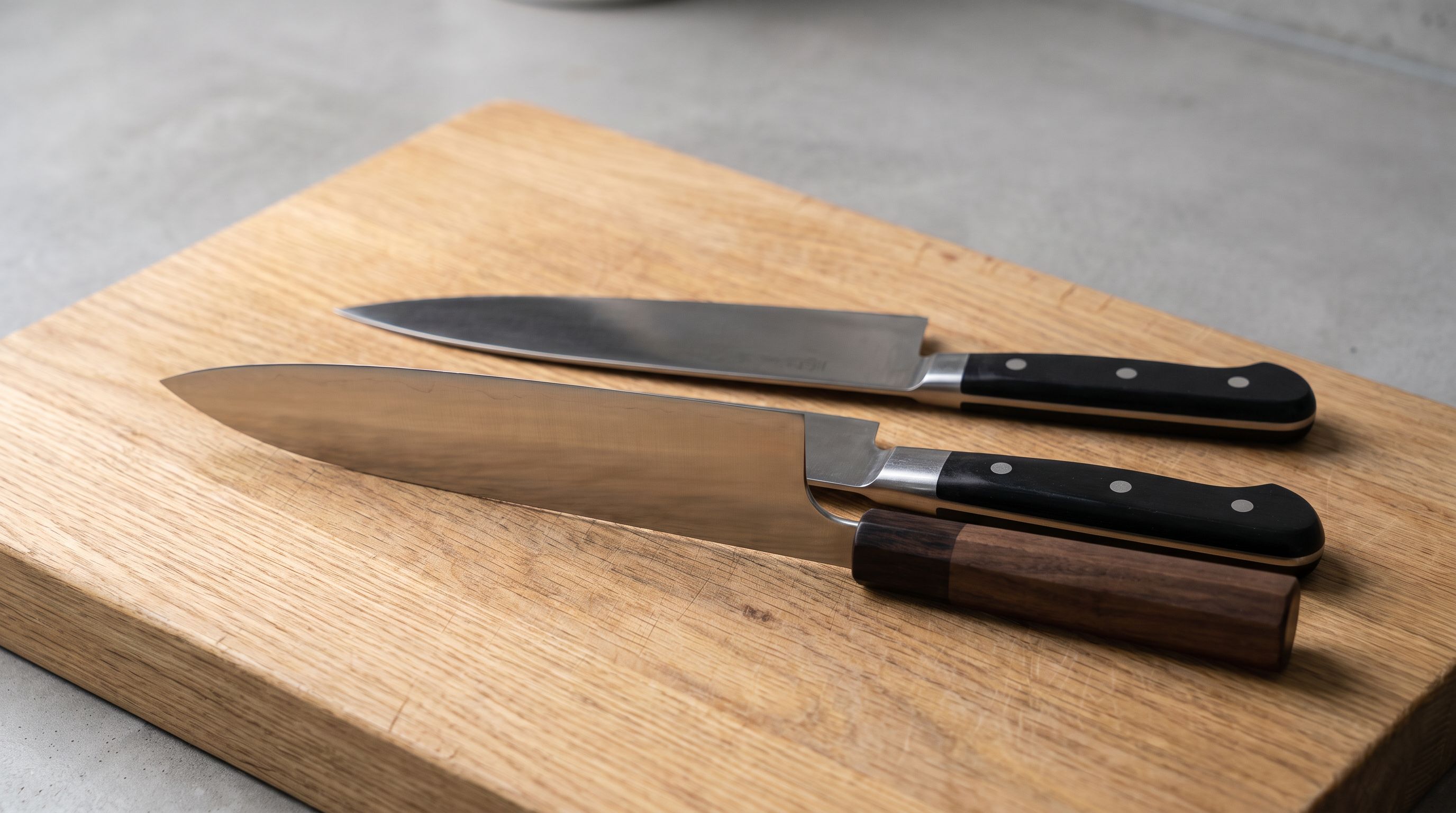
Japanese vs German Chef Knife: Which Fits Your Hands in 2026
Japanese vs German chef knife, compared on edge angle, steel hardness, blade geometry and upkeep — plus four knives worth buying as your first serious blade in 2026.
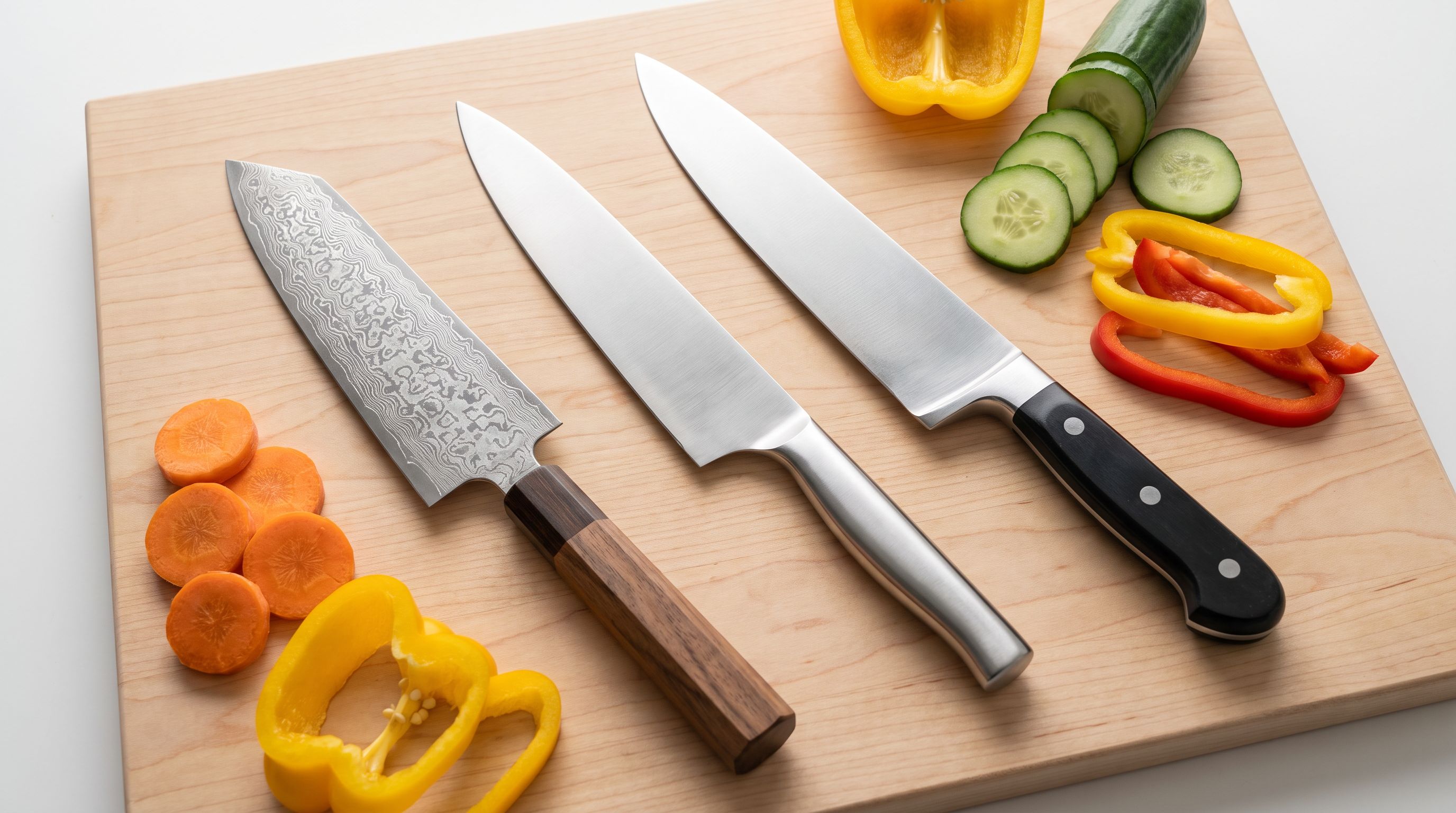
VG-10 vs AUS-10 vs S35VN: The Best Chef Knife Steel in 2026
VG-10, AUS-10, S35VN and X50CrMoV15 decoded. Learn which chef knife steel matches your cooking style, hardness, edge retention and chip risk in 2026.
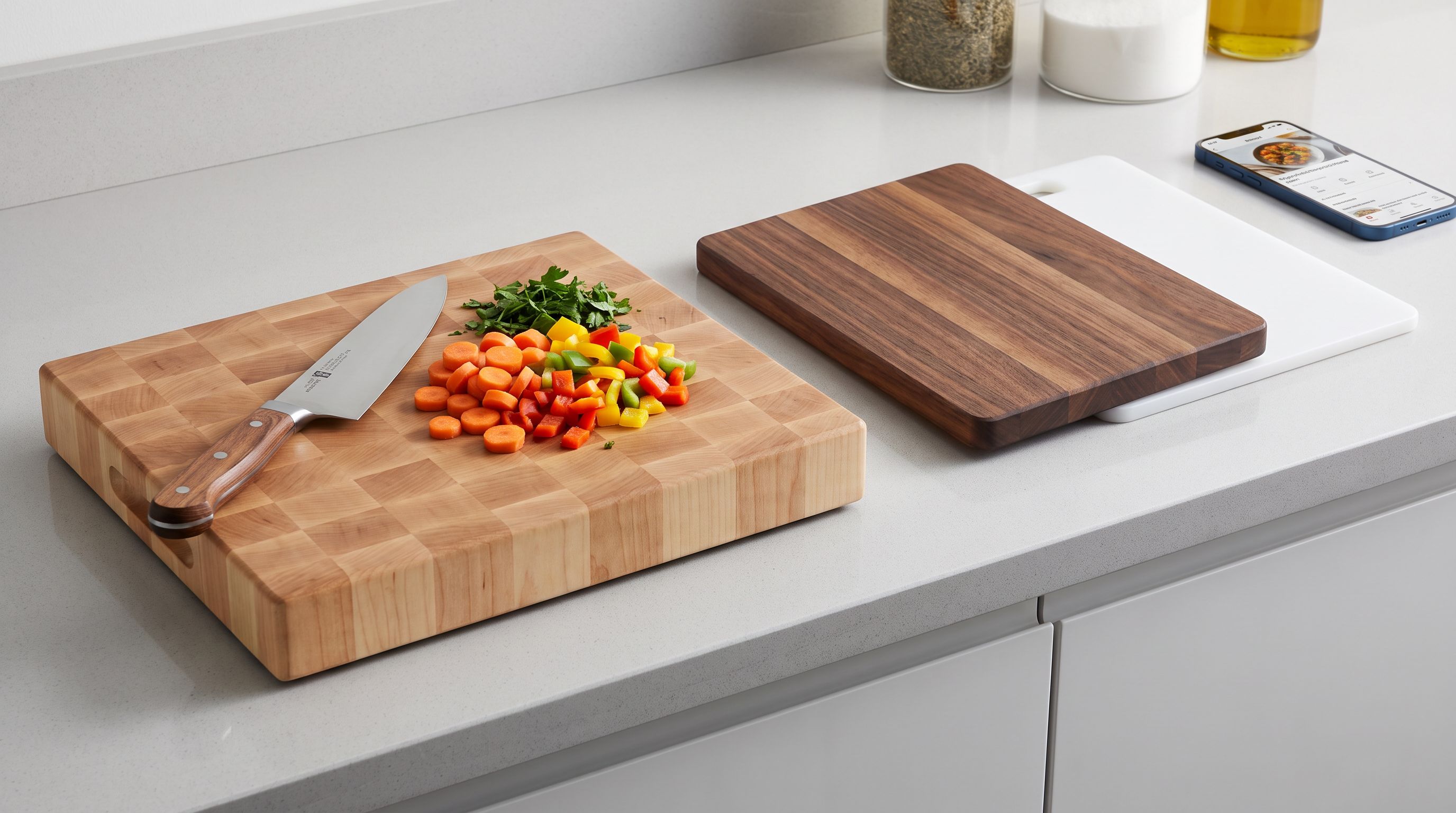
Cutting Boards in 2026: End Grain vs Edge Grain vs Plastic
End grain, edge grain or plastic? We compare wood species, thickness, knife-edge wear, warping and dishwasher reality to find the best cutting board for 2026.