Kamado vs Pellet Grill in 2026: The 5-Year Fuel Math
Kamado vs pellet grill in 2026: we compare lump charcoal and pellet consumption, gaskets, augers, accessories and the real five-year cost of each platform.
Reader-supported: we may earn a commission from links on this page, at no extra cost to you. It never affects our picks. Learn more.
Most kamado-versus-pellet arguments stop at the sticker price. That's the least interesting number. What actually separates these two platforms over five years is what you feed them, what wears out, and how much accessory spend each one quietly demands once it's on your patio.
We compared both platforms using manufacturer specs, published consumption figures, independent review testing and verified owner feedback. Below is a realistic model of multi-year ownership — not a promise about your utility bill, but a framework you can plug your own cooking habits into.
The short version
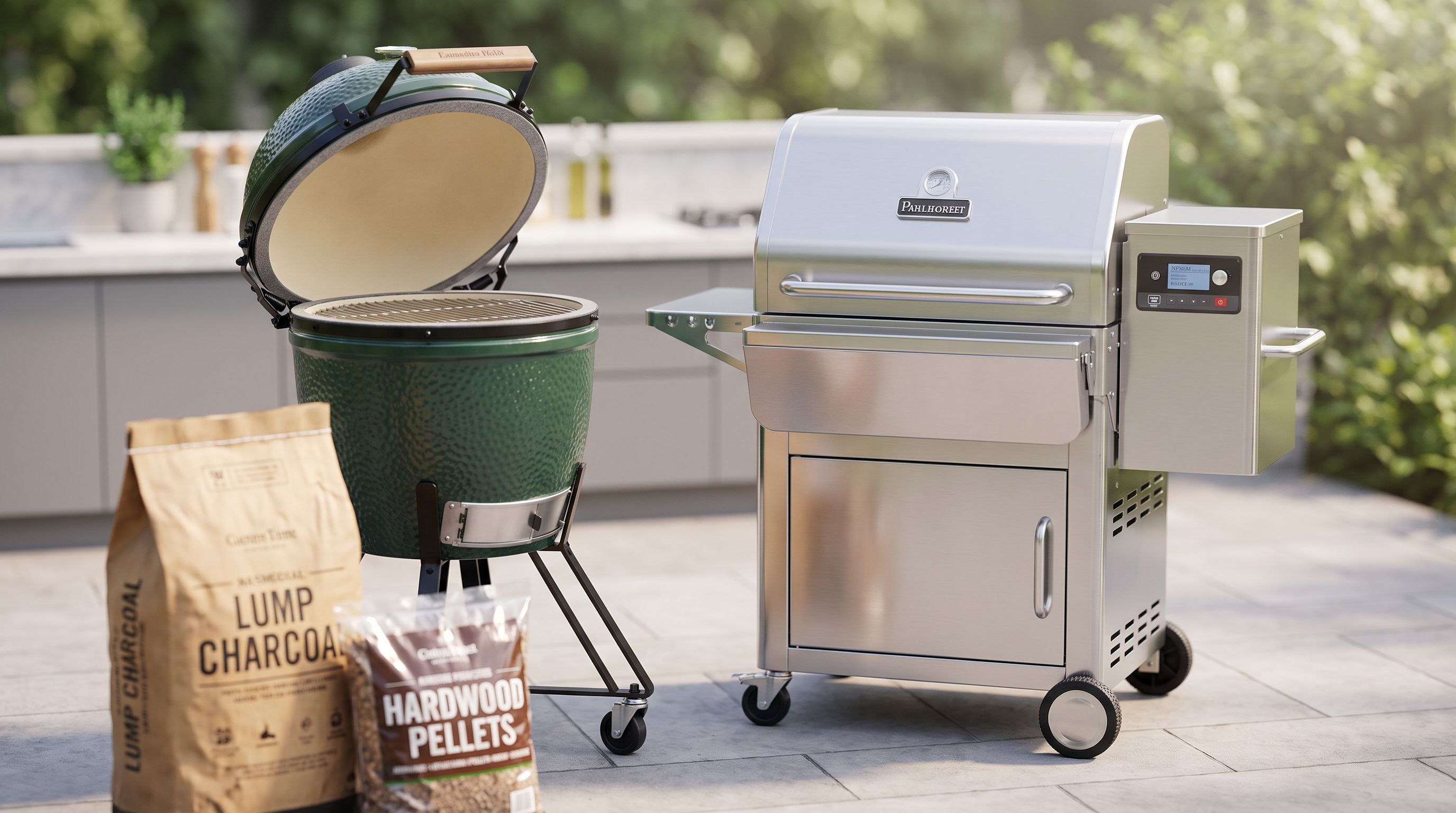
A kamado is a thick ceramic (or insulated steel) vessel that burns lump charcoal. It's absurdly efficient because the walls hold heat, and it tops out hot enough for pizza and steak searing. You manage temperature with two vents and a little patience.
A pellet grill is an electrically-driven convection oven that augers compressed hardwood pellets into a fire pot, with a PID controller holding a set temperature. You press a button and walk away. It excels at hands-off smoking and roasting, and struggles to produce a proper hard sear without accessories.
Neither is strictly better. But the fuel curve bends in opposite directions.
Fuel: how much each one actually burns
This is where the platforms diverge most.
Kamado consumption. A well-sealed ceramic kamado running a 225–250°F smoke typically burns on the order of 1–2 lb of lump charcoal per hour, and because the firebox holds a large charge, a single load can carry an overnight brisket without a refill. High-heat grilling burns more per hour but for far less time. Realistically, a household cooking 50–60 times a year — a mix of quick sears and a handful of long smokes — lands somewhere in the range of 8–14 bags of lump annually.
Pellet consumption. Manufacturers broadly publish 1–3 lb of pellets per hour at smoke temperatures and up to 3+ lb/hr at high heat, depending on ambient temperature, wind and how well-insulated the barrel is. Pellets come in 20 lb bags. The same 50–60 cooks a year commonly works out to 12–20 bags.
Two things push the pellet number up that people forget. First, cold weather is brutal — a thin steel barrel at 20°F outside can double hourly consumption, which is why insulated blankets exist. Second, pellets are hygroscopic. A bag left open in a humid garage turns to sawdust, jams the auger, and gets thrown away. Charcoal doesn't care.
Per pound, lump charcoal and hardwood pellets are usually in the same ballpark at retail, with pellets sometimes cheaper when bought by the pallet. The kamado's advantage isn't cheaper fuel — it's burning less of it, and never wasting any.
Wear parts: gaskets vs augers and igniters
Here's the part nobody shops for.
Kamado wear items are short and predictable: the felt or fiberglass gasket that seals the dome, the firebox (cheap ceramic fireboxes crack, and most quality brands warrant them), and the ash tool / fire ring hardware. Gaskets on heavily used kamados typically want replacing every few years; high-temp fiberglass replacements last longer than the factory felt on older units. Total parts spend across five years is modest and the work is DIY-level.
Pellet wear items are electromechanical: the auger motor, the induction fan, the hot rod igniter, the temperature probe and the controller board. Igniters are the most commonly replaced item and are genuinely consumable. Owner reports across major brands put igniter life in the range of a few hundred cycles; auger motors and fans fail less often but cost more. Replacement parts are widely available for Traeger, Camp Chef and Pit Boss — availability is a real buying criterion. A pellet grill is a small appliance and should be budgeted like one.
Pellet grills also need cleaning that kamados don't: fire pot vacuuming every handful of cooks, grease management, and periodic full teardown. Skip it and you get the famous grease fire or a temperature swing you'll blame on the controller.
Accessories: the spend you don't see coming
| Cost area | Kamado | Pellet grill |
|---|---|---|
| Typical fuel per hour (smoking) | ~1–2 lb lump | ~1–3 lb pellets |
| Fuel waste risk | Low — charcoal is shelf-stable | Moderate — pellets degrade with moisture |
| Cold-weather penalty | Minimal (ceramic insulates) | Significant without a blanket |
| Electricity needed | None | Yes, continuous |
| Main wear parts | Gasket, firebox, fire ring | Igniter, auger motor, fan, controller |
| Parts replacement frequency | Low, DIY-friendly | Moderate, igniter most common |
| Near-mandatory accessories | Heat deflector, grill gripper, ash tool, cover | Cover, pellet storage bin, grease liners, (cold climates) insulation blanket |
| Common upgrade spend | Pizza stone, rotisserie, extra racks | Sear kit / GrillGrates, extra probes, folding front shelf |
| Max sear temperature | Very high | Limited without accessories |
| Hands-on attention per cook | Moderate | Minimal |
The honest summary: a kamado's required accessories are mostly one-time purchases that never wear out — a ceramic deflector, a decent ash tool, a gripper. A pellet grill's ongoing costs are more consumable: liners, storage, probes, and eventually the parts above. Factor in the sear accessory almost every pellet owner buys within year one once they realize a 500°F grate doesn't make a steak crust.
So which platform costs more over five years?
Modeled honestly, the kamado usually wins on running cost — less fuel burned, no electricity, fewer failure-prone parts — while the pellet grill wins on upfront price at most tiers and on time, which is a real currency.
The crossover point depends on how you cook:
- Mostly long smokes, 20+ a year. The kamado's efficiency compounds. A ceramic unit like the Kamado Joe Classic Joe III will burn through less fuel over five years than almost any pellet grill, and its wear parts are cheap.
- Mostly weeknight roasting and set-and-forget cooks. A Traeger Pro 575 earns back its fuel premium in convenience. You will cook more often, which is the only metric that matters.
- Budget-constrained but charcoal-curious. The Char-Griller Akorn Kamado is insulated steel rather than ceramic — a fraction of the price, light enough to move, and genuinely stingy with charcoal. It won't retain heat like ceramic in deep cold, and the steel body is less durable long-term, but it's the cheapest route into kamado-style cooking.
- Want pellet convenience without the flavor compromise. The Camp Chef Woodwind Pro 24 adds a smoke box that burns real wood chunks alongside pellets. It costs more up front and uses slightly more fuel overall, but it addresses the single biggest complaint pellet owners have.
- Just want great smoked food cheaply. Be honest with yourself: a Weber Smokey Mountain Cooker 18" costs a fraction of either platform, burns charcoal efficiently, has essentially no parts to fail, and produces barbecue that wins competitions. It's not convenient and it doesn't grill. But on five-year cost per pound of brisket, nothing beats it.
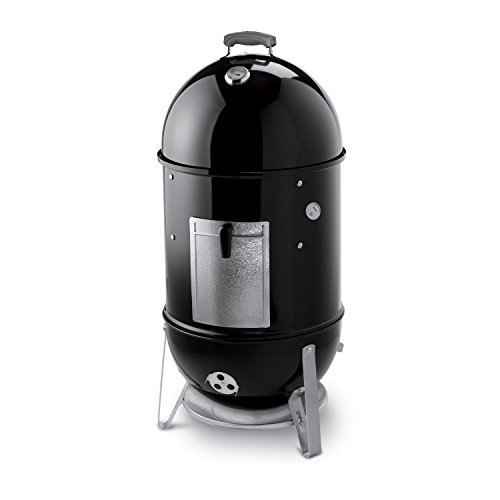 Best low-cost alternative · Weber Smokey Mountain Cooker 18 — Check price on Amazon →
 Budget kamado pick · Char-Griller Akorn Kamado Charcoal Grill — Check price on Amazon →
 Best overall pellet grill · Traeger Pro 575 Wood Pellet Grill — Check price on Amazon →
 Best overall kamado · Kamado Joe Classic Joe III 18 Ceramic Grill — Check price on Amazon →
The deciding question
Ask yourself how many cooks per year you'll realistically do, and whether you'll actually be home to manage vents. A kamado rewards attention with efficiency and searing heat. A pellet grill buys back your Saturday at the cost of a bag of pellets and some eventual parts. Both are defensible. Only one fits your schedule.
FAQ
Does a kamado really use less fuel than a pellet grill? Yes, in most conditions. Ceramic walls radiate heat back into the cook chamber, so the fire needs less oxygen and less fuel to hold temperature. Pellet grills fight heat loss through thin steel, especially in wind and cold.
How often do pellet grill igniters fail? There's no universal figure, but igniters are the most commonly replaced pellet grill part and owners frequently report replacing one within a few years of regular use. They're inexpensive and usually user-serviceable; budget for one.
Can a pellet grill sear a steak? Not well on its own. Most top out around 450–500°F at the grate. Adding GrillGrates, a sear box, or reverse-searing in a cast iron pan solves it. A kamado hits searing temperatures natively.
Do kamado gaskets need replacing? Eventually. Factory felt gaskets degrade with high-heat cooks; high-temperature fiberglass or Nomex replacements last considerably longer. It's a 30-minute DIY job and the parts are inexpensive.
Can pellets be stored outdoors? No. Store pellets sealed, indoors, off concrete. Moisture swells them, degrades combustion, and causes auger jams — which is both a fuel-cost and a repair-cost problem.
Which is better for beginners? A pellet grill, clearly. Set a temperature, insert a probe, walk away. A kamado has a learning curve around vent control and overshooting temperature — recoverable, but it costs you a cook or two early on.
Our picks
Kamado Joe Classic Joe Series II 18-inch Ceramic Charcoal Grill and Smoker with Cart, Side Shelves, Stainless Steel Grates and 250 Cooking Square Inches in Red, Model KJ-23RHC
Three-tier divide-and-conquer rack system, top-vent kontrol tower and a genuinely good gasket out of the box.
Traeger Pro 22 Wood Pellet Grill & Smoker, 572 Sq In | 6-in-1 BBQ versatility, meat probe, 450°F max, 18 lb hopper – grill, smoke, bake, roast, braise & BBQ
Reliable PID controller, WiFIRE app control and the widest accessory and parts network of any pellet brand.
Char-Griller AKORN 20-Inch Kamado Charcoal Grill and Smoker, Triple-Wall Insulated Steel with Cast Iron Grates, Warming Rack and EasyDump Ash Pan, 445 Sq. In. Cooking Area, Graphite
Insulated steel instead of ceramic: far cheaper, far lighter, and it sips charcoal on long low-and-slow cooks.

Utheer Pellet Grill Cover for Camp Chef 24 Woodwind Pro DLX/SG w/o Sidekick | Fits Woodwind Pro 24, SmokePro DLX 24 and SG 24, PG24SE PG24SGB/PG2424SGB PG24MZG PG24WWSB Full-Length 600D Waterproof Cover
Smoke box burns wood chunks alongside pellets, closing most of the flavor gap with charcoal.
Weber® Smokey Mountain Cooker Smoker, 18" Charcoal Smoker | 18-inch Outdoor BBQ Smoker with Dual Cooking Grates, Porcelain‑Enameled Kettle & Temperature Control Dampers, Charcoal Grill
If budget is the deciding factor, a bullet smoker delivers charcoal flavor for a fraction of either platform.
Get the best kitchen gear deals in your inbox
Join the PrepDeck newsletter for hand-picked kitchen gear deals and new buying guides. No spam, unsubscribe anytime.
Related reads
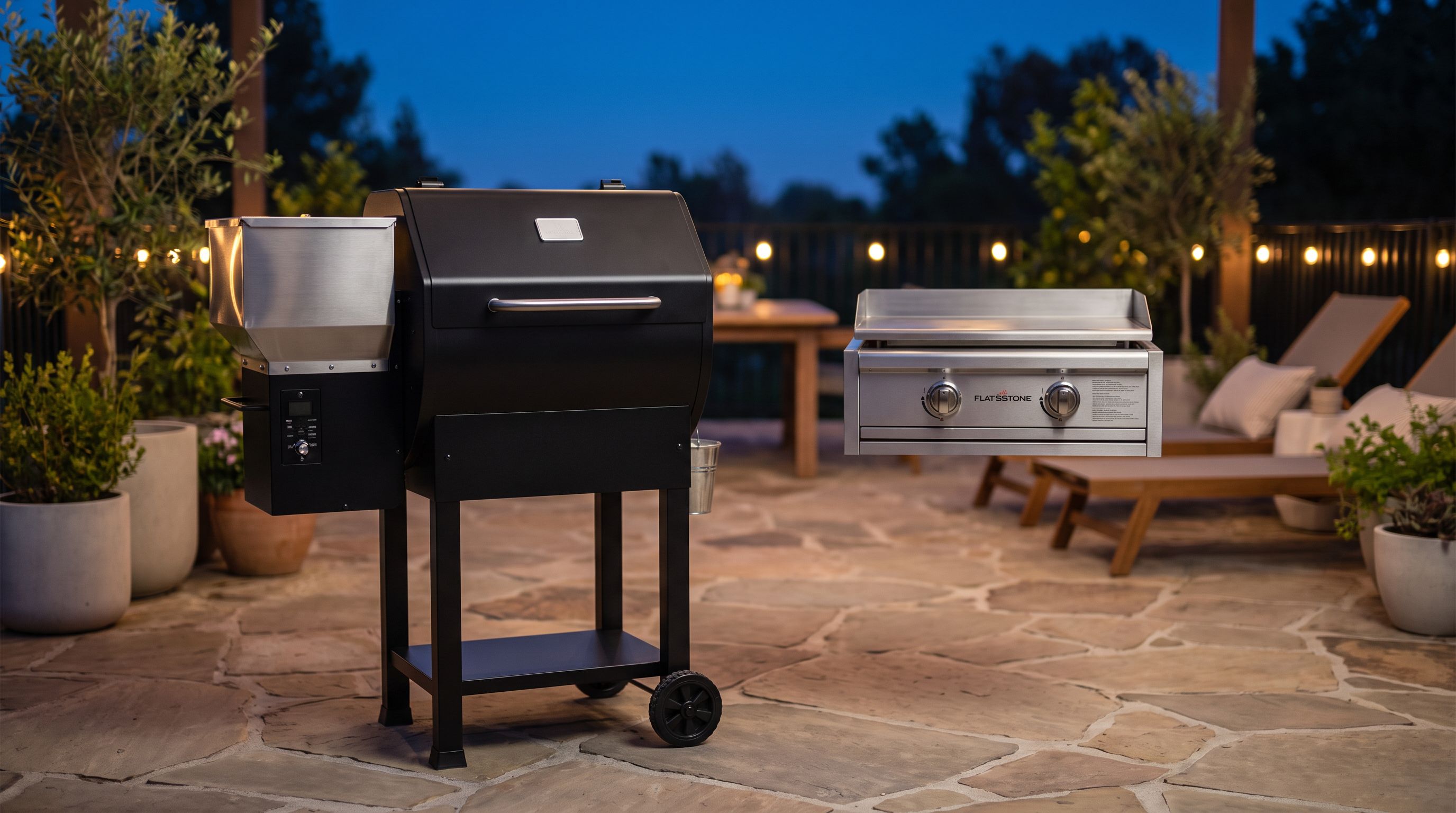
Pellet Grill Griddle Combo or Two Machines? 2026 Guide
Pellet grill griddle combo vs a dedicated pellet smoker in 2026: hopper size, griddle temps, cook surface and which one actually earns the patio slot.
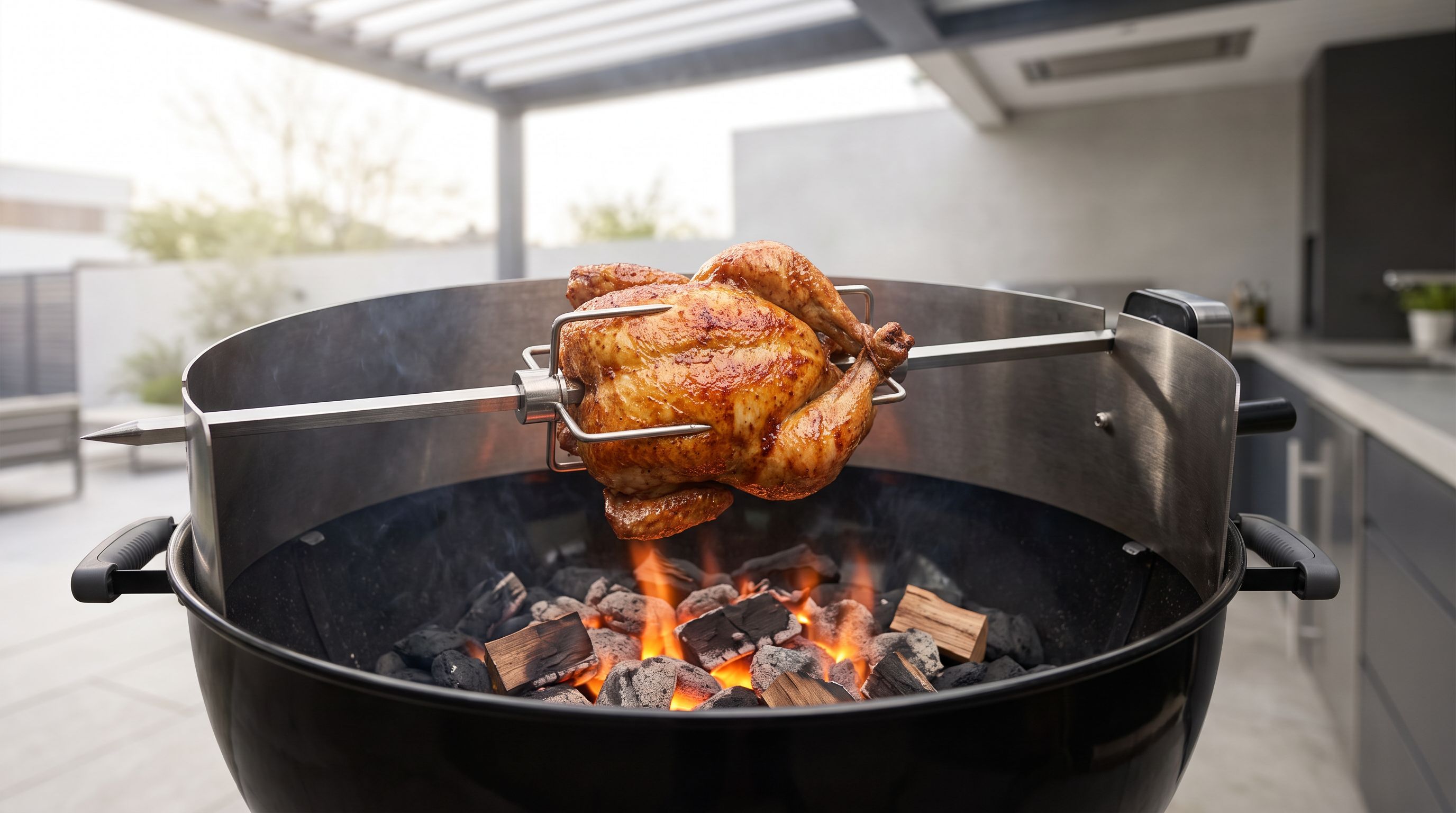
Grill Rotisserie Kit 2026: Fit Your Kettle Before You Shop
A grill rotisserie kit only works if the ring, spit and motor match your grill. Our 2026 guide to fitting 22-inch kettles, kamados and gas grills.
Flat Top Griddle vs Pellet Grill in 2026: Only Room for One
Flat top griddle vs pellet grill in 2026: we compare fuel cost, cook surface, cleanup, winter use and long-term durability to help you pick the one that earns your patio.