Kamado Grills in 2026: 5 Picks Sized by Cooking Grate
The best kamado grill 2026 guide: we compare ceramic and steel kamados by grate diameter, wall thickness, gasket life and patio footprint to match capacity to your family.
Reader-supported: we may earn a commission from links on this page, at no extra cost to you. It never affects our picks. Learn more.
Kamados get sold on temperature range and ceramic mystique, but the spec that actually determines whether you're happy three years in is far more boring: the diameter of the main cooking grate. Everything else — wall thickness, gasket type, hinge design — matters mostly because it protects that cooking space from being unusable.
We compared the current 2026 lineups from Kamado Joe, Big Green Egg, Primo, Char-Griller and Weber using manufacturer specs, third-party review data and verified owner feedback, and sorted them by what you can actually fit on the grate. Here's how to match a kamado to your household and your patio.
Start with grate diameter, not dome size
Kamado marketing quotes dome volume, "total cooking area" (which includes upper racks you may rarely use), and sometimes exterior width. The number to anchor on is the primary grate diameter, because that's your usable single-layer searing and smoking surface.
Rough capacity by grate size:
- 13–14 inches — two steaks, a spatchcocked chicken, a small pork butt. One or two people.
- 16–17 inches — four to six burgers comfortably, one rack of ribs curled or cut, a 12 lb turkey. Couples and small families.
- 18 inches — the sweet spot. Six to eight burgers, two racks of ribs on a rib rack, a 14 lb brisket flat. Family of four plus guests.
- 24 inches — two pork butts side by side, a packer brisket laid flat, 10+ burgers. Entertainers and competition-curious cooks.
Note that upper or half-moon racks add area but not depth of airflow. A second tier is excellent for ribs and wings; it's not a substitute for a wider firebox when you're searing.
Ceramic vs. insulated steel
The classic kamado is thick-walled ceramic, typically around an inch or more of refractory material with a glazed exterior. The steel alternative — Char-Griller's Akorn is the best-known — uses a triple-wall insulated steel body.
Ceramic wins on: heat retention over 12-hour cooks, temperature stability when the wind picks up, and longevity of the body itself (most ceramic makers offer very long or lifetime body warranties). Ceramic also radiates heat back into the dome, which is why ceramic kamados bake pizza so well.
Steel wins on: weight (an Akorn is light enough for one or two people to move; a comparable ceramic kamado is a two-to-four-person lift), shock resistance (ceramic cracks if you drop it or thermal-shock it), price, and warm-up time. Steel climbs to temperature faster and cools faster — a genuine advantage on a weeknight.
Steel's real downside is long-cook stability in cold or windy weather and a shorter expected lifespan at the seams and ash pan. If you grill year-round in a northern climate and smoke overnight, ceramic earns its weight.
Gaskets: the part that actually fails
A kamado's airtight seal is what makes it a kamado. The gasket between dome and base is also the single most common wear item, and brands differ meaningfully.
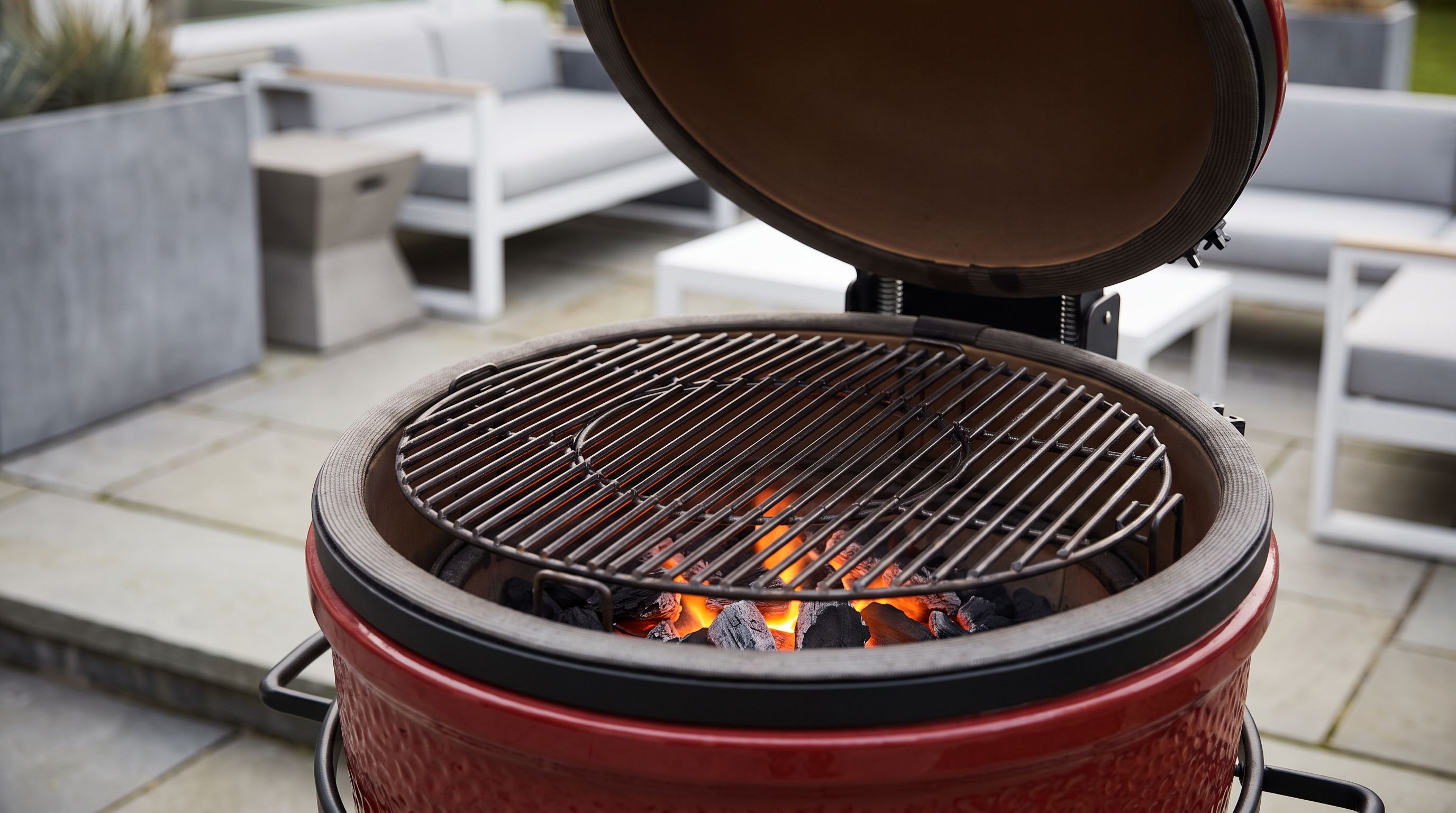
Older felt gaskets scorch and shed if you regularly run above 600°F for searing or pizza. Modern high-temp gaskets — Kamado Joe uses a wire-mesh fiberglass design, Big Green Egg ships a high-temp replacement material — tolerate searing temps far better. Whatever you buy, confirm two things: that replacement gaskets are sold directly by the manufacturer, and that they're user-replaceable with adhesive rather than requiring a service call. Budget on replacing one every few years if you sear hard.
Hinge design feeds into this. A spring-assisted or air-lift hinge that closes the dome squarely puts even pressure on the gasket; a sloppy hinge chews one side of the seal. The Kamado Joe air-lift hinge is a standout here because the dome lifts with a finger and seats flat.
The picks, by grate size
18 inches: Kamado Joe Classic Joe II
 Best overall · Kamado Joe Classic Joe II 18-inch — Check price on Amazon →
The Classic Joe II remains the default recommendation for most buyers and the returning top pick in multiple independent 2026 roundups. The 18-inch grate is the versatility sweet spot, and the Divide & Conquer rack system — two half-moon grates that sit at two different heights — is the most genuinely useful accessory in the category. You can sear a steak over bare coals on one side while vegetables roast higher on the other. The ceramic is thick, the wire-mesh gasket handles pizza temps, and parts availability is excellent.
Downsides: it's heavy, and the included cart is good but takes up real patio width. Measure before you buy.
24 inches: Kamado Joe Big Joe III
 Best for big cooks · Kamado Joe Big Joe III 24-inch — Check price on Amazon →
Step up only if you actually cook for crowds. The 24-inch grate takes two pork butts side by side without choking airflow, which the 18-inch cannot do properly. Fuel consumption rises accordingly — a full Big Joe load is a lot of lump charcoal — so it's an inefficient choice for two-person weeknight cooking. If your pattern is "small cooks most weeks, big cooks occasionally," the Classic is still the smarter buy.
17 inches, oval: Primo Oval Large 300
 Best for two-zone cooking · Primo Oval Large 300 Ceramic Grill — Check price on Amazon →
Primo's oval firebox is the structural answer to two-zone cooking. Instead of a round fire you divide with accessories, the oval shape lets you build charcoal at one end and leave the other genuinely cool — a true indirect zone without a deflector plate. Primo ceramics are made in the USA and the brand has a deep reputation for heavy-wall construction. The tradeoff is that oval grates, deflectors and covers are Primo-specific; you won't find as much third-party accessory support as the round-kamado world enjoys.
13.5 inches: Kamado Joe Joe Jr.
 Best small-space pick · Kamado Joe Joe Jr. 13.5-inch — Check price on Amazon →
The Joe Jr. is the honest small-space pick. A 13.5-inch grate handles a chicken, four burgers, or a couple of steaks, and it's light enough to move or take camping with a stand. It still has the ceramic heat retention that makes low-and-slow possible. Don't buy it hoping to feed six people; buy it because your balcony is 40 square feet.
16 inches, steel: Char-Griller Akorn Kamado
The Akorn is the entry point that converts people to kamado cooking without a ceramic-level commitment. Triple-wall insulated steel, a 16-inch grate, and a body light enough to wheel around solo. It holds low temps well for a steel unit and heats up notably faster than ceramic. Owner feedback consistently flags the ash pan and the paint finish as the first things to show age, and it's more wind-sensitive than ceramic — a windbreak helps. For the money, it's still the best way to find out whether you're a kamado person.
Comparison table
| Model | Main grate | Body | Best for | Watch out for |
|---|---|---|---|---|
| Kamado Joe Classic Joe II | 18 in | Thick ceramic | Family of 4, all-round cooking | Heavy; cart needs patio width |
| Kamado Joe Big Joe III | 24 in | Thick ceramic | Two butts, packer briskets, crowds | High fuel use on small cooks |
| Primo Oval Large 300 | ~17 in oval | Thick ceramic, US-made | True two-zone direct + indirect | Brand-specific accessories |
| Char-Griller Akorn | 16 in | Triple-wall steel | Budget entry, easy to move | Wind sensitivity, ash pan wear |
| Kamado Joe Joe Jr. | 13.5 in | Ceramic | Balconies, tailgates, 1–2 people | Too small for entertaining |
Patio footprint and the stuff nobody measures
A kamado on a nest-and-side-shelf cart is usually 15 to 20 inches wider than the grill itself. Before ordering, tape out the cart footprint on your deck, then add clearance: you need room to swing the dome open and space behind for heat. Most manufacturers specify minimum clearance from combustible walls and railings — check it, especially on a wood deck, and use a heat-resistant mat under the unit.
Also plan for storage of a deflector plate, ash tool, and a cover. The cover matters more than people expect: ceramic kamados tolerate rain, but water sitting in the firebox leads to clumped ash and a slower light.
FAQ
Is ceramic always better than steel? No. Ceramic is better at long, stable, cold-weather cooks and radiant baking. Insulated steel is lighter, cheaper, faster to heat, and won't crack if it tips. For a weeknight griller in a mild climate, steel is a rational choice.
How long does a kamado gasket last? Depends on how often you run above 600°F. Modern high-temp gaskets commonly go several years under normal use; frequent searing and pizza cooks shorten that. Replacement kits are inexpensive and owner-installable on the major brands.
What size should I buy if I'm unsure? 18 inches. It handles a brisket flat and two racks of ribs, sears four to six portions at once, and doesn't waste fuel on a two-person dinner. The 24-inch class is for people who already know they need it.
Can I use briquettes? Lump charcoal is strongly preferred. Briquettes produce far more ash, which clogs the lower vent and strangles airflow in a sealed kamado. Lump also lights faster and leaves less residue in the firebox.
Do I need the two-tier rack system? It's the accessory most owners actually use. If your chosen grill doesn't include one, budget for a half-moon or raised secondary grate early — it roughly doubles practical capacity for ribs, wings and vegetables.
Our picks
Kamado Joe Classic Joe Series II 18-inch Ceramic Charcoal Grill and Smoker with Cart, Side Shelves, Stainless Steel Grates and 250 Cooking Square Inches in Red, Model KJ-23RHC
18-inch grate, two-tier Divide & Conquer rack and a replaceable gasket make it the most usable mid-size kamado.
Kamado Joe Big Joe Series III 24-inch Ceramic Charcoal Grill and Smoker with Premium Cart, SloRoller Insert and 450 Cooking Square Inches in Red, Model KJ15041021
24-inch grate swallows two pork butts or a full rib rack without crowding airflow.
Char-Griller Akorn Kamado 16-inch
Insulated triple-wall steel at a fraction of ceramic weight and price; great starter kamado.
Kamado Joe Joe Jr 13.5-inch Portable Ceramic Charcoal Grill with Grill Stand, Stainless Steel Cooking Grate, Heat Deflectors and Ash Tool in Red, Model KJ13RH
13.5-inch grate and portable size for balconies, tailgates and two-person cooks.
Primo Grills All-in-One Oval Large 300 Ceramic Kamado Grill with Cradle, Side Shelves, and Stainless Steel Grates - PGCLGC (2021), Black
Oval firebox gives a true hot side and cool side — the easiest kamado for indirect and direct at once.
Get the best kitchen gear deals in your inbox
Join the PrepDeck newsletter for hand-picked kitchen gear deals and new buying guides. No spam, unsubscribe anytime.
Related reads
Flat Top Griddle vs Pellet Grill in 2026: Only Room for One
Flat top griddle vs pellet grill in 2026: we compare fuel cost, cook surface, cleanup, winter use and long-term durability to help you pick the one that earns your patio.
Portable Pizza Ovens 2026: Pick Your Stone Size First
The best portable pizza oven 2026 picks compared by stone diameter, fuel type, preheat time and packed weight — so your oven matches the pie you actually bake.
Flat Top Griddles in 2026: 5 Picks Ranked by Cook Surface
The best flat top griddle for 2026, sorted by cooking surface, burner zones and plate thickness — plus seasoning, rust protection and cover advice for year-round patio use.