Induction Cookware Sets in 2026: What Passes the Magnet Test
The best induction cookware set for your hob depends on base construction, not marketing. How cladding, disc bases and warping work — plus 4 sets that qualify.
Reader-supported: we may earn a commission from links on this page, at no extra cost to you. It never affects our picks. Learn more.
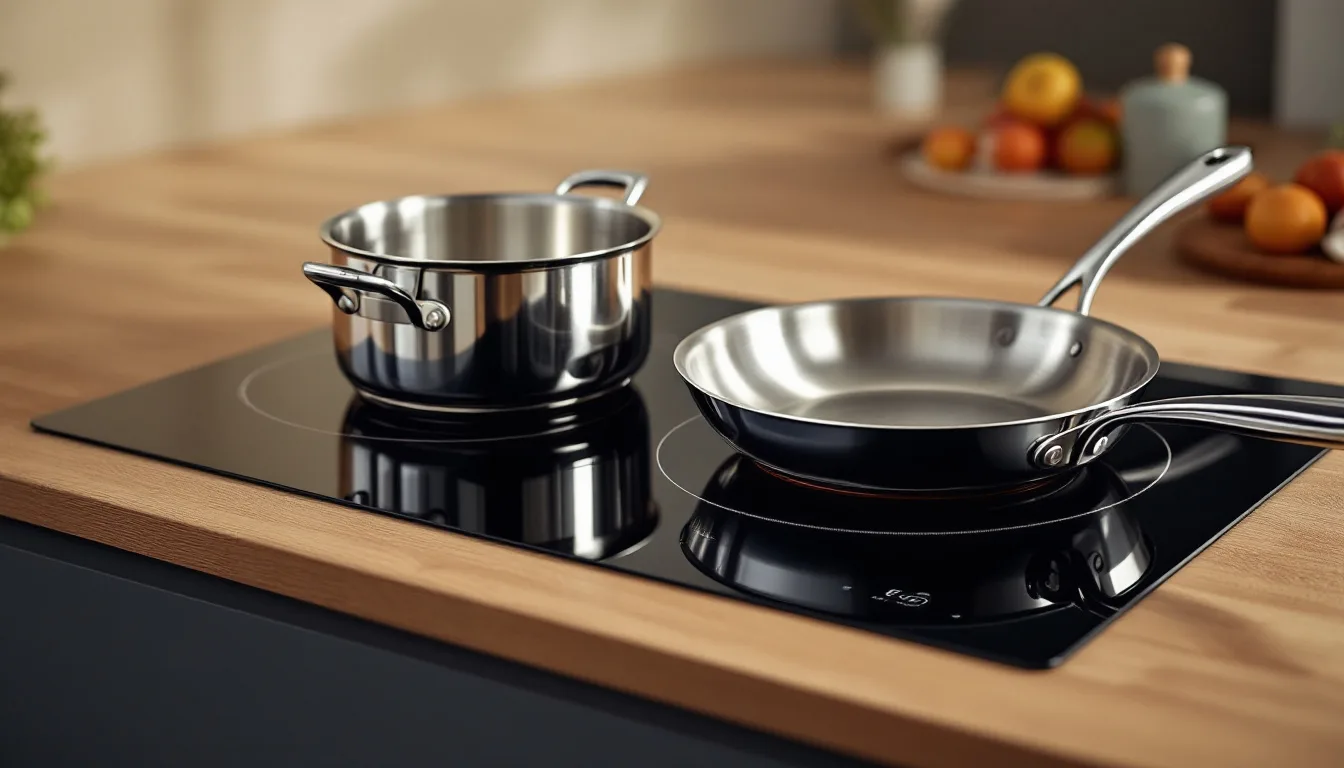
Induction cooktops don't heat pans. They heat ferrous metal, using a magnetic field that induces eddy currents directly in the base of the pan. That one fact explains everything confusing about shopping for cookware in 2026: why a $400 copper saucier does nothing on your hob, why a cheap disc-bottom pot boils water faster than a premium clad pan, and why "induction compatible" on a box is a claim, not a guarantee of good performance.
This guide covers what actually matters in base construction, how cladding layers behave under an induction coil, why pans warp and click, and which sets we'd put on a glass-top induction range right now.
The magnet test — and its limits
Stick a fridge magnet to the bottom of a pan. If it clings firmly, there's enough ferromagnetic material to couple with the field. If it slides off or barely tacks, the pan won't work — or will work erratically.
That's the floor, not the ceiling. Three things the magnet test won't tell you:
- Coverage. A small magnetic disc on a large pan means only the centre heats. Many induction hobs also require a minimum base diameter (commonly around 11–12 cm / 4.5 inches) before the element will even switch on. Small milk pans and 1-quart saucepans are the usual casualties.
- Flatness. Induction depends on close contact with the glass. A base that's convex by even half a millimetre heats unevenly and rattles.
- Thermal spreading. Magnetic steel heats, but stainless is a poor conductor. Without an aluminium or copper layer to move that heat sideways, you get a hot ring where the coil sits and cool edges.
So the real question isn't "is it induction compatible?" It's "how is the base built?"
Three base constructions, three behaviours
Fully clad (tri-ply or 5-ply)
An aluminium core bonded between two layers of stainless, wrapped all the way up the walls. The outer layer is magnetic 430-series steel; the inner is non-reactive 18/10. Heat spreads through the aluminium core and continues up the sides, so sauces don't scorch at the base while the walls stay cold.
This is the best all-round option for induction. Cuisinart MultiClad Pro and Tramontina Tri-Ply Clad are the two mainstream tri-ply sets that get this right without premium pricing; All-Clad D3 is the same architecture executed with tighter manufacturing tolerances.
Five-ply adds more aluminium (or a copper layer) for extra mass and evenness. It's genuinely better for low-and-slow work and searing, and genuinely heavier — a 12-inch 5-ply skillet is a two-handed pan.
Impact-bonded disc base
A stainless or aluminium body with a thick sandwiched disc welded to the bottom. Popular in European and commercial ranges. The disc is often thicker than a clad base, so heat retention at the bottom can be excellent and boil times fast.
The trade-off: heat stops at the edge of the disc. On a 10-inch skillet, that leaves an unheated rim where food steams instead of browning. Disc bases are great for stockpots and saucepans, mediocre for frying pans.
Coated aluminium with a bonded magnetic plate
Nearly all nonstick induction cookware — ceramic or PTFE — is aluminium with a stainless steel plate bonded to the bottom to make it induction-readable. Caraway's ceramic set and Circulon Premier Professional both work this way.
Aluminium spreads heat superbly, so evenness is good. The risk is thermal shock: a thin aluminium body with a dissimilar steel plate on the bottom is the classic recipe for warping. Which brings us to the thing induction owners complain about most.
Why induction pans warp (and what to do about it)
Induction delivers power to the base extremely quickly — far faster than a gas flame diffusing across the same area. Put an empty thin-bottomed pan on boost, and the base can go from room temperature to 250 °C in under a minute while the walls lag behind. Metals expand at different rates, the bond stresses, and the base goes convex. Once it's domed, it spins on the glass, heats unevenly, and often triggers a buzzing or clicking noise.
Practical defences:
- Never preheat empty on boost. Use medium, and add oil or water early.
- Don't rinse a hot pan under cold water. This kills more nonstick bases than any other habit.
- Buy mass at the bottom. A base thickness in the 4–6 mm range (clad or disc) handles rapid power far better than 2–3 mm.
- Match pan to ring. A 12-inch skillet on a 6-inch element concentrates the field into a small, over-stressed zone.
Buzzing and vibration, for the record, are not always a fault — multi-layer bases resonate at the hob's switching frequency, and heavier pans are generally quieter.
How the sets compare
| Set | Construction | Best for | Oven-safe body | Watch-outs |
|---|---|---|---|---|
| Cuisinart MultiClad Pro | Tri-ply clad, aluminium core | All-round everyday cooking | High (stainless handles) | Handles stay cool but are squared-off; food sticks until you learn the preheat |
| Tramontina Tri-Ply Clad | Tri-ply clad, heavier gauge | Value-focused buyers who cook hot | High | Heavier than Cuisinart; finish scratches visibly |
| All-Clad D3 | Bonded tri-ply, US-made | Long-term buy, flatness | High | Smaller piece counts for the money; riveted handles need scrubbing |
| Caraway Ceramic | Ceramic-coated aluminium, bonded base | Eggs, fish, low-fat cooking | Moderate | Ceramic coatings lose release over 1–3 years; avoid high heat |
| Circulon Premier Professional | Hard-anodized aluminium, stainless induction base | Nonstick that survives real use | Moderate | Not a searing set; raised-circle surface needs care with metal tools |
Which one for your hob?
If you want one set to do everything: Cuisinart MultiClad Pro. Full cladding, a sensible spread of sizes, and enough base mass to sit flat on a high-power ring. It's the default recommendation for a reason.
If you cook hot and want the most metal per pound: Tramontina Tri-Ply Clad. Noticeably heavier than the Cuisinart in the skillets, which is exactly what you want against warping.
If you're buying once: All-Clad D3. The construction isn't magic, but the flatness tolerance and bond quality are the best of the group, and replacement pieces are easy to source a decade later.
If you mostly cook eggs, fish and vegetables: Caraway 12-Piece Ceramic Nonstick. Best-in-class release when new — just accept that ceramic is a consumable and keep it under medium heat.
If you want nonstick that lasts: Circulon Premier Professional. Hard-anodized bodies are stiffer than stamped aluminium, and the textured interior means utensils ride on ridges rather than the coating.
A pragmatic build for most kitchens: a tri-ply clad set as the backbone, plus one nonstick skillet you expect to replace every couple of years. Buying an entire nonstick set means replacing an entire set.
What to skip
Pure copper, pure aluminium, and most vintage thin-gauge stainless won't work at all. Induction discs (a steel plate you set between hob and pan) technically work but waste most of induction's efficiency and get dangerously hot — a workaround, not a solution. And "induction ready" printed on a pan with only a coin-sized magnetic patch is a spec-sheet technicality; your hob may not even detect it.
FAQ
Will a magnet sticking to the side of a pan mean it works? No. Only the base matters. Test the centre and the outer edge of the bottom — both should hold firmly.
Why does my hob beep and shut off with a small saucepan? Most induction elements need a minimum base diameter to register a load. Use a larger pan or the smallest dedicated ring.
Does 5-ply heat better than tri-ply on induction? It retains heat better and evens out hot spots, which helps with searing and long simmers. For boiling and everyday sautéing, good tri-ply is indistinguishable.
Can I use cast iron on a glass induction top? Yes — it's highly magnetic and efficient. Lift rather than slide it, and check the base is smooth; rough casting scratches glass.
Is nonstick safe on induction's fast heat? It's safe if you control the power. Induction's precision is actually an advantage here — just don't preheat empty and never use boost.
Our picks

Cuisinart Stainless Steel Pots and Pans Set, Induction Compatible, 12 pc
Full tri-ply cladding to the rim, flat bases, and the strongest price-to-performance ratio in stainless.

Tramontina Signature Tri-Ply Clad Stainless Steel 12-Pc Pots and Pans Set
Heavier-gauge tri-ply with thick, flat disks that resist warping on high-power induction rings.

All-Clad D3® Stainless Steel Cookware Set, 10-Piece, Made in the USA
Bonded tri-ply with excellent flatness tolerance and the best long-term warp record of the group.

Caraway 12-Piece Non-Stick Ceramic Cookware Set
Ceramic-coated aluminum with a bonded magnetic plate — easy release, but treat it as low-to-medium heat gear.
Circulon Premier Professional 13-Piece Hard-Anodized Induction Cookware Set
Hard-anodized bodies with a stainless induction base and raised circles that spare the coating.
Get the best kitchen gear deals in your inbox
Join the PrepDeck newsletter for hand-picked kitchen gear deals and new buying guides. No spam, unsubscribe anytime.
Related reads
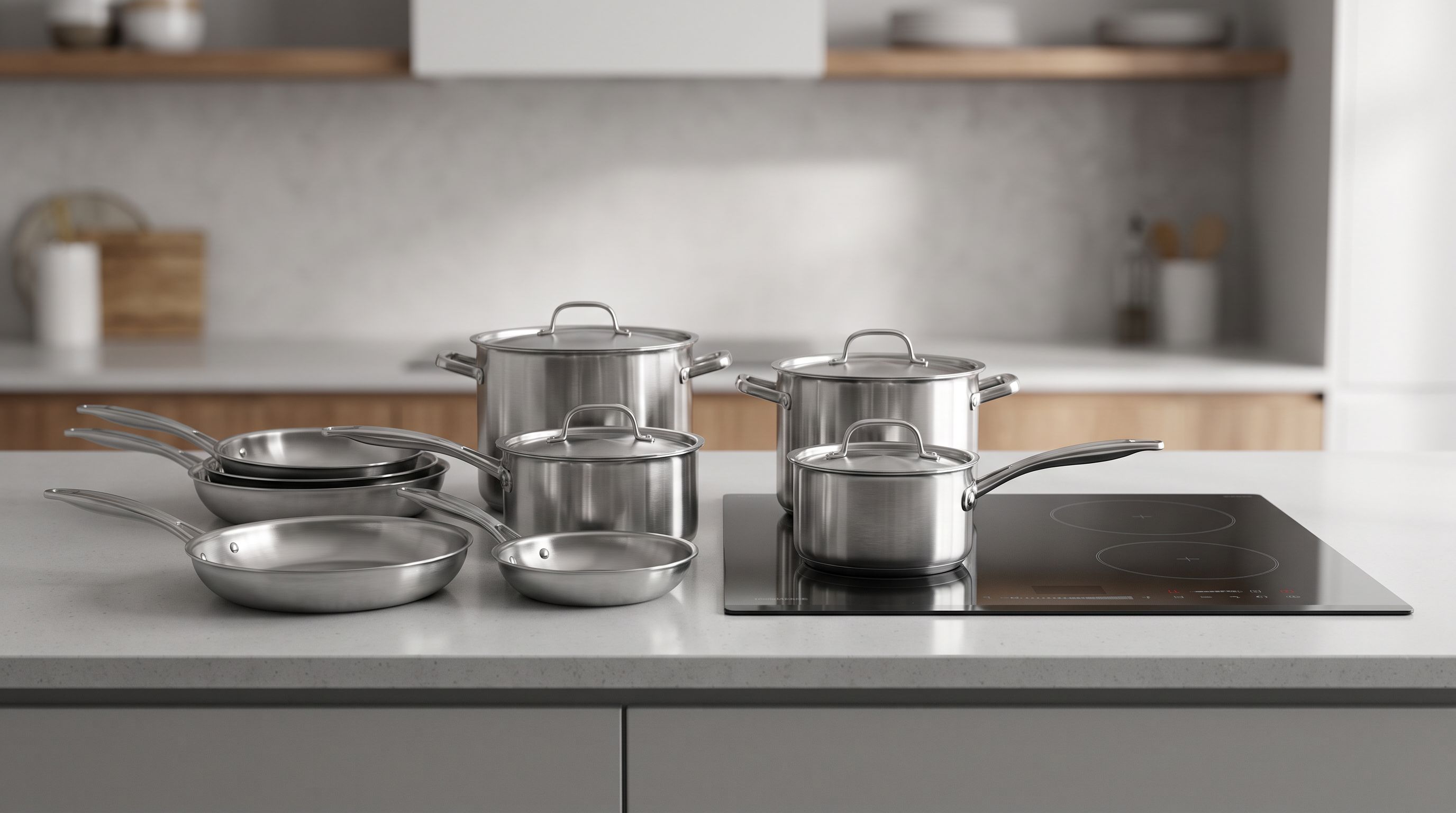
Stainless Cookware Sets 2026: Stop Paying for Lids
The best stainless steel cookware set 2026 picks compared on real usable piece count, handle comfort, oven limits and induction compatibility — not lid math.
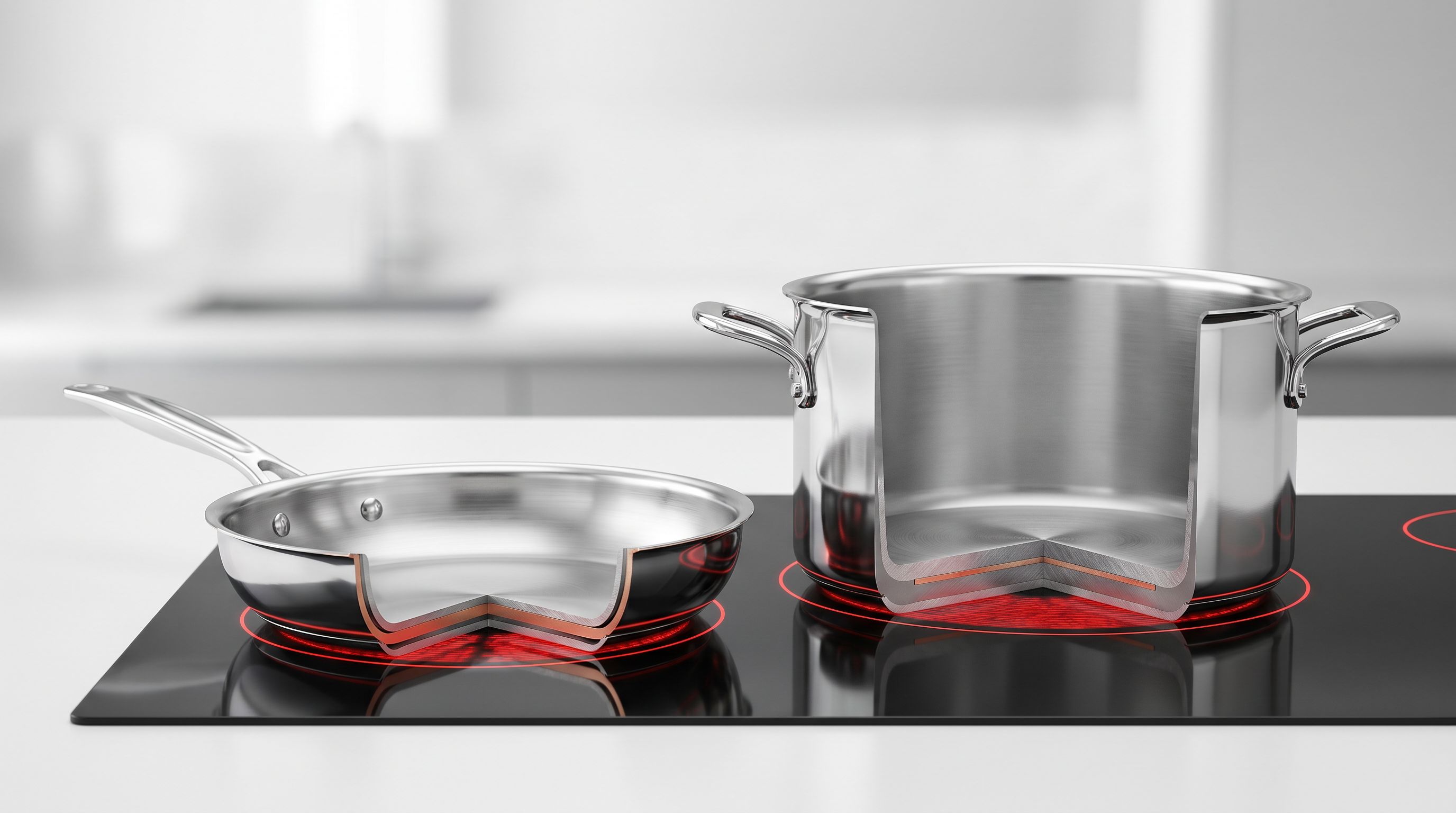
Tri-Ply vs Disc Bottom Cookware: Which Survives a Decade?
Tri-ply vs disc bottom cookware, explained: how clad and impact-bonded bases differ on warping, induction response, and 10-year durability — plus 2026 picks.
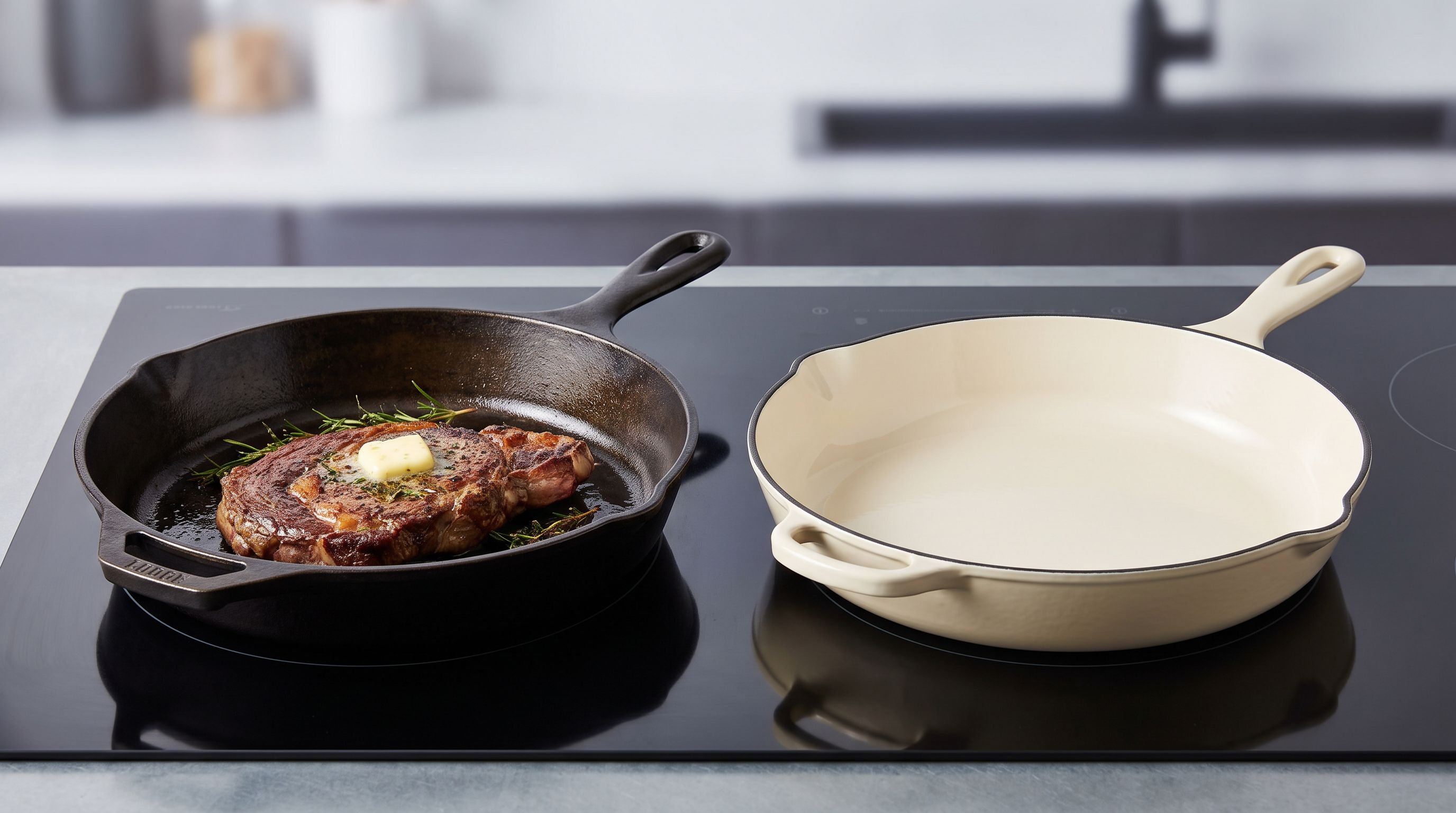
Enameled vs Bare Cast Iron Skillet: Which Wins in 2026?
Enameled vs bare cast iron skillet, settled: how each handles searing, acid, induction and 10+ years of wear — plus the skillets worth buying in 2026.