Gooseneck Kettles in 2026: Flow, Temp, and Induction
The best gooseneck kettle in 2026 depends on flow control, hold settings, and induction compatibility. We compare Fellow, OXO, Cosori, Cuisinart and Hario picks.
Reader-supported: we may earn a commission from links on this page, at no extra cost to you. It never affects our picks. Learn more.
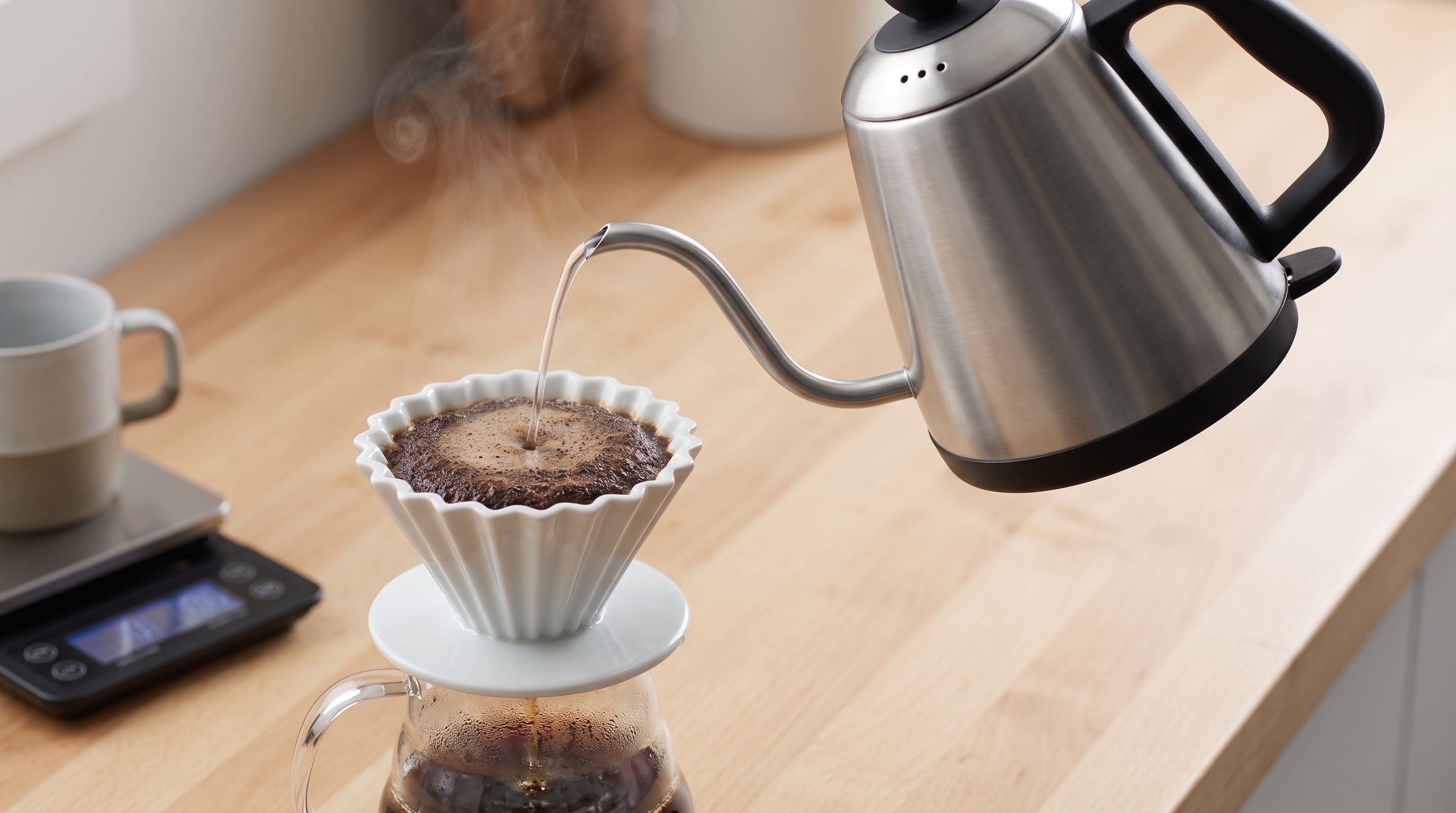
A gooseneck kettle is one of the few pieces of coffee gear that changes your cup immediately. The narrow, curved spout slows the water down and lets you place it where you want it, which means even saturation, fewer dry pockets, and a brew that doesn't channel down one side of the bed. If you're brewing V60, Kalita, Chemex, Origami, or anything with a flat-bottom basket, it matters more than your grinder's color and about as much as your water.
But "gooseneck" has become a shape, not a standard. Kettles at wildly different prices share the same silhouette and behave nothing alike. Below is how we'd actually choose one in 2026, based on manufacturer specs, independent reviews, and verified owner feedback.
The four things that actually separate gooseneck kettles
1. Flow rate and spout geometry
This is the whole point and the spec nobody publishes. What you can judge:
- Spout diameter and taper. A narrower tip gives a thinner stream at a given tilt angle. Great for slow, deliberate pulse pours; annoying if you want to dump 100 g quickly into a Chemex.
- Where the spout meets the body. Spouts that draw from low in the kettle keep flow more consistent as the water level drops. High-mounted spouts change behavior noticeably between a full and a half-full kettle.
- Handle balance. A counterweighted handle (the Fellow Stagg EKG Pro is the reference here) lets you steer with your wrist instead of your shoulder. Cheap kettles with the center of mass forward of your grip will wobble on long pours.
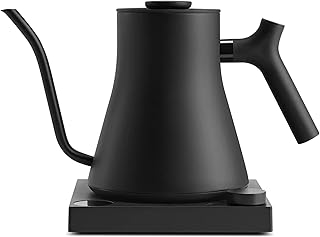 Best overall · Fellow Stagg EKG Pro Electric Kettle — Check price on Amazon →
Practical rule: if you brew single cups and care about spiral technique, prefer the narrowest spout you can find. If you brew 600–1000 g batches, a slightly faster spout saves you from a four-minute pour.
2. Temperature control — set point vs. hold
Variable temperature is near-universal now. The differences are in the details.
- Resolution. Some kettles adjust in 1°F increments (Fellow), others in 5°F steps or fixed presets (many budget models). For light roasts where 205°F vs. 198°F is a real flavor decision, fine increments are worth it.
- Hold. A "keep warm" function that holds your set point for 30–60 minutes is the difference between brewing when you're ready and racing the kettle. Fellow and Cuisinart hold at your chosen temp; COSORI offers a 60-minute hold; some entry models only hold at a fixed preset.
- Overshoot and accuracy. Cheaper thermistors placed far from the water can read several degrees off. Independent testing consistently finds boutique kettles closer to their set point, though most budget kettles land within a range that's fine for medium roasts.
3. Induction compatibility — two very different questions
People mean two things by this, so be clear which one you need:
Stovetop kettles on an induction hob. An induction range needs a ferromagnetic base. Most stainless stovetop goosenecks, including the Hario V60 Buono, work on induction. Copper and aluminum kettles generally don't unless they have a bonded magnetic disc. Test with a fridge magnet: if it sticks firmly to the base, you're fine.
 Best stovetop (and induction-ready) · Hario V60 Buono Drip Kettle — Check price on Amazon →
Electric kettles with induction-heated bases. A handful of premium electrics use induction rather than a resistive element for faster, more even heating. Most electric goosenecks — including OXO, COSORI, and Cuisinart — use a conventional concealed element, which is perfectly good. Don't pay extra for "induction" branding on an electric kettle unless you've confirmed what it's actually doing.
4. Build materials and the water path
Look at what the water and steam touch:
- All-stainless interior and lid (Cuisinart GK-1, Fellow) means no hot plastic contact. Worth seeking out if that bothers you.
- Plastic lids or handles aren't inherently unsafe, but they're the first thing to discolor or loosen.
- Wall thickness affects heat retention and how long the handle stays cool. Thin walls heat fast and lose heat fast.
- Base plate quality determines scale resistance. Whatever you buy, descale it — mineral buildup insulates the element and pushes readings off.
How the 2026 picks compare
| Kettle | Type | Temp control | Hold | Standout trait |
|---|---|---|---|---|
| Fellow Stagg EKG Pro | Electric, corded base | 1°F increments, wide range | Yes, at set temp | Best-balanced handle and spout; brew-stopwatch and scheduling |
| OXO Brew Adjustable Temperature | Electric, corded base | Adjustable set point | Yes | 1500W fast heat-up; comfortable handle at a mid price |
| COSORI Electric Gooseneck | Electric, corded base | Five presets | 60 minutes | Most kettle per dollar; good starter for pour-over |
| Cuisinart GK-1 Digital Gooseneck | Electric, corded base | Digital set + hold | Yes | All-steel body and lid — no plastic in the water path |
| Hario V60 Buono | Stovetop | None (use a thermometer) | N/A | Works on induction, gas, and electric; nothing to break |
 Best all-steel build · Cuisinart GK-1 Digital Gooseneck Kettle — Check price on Amazon →
Which one is right for you
Buy the Fellow Stagg EKG Pro if pour-over is a hobby, not a habit. It's the kettle most frequently named best overall across independent reviews, and the reasons hold up: tight temperature resolution, a spout that rewards technique, and genuinely useful software (hold, a built-in timer, and scheduling on the Pro). It's also the best-looking kettle here, which matters if it lives on the counter. The trade-off is price and a relatively small capacity — it's built for one to two brews, not for filling a French press and a teapot.
Buy the OXO Brew Adjustable Temperature Pour-Over Kettle if you want 90% of that for meaningfully less. Its 1500W element gets to temperature quickly, the handle is among the more comfortable in the category, and the flow is controllable without being frustratingly slow. It's the kettle we'd hand to someone who brews every morning and doesn't want to think about it.
 Best value · OXO Brew Adjustable Temperature Pour-Over Kettle — Check price on Amazon →
Buy the COSORI Electric Gooseneck Kettle if you're starting out. Presets cover the usual brewing temperatures, the 60-minute hold is the feature beginners actually use, and it consistently gets recommended in owner discussions as the best entry point. Flow control isn't as refined as the Fellow's, but it's a real gooseneck, not a decorative one.
 Budget pick · COSORI Electric Gooseneck Kettle — Check price on Amazon →
Buy the Cuisinart GK-1 if materials are your priority. An all-steel body and lid is rarer than it should be, and Wirecutter named it their gooseneck pick partly for that reason. It's a straightforward digital kettle without the app-adjacent features, which some people will count as a plus.
Buy the Hario V60 Buono if you already own a thermometer, or you travel. No electronics, no base to store, works on induction and gas. Bring water to a boil, let it sit 30–45 seconds for medium roasts, and pour. It's also the cheapest way to find out whether you actually care about pour-over before investing in a $150+ electric.
What to skip
Ultra-cheap no-name goosenecks with a wide spout opening pour almost as fast as a regular kettle — you get the look without the control. Also skip kettles whose only temperature options are fixed presets at 5°F gaps if you brew light roasts near boiling. And be skeptical of any kettle marketed on capacity above about 1.2 L: a full large kettle is heavy, and weight is the enemy of a steady pour.
FAQ
Do I need variable temperature, or is boiling fine? For dark and medium roasts, boiling water rested a minute is fine. For light roasts and delicate filter coffees, holding 200–205°F consistently makes a real difference — and the hold function is arguably more useful day to day than the set point itself.
Will a stovetop gooseneck work on my induction cooktop? If the base is magnetic stainless, yes. Hold a magnet to the bottom — if it grips, it will heat. Copper and plain aluminum kettles won't work without a bonded steel disc.
What temperature should I brew at? Start at 200°F for most medium roasts, go up toward 205–208°F for light roasts and coarser grinds, and drop to 195°F if your cup tastes bitter or harsh. Adjust one variable at a time.
How do I slow my pour down? Tilt less and pour from lower. A gooseneck's flow is controlled by angle, not by squeezing; keeping the spout 3–5 cm above the bed also reduces agitation and channeling.
How often should I descale? Every one to three months with hard water, less often with filtered. Scale on the element slows heating and skews temperature accuracy — the two things you paid for.
Our picks
Fellow Stagg EKG Pro Gooseneck Electric Kettle, Brew Timer, 0.9 Liter
Precise ±1°F control, a counterweighted spout with excellent flow control, and real hold/scheduling features.
OXO Brew Pour Over Gooseneck Electric Kettle - Stainless Steel
1500W heating, a wide temperature range and a genuinely comfortable handle — the sane mid-price default.
Cosori Gooseneck Electric Kettle with Temperature Control, 0.8L, Black
Five presets, a 60-minute hold and fast heat-up for a fraction of the price of boutique kettles.
Cuisinart GK-1C Digital Gooseneck Kettle 1.0L
All-stainless body and lid with digital temperature set and hold — no plastic in the water path.
HARIO V60 "Buono" Drip Kettle Stovetop Gooseneck Coffee Kettle 1.2L, Stainless Steel, Silver
The classic stovetop gooseneck: slow, controllable pour, works on induction, nothing to break electronically.
Get the best kitchen gear deals in your inbox
Join the PrepDeck newsletter for hand-picked kitchen gear deals and new buying guides. No spam, unsubscribe anytime.
Related reads
Burr Grinders Under $300 in 2026: Burr Size Decides
The best burr coffee grinder under 300 in 2026, ranked by burr diameter and geometry — plus when conical beats flat for drip, espresso, and everything between.
Pour-Over Coffee Setups in 2026: 5 Kits That Actually Work
The best pour over coffee setup in 2026 depends on dripper material, filter cost and carafe size. We compare five complete kits, kettles and scales included.
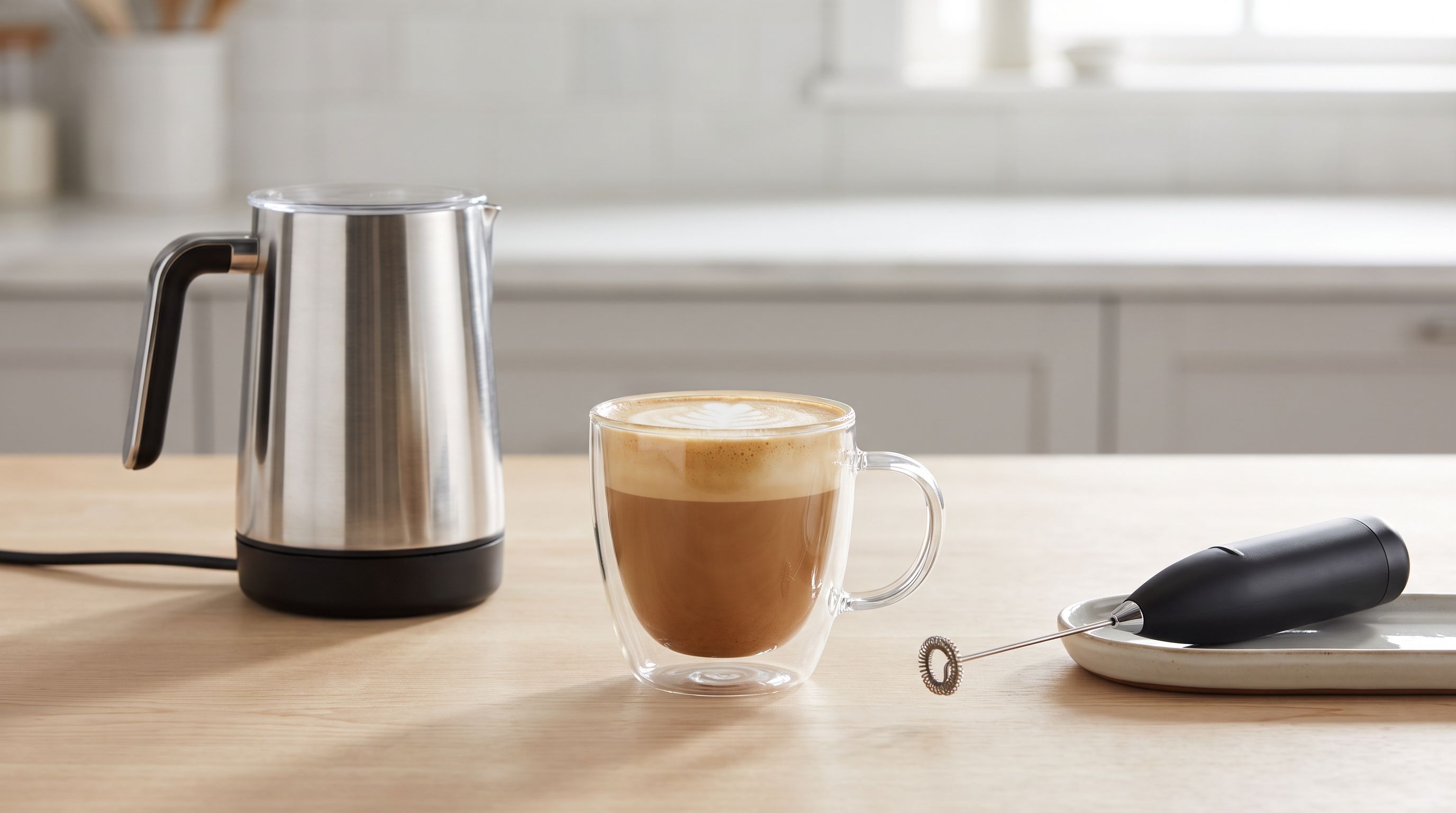
Milk Frothers in 2026: Steam Wand or Automatic Pitcher?
The best milk frother in 2026 depends on whether you want hands-off foam or steam-wand control. We compare capacity, froth texture and dishwasher-safe parts.