Espresso Boilers in 2026: Single, HX, or Dual, Explained
Single boiler, heat exchanger, or dual boiler? How each design actually handles back-to-back shots and milk steaming — and what that means for buyers in 2026.
Reader-supported: we may earn a commission from links on this page, at no extra cost to you. It never affects our picks. Learn more.
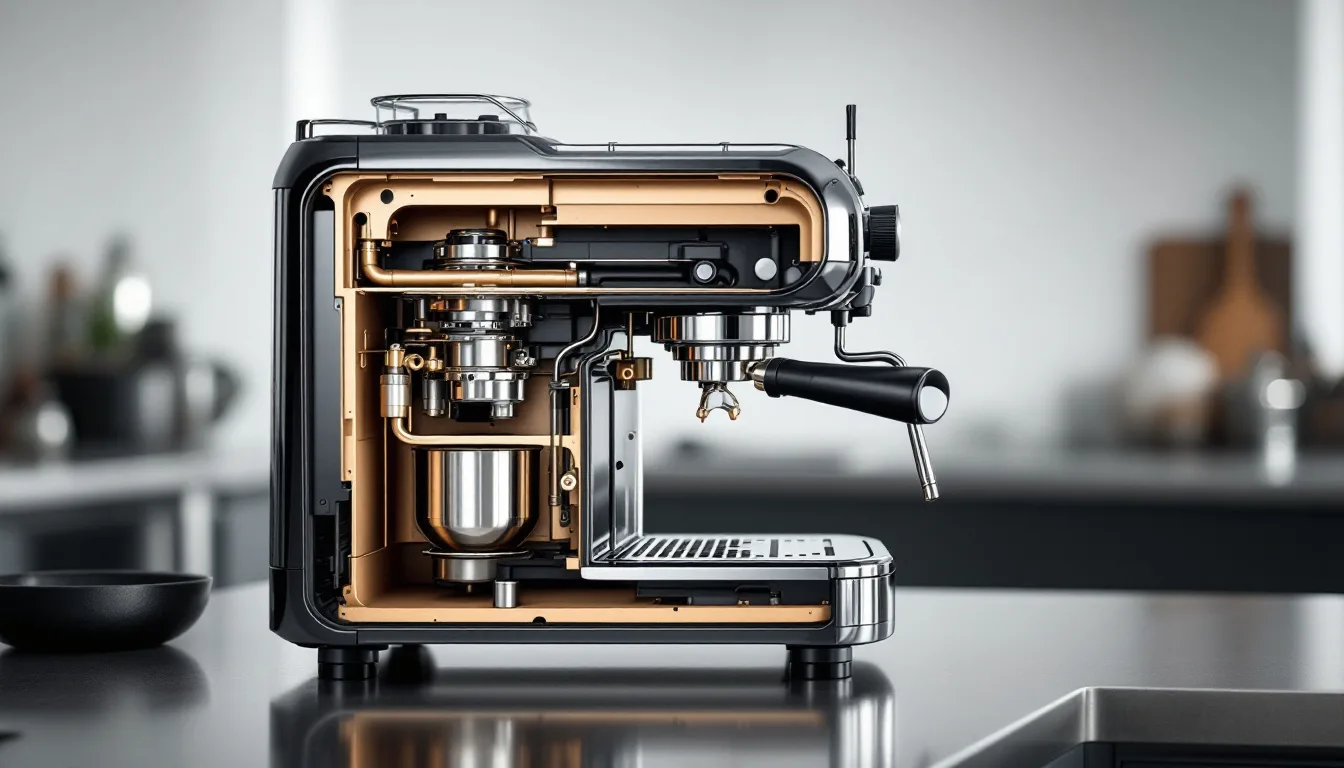
Walk into any espresso forum thread and you'll find the same argument on loop: single boiler, heat exchanger, or dual boiler. The specs get thrown around like they're self-explanatory — "1.8L copper boiler," "dual PID," "saturated group" — but almost nobody explains the thing that actually changes your morning. Which is this: how long you wait between pulling a shot and steaming milk, and whether the second drink is as good as the first.
That's the whole game. Boiler architecture is a plumbing answer to a scheduling problem. Espresso wants water around 90–96°C. Steam wants water at roughly 120–130°C, which means a pressurized boiler well above boiling. One machine, two incompatible temperatures. Everything else — the flushes, the PIDs, the price jumps — follows from how a manufacturer chose to solve that conflict.
What's Actually Happening Now
Three designs still dominate the market in 2026, and the interesting shift isn't that a new one arrived. It's that the boundaries between them have blurred.
Single boiler, dual use (SBDU) is the classic budget approach: one small boiler, one thermostat or PID, and a mode switch. Brew at brew temp, flip to steam, wait for the boiler to climb, steam, then flip back and run water through the group to cool it down. The wait is the product. On a traditional brass single boiler like the Gaggia Classic Evo Pro, that heat-up-and-cool-down cycle is measured in tens of seconds each way, and the cool-down is genuinely fussy — overshoot and your next shot tastes scorched.
 Single boiler, maximum repairability · Gaggia Classic Evo Pro — Check price on Amazon →
Thermoblocks and thermocoils are the modern twist on single-boiler thinking. Instead of heating a reservoir of water, they heat water as it flows through a metal block. Breville's Thermojet, used in the Bambino Plus, is the widely-cited example: heat-up is reported in the three-second range, and mode switching is fast because there's very little thermal mass to drag around. The tradeoff is steam that's typically drier-but-briefer and less raw capacity than a big boiler — fine for one or two milk drinks, less fine for a dinner party.
Heat exchangers (HX) solve the problem with geometry. There's one boiler, held at steam temperature, and a tube runs through it carrying fresh water from the reservoir to the group head. The water picks up heat in transit and arrives at roughly brew temperature. Brew and steam are genuinely simultaneous. The catch is the famous "cooling flush": water sitting idle in that tube gets too hot, so you run a few seconds of water before pulling to purge it. It's a learnable ritual, not a flaw, but it is a ritual.
Dual boilers just use two boilers. One held at brew temp, usually PID-controlled; one held at steam temp. No flush, no waiting, independent control of both. As one industry comparison puts it bluntly, heat exchangers prioritize steaming power with large boilers while dual boilers prioritize precise temperature control via PID. That's a fair summary — though it undersells how much steam a well-built dual boiler can produce.
The Real Players and Shipping Products
At the accessible end, Breville has effectively defined two categories at once. The Bambino Plus is the reference point for fast thermoblock single-boiler machines, and the Breville Dual Boiler (BES920XL) remains the most widely available true dual boiler in the sub-prosumer bracket — two independently PID'd boilers, over-pressure valve, and a shot clock, in a machine that lives on a normal kitchen counter.
 Most accessible true dual boiler · Breville Dual Boiler BES920XL — Check price on Amazon →
Rancilio's Silvia Pro X occupies an interesting middle ground: a dual boiler with dual PID, built on Rancilio's commercial parts lineage. It's the machine people buy when they want dual-boiler behavior but care about long-term serviceability more than app connectivity.
In the prosumer E61 world, the single-versus-dual conversation usually plays out brand-by-brand within the same lineup. Retailer comparisons commonly pit the Diletta Bello+ (heat exchanger) against the Diletta Alto (dual boiler) — same chassis philosophy, different plumbing answer. Profitec, ECM, Lelit and Rocket all run similar parallel lines. The takeaway from those comparisons is consistent: at equivalent build quality, the HX costs meaningfully less and steams just as hard; the dual boiler buys you brew-temperature precision and no flush.
One point that rarely makes it into marketing copy comes from repair-side commentary: dual boilers have more failure surface area than HX or single-boiler machines — more solenoids, more plumbing, more sensors. That doesn't make them unreliable. It does mean complexity has a maintenance cost, and it's worth weighing if you're the kind of person who'd rather not know a technician by name.
What It Means If You're Shopping Today
Map the architecture to your actual drink habit, not your aspirational one.
| Design | Brew + steam at once? | Typical wait between | Temp precision | Real-world fit |
|---|---|---|---|---|
| Single boiler (brass) | No | Longest — heat up, then cool down | Good with PID, slow to recover | 1–2 drinks, patient user, easy repairs |
| Thermoblock / Thermojet | No, but switching is fast | Seconds | Stable, low thermal mass | Espresso + occasional milk, small kitchens |
| Heat exchanger | Yes | None, but requires cooling flush | Good; flush technique matters | Back-to-back milk drinks, best value per steam |
| Dual boiler | Yes | None | Highest, independent PID per boiler | Volume, milk-heavy households, light-roast tinkering |
If you drink one or two straight espressos a day, a dual boiler is mostly paying for capability you won't schedule. If you make cappuccinos for two people every morning, the single boiler's mode-switch wait stops being charming by week three. If you're making four or more milk drinks back-to-back, a heat exchanger or dual boiler isn't a luxury — it's the difference between a five-minute routine and a fifteen-minute one.
The value argument that keeps circulating in the community is worth repeating carefully: at a given budget, an HX machine typically out-performs a single boiler costing considerably more, because the money went into a real boiler and a real group instead of features. And a dual boiler above it buys precision, not power. That's an opinion widely held by retailers and enthusiasts, not a law of physics — but the reasoning holds up.
What to Watch Next
Three things are quietly reshaping the categories. First, PID is no longer a differentiator; it's baseline, even on machines that used to ship with bimetallic thermostats. Second, flow and pressure profiling has migrated from six-figure café machines down into prosumer dual boilers, which shifts the conversation from "what temperature" to "what pressure curve" — and that only matters if your brew temperature is already stable, which is a dual-boiler argument by proxy. Third, thermoblock heat-up times have gotten fast enough that the old "single boiler means waiting" shorthand deserves an asterisk; the wait now is about steam capacity, not readiness.
What hasn't changed: physics. Two temperatures, one machine. Every design on the market is still a negotiation with that, and the right answer is whichever negotiation matches how many milk drinks you actually make before 9 a.m.
FAQ
Is a cooling flush hard to learn? No, but it's a habit. On an HX machine you run water from the group until the temperature stabilizes — commonly a few seconds, varying by machine and idle time. Many owners use a thermometer or simply time it. It becomes automatic; it also never goes away.
Does a dual boiler make better espresso than a heat exchanger? Not inherently. It makes more repeatable espresso, because brew temperature is independently controlled and doesn't depend on flush technique. Repeatability matters most with lighter roasts and when you're dialing in a new coffee.
Can a single boiler machine make good milk drinks? Yes, for one or two. The limit is steam capacity and the switching wait, not steam quality. The Bambino Plus and similar thermoblock machines mitigate the wait substantially; they don't add boiler volume.
Are dual boilers less reliable? They have more components that can fail — more solenoids and plumbing, per repair-shop commentary. That's complexity risk, not poor quality. Simpler machines like the Gaggia Classic Evo Pro are cheaper and easier to service precisely because there's less inside.
Our picks

Breville BES500BSS Bambino Plus Espresso Machine, Brushed Stainless Steel
Thermojet single-boiler design that heats in seconds and switches to steam fast — the pragmatic single-boiler answer.
Breville BES920XL Dual Boiler Espresso Machine, Brushed Stainless Steel
Two independent PID-controlled boilers, so brewing and steaming happen simultaneously without a cooling flush.
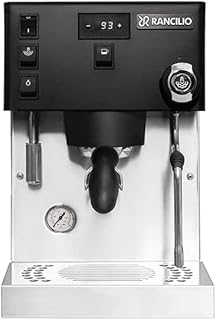
Rancilio Silvia Pro X Espresso Machine, Black
Twin boilers with dual PID in a serviceable, repair-friendly Italian chassis built around standard components.
Gaggia RI9380/46 E24 Espresso Machine, Brushed Stainless Steel
Simple brass single boiler and commercial 58mm portafilter — cheap to fix, easy to mod, slow to switch modes.
Get the best kitchen gear deals in your inbox
Join the PrepDeck newsletter for hand-picked kitchen gear deals and new buying guides. No spam, unsubscribe anytime.
Related reads
Espresso Grinders in 2026: 5 Picks From $150 to $600
The best espresso grinder 2026 shortlist: flat vs conical burrs, stepless adjustment, retention and static compared across home grinders from $150 to $600.
58mm or Not? The Espresso Tamper Guide for 2026
Find the best espresso tamper 58mm and matching WDT tool, distributor and dosing funnel in 2026 — plus how to measure basket diameter so parts actually fit.
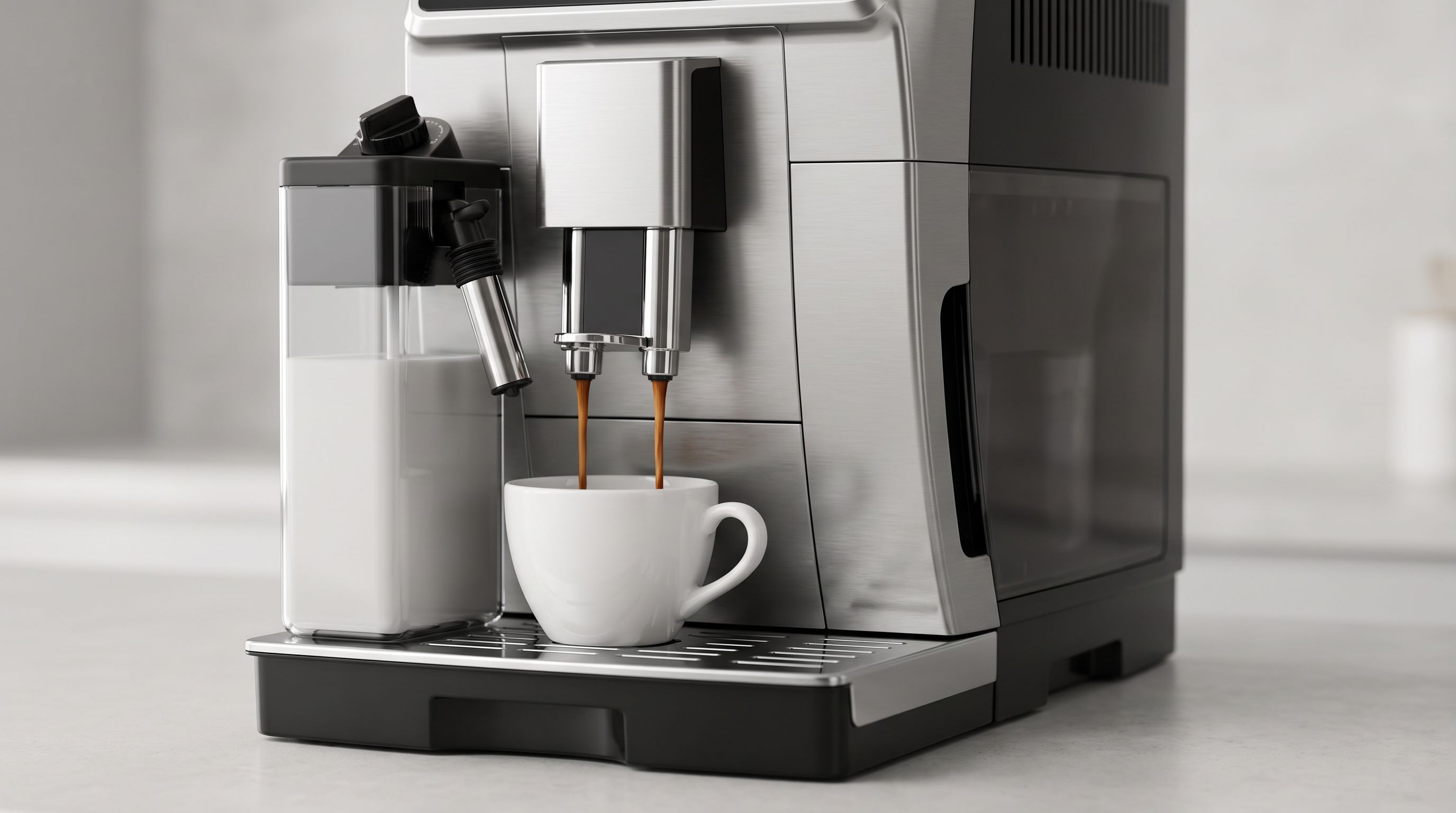
Super-Automatic Espresso Machines in 2026: 5 Picks That Skip the Workflow
The best super automatic espresso machine 2026 picks, ranked by grinder quality, milk system (carafe vs steam wand) and how much daily cleaning each one demands.