Enameled vs Bare Cast Iron Skillet: Which Wins in 2026?
Enameled vs bare cast iron skillet, settled: how each handles searing, acid, induction and 10+ years of wear — plus the skillets worth buying in 2026.
Reader-supported: we may earn a commission from links on this page, at no extra cost to you. It never affects our picks. Learn more.
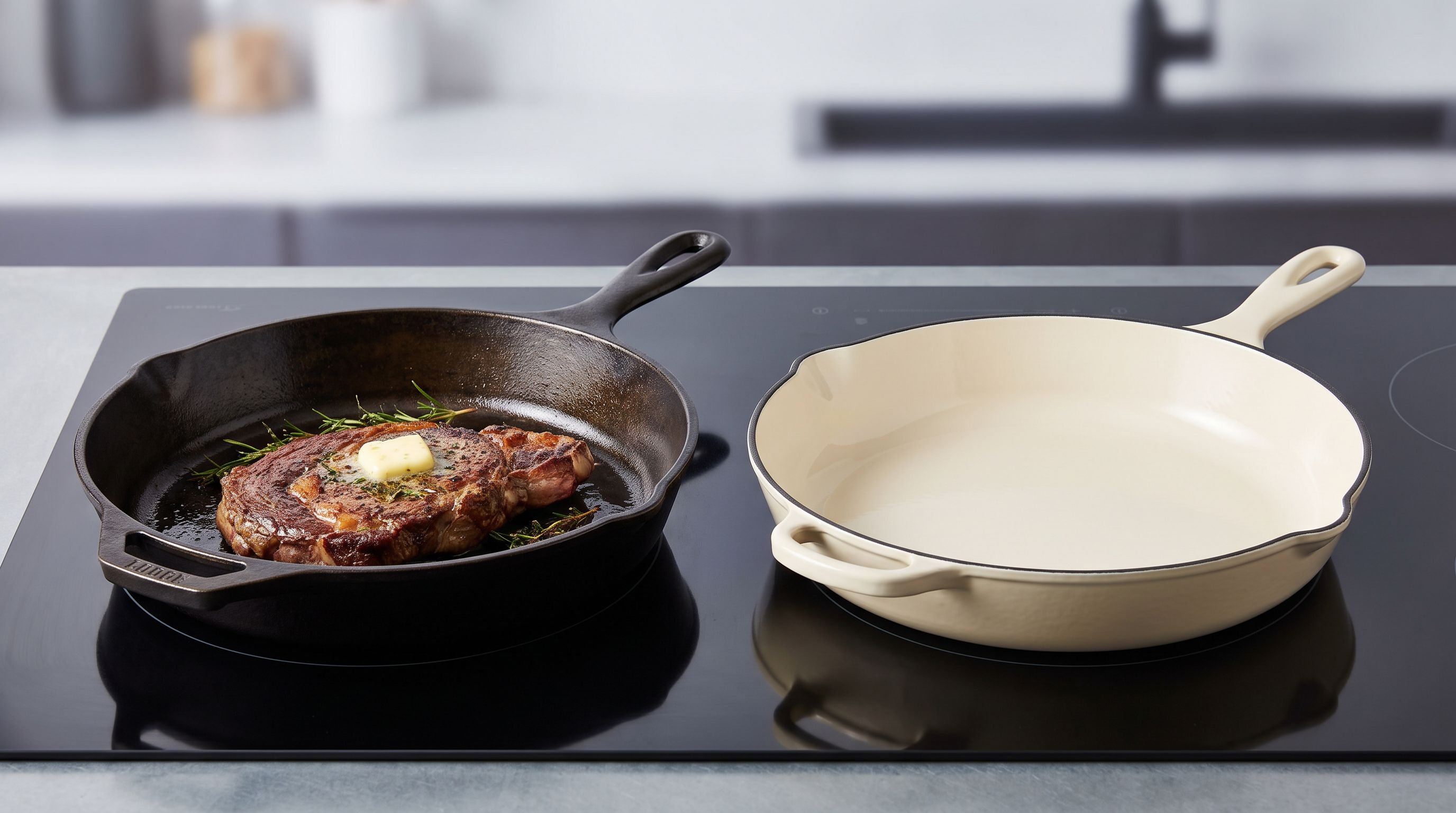
Cast iron is cast iron. Both styles start as the same molten gray iron poured into a sand mold. The entire argument comes down to what happens next: either the pan gets a thin polymerized oil layer baked onto raw metal (seasoning), or it gets sprayed with powdered glass and fired into a fused porcelain enamel coating.
That single difference changes how the pan browns, what you can cook in it, how you wash it, and how it ages over a decade. Here's how to decide which one belongs on your stove — and which belongs on both.
The short version
Buy bare cast iron if your priority is searing, cornbread, shallow frying, campfires, and spending as little as possible. It browns better, tolerates ruinous heat, costs a fraction as much, and can be resurrected from rust with steel wool and an hour in the oven.
Buy enameled cast iron if you cook tomato sauces, wine pan sauces, braises, and anything you want to deglaze without worrying. It needs no seasoning, washes with soap and a sponge, won't take on metallic flavors, and looks presentable going from oven to table.
Most people who cook daily end up owning one of each, and that's a reasonable outcome — a 10- or 12-inch bare skillet for dry heat, an enameled piece for wet, acidic cooking.
Heat retention and browning
Both pans hold roughly the same amount of heat per gram, because the iron body is doing the work. Thickness matters more than coating: a thick-walled Lodge and a thick-walled Le Creuset have similar thermal mass, while a thin, machined pan like the Field Company No. 8 heats faster, recovers faster, and gives you less of a buffer when cold steak hits the surface.
Where they genuinely differ is the surface. Enamel is glass, and glass is a worse conductor than iron. The practical effect isn't dramatic, but it's real: at the same stovetop setting, enamel browns a touch more gently and takes slightly longer to build hard crust. Serious Eats and other independent reviewers consistently note the same thing — bare iron gives the darker, faster sear.
The other variable is color. Glossy light-colored interiors (classic Le Creuset cream) show every speck of fond and tend to stain brown over time. Staub's matte black interior enamel is textured and engineered for high-heat searing; it browns closer to bare iron and hides discoloration entirely. If you want enamel but refuse to give up sear quality, that's the lane to shop in.
Heat limits
Bare cast iron is effectively heat-proof. Broilers, 500°F ovens, grill grates, coals — none of it harms the pan, and if the seasoning burns off you just re-season.
Enamel has limits. Most manufacturers cap oven use somewhere in the 450–500°F range and warn against broiler use, empty preheating, and thermal shock (a hot pan hitting cold water). Enamel is also chip-prone at the rim and on the pour spouts if you bang it against the sink. Those aren't deal-breakers, but they are rules, and bare iron has almost none.
Induction, gas, and glass tops
Both types are fully induction-compatible — iron is ferromagnetic whether or not it's wearing a glass coat, and cast iron is one of the most efficient materials you can put on an induction hob. Two caveats:
- Glass and ceramic cooktops: bare cast iron's rough bottom can scratch. Enameled bottoms are smoother, and some enameled skillets have a fully enameled base specifically for this. Lift, don't slide, either way.
- Induction hot-spotting: induction heats a ring, not the whole base. Thick cast iron spreads it reasonably well, but on any induction cooktop, preheat on medium for a few minutes rather than blasting high — this is also how you avoid cracking enamel.
Acid, flavor, and what you can actually cook
This is the biggest functional divide and the main reason to own enamel at all.
A long-simmered tomato sauce, a wine reduction, or a lemon-heavy braise will strip seasoning from bare iron and can pull a metallic edge into the food. A well-seasoned pan shrugs off a quick deglaze; it does not shrug off 40 minutes of simmering acid. Enamel is chemically inert — you can simmer tomatoes, vinegar, citrus or wine in it indefinitely with zero effect on the pan or the flavor.
Enamel is also the easy answer for storing leftovers in the pan, for anyone cooking for someone on iron-restricted diets, and for delicate white sauces that would look gray in a black pan.
A decade of wear
| Bare cast iron | Enameled cast iron | |
|---|---|---|
| Surface | Polymerized oil seasoning on raw iron | Fused porcelain enamel |
| Searing/browning | Best in class | Very good; best with matte black interiors |
| Max heat | Essentially unlimited; broiler and open-fire safe | Typically capped around 450–500°F; no broiler, no empty preheat |
| Acidic foods | Short deglazes only | Unlimited |
| Nonstick behavior | Improves with use; eggs possible once well seasoned | Slick but static; never becomes truly nonstick |
| Cleaning | Hot water, brush, dry immediately, light oil | Soap, sponge, dishwasher-safe on many models |
| Can rust | Yes, if left wet | No (except at chips and the unglazed rim) |
| Repairable | Yes — strip and re-season indefinitely | No; chips are permanent |
| Weight | Heavy; lightweight options exist | Heavy to very heavy |
| 10-year outlook | Better than new if maintained | Stained, possibly chipped, still functional |
| Cost | Low to moderate | Moderate to high |
The durability story is counterintuitive. Enamel feels like the premium product, and it is more expensive — but it's the one with a finite lifespan. Enamel crazes (fine cracks), stains, and chips, and none of that can be fixed at home. A bare pan has no coating to fail. Rust it, burn it, drop it in a campfire; sand it down and bake oil on it and it's a new pan. Lodge skillets from the 1940s are still in daily use.
That said, good enamel lasts a very long time with gentle handling, and Le Creuset's warranty support on manufacturing defects is the reason the brand still commands its price.
How we'd actually buy in 2026
One pan, do-everything, minimum money: the Lodge 10.25 Inch Cast Iron Skillet. It's thick, pre-seasoned, broiler-safe, induction-ready, and costs less than a decent dinner. Its flaws are the pebbled surface (which smooths with use) and the short, hot handle.
 Best overall bare cast iron · Lodge 10.25 Inch Cast Iron Skillet — Check price on Amazon →
One pan, but nicer to use: the Lodge Chef Collection 12 Inch Cast Iron Skillet. Machined smoother, thinner walls, a longer and more comfortable handle, and a slightly sloped shape that's better for sautéing than the classic straight-sided Lodge.
 Best value upgrade · Lodge Chef Collection 12 Inch Cast Iron Skillet — Check price on Amazon →
If weight is the thing stopping you: the Field Company No. 8 Cast Iron Skillet. Thinner, lighter, machine-polished so it reaches slick nonstick behavior fast. It recovers heat less aggressively than a thick pan, so give it a longer preheat.
For acid, braises, and table service: the Le Creuset Signature Enameled Cast Iron Skillet 10.25 Inch. Big helper handle, hard-wearing sand-colored interior enamel, no maintenance ritual.
For enamel that still sears hard: the Staub Cast Iron 10-Inch Fry Pan. The matte black interior takes high heat better than glossy enamel and hides stains, which solves the two main complaints about enameled skillets.
 Best enameled for high-heat searing · Staub Cast Iron 10-Inch Fry Pan — Check price on Amazon →
FAQ
Does enameled cast iron need seasoning? No. The enamel is inert glass; there's nothing for oil to bond to. Some owners wipe a little oil on the unglazed rim of cheaper pans to prevent surface rust there, but the cooking surface needs nothing.
Can I use soap on bare cast iron? Yes. Modern dish soap doesn't dissolve polymerized seasoning — that myth dates to lye-based soaps. The real enemy is soaking and air-drying. Wash, rinse, dry on the burner, wipe with a thin film of oil.
Will either scratch a glass cooktop? Bare cast iron can, because of its rough casting. Enameled bases are smoother. Lift rather than slide, and check for grit under the pan.
Is enameled cast iron worth the extra money? If you cook acidic food regularly or hate maintenance rituals, yes. If you mostly sear, fry, and bake, a bare skillet does the job better for far less.
Can I fix a chipped enamel pan? Not properly. Small chips on the outside are cosmetic; chips on the cooking surface mean exposed iron that will rust and spread. At that point, retire it to decorative duty or recycle it.
Which is better for eggs? A well-seasoned bare pan, once the seasoning has matured over months. Enamel is smooth but never becomes truly nonstick — eggs in enamel want plenty of fat and moderate heat.
Our picks
Lodge Pre-Seasoned Cast Iron Skillet with Hot Handle Holder, 10.25 Inches
The default American skillet: thick walls, pre-seasoned, oven- and fire-proof, and cheap enough to abuse.

Le Creuset Enameled Cast Iron Signature Round Skillet, 10.25", Marseille
Thick iron under hard, acid-proof enamel with a big helper handle and the best long-term warranty record.

Field Company No.8 Medium Cast Iron Skillet – 10.25-Inch Pre-Seasoned Pan for 2–4 Servings, Lighter & Smooth, Made in USA
Machine-smoothed, thinner and lighter than Lodge, so it seasons slick fast and is easy to one-hand.
STAUB Cast Iron 10-inch Fry Pan with Glass Lid, Grenadine
Matte black interior enamel takes aggressive heat and browns far closer to bare iron than glossy enamel.
Lodge Pre-Seasoned Cast Iron Skillet with Silicone Handle Holder, 12 Inches
Smoother machined surface, lighter walls and a more ergonomic handle than the classic Lodge, for not much more.
Get the best kitchen gear deals in your inbox
Join the PrepDeck newsletter for hand-picked kitchen gear deals and new buying guides. No spam, unsubscribe anytime.
Related reads
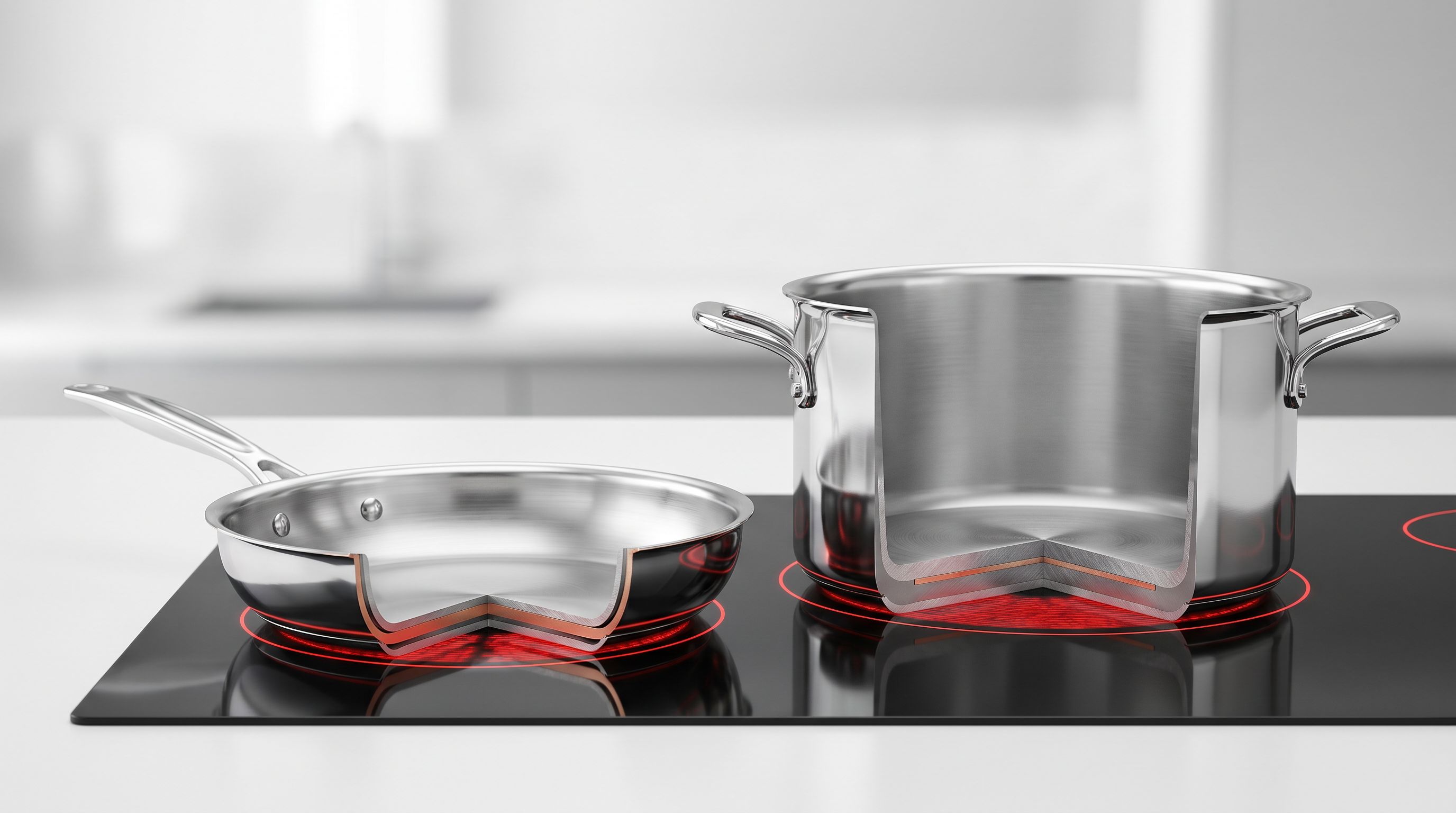
Tri-Ply vs Disc Bottom Cookware: Which Survives a Decade?
Tri-ply vs disc bottom cookware, explained: how clad and impact-bonded bases differ on warping, induction response, and 10-year durability — plus 2026 picks.
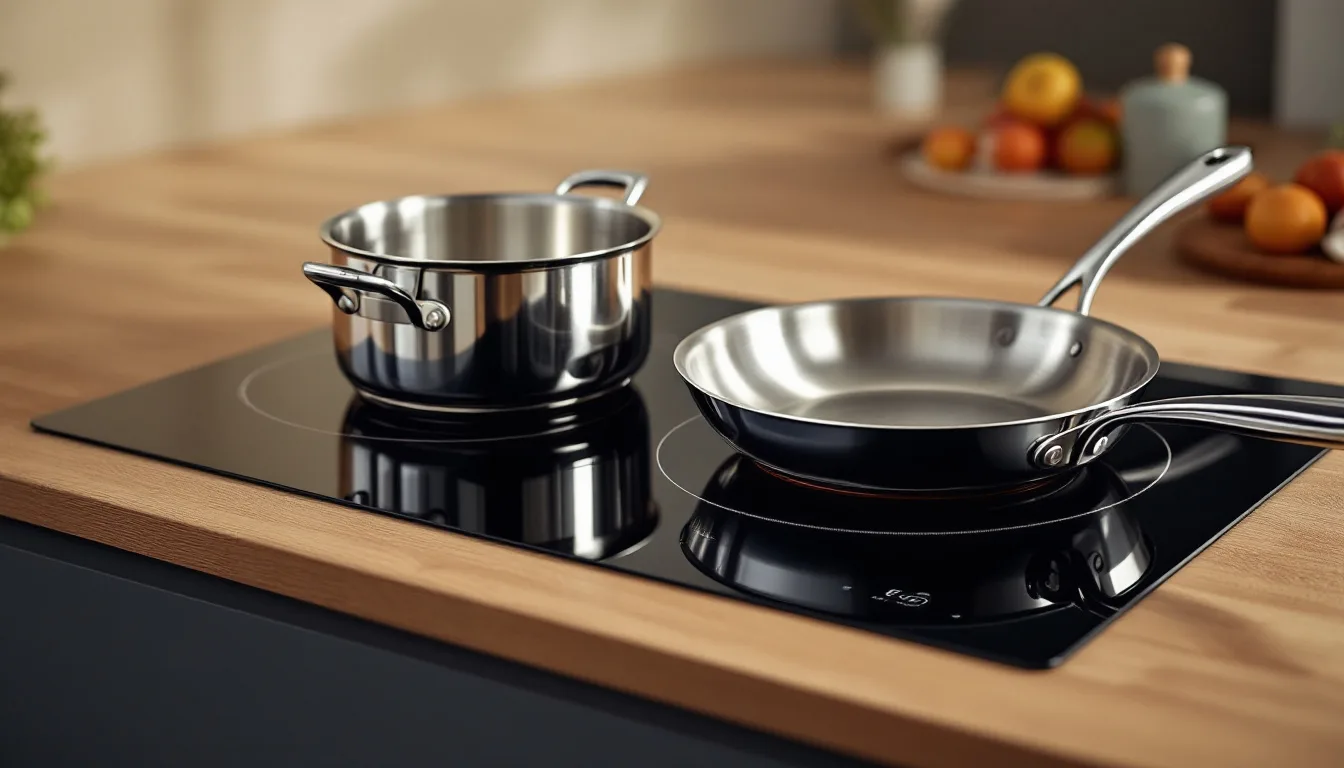
Induction Cookware Sets in 2026: What Passes the Magnet Test
The best induction cookware set for your hob depends on base construction, not marketing. How cladding, disc bases and warping work — plus 4 sets that qualify.
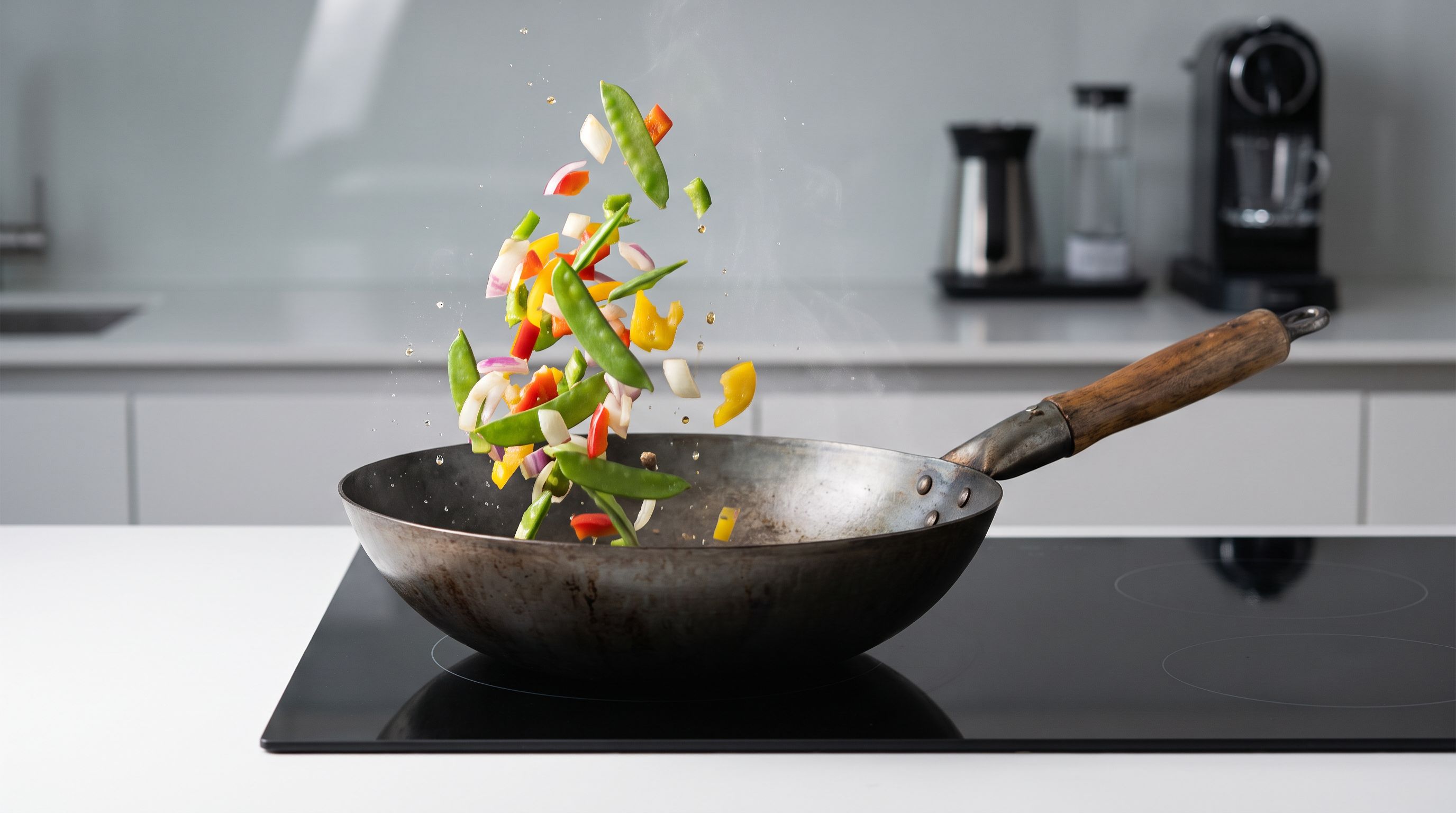
Which Wok Should You Buy in 2026? Flat vs Round Bottom
The best wok for induction cooktop use is flat-bottomed carbon steel — here's how gauge, diameter and handle type change your stir-fry, with 2026 picks.