Electric Pressure Cookers in 2026: Pick by Quart Size First
The best electric pressure cooker 2026 guide that sorts multi-cookers by 3, 6, 8 and 10-quart capacity, inner pot material and pressure rating — match your household.
Reader-supported: we may earn a commission from links on this page, at no extra cost to you. It never affects our picks. Learn more.
Most people buy an electric pressure cooker the wrong way round. They compare function counts — 7-in-1 versus 10-in-1 versus 13-in-1 — and pick whichever number is biggest. Then they discover that a 6-quart pot only holds about 4 quarts of liquid once you respect the max-fill line, or that the 8-quart they bought for "future-proofing" takes 25 minutes just to come up to pressure for a weeknight risotto.
Capacity is the decision. Everything else — inner pot material, pressure rating, lid mechanism, smart features — is a refinement. So this guide is organized by quart size first, with the specs that actually differ between models called out along the way.
We compared current models from Instant Pot, Breville, Ninja and Chef iQ against manufacturer specifications, independent lab reviews, and verified owner feedback. We don't physically test units at PrepDeck; we research, cross-reference and rank.
Start here: how many quarts do you actually need?
The usable capacity of a pressure cooker is roughly two-thirds of its nominal size. Pressure cooking requires headspace for steam, and foaming foods — beans, grains, pasta, anything starchy — are capped at the half-full line. A 6-quart pot is really a 4-quart pot for stew and a 3-quart pot for dried beans.
| Size | Household | Realistic max batch | Trade-off |
|---|---|---|---|
| 3 qt | 1–2 people | ~2 qt soup, 1–2 lb meat | Too small for a whole chicken or a stock batch |
| 6 qt | 2–4 people | ~4 qt soup, 3–4 lb roast | The default for a reason; fits most recipes as written |
| 8 qt | 4–6 people, batch cookers | ~5.5 qt soup, 5–6 lb pork shoulder | Slower to pressurize; heavy lid; big counter footprint |
| 10 qt | 6+, canning-adjacent, big stock | ~7 qt | Rare in electric; long preheat, often 1500W+ |
A blunt recommendation: unless you regularly cook for five or more, or you make stock by the gallon, buy 6 quarts. Nearly every pressure-cooker recipe published in the last decade is written for a 6-quart pot, and scaling down for an 8-quart (which needs the same minimum liquid to pressurize, regardless of how little food is in it) is a recurring annoyance.
The 3-quart tier: small kitchens and side dishes
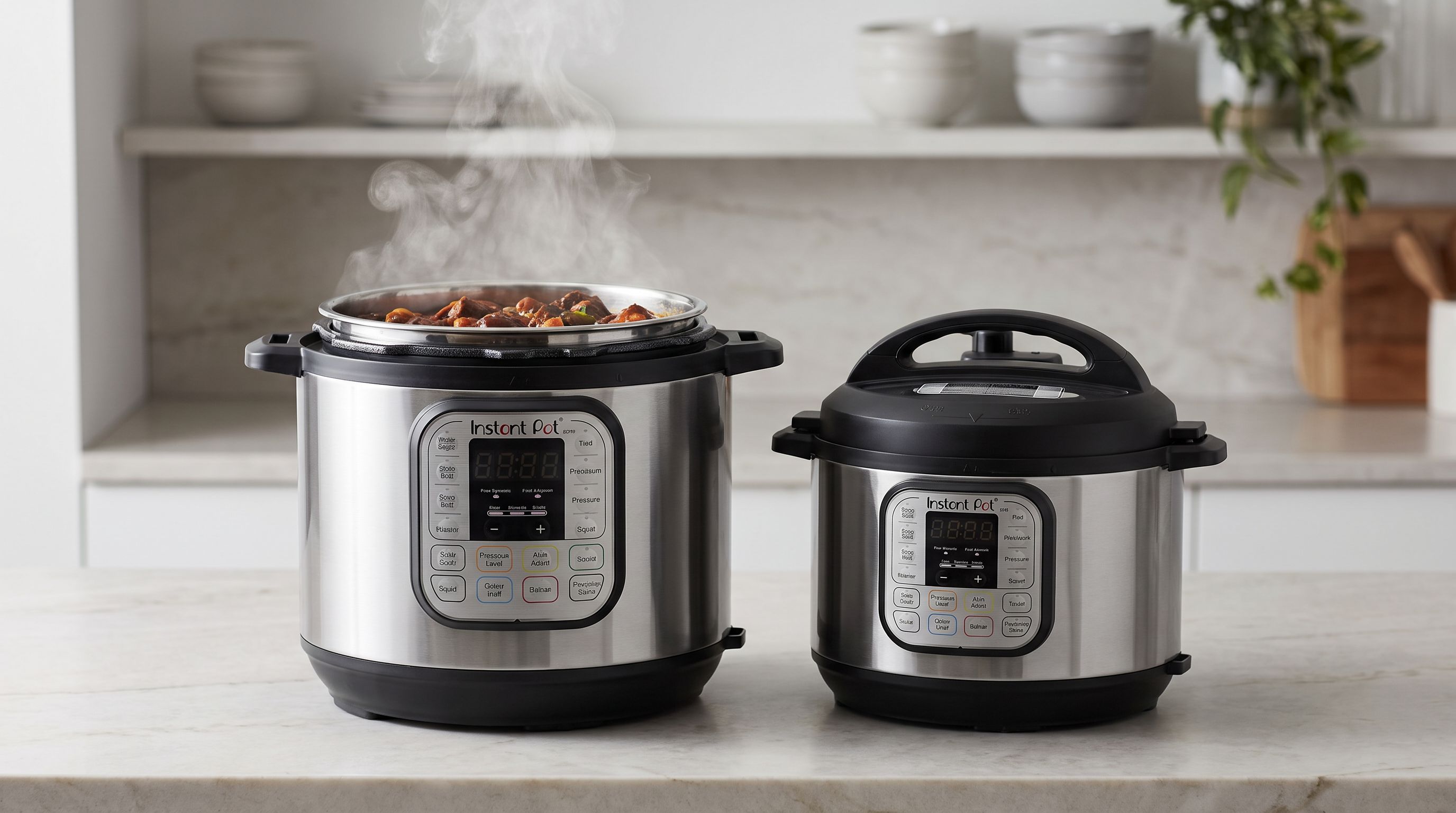
The Instant Pot Duo Mini 3-Quart is the model worth considering here. It runs the same 7-in-1 program set as its larger siblings — pressure cook, slow cook, sauté, steam, rice, yogurt, keep warm — on a smaller 700-watt heating element, which means it reaches pressure noticeably faster than a 6-quart. For a single person cooking a cup of dry beans, a pot of rice, two chicken breasts, or a small batch of oatmeal, that speed difference is real.
 Best compact · Instant Pot Duo Mini 3-Quart — Check price on Amazon →
Its limits are also real. A whole chicken won't fit. Neither will most 4-quart soup recipes. Many people buy a 3-quart as a second cooker alongside a 6-quart, running grains in one and a braise in the other — a genuinely useful setup if you have the outlet space.
The 6-quart tier: where most buyers should land
Two Instant Pots dominate this size, and the difference between them is interface philosophy.
The Instant Pot Duo Plus 6-Quart is our overall pick. It adds a few programs over the base Duo — sous vide, sterilize, cake — but the meaningful upgrade is the lid and the display. The EasySeal lid moves to the sealing position automatically when you close it, which eliminates the single most common user error (leaving the valve on venting and coming back to a warm, unpressurized pot of raw chicken). The blue-on-black display spells out what stage the cooker is in rather than blinking cryptic codes. The inner pot is 18/8 stainless steel with a tri-ply base, so you can brown properly on sauté and scrub aggressively afterward without worrying about coating damage.
 Best overall · Instant Pot Duo Plus 6-Quart — Check price on Amazon →
The Instant Pot Rio 6-Quart is the value alternative and the better choice for people who find multi-cookers intimidating. It's a 7-in-1 with a simplified button layout, the same 6-quart stainless inner pot, and the same 1000-watt element. You lose sous vide and a couple of niche programs; you gain a control panel you can read at a glance. Reviewers who have covered this category for a decade consistently land on the Rio as the "just buy this one" recommendation, and that's a fair read.
 Best value · Instant Pot Rio 6-Quart — Check price on Amazon →
Both operate at roughly 10–12 psi on high pressure, which is the electric-cooker standard and slightly below the 15 psi of stovetop models. Practically, that means electric cook times run a bit longer than old stovetop recipes suggest — a difference of a few minutes on most things, more on tough cuts.
The 8-quart tier: batch cooking and big cuts
The Instant Pot Pro 8-Quart is the one to get if you've decided you need the volume. It's built around a heavier stainless inner pot with a thicker base than the Duo line, which reduces scorching during long sauté sessions and browning of large batches. The lid stores upright in the handle instead of balancing on the counter — a small thing that matters a lot when the lid is dripping condensate and the pot is full.
 Best for big batches · Instant Pot Pro 8-Quart — Check price on Amazon →
The Pro's genuinely useful feature is its steam-release options: quick release, natural release with a countdown, and a pulse release that vents in bursts to prevent liquid spitting from foamy contents. On an 8-quart full of chili, that's the difference between a clean stovetop and a wiped-down backsplash.
Be honest about the downsides before buying. An 8-quart takes longer to come to pressure because there's more mass and air to heat. It stands roughly 14 inches tall with the lid on, which clears most under-cabinet spaces but not all. And it still needs around 1.5 to 2 cups of liquid to pressurize even if you're cooking one pound of chicken.
The premium tier: when control is worth it
The Breville Fast Slow Pro is the outlier and the enthusiast's answer. Instead of the fixed high/low pressure of every Instant Pot, it offers variable pressure settings across a range, plus automatic steam release with three modes and a fully sealed lid with a dual sensor system. The inner pot is heavy-gauge stainless, the display shows a live pressure readout, and the slow-cook function is genuinely competent rather than an afterthought — which is rarely true of multi-cookers.
 Premium pick · Breville Fast Slow Pro — Check price on Amazon →
You're paying for precision and build quality, not for more programs. If you cook custards, delicate fish, or you're the kind of person who wants to dial a pressure level for a specific bean, it's the best electric cooker available. If you mainly want fast weeknight chicken thighs, it's more machine than you need.
Inner pot material, briefly
Stainless steel is the right answer for almost everyone: it browns well, survives metal utensils and dishwashers, and won't degrade. Nonstick inner pots — found on some Ninja and budget models — make cleanup easier and cook rice without sticking, but they scratch, they can't take aggressive searing, and a worn coating means replacing the pot. If a model only offers nonstick, check whether a stainless replacement pot is sold separately.
FAQ
Is an electric pressure cooker as fast as a stovetop one? No. Electric models top out around 10–12 psi versus 15 psi on stovetop, and they include a preheat phase of 10–25 minutes depending on size and contents. The trade is hands-off operation and no stove babysitting.
Can I use a 6-quart recipe in an 8-quart cooker? Usually, but check the liquid. An 8-quart needs more minimum liquid to generate steam, so thin recipes can trigger a burn warning. Add roughly a half cup of water or stock and expect slightly longer preheat.
Do I need the yogurt or sous vide functions? Most people use pressure cook and sauté for 95% of their cooking. Yogurt is the one specialty program with a real following; sous vide on a pressure cooker is imprecise compared to a dedicated immersion circulator.
Can electric pressure cookers do pressure canning? Not safely for low-acid foods, with very few exceptions that carry explicit USDA-validated certification. Assume no unless the manufacturer states otherwise in writing, and use a tested stovetop canner instead.
Which size fits under standard cabinets? Most 6-quart models clear an 18-inch counter-to-cabinet gap with the lid on. An 8-quart is close to the limit — measure before buying, and remember you need to lift the lid clear.
Our picks
Instant Pot Duo Plus 6 Qt 9-in-1 Electric Pressure Cooker, Stainless Steel
The 6-quart sweet spot: stainless inner pot, easy-seal lid and a clear display for most households.
Instant Pot 6QT RIO 7-in-1 Multi-Cooker, Pressure Cooker, Slow cook, Sauté, Steam, Rice Maker, Yogurt, & Warmer, Sea Salt, 6 Quarts
Stripped-back 7-in-1 controls and the same 6-quart stainless pot — the least fussy way in.
Instant Pot Pro 6 Qt 10-in-1 Electric Pressure Cooker, Black
8 quarts, a heavier stainless pot and steam-release presets for whole chickens and stock days.
Instant Pot Duo 7-in-1 Mini Electric Pressure Cooker, Slow Rice Cooker, Steamer, Sauté, Yogurt Maker, Warmer & Sterilizer, Includes Free App with over 1900 Recipes, Stainless Steel, 3 Quart
3 quarts for one or two people, sides and small-batch grains without hogging the counter.
Breville Fast Slow Pro Pressure Cooker BPR700BSS, Brushed Stainless Steel
Variable pressure levels and automatic steam release give the most control of any electric model.
Get the best kitchen gear deals in your inbox
Join the PrepDeck newsletter for hand-picked kitchen gear deals and new buying guides. No spam, unsubscribe anytime.
Related reads
Air Fryer Toaster Ovens in 2026: 5 Picks by Interior Size
The best air fryer toaster oven 2026 picks ranked by usable interior: what actually fits a 12-inch pizza, a half sheet pan, or a 4-lb chicken.
High-Speed Blenders in 2026: 5 Picks Sized by Jar
The best high speed blender 2026 guide: compare motor power, jar size and material, tamper design and warranty across Vitamix, Blendtec and Beast picks.
Sous Vide Circulators in 2026: Watts, Pot Size, Noise
How wattage, pump flow, and clamp design decide the biggest pot your circulator can hold. Our 2026 picks for small batches, big briskets, and quiet kitchens.