Dutch Oven Enamel, Explained: What Cracks It in 2026
Crazing, chipping, thermal shock and lid-knob heat limits — what actually damages enameled cast iron, what's cosmetic, and how real brands set their rules.
Reader-supported: we may earn a commission from links on this page, at no extra cost to you. It never affects our picks. Learn more.
The crack that isn't a crack
Every few weeks, someone posts the same photo: a sourdough loaf pulled from a Dutch oven, and underneath it, a fine spiderweb of lines across the enamel floor. The caption is always a version of "is this still safe?" The replies are always a mix of "that's crazing, it's fine" and "chipped enamel is never food safe, throw it out."
Both camps are partly right, and the confusion comes from the fact that enameled cast iron fails in at least three distinct ways that look superficially similar. Crazing, chipping, and staining are different events with different causes and different consequences. Once you can tell them apart, the care rules stop sounding like superstition and start sounding like materials science — because that's what they are.
Enamel is glass. Specifically, it's a powdered glass frit fused to the cast iron at high temperature, bonding into a hard, non-porous, chemically inert layer. Glass is brilliant at resisting acid, staining, and reactivity — which is why you can simmer tomato sauce in a Le Creuset for six hours without a metallic edge. Glass is also brittle and has a different coefficient of thermal expansion than the iron underneath it. Almost every failure mode traces back to that one mismatch.
What's actually happening to the enamel
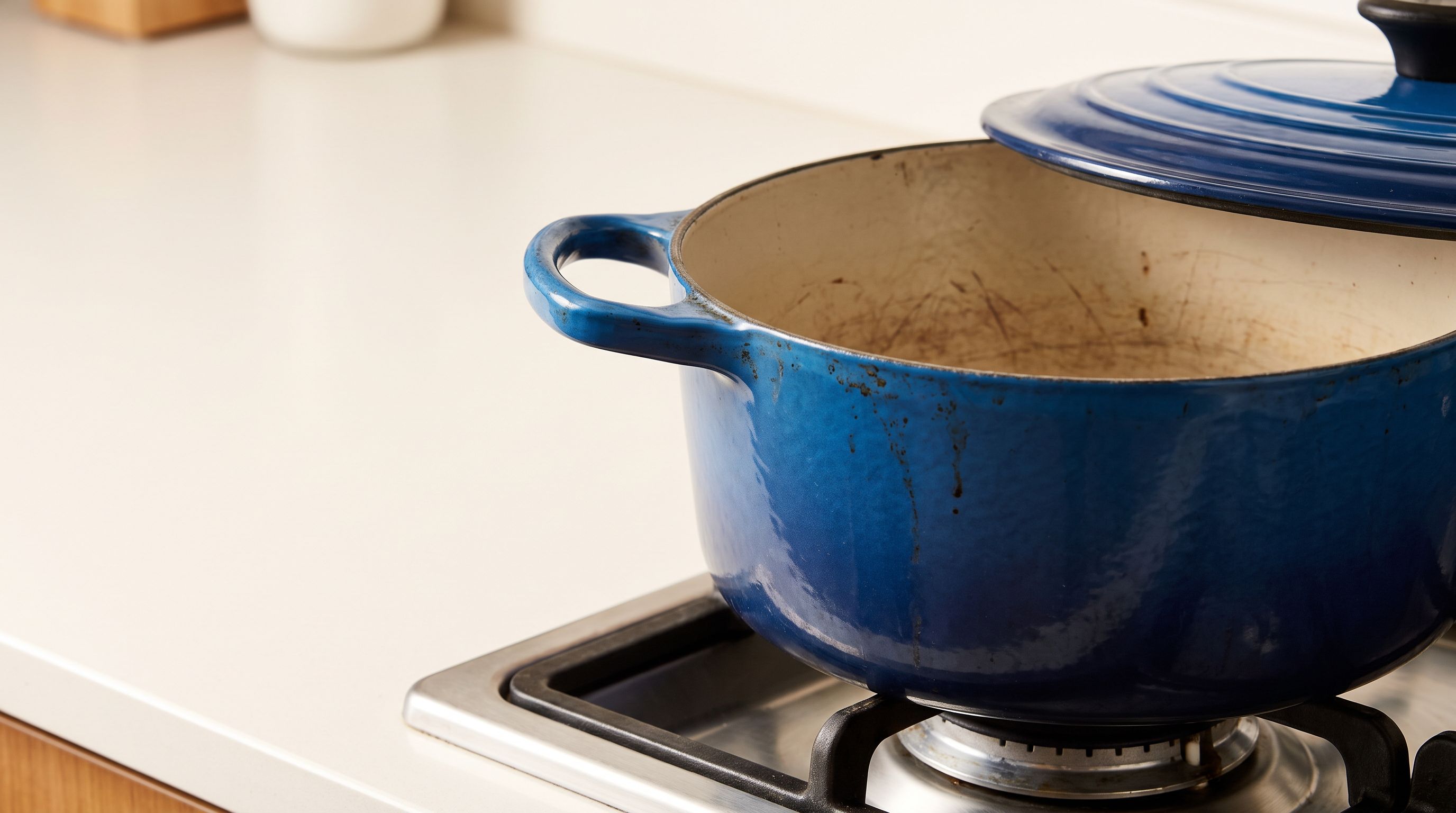
Crazing is the fine, hairline, web-like cracking that shows up on interior floors and walls. It happens when the glass layer is stressed beyond what it can flex — most commonly from overheating or dry-heating an empty pot, where the iron expands faster than the enamel skin sitting on it. Care guidance from enameled cast iron brands and retailers consistently flags the same culprits: excessive high heat, preheating empty, and letting a pot run dry. Crazing is generally treated as cosmetic because the glass layer is still bonded and still covering the iron. It is also, importantly, a warning: the pot has been stressed, and stressed enamel is more likely to chip later.
Chipping is the serious one. A chip means the glass has released from the iron and a piece is gone, exposing bare metal at the edge of a sharp glass boundary. The common view in cookware care writing is blunt: once enamel starts chipping on a cooking surface, it tends to keep chipping, and fragments can end up in food. That's the case where "stop using it for cooking" is reasonable advice, especially on the interior floor where a spatula will keep worrying the edge.
Thermal shock is the mechanism that causes both. It's not an abstract risk — it's the specific act of changing the pot's temperature faster than the two bonded materials can agree on. Pouring cold water into a hot pot, dropping a screaming-hot pot into a sink, moving a pot straight from freezer to oven, or setting a hot empty pan down on a cold wet counter. Brand care documentation and cookware guides all circle the same instruction: let it cool before washing, don't shock it, don't heat it empty.
Staining and dulling get mistaken for damage constantly. A light interior that has gone beige-brown after a few braises is not cracked; it's residue bonded to the glass. The widely repeated home fix — a thick paste of baking soda with a little dish soap, left to sit, then gently scrubbed — works because it's mildly abrasive and alkaline without being a steel pad. What you want to avoid is bleach and metal scouring pads, which cookware care guidance repeatedly warns will dull or damage the enamel surface itself.
| Symptom | What it is | Usual cause | Practical call |
|---|---|---|---|
| Fine web of hairlines | Crazing | Overheating, dry/empty preheating | Cosmetic; treat as a warning sign |
| Missing flake, bare metal visible | Chipping | Impact, utensil damage, progressed crazing | Retire from cooking use |
| Brown/beige discoloration | Staining | Bonded residue, oil polymerization | Baking soda paste; not damage |
| Dull, scratched sheen | Surface abrasion | Steel wool, harsh abrasives, metal utensils | Avoidable; use wood/silicone |
The real players and what their rules tell you
The specs that matter here aren't advertised in big type — they're buried in care instructions, and they differ by brand in ways that reveal a lot.
Le Creuset's Signature line ships with a stainless steel knob, a change the brand made specifically so the lid isn't the limiting factor on oven temperature. Older Le Creuset pots and many budget models use phenolic (plastic) knobs with a stated oven ceiling, typically well below bread-baking temperatures. If you bake no-knead loaves at 450°F or higher, the knob material is the single most relevant spec on the entire pot. Lodge's enameled Dutch ovens, including the familiar 6-quart EC6D, also use a stainless knob on current versions — which is why they've become the default recommendation in sourdough circles at a fraction of the French-made price.
Staub takes a different approach to the interior: a matte black enamel rather than the light sand-colored interior Le Creuset uses. Neither is "tougher" in a way anyone can honestly quantify from the outside, but the practical difference is real — a dark interior hides the staining that drives people to aggressive scrubbing in the first place, while a light interior lets you actually see fond and browning while you cook. Tramontina's enameled cast iron sits at the budget end and is the pot a lot of people buy precisely because they expect to abuse it with high-heat bread baking.
What none of these brands claim is an enamel that is immune to thermal shock. The care instructions converge because the physics converge.
What it means if you're shopping today
Stop evaluating Dutch ovens on color and start evaluating them on three things.
Knob material. Stainless or an explicitly oven-safe metal knob removes a temperature ceiling entirely. A phenolic knob doesn't make a pot bad, but it makes it a braising pot rather than a bread pot. This is the clearest example in all of cookware of a spec that's quietly decisive and rarely marketed.
Interior color, chosen honestly. Light interiors for people who care about watching a sauce develop; dark interiors for people who hate looking at stains. This is a preference, not a durability ranking.
Weight and handle size. Enamel chips from impact, and most impact comes from a 12-pound pot slipping while you lift it with oven mitts. Wide loop handles are a durability feature disguised as ergonomics.
Everything else — "lifetime" enamel language, hairline-resistance claims — should be read with the understanding that brands universally void coverage for thermal shock and overheating, because those are user-induced.
What to watch next
Two things are worth tracking. First, knob standardization: as bread baking continues to drive Dutch oven sales, stainless knobs are becoming the expected default rather than a premium feature, and some brands sell stainless knobs as a replacement part for older lids — a cheap upgrade worth checking before buying a whole new pot.
Second, the rise of purpose-built bread pots — shallow-based, high-domed designs from several cast iron makers — which sidestep the enamel question entirely by using bare seasoned iron. If your Dutch oven's only job is a 500°F loaf, bare cast iron has no glass layer to craze, and the tradeoff is seasoning maintenance instead.
FAQ
Are hairline cracks safe to bake in? Crazing is generally considered cosmetic because the enamel is still bonded and still covering the iron. Watch it. If a line turns into a chip or you see bare metal, stop cooking in it.
Is chipped enamel actually unsafe? The common guidance is yes — retire it from cooking. Chips tend to progress, and fragments can end up in food.
Can I preheat an empty Dutch oven for bread? This is the most debated point in the category. Brand guidance warns against heating empty cookware because enamel and iron expand at different rates. Many bakers do it anyway; crazing is the risk they're accepting.
How do I clean stains without damaging it? A thick baking soda and dish soap paste, left to sit, then a soft scrub. Avoid bleach, steel wool, and harsh abrasives.
Can enamel be repaired? Not practically at home. Enamel is fused glass applied at high temperature; patch products don't restore a food-safe cooking surface.
Our picks
Lodge 6 Quart Enameled Cast Iron Dutch Oven (EC6D)
Porcelain enamel over cast iron with a stainless knob, so there's no plastic lid-temperature ceiling.

Le Creuset Enameled Cast Iron Round Dutch Oven, 5.5 qt., Flame
Sand-colored interior enamel and a stainless knob rated by Le Creuset for oven use at any oven temperature.

STAUB Cast Iron 5.5-qt Round Cocotte - White Truffle, Made in France
Matte black interior enamel that hides staining and is marketed for searing before braising.

Tramontina Bestow Enameled Cast Iron 6.5-Qt Round Dutch Oven Pot with Lid
Widely sold enameled cast iron at a lower price, useful if you expect bread-baking abuse.
Get the best kitchen gear deals in your inbox
Join the PrepDeck newsletter for hand-picked kitchen gear deals and new buying guides. No spam, unsubscribe anytime.
Related reads
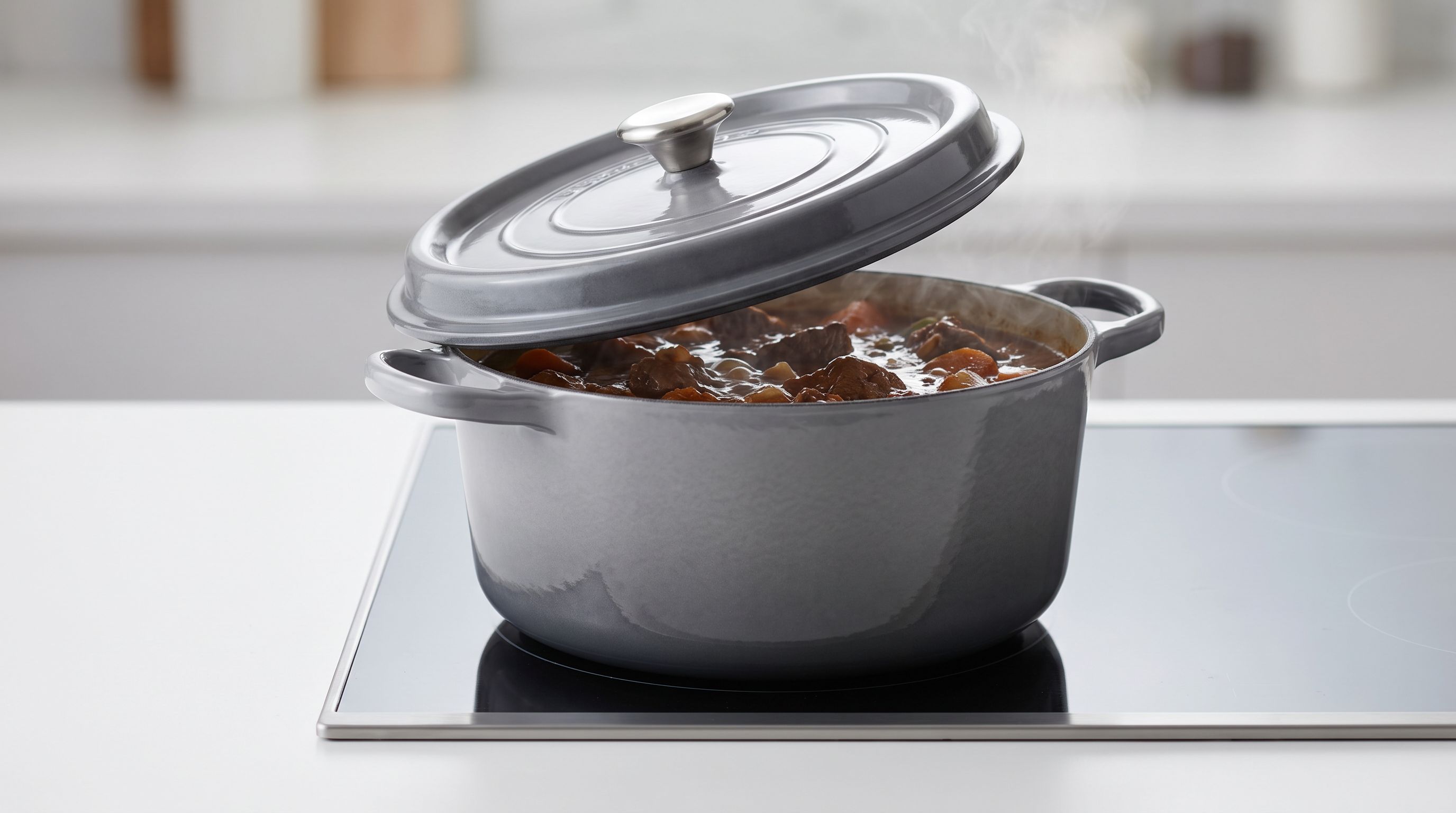
Which Dutch Oven Should You Buy in 2026? 5 Sizes Compared
We compared enameled cast iron Dutch ovens on capacity, lid weight, knob heat limits and enamel durability so you can match the right pot to your household in 2026.
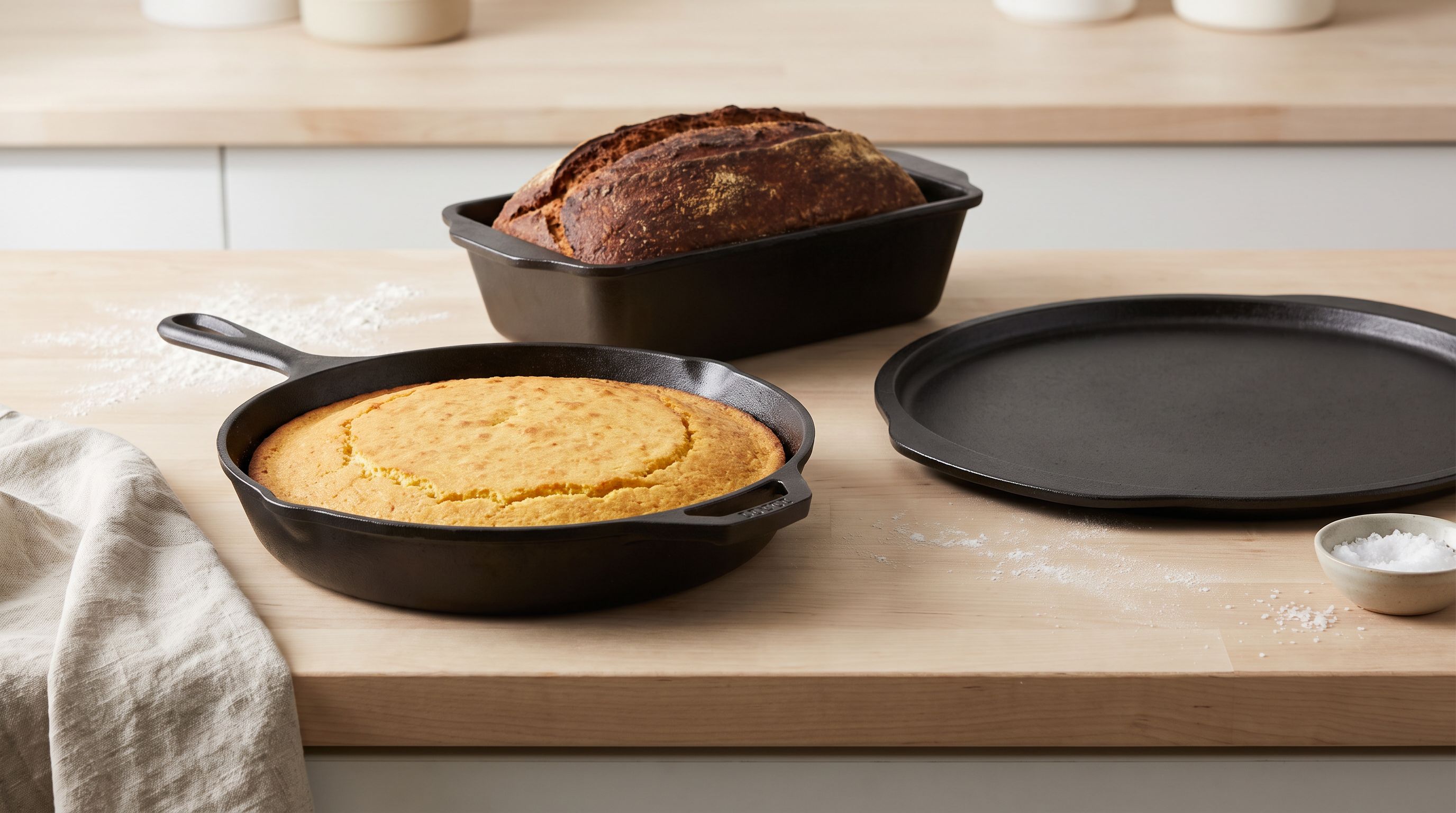
Cast Iron Bakeware in 2026: Preheat Mass Is the Real Spec
Cast iron bakeware in 2026, ranked by preheat mass and oven rack clearance — loaf, cornbread and pizza pans compared against steel and ceramic for crust.
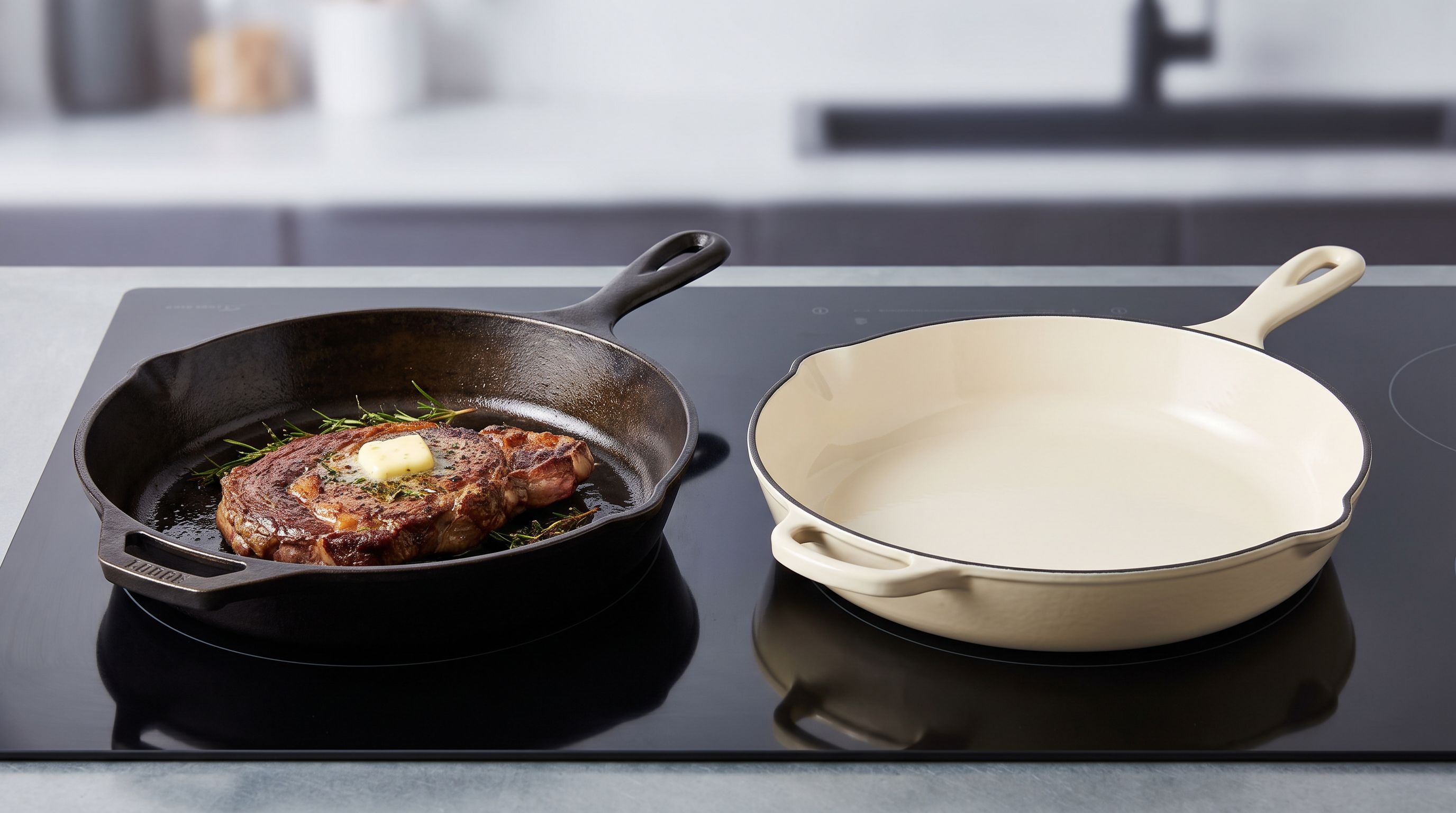
Enameled vs Bare Cast Iron Skillet: Which Wins in 2026?
Enameled vs bare cast iron skillet, settled: how each handles searing, acid, induction and 10+ years of wear — plus the skillets worth buying in 2026.