Cutting Boards in 2026: End Grain vs Edge Grain vs Plastic
End grain, edge grain or plastic? We compare wood species, thickness, knife-edge wear, warping and dishwasher reality to find the best cutting board for 2026.
Reader-supported: we may earn a commission from links on this page, at no extra cost to you. It never affects our picks. Learn more.
A cutting board is the one piece of gear every knife in your kitchen has to touch. Get it wrong and you dull edges faster, fight a board that rocks on the counter, or end up with a warped slab you resent. Get it right and you'll still be using the same board in fifteen years.
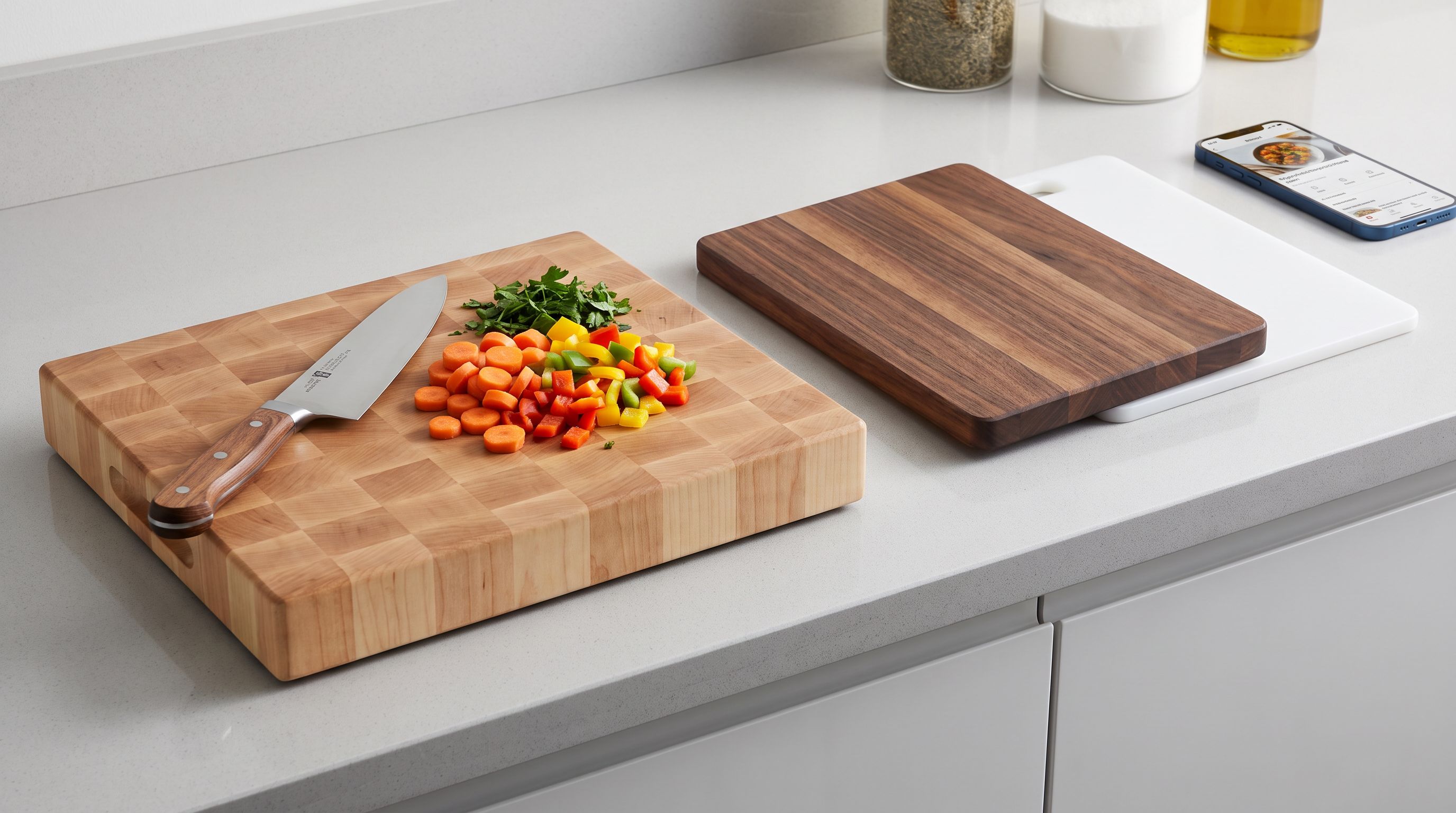
The honest answer in 2026 is that most serious home cooks should own two boards: one wood board for produce, bread and cooked proteins, and one plastic or composite board for raw meat and anything you want to run through the dishwasher. Here's how the construction types actually differ, and which specific boards earn their counter space.
End grain vs edge grain vs plastic: what actually changes
End grain boards are built from blocks of wood stood on end, so your knife meets the open ends of the wood fibers — think of a bundle of straws. The edge slips between fibers and the fibers close back up, which is why end-grain boards self-heal, hide knife marks and are the gentlest surface for a thin, hard edge. The trade-offs are weight, price, and more wood movement: the glued-up block expands and contracts across more joints, so neglect it (soaking it, running it through the dishwasher, letting it dry out) and you'll get cracks or cupping.
Edge grain boards glue long strips side by side, so you cut across the face of the fibers. It's slightly harder on an edge than end grain, but the difference is smaller than marketing suggests — far smaller than the gap between any wood board and glass, stone, ceramic or the metal boards trending on marketplace bestseller lists. Edge grain is lighter, cheaper, dimensionally more stable and easier to keep flat. For most people it's the smarter wood buy.
Plastic (high-density polyethylene or polypropylene) is softer than wood on the knife, non-porous, and dishwasher safe — which is the real argument. You can sanitize it at temperatures that would destroy a wood board. The downside is that plastic scars permanently; deep, fuzzy knife grooves trap residue and shed microplastic particles, so a plastic board is a consumable. Budget on replacing it every year or two, and resurface or retire any board with grooves you can catch a fingernail in.
Composites like compressed wood fiber (Richlite-style material) split the difference: dishwasher safe, no oiling, nearly unbreakable, thin and light. They're harder on knife edges than real wood, but they're far better than bamboo, which is dense, silica-rich, and genuinely abrasive.
| Type | Knife friendliness | Stability / warping | Dishwasher | Weight | Realistic lifespan |
|---|---|---|---|---|---|
| End grain hardwood | Best | Most movement; needs regular oiling | Never | Heaviest (often 10–20+ lb) | Decades with care |
| Edge grain hardwood | Very good | Good if 1"+ and oiled | Never | Moderate | 10–20 years |
| Plastic (HDPE/PP) | Good when new, worse as it scars | Can warp in hot dishwashers | Yes | Light | 1–3 years |
| Wood-fiber composite | Fair | Excellent — barely moves | Yes | Light | 5–10 years |
| Bamboo | Poor (abrasive, hard) | Prone to splitting at glue lines | No | Light–moderate | 2–5 years |
| Glass / stone / metal | Terrible — avoid | N/A | Yes | Heavy | Forever, but ruins knives |
Wood species: maple is the default for a reason
Hardness is measured on the Janka scale, and the sweet spot for cutting boards is a wood hard enough to resist gouging but soft enough to spare your edge. Hard maple sits right in that window, which is why it's the standard for butcher blocks and professional boards. Walnut is slightly softer and more forgiving on knives, with obvious visual appeal; cherry is softer again and scars more readily. Teak is naturally oily and water-resistant but its silica content makes it harder on edges than maple. Avoid acacia boards sold as cheap "hardwood" — quality varies wildly and many are thin, lightly glued and prone to splitting.
Also check that any wood board is closed-grain. Open-pored species like red oak have visible pores that hold moisture and food residue.
Thickness, weight and the warping problem
Thickness is the single best predictor of whether a wood board stays flat. Thin boards under about three-quarters of an inch cup almost inevitably, because they absorb moisture on the working face and dry on the other. For edge grain, aim for at least 1 inch; for end grain, 1.5 inches or more is typical and the mass is part of the point — a heavy board doesn't skate when you're breaking down a squash.
That mass is also a real constraint. A big end-grain block is awkward to lift into a sink and heavy enough that some people simply stop washing it properly. Be honest about your sink, your counter height and your wrists before buying a 20-pound board.
The anti-warp routine is simple: wash both faces so they dry evenly, never soak or leave a board flat in a wet sink, stand it on edge to dry, and oil it with food-grade mineral oil monthly at first, then whenever it looks dry and pale. Board cream with beeswax adds a bit of water resistance.
The picks
John Boos Chop-N-Slice Maple Cutting Board is the best all-round buy for most kitchens. It's edge-grain hard maple from a manufacturer that's been making butcher blocks for well over a century, and it's the board that has repeatedly topped independent wooden-board round-ups for sheer durability and flatness. It's substantial without being unliftable, reverses for a fresh face, and takes a sanding-and-oiling refresh beautifully.
 Best overall · John Boos Chop-N-Slice Maple Cutting Board — Check price on Amazon →
John Boos Block Classic Reversible Maple End Grain Cutting Board is the upgrade if you cut daily and care about your edges. End-grain maple, thick enough to serve as a working butcher block, reversible, and repairable essentially forever. Expect real weight and a genuine oiling commitment — this is a board you maintain, not one you own passively.
OXO Good Grips Utility Cutting Board is the plastic board to pair with either. Non-porous polypropylene, a juice groove to catch poultry and steak runoff, grippy edges so it doesn't wander, and it goes straight into the dishwasher. Treat it as replaceable: when the grooves get deep, buy another.
 Best plastic / raw meat board · OXO Good Grips Utility Cutting Board — Check price on Amazon →
Epicurean Kitchen Series Cutting Board is the pick when weight is the enemy. The compressed wood-fiber composite is thin, light, dishwasher safe, heat resistant and needs no oil at all. It's less kind to knife edges than maple, so use it for quick prep, travel and small kitchens rather than as your primary chopping surface.
 Best lightweight pick · Epicurean Kitchen Series Cutting Board — Check price on Amazon →
Material Kitchen reBoard is the small-kitchen and apartment answer: recycled plastic and sugarcane, light enough to handle one-handed, slim enough to store upright beside the fridge, and available in colors that make it easy to keep a dedicated raw-meat board separate.
What to skip
Skip glass, marble, ceramic and the titanium or stainless boards currently climbing marketplace bestseller charts. They're easy to sanitize and that's the entire argument. A hard metal or glass surface rolls and chips a knife edge in a way no amount of honing fixes, and they're loud and slippery to work on. Skip bamboo if you own knives you actually sharpen. And skip any wood board under about three-quarters of an inch thick unless you're buying it as a serving board.
FAQ
Is plastic or wood more sanitary? Both are safe when maintained. Plastic can be dishwasher-sanitized, which matters for raw meat. Wood has natural antimicrobial properties and research has repeatedly found bacteria do not survive well on a clean, dry wood surface — but a scarred, dirty board of either material is a problem. Use separate boards for raw meat and ready-to-eat food.
Can I ever put a wood board in the dishwasher? No. Heat, prolonged water exposure and detergent will split glue joints and crack the wood, usually within a few cycles. Hand wash, rinse, towel dry, stand on edge.
How often should I oil a wood board? Monthly is a good default, more often when the board is new or when it looks dry and chalky. Use food-grade mineral oil or a mineral oil and beeswax cream — never olive, vegetable or nut oils, which go rancid.
Does end grain really keep knives sharper? Yes, measurably, though the effect is gradual. Over years of daily prep an end-grain board means fewer trips to the stone. If you're choosing between an end-grain board and a better knife, buy the knife first.
When should I throw out a plastic board? When knife grooves are deep enough to catch a fingernail, or when the board has warped enough to rock on the counter. Deep scarring traps residue and increases particle shedding.
What size should I buy? At least 15 by 20 inches if the counter allows — small boards push food onto the counter and make you work in cramped, unsafe strokes. Keep a smaller board for garlic, lemons and quick tasks so you're not washing the big one constantly.
Our picks
John Boos Chop-N-Slice Series Rectangular Maple Cutting Board
Edge-grain hard maple that stays flat, handles daily abuse, and costs far less than an end-grain block.

John Boos Block CCB121203 Classic Reversible Maple Wood End Grain Chopping Block, 12 Inches x 12 Inches x 3 Inches
Thick end-grain maple that swallows knife marks and is kindest to an edge over years of use.
OXO Good Grips Plastic Utility Cutting Board
Dishwasher-safe polypropylene with grippy edges and a juice groove — the sanitation workhorse.
Epicurean Kitchen Series Cutting Board, 14.5 x 11.25 Inch, Natural
Compressed wood-fiber composite: thin, dishwasher-safe, nearly indestructible, no oiling required.
Material Kitchen reBoard
Recycled plastic and sugarcane board that's light enough to use one-handed and stores upright.
Get the best kitchen gear deals in your inbox
Join the PrepDeck newsletter for hand-picked kitchen gear deals and new buying guides. No spam, unsubscribe anytime.
Related reads
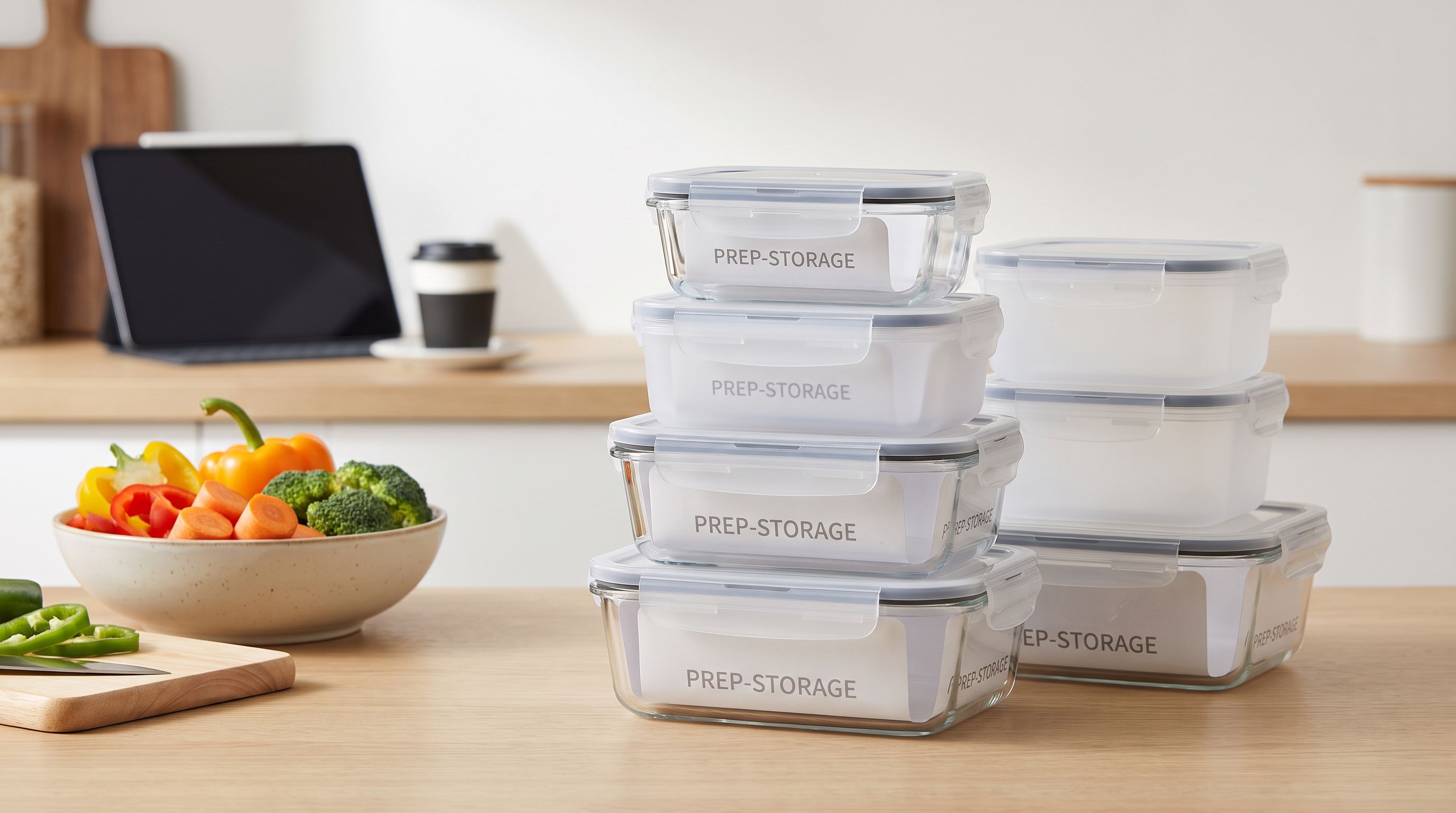
Glass vs Plastic: The Best Food Storage Containers for 2026
Glass or plastic? We compared the best food storage containers of 2026 on oven and freezer limits, lid seal design, stack height, and fridge footprint.
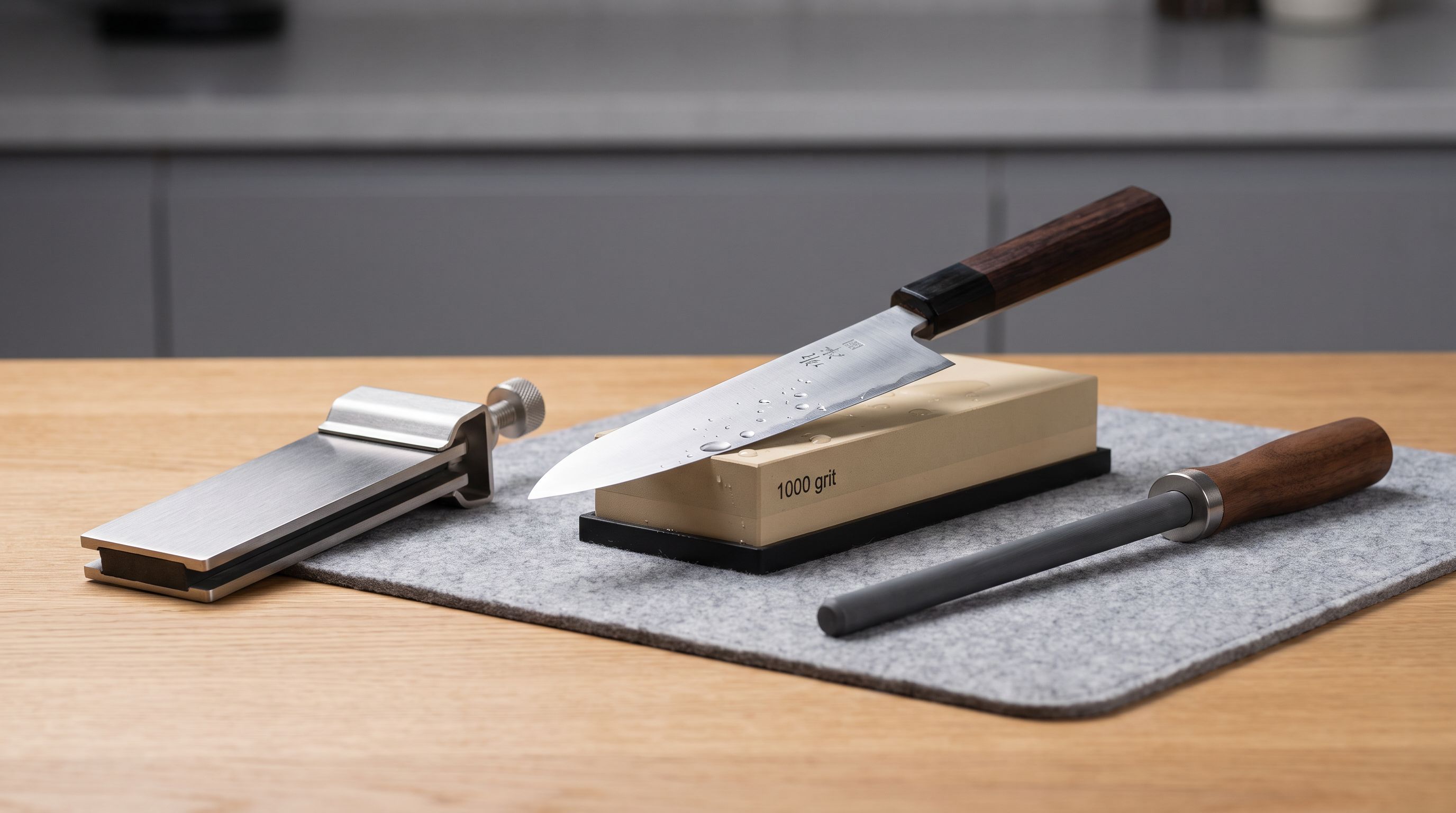
Knife Sharpening Systems in 2026: Stones vs Guided Rigs
Whetstones, guided-angle rigs, or electric? We compare grits, edge angles for Japanese vs German knives, and how much steel each method costs you long term.
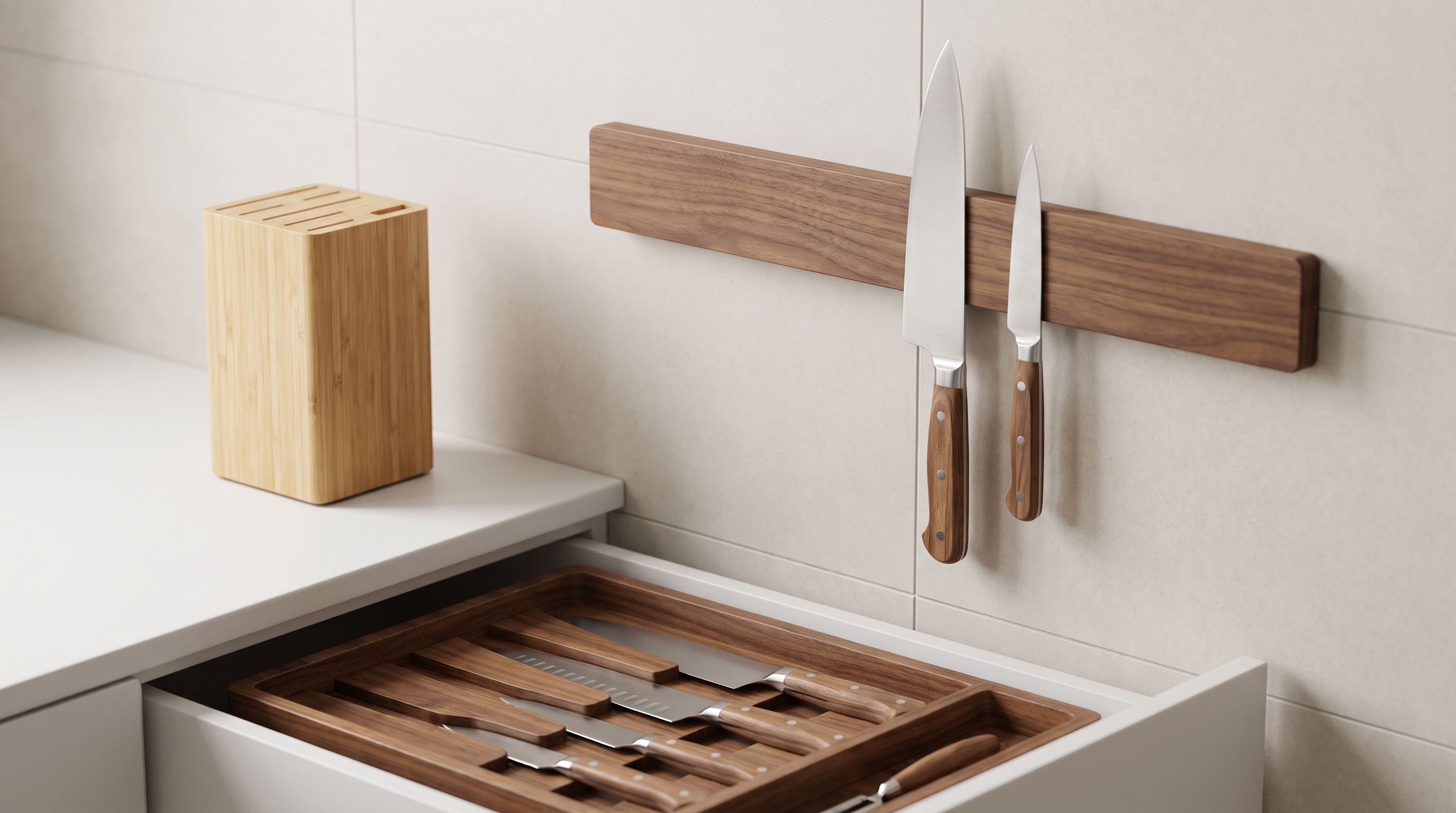
Knife Storage in 2026: Block, Magnetic Strip or Drawer?
Knife blocks vs magnetic strips vs in-drawer trays in 2026: how each format affects counter space, edge protection and knife capacity — plus four picks worth buying.