Chamber Vacuum Sealer vs Suction in 2026: Who Actually Needs One?
Chamber vacuum sealer vs suction in 2026: we compare bag cost, liquid handling, counter space and real payback math for home cooks who buy meat in bulk.
Reader-supported: we may earn a commission from links on this page, at no extra cost to you. It never affects our picks. Learn more.
If you buy a quarter cow, break down pork shoulders, or batch-cook brines and braises, you've probably hit the wall where a cheap vacuum sealer stops being enough. Liquid gets sucked into the pump. Textured bags cost more than you expected. Bags fail in the freezer six months later.
That's the point where people start researching chamber machines — and the honest answer is that most home cooks don't need one, but a specific minority absolutely does. Here's how to tell which group you're in.
How the two technologies actually differ
An external suction sealer clamps the open end of a bag against a heat strip and pulls air out through that opening. Because the bag's walls collapse immediately, you need channel bags — embossed or ribbed plastic with air pathways molded in — or nothing comes out. Those textured bags are the hidden ongoing cost.
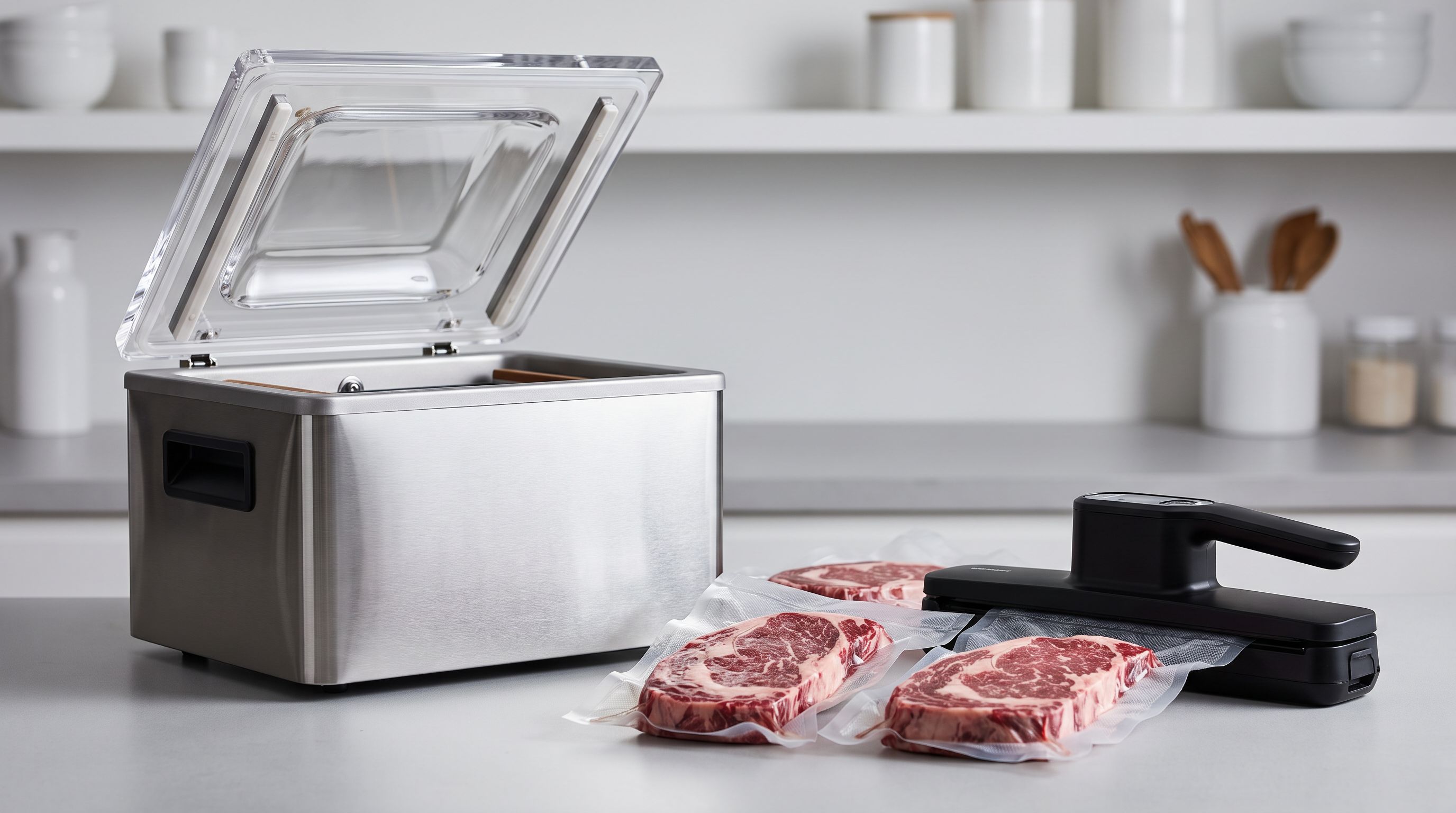
A chamber sealer puts the entire bag inside a sealed box and evacuates the chamber, not the bag. Pressure equalizes inside and out, so the bag doesn't collapse until the pump stops — which means you can use plain, smooth, cheap flat bags, and liquids don't get pulled toward the seal. The lid also contains the vacuum, so soups and marinades don't boil over into your machine.
That single architectural difference drives every other trade-off: cost, size, noise, speed, and what you can safely seal.
Chamber vs suction: the comparison
| External suction | Chamber | |
|---|---|---|
| Bag type | Textured/embossed channel bags only | Plain flat bags (far cheaper per unit) |
| Liquids | Poor — soups and marinades need pre-freezing | Excellent — seals liquid straight from the pot (cooled) |
| Vacuum strength | Good, varies widely by model | Stronger and more consistent |
| Footprint | Slim; stores in a drawer or upright | Large, heavy, usually lives on the counter |
| Weight | Typically a few pounds | Often 20–50+ lb depending on chamber size |
| Speed per bag | Fast for single bags | Slower per cycle, but you can seal multiple small bags at once |
| Max bag size | Limited by bar width (commonly 11–12 in) | Limited by chamber dimensions |
| Noise | Moderate, higher-pitched | Varies; oil pumps are loud, dry pumps quieter |
| Maintenance | Essentially none | Gaskets; oil-pump models need oil changes |
| Upfront cost | Low to moderate | Several times higher |
| Best for | Occasional bulk buys, sous vide proteins, pantry goods | Weekly batch work, wet foods, high bag volume |
The bag-cost math (where chamber machines earn their keep)
Forget the sticker price for a second — the real argument for a chamber sealer is consumables. Flat bags for chamber machines generally cost a fraction of what equivalent-size embossed channel bags cost, because they're simple co-extruded plastic with no embossing step.
Run the math yourself rather than trusting a generic payback claim:
- Count the bags you actually seal per month. Be honest — most people overestimate by 2–3×.
- Look up current per-bag cost for your preferred channel bag size, and for a flat chamber bag in the same size.
- Divide the price gap between the two machines by your monthly bag savings.
A household sealing 20–30 bags a month will typically be looking at a payback measured in many years — long enough that the chamber machine only makes sense if you also want the liquid capability. A household sealing 100+ bags a month (a hunter processing game, someone running a small farm share, a serious sous vide meal-prepper) crosses over much faster, often inside a couple of seasons. The Anova Precision Chamber Vacuum Sealer is the model that moved this calculation for home kitchens, because it shrank the chamber format down to something that fits a normal counter without commercial-grade pricing.
When a suction sealer is genuinely the right answer
Buy external if most of these describe you:
- You seal dry or mostly-dry items: steaks, chicken breasts, cheese, coffee, nuts, cured meats, dehydrated goods.
- You buy in bulk a few times a year, not weekly.
- Counter space is scarce and you want the machine in a cabinet.
- You use Mason jar attachments for pantry staples — a feature chamber machines generally don't offer.
- You sous vide, but you're sealing proteins with a marinade you can freeze into a puck first.
For that profile, the Nesco VS-12 Deluxe Vacuum Sealer is the sensible target: it has a strong pump, a double seal bar for freezer-durable welds, and a manual pulse mode so you can stop the vacuum before you crush a fillet of fish or a stack of cookies. If you want something simpler and cheaper that still handles a chest-freezer restock, the FoodSaver FM2100 Vacuum Sealing Machine is the perennial default — bags are available everywhere, including grocery stores, which matters more than people expect when you're midway through portioning 40 lb of pork.
 Best simple suction pick · FoodSaver FM2100 Vacuum Sealing Machine — Check price on Amazon →
 Best overall suction sealer · Nesco VS-12 Deluxe Vacuum Sealer — Check price on Amazon →
If you're sealing a dozen bags a month and mostly want to stop freezer burn on the chicken thighs from the warehouse club, the Bonsenkitchen VS2100 Vacuum Sealer Machine does that job for very little money. It's not a lifetime appliance and the pump will struggle with back-to-back cycles, but it's the right amount of machine for light duty, and we'd rather see someone buy that than a chamber unit that gathers dust.
When a chamber sealer is worth the counter space
Go chamber if:
- You seal wet foods regularly — stocks, chili, brined turkey parts, ceviche, pickles, sauces, cooked braises.
- You're sealing 50–100+ bags a month and the bag savings are real.
- You do compression work: quick-pickling, infusing, or compressed melon and cucumber for plated dishes.
- You want consistent, repeatable vacuum levels rather than "whatever the pump managed today."
- You process whole animals or large shares and want to seal several small portions per cycle.
The Anova Precision Chamber Vacuum Sealer is the easiest entry point: dry pump (no oil changes), a footprint comparable to a large stand mixer, and controls that let you dial vacuum time and seal time for delicate items. For higher volume — think an annual hog or elk, or a side business — the Avid Armor USV32 Chamber Vacuum Sealer steps up to a bigger chamber and a pump built for sustained cycles.
 Premium pick for volume · Avid Armor USV32 Chamber Vacuum Sealer — Check price on Amazon →
Be realistic about the physical reality: a chamber sealer is heavy, it does not go in a cabinet, and you will leave it out. If that's a dealbreaker in your kitchen, the decision is already made.
Practical buying notes for either type
- Seal bar width sets your max bag width. An 11–12 in bar covers most household needs; roasts and whole fish may want wider.
- Double seal bars matter for freezer storage beyond a few months.
- Pulse/manual mode is the single most useful feature on a suction sealer — it saves delicate foods from being crushed.
- Accessory port for jars, canisters and marinating containers is an external-sealer advantage; don't assume a chamber model has one.
- Duty cycle: cheap suction units need cooldowns between bags. If you're doing 30 bags in a session, buy up.
- Bag availability matters as much as price. Verify you can buy your bag size reliably before committing.
- Vacuum sealing is not botulism protection. Removing oxygen favors anaerobic bacteria. Keep sealed perishables refrigerated or frozen — never at room temperature.
The short verdict
For the overwhelming majority of home cooks, a good external suction sealer — the Nesco VS-12 Deluxe or the FoodSaver FM2100 — is the correct purchase, and the money you save goes toward better meat. A chamber machine like the Anova Precision Chamber Vacuum Sealer is a genuine upgrade, but it's justified by wet foods and bag volume, not by vague freshness claims. If you can't point to liquids you need to seal or a three-digit monthly bag count, stay external.
FAQ
Can I use cheap flat bags in an external suction sealer? No. Without embossed channels the bag collapses against itself and the pump can't pull air from inside. You must use textured channel bags or a channel-lined roll.
Can a chamber sealer use the embossed bags I already own? Yes, they'll seal fine — you're just paying more per bag than you need to.
Do I need a chamber sealer for sous vide? No. Water displacement in a zip-top bag works for most sous vide, and a suction sealer handles proteins well. A chamber machine only helps if you're bagging a lot of liquid with the food.
How do I seal soup with a suction sealer? Freeze it first. Portion into a container or bag laid flat, freeze solid, then vacuum-seal the frozen block. Alternatively, use the pulse mode and stop when liquid approaches the seal bar.
Are chamber sealers loud? Oil-rotary-vane pumps in commercial units are loud; home-oriented dry-pump models like the Anova are noticeably quieter, though cycles last longer than a suction sealer's.
How long does vacuum-sealed meat last in the freezer? Significantly longer than wrapped meat before freezer burn sets in — often a year or more for a good seal — but quality still degrades. Label everything with a date.
Our picks

Anova Culinary Precision Vacuum Sealer Pro, Includes Large Bag Roll (19ft), Wet & Dry Dual Food Vacuum Sealer Machine for Sous Vide and Long-Term Storage, 2-Year Warranty
Compact, quiet chamber unit that seals soups and marinades using cheap flat bags.
NESCO Deluxe Food VS-12 Vacuum Sealer, 130 Watts, Kit Bags & Viewing Lid, Compact, Silver
Strong pump, double seal bar and manual pulse control for delicate foods.
FoodSaver FM2100 Vacuum Sealer Machine, One-Touch Sealing, Roll Storage & Cutter, Dry & Moist Food, For Sous Vide Cooking, Accessory Port & Hose, Starter Bags & Roll Included
No-frills FoodSaver that handles bulk meat portioning with widely available bags.
Bonsenkitchen VS2100 Vacuum Sealer Machine
Cheap, slim suction sealer with moist/dry modes for occasional freezer duty.
Avid Armor USV32 Chamber Vacuum Sealer Machine for Foods, Soups & Liquids
Larger chamber and heavy-duty pump for cooks sealing a whole hog share at once.
Get the best kitchen gear deals in your inbox
Join the PrepDeck newsletter for hand-picked kitchen gear deals and new buying guides. No spam, unsubscribe anytime.
Related reads
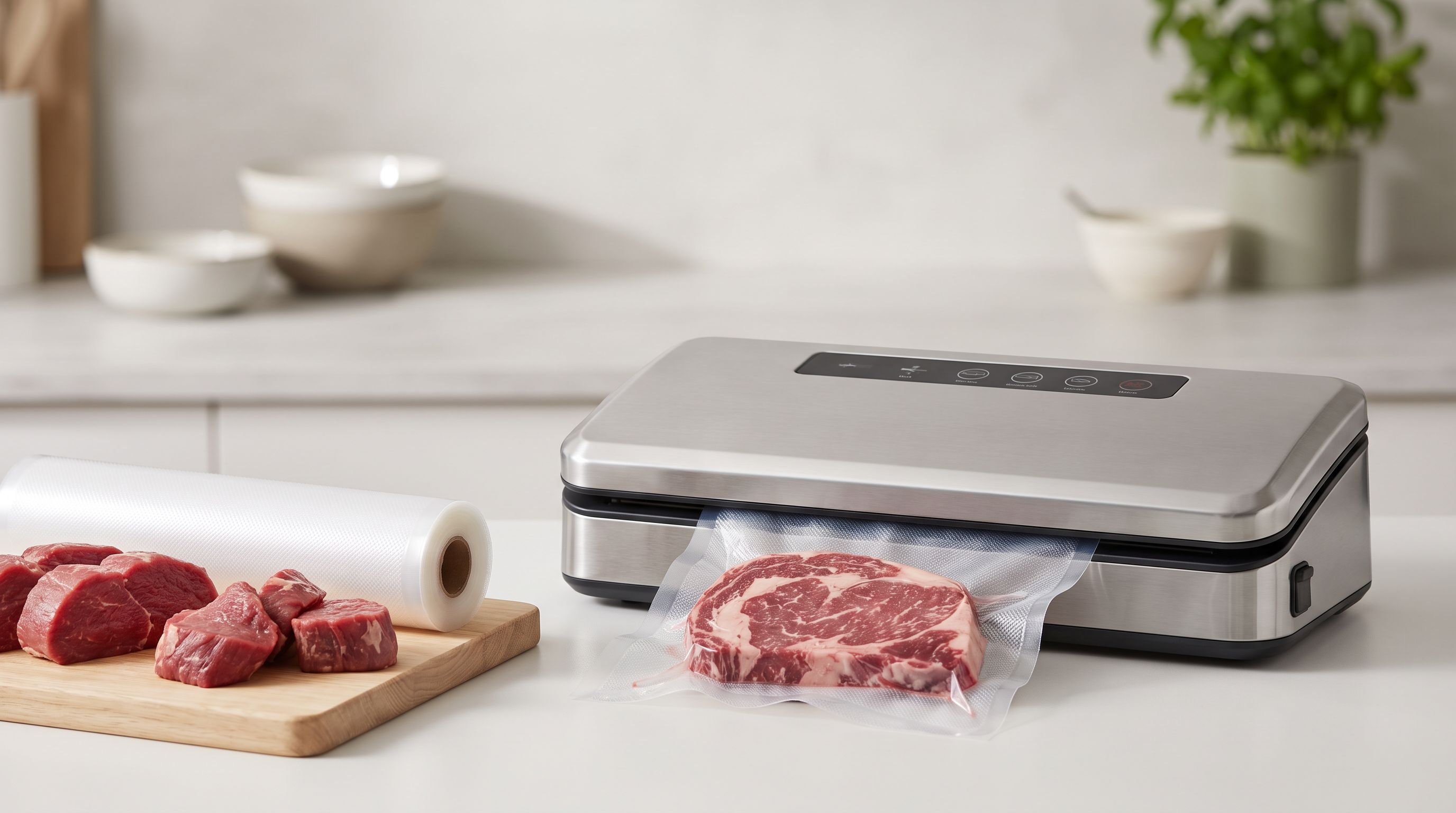
Vacuum Sealers in 2026: 5 Picks by Bag Width and Seal
The best vacuum sealer 2026 guide: chamber vs external machines compared on bag width, seal strength, moist-food modes and long-term bag cost for sous vide and freezer use.
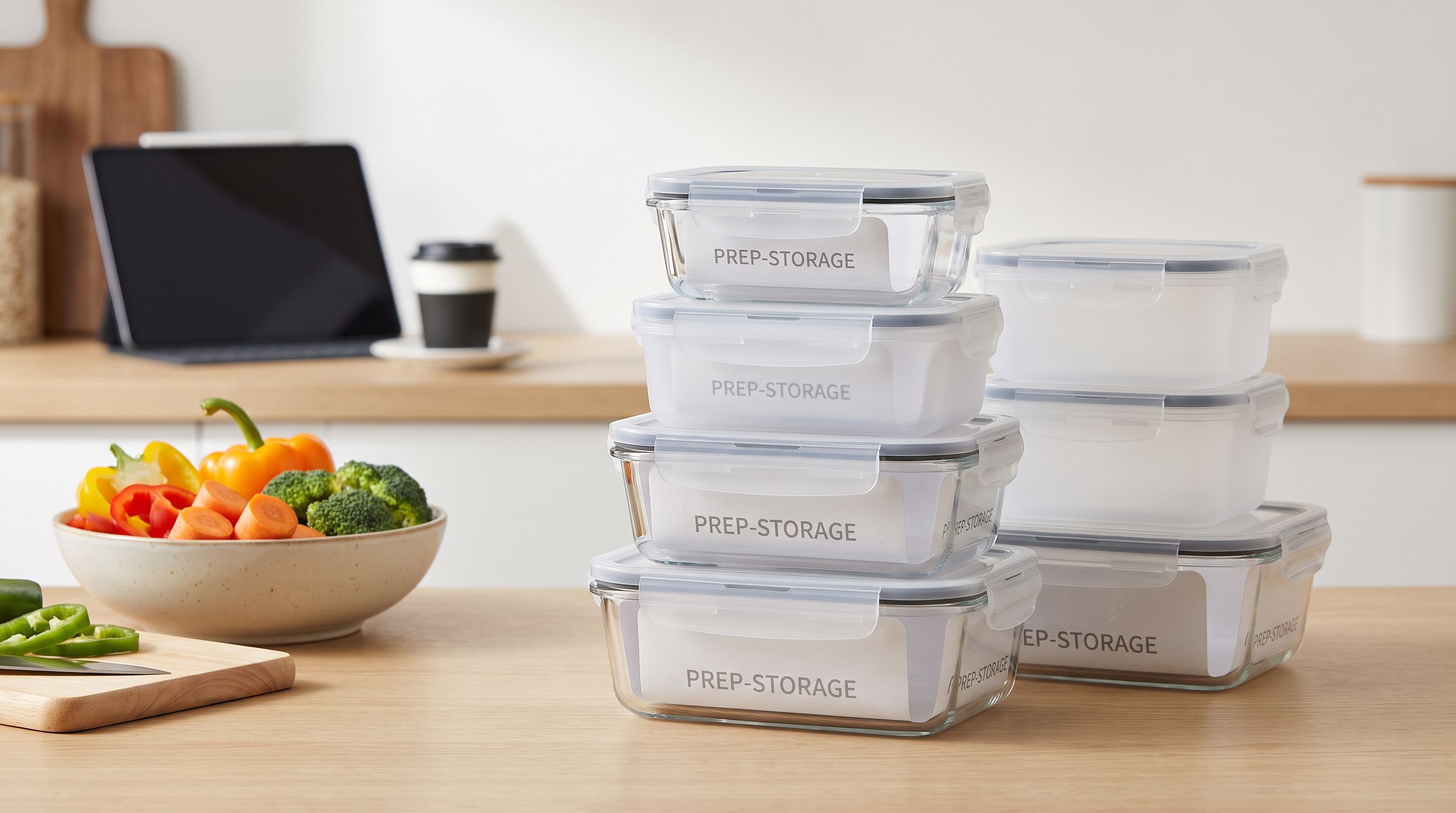
Glass vs Plastic: The Best Food Storage Containers for 2026
Glass or plastic? We compared the best food storage containers of 2026 on oven and freezer limits, lid seal design, stack height, and fridge footprint.
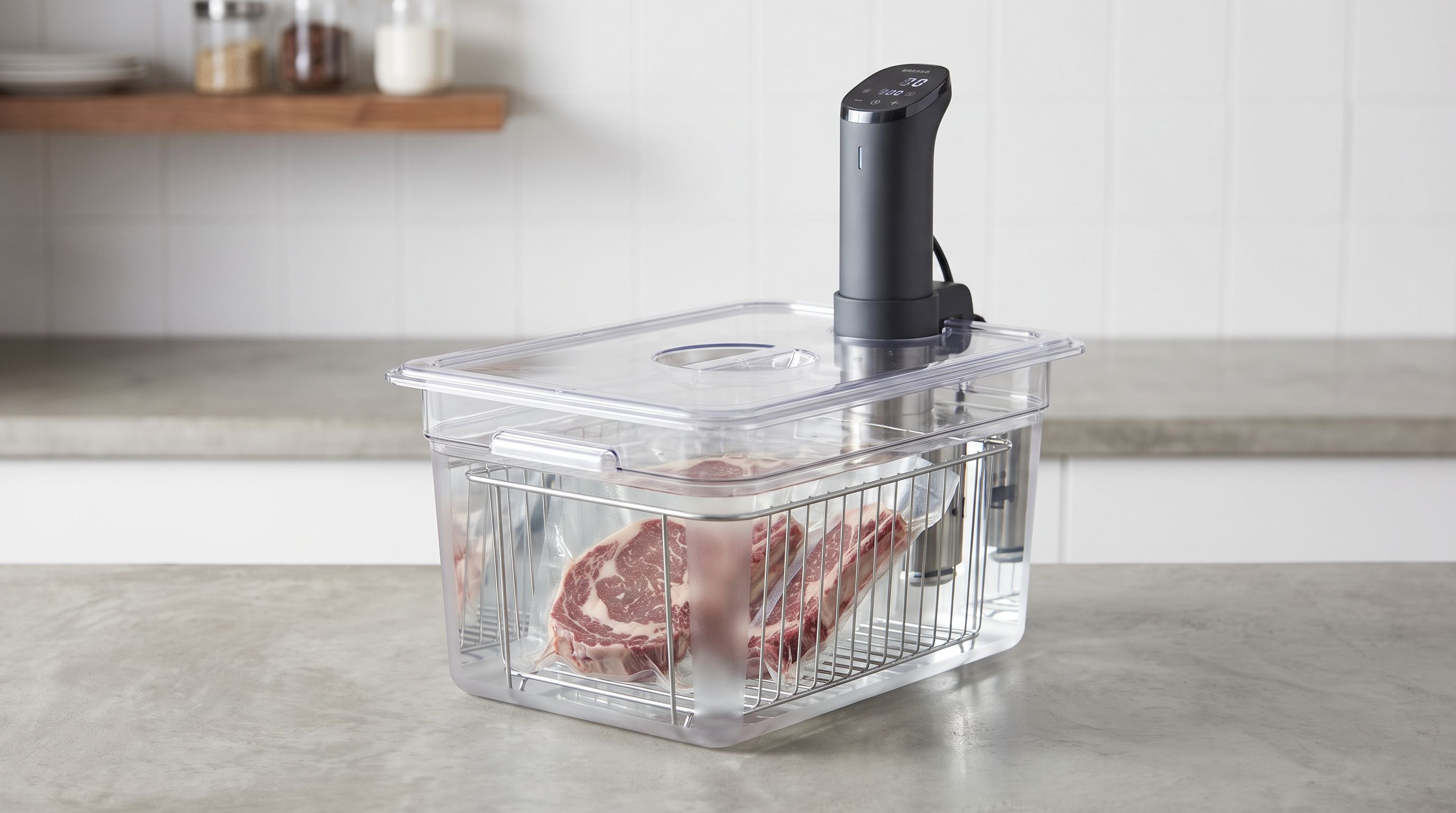
Sous Vide Containers in 2026: Fit Your Lid Cutout First
A sous vide container only works if the lid cutout matches your circulator clamp. Here's how to match Anova, Joule and Instant Pot units to the right tub, rack and lid in 2026.