Built-In Coffee Machine 2026: Plumbed or Tank-Fed?
Plumbed vs tank-fed built-in coffee machines in 2026: cabinet cutouts, water line rules, descaling intervals and service costs, plus the models worth the cabinetry.
Reader-supported: we may earn a commission from links on this page, at no extra cost to you. It never affects our picks. Learn more.
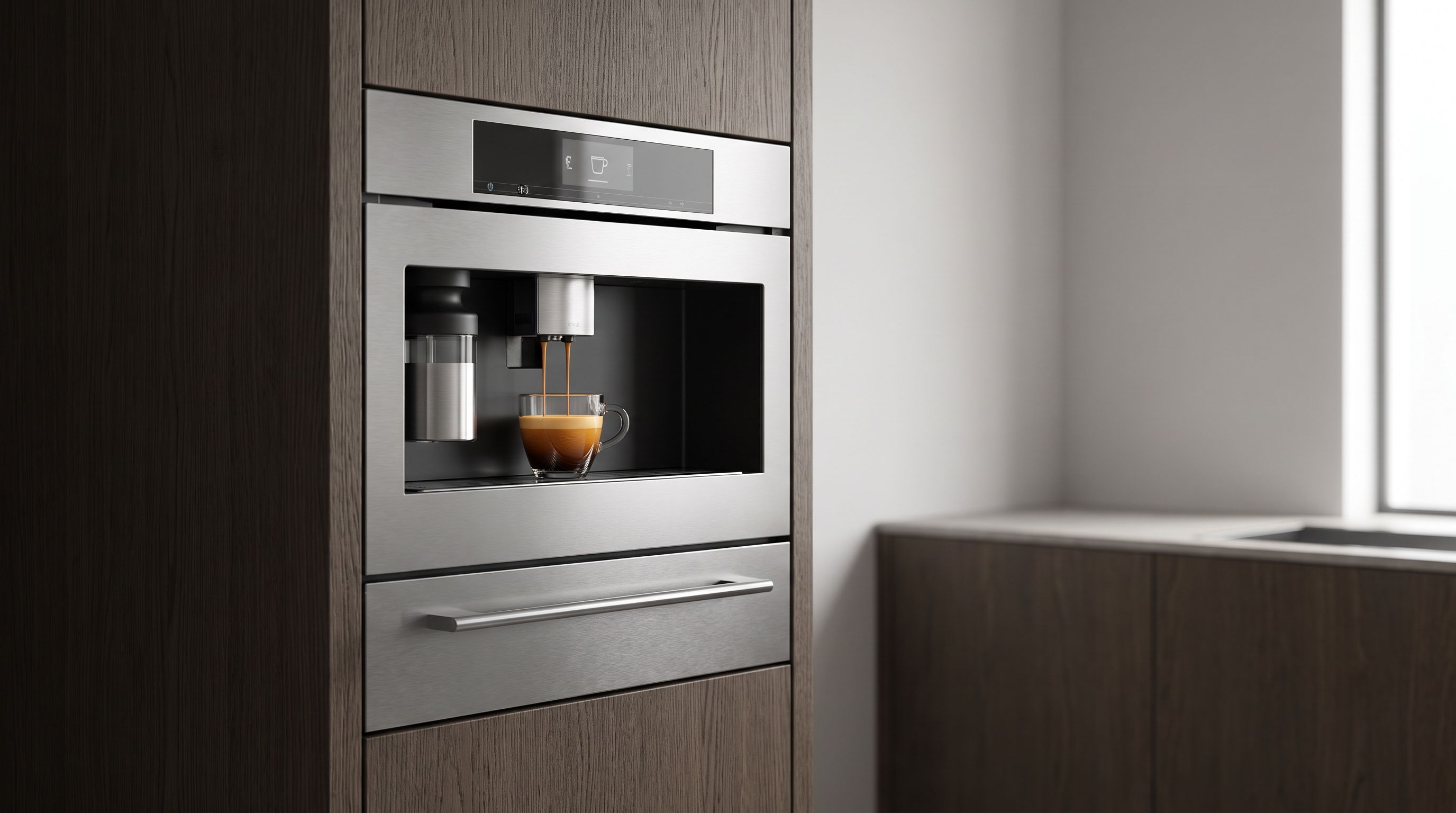
A built-in coffee machine is the single most expensive square foot of cabinetry most kitchens will ever commit to. Before you decide between brands, you have to decide between two very different installations: a plumbed machine that draws from your cold water supply, and a tank-fed machine that you refill by hand from a reservoir behind the door.
That choice drives your cabinet cutout, your plumber's scope of work, your descaling schedule, and — honestly — whether you'll still love the thing in year four. We compared current spec sheets, installation manuals and owner reports to break down what actually differs.
The short version
- Tank-fed built-ins are the overwhelming majority of residential 24-inch column machines. Reservoirs typically run in the 1.3–2.5 litre range, which is roughly 8–16 espressos or 4–6 large milk drinks before a refill.
- Plumbed built-ins eliminate refills and (on most models) automate the drain too, but they require a dedicated cold water line, usually a shutoff valve inside the cabinet, and on many models a drain connection. They're more common in Miele, Jura and Gaggenau's higher tiers.
- Plumbing does not reduce descaling. It changes who notices the scale. Fixed-line machines often sit on harder, unfiltered municipal water, so inline filtration becomes mandatory rather than optional.
Cabinet cutout: the number that decides everything
Most North American built-in coffee systems are designed for a 24-inch (60 cm) wide column with a cutout height around 17–18 inches and a depth near 22–23 inches. European-market machines are specified in millimetres (typically 560–568 mm wide, 450 mm high) and are not interchangeable with a US oven column without filler panels.
Three cutout details owners regret ignoring:
- Rear clearance. A plumbed machine needs room behind the chassis for the inlet hose and its bend radius. Several manuals call for 2–4 inches of service depth that your cabinet maker will happily not provide.
- Service access. Most built-ins slide forward on rails for brew-unit cleaning. If you put a drawer or a stone countertop lip directly below the cutout, you may not be able to pull the unit out without removing trim.
- Power. These are 1,200–1,600 W appliances on a standard 120 V circuit in the US, but the outlet must sit inside or adjacent to the cabinet — not on the same circuit as a microwave drawer you'll run simultaneously.
The Miele CVA 7440 is the cleanest example of a machine designed for both worlds: it ships as a tank machine and accepts a plumbed water connection kit, so the cutout and cabinetry are identical either way. That flexibility is worth a lot if your remodel timeline is uncertain.
Water line requirements, honestly
A plumbed install generally needs:
- A cold 3/8-inch supply with its own quarter-turn shutoff inside the cabinet (hot water will cook the inlet valve's seals and wreck flavour).
- A braided or manufacturer-supplied inlet hose — many brands void warranty coverage if you substitute a generic ice-maker line.
- Pressure within spec, commonly around 20–100 psi. Well systems with a weak pump can fall below the minimum and trip the machine's "no water" error.
- On commercial-leaning units like the Jura GIGA X3 Professional, an optional drain connection so the drip tray empties continuously instead of filling.
That last point matters more than people expect. A plumbed machine with no drain still fills a drip tray and a grounds container. You've automated the fill, not the empty. Owner reports consistently flag this: a high-volume household still visits the machine daily to dump pucks.
Service intervals: what the manuals actually say
| Tank-fed built-in | Plumbed built-in | |
|---|---|---|
| Typical water capacity | ~1.3–2.5 L reservoir | Continuous |
| Refills per day (4 lattes) | 1–2 | 0 |
| Water filter | In-tank cartridge, ~2 months or 50 L | Inline cartridge, often 6–12 months |
| Descaling trigger | Counter + filter status, every ~2–4 months typical | Same intervals; hardness-driven |
| Drip tray / grounds | Manual, daily-ish | Manual unless drain-connected |
| Milk system cleaning | Daily rinse + weekly deep clean | Identical |
| Install cost | Electrician only | Plumber + electrician |
| Relocation later | Easy | Re-plumb required |
The headline: plumbing removes one chore, not the maintenance programme. Brew-group cleaning tablets, milk-circuit detergent and descaling solution are still on the same calendar. Miele's AutoDescale (on the CVA 7440 and siblings) is the one feature that genuinely reduces hands-on time, dosing descaler from an onboard cartridge and running the cycle unattended.
When plumbed is genuinely worth it
Go plumbed if you're pulling more than roughly 10 drinks a day, if the machine serves an office or guest-heavy household, or if the cutout is above shoulder height where lifting a full 2-litre tank is awkward. The Jura GIGA X3 Professional exists for exactly this: dual grinders and dual boilers so two different drinks can be built back to back, with a fixed-water-line accessory for continuous operation.
Go tank if you're a two-to-four-drink-a-day household, if you rent, if your water is hard enough that you'd rather control filtration at the tank, or if the cabinet run has no realistic path for supply plumbing. Reservoirs also let you use filtered or bottled water on well systems where mineral content would otherwise destroy a boiler.
Strong alternatives to a cabinet cutout
Not everyone needs to cut a hole. Two cases where we'd steer you away from built-in entirely:
You want built-in polish without the remodel. The Jura Z10 is the obvious answer — it delivers both hot and genuine cold-extraction drinks, self-cleans its milk circuit, and looks deliberate on a counter. No cutout, no plumber, and it moves with you.
You want to actually make espresso, not order it. A superautomatic hides the process. The Breville Oracle Touch automates grinding and tamping but keeps a real portafilter and a dual-boiler steam wand, so you can dial in a shot. For people who care about extraction, that's a better use of money than a built-in's cabinetry premium.
 Best countertop alternative · Breville Oracle Touch — Check price on Amazon →
You want the volume without the spend. The De'Longhi Eletta Explore ECAM450.86.T covers hot and cold drinks with a detachable milk carafe and a full-size reservoir for a fraction of a column install. It's the sensible "try before you remodel" machine.
Buying checklist
- Confirm the exact cutout in the installation manual, not the marketing page, before cabinets are ordered.
- Ask whether the model is plumb-ready from the factory or needs a brand kit — retrofits are rarely possible.
- Test your water hardness. Above roughly 180 ppm, budget for inline filtration regardless of fill method.
- Check authorised service coverage in your area. A built-in that needs factory service and has none within 200 miles is a liability.
- Budget for consumables: filters, descaler, milk cleaner and cleaning tablets are an ongoing annual cost on every machine here.
FAQ
Does a plumbed machine make better coffee? No. Extraction quality comes from the grinder, brew unit and temperature stability. Plumbing only changes water delivery convenience.
Can I convert a tank machine to plumbed later? Usually not. Plumb-ready models like the Miele CVA 7440 are built with the inlet valve and firmware in place. Aftermarket conversions are not supported and typically void warranty.
How often will I really descale? Most built-ins prompt every two to four months depending on hardness and cup count. Using a fresh filter cartridge on schedule meaningfully stretches that interval.
Do built-ins need a drain? Only if you want continuous drip-tray emptying, and only on models that offer it. Standard residential built-ins drain to a removable tray you empty by hand.
Is a built-in worth it over a countertop machine? If you're remodelling anyway and value the clean elevation, yes. If you're retrofitting an existing kitchen, the install cost rarely beats putting the same money into a better grinder and a machine like the Jura Z10 or Breville Oracle Touch.
Our picks
Miele CVA 7440 Built-In Coffee System
Plumbing-ready 24-inch column machine with AutoDescale and a genuinely usable app; the benchmark build.
Jura GIGA X3 Professional
Dual grinders and a fixed-water-line kit; built for 80+ cups a day in a home office or small cafe.

Jura Z10 Diamond Onyx, 15811
Cold-extraction brewing and Jura's clean-in-place system — near-built-in polish without a cutout.
De'Longhi Eletta Explore ECAM450.86.T
Full-size tank machine with automatic cold brew and milk carafe for a fraction of a column install.
Breville BES990BSS Oracle Touch Espresso Machine, Brushed Stainless Steel
Auto-grinding, auto-tamping espresso with real steam power if you'd rather keep the cabinet space.
Get the best kitchen gear deals in your inbox
Join the PrepDeck newsletter for hand-picked kitchen gear deals and new buying guides. No spam, unsubscribe anytime.
Related reads
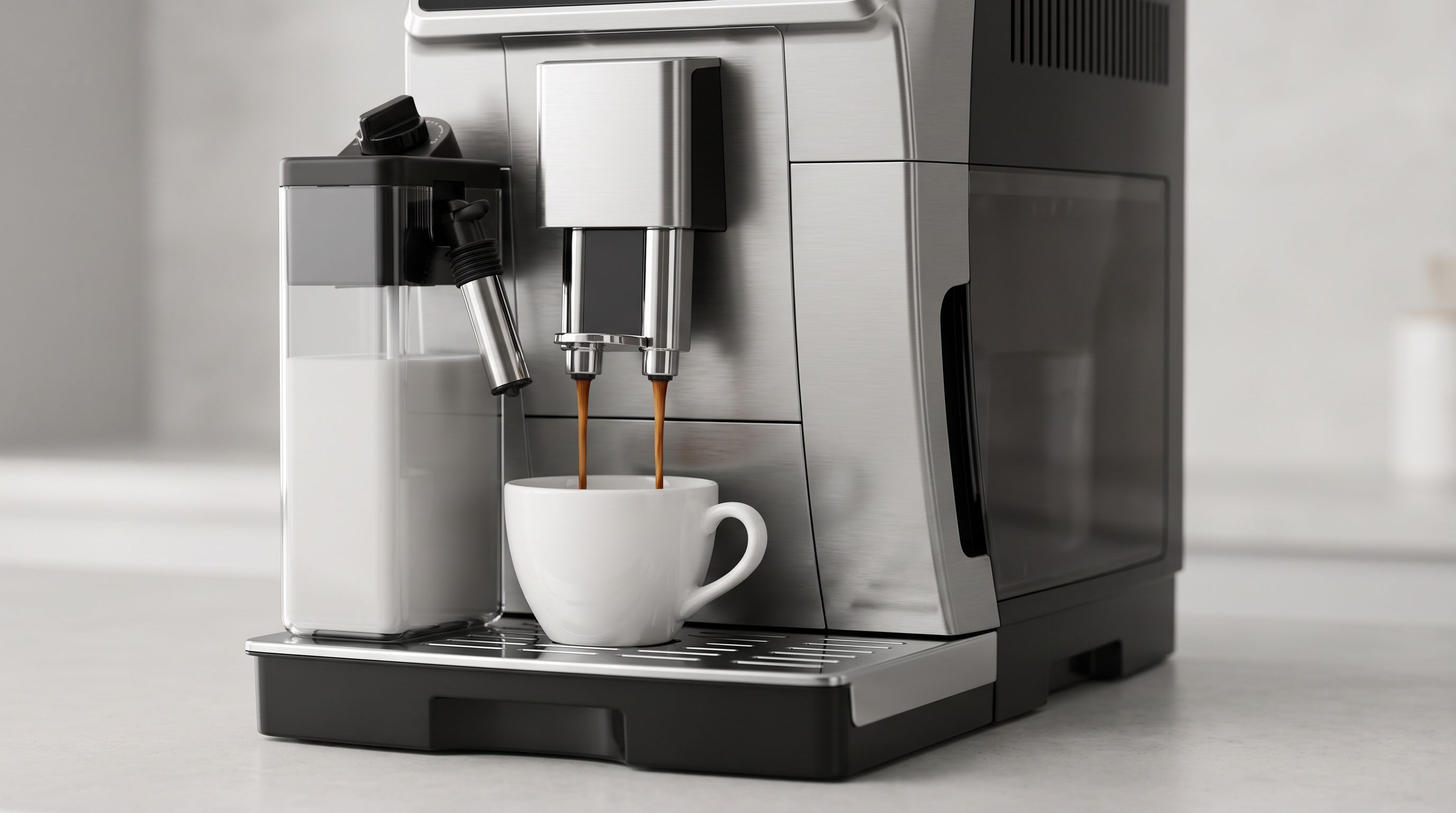
Super-Automatic Espresso Machines in 2026: 5 Picks That Skip the Workflow
The best super automatic espresso machine 2026 picks, ranked by grinder quality, milk system (carafe vs steam wand) and how much daily cleaning each one demands.
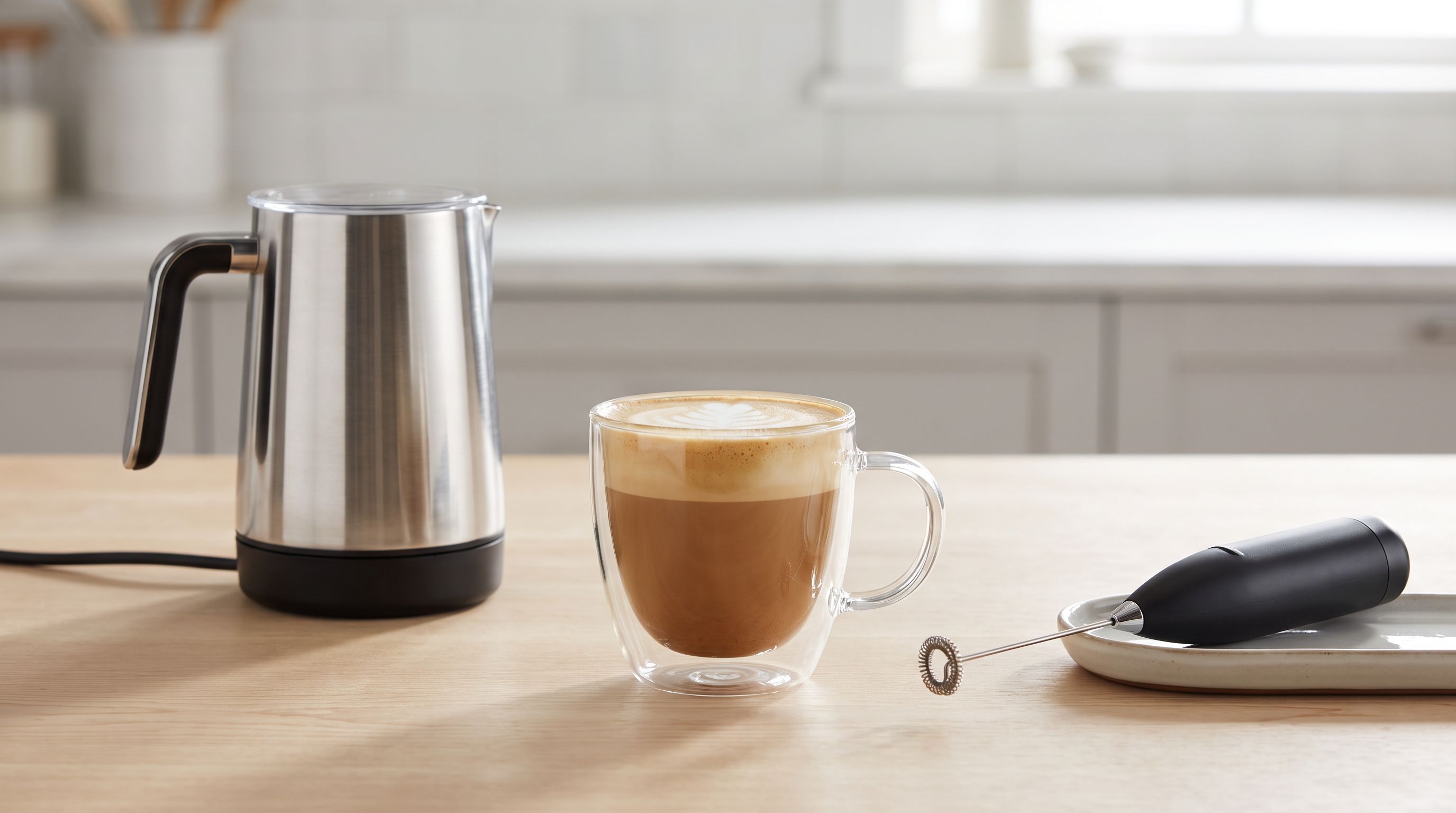
Milk Frothers in 2026: Steam Wand or Automatic Pitcher?
The best milk frother in 2026 depends on whether you want hands-off foam or steam-wand control. We compare capacity, froth texture and dishwasher-safe parts.
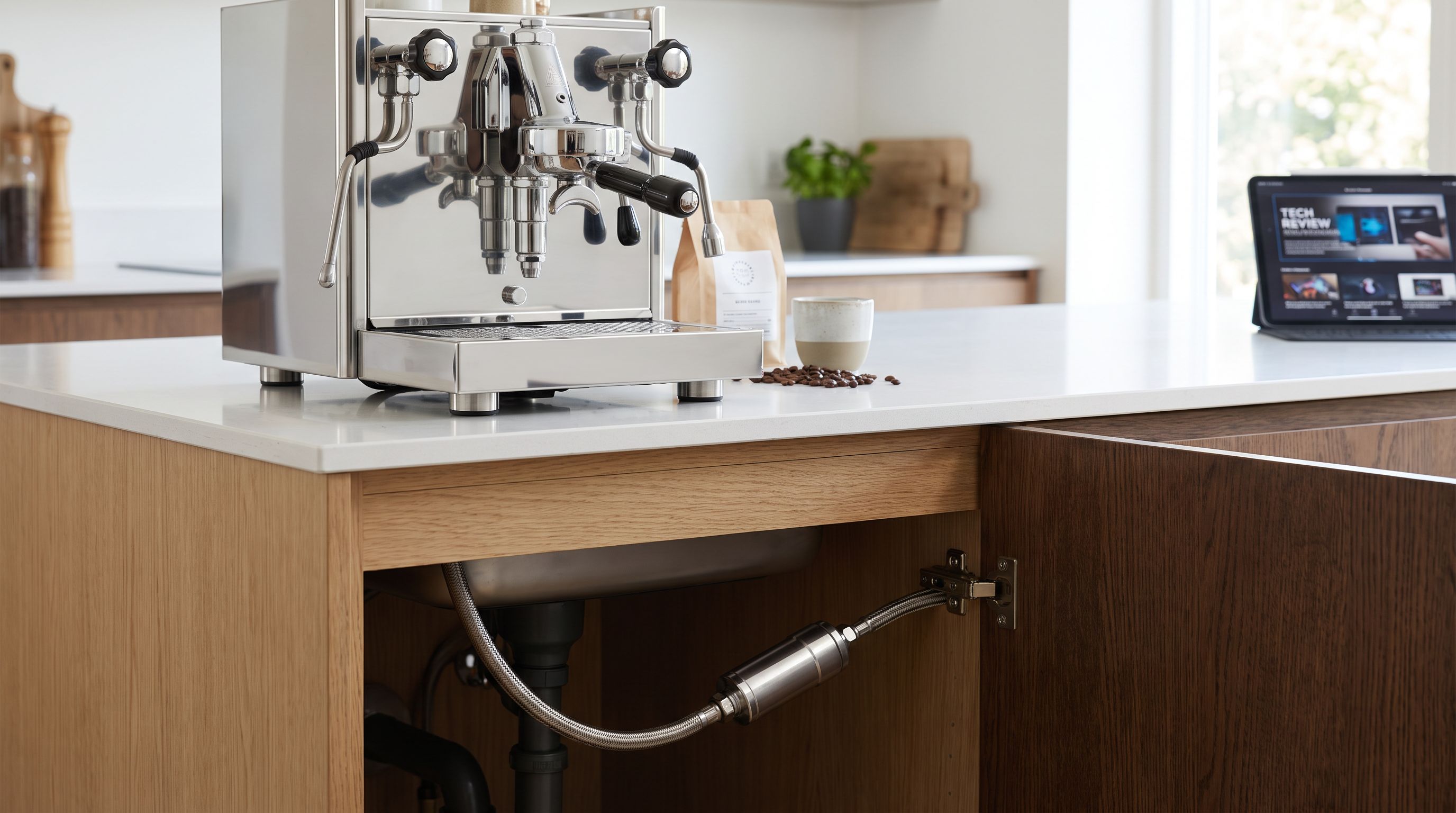
Plumbed In Espresso Machine 2026: What Your Sink Needs
Thinking of plumbing in your espresso machine in 2026? Here's the line pressure, regulator, filtration and machine compatibility you actually need under the counter.