Bakeware Set Buying Guide 2026: The Heat Math Behind Dark Pans
Aluminized steel, dark nonstick, glass or ceramic? We compare heat absorption, warping risk and longevity to help you pick the best bakeware set in 2026.
Reader-supported: we may earn a commission from links on this page, at no extra cost to you. It never affects our picks. Learn more.
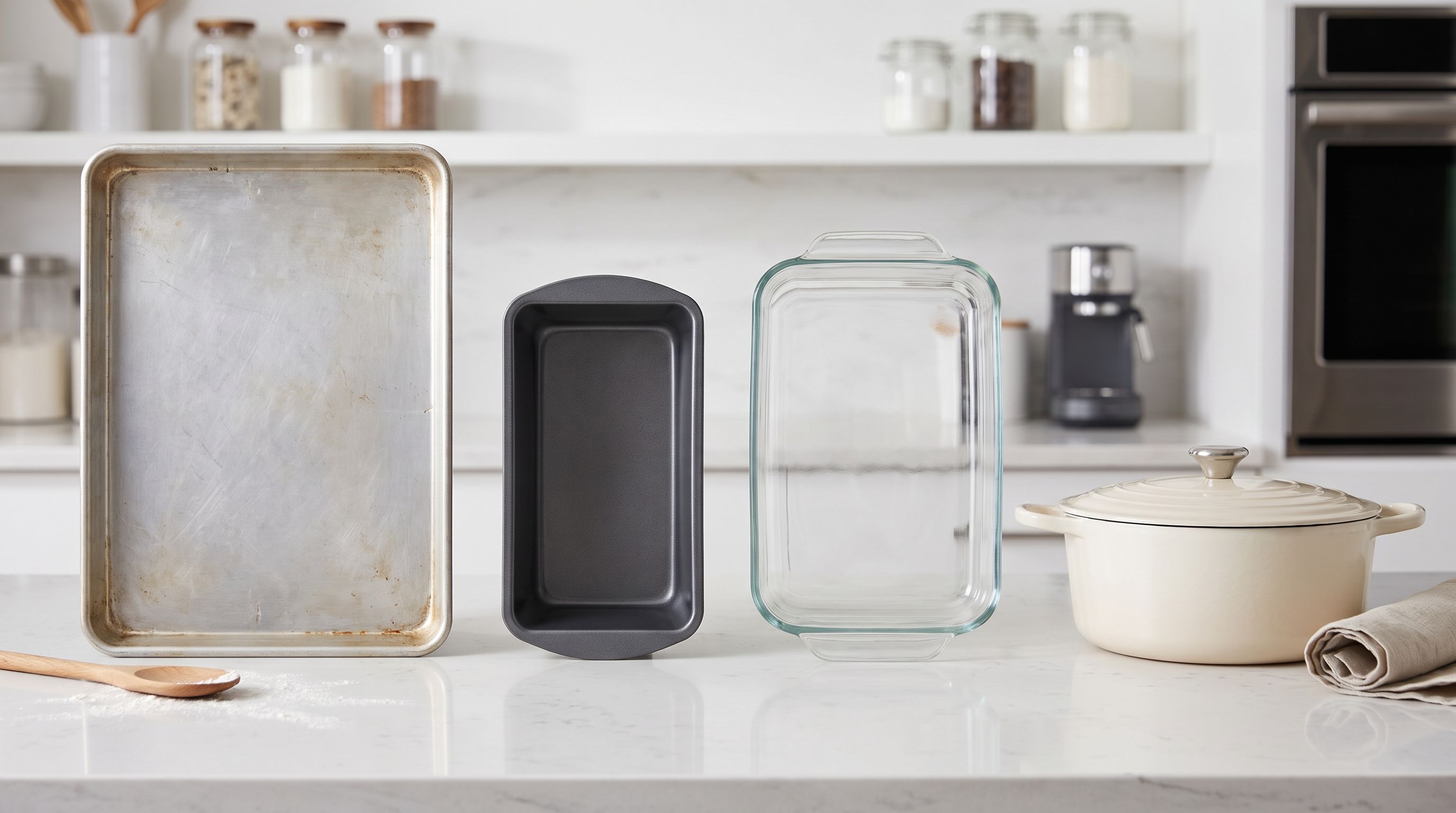
Most bakeware arguments come down to one unglamorous variable: how much heat the pan absorbs and how fast it gives that heat to your dough. Color, thickness, and material all push that number around, and the difference between a pale, gummy-bottomed cookie and a scorched one is often 50°F of effective surface temperature — not a recipe problem at all.
If you're buying a long-term set in 2026, it helps to think in heat math rather than marketing claims. Here's how the four common materials actually behave, which pans warp, and which combination makes the most sense for a home kitchen.
The physics, briefly
Three properties matter:
Emissivity / color. Dark, matte surfaces absorb more radiant heat from the oven's walls and elements than shiny ones. A dark nonstick pan can run meaningfully hotter at the surface than bare aluminum at the same oven setting. That's why nearly every dark-pan manufacturer and the test kitchens at Cook's Illustrated and King Arthur recommend reducing oven temperature roughly 25°F when a recipe was written for a light pan.
Conductivity. Aluminum conducts heat about 3-4x faster than steel and roughly 200x faster than glass or ceramic. Fast conductors even out hot spots and spread energy across the pan floor. Slow conductors hold heat instead — great for a bubbling gratin, bad for a thin sugar cookie.
Mass and gauge. Heavy-gauge pans resist both warping and temperature swings when cold dough hits them. Thin, stamped pans are the ones that ping and buckle at 450°F. Warping is really a thermal-stress problem: uneven expansion across a thin sheet with nothing to brace it. A rolled steel rim around an aluminum sheet — the Nordic Ware Naturals design — is a cheap, effective fix, which is why those pans have outlasted so many trendier ones.
Material-by-material
Uncoated aluminum (the "naturals" look)
Light, highly reflective, extremely conductive. Browning is gentle and even; cookies spread predictably; sheet-pan dinners roast without the undersides turning black. Downsides: it's reactive, so acidic tomato or lemon mixtures can discolor it, and it will develop a permanent patina. Nothing is nonstick, so parchment or a silicone mat is standard. For sheet pans specifically, this is the default professional choice and the reason the Nordic Ware Naturals Half Sheet Pan (2-Pack) remains the single most recommended piece of bakeware in the category.
 Best overall · Nordic Ware Naturals Half Sheet Pan (2-Pack) — Check price on Amazon →
Aluminized steel
A steel core dipped in aluminum-silicon alloy: steel's stiffness and warp resistance, aluminum's conductivity and corrosion resistance at the surface. This is the sweet spot for loaf pans, cake pans, and muffin tins, where rigidity matters and you don't want a floppy sheet. The USA Pan Bakeware 6-Piece Set is the classic example — heavy gauge, corrugated interiors that reduce contact area and encourage airflow, plus a silicone-based coating that releases well without the pitch-black surface of cheap nonstick. The Chicago Metallic Professional Non-Stick 6-Piece Bakeware Set uses the same core idea at a lower price, with a darker finish; bake 25°F lower and check early.
 Budget pick · Chicago Metallic Professional Non-Stick 6-Piece Bakeware Set — Check price on Amazon →
 Best aluminized steel set · USA Pan Bakeware 6-Piece Set — Check price on Amazon →
Dark nonstick (PTFE-coated steel)
Cheapest to manufacture, easiest to sell. Release is excellent on day one. The problems are predictable: the dark surface over-browns bottoms and edges, thin gauges warp, and the coating is a consumable — abrasion, metal utensils, and sustained heat above about 500°F degrade it. If you buy dark nonstick, buy it heavy, keep it under 450°F, hand wash it, and accept that you'll replace it.
Glass (tempered borosilicate or soda-lime)
Terrible conductor, excellent heat retainer. Glass lags getting to temperature, then stays hot, which is exactly what you want for custards, casseroles, cobblers, and brownies you want set at the edges and fudgy in the middle. You can also see the bottom crust — genuinely useful for pies. The Pyrex Easy Grab 8-Piece Glass Bakeware Set covers that job well. Rules: no thermal shock. Don't move it from fridge to a preheated oven, don't put a hot dish on a wet counter, don't broil in it.
 Best for casseroles and bars · Pyrex Easy Grab 8-Piece Glass Bakeware Set — Check price on Amazon →
Ceramic and ceramic-coated
Two different things. Solid stoneware (think a baking dish) behaves like glass — slow, retentive, oven-to-table pretty, and heavy. Ceramic-coated bakeware is aluminized steel or aluminum with a sol-gel silica coating; that's what the Caraway Bakeware Set is. It's PTFE- and PFOA-free, releases gently, cleans easily, and looks good. The honest caveat: sol-gel coatings lose slickness faster than PTFE under heat cycling. Treat a premium ceramic-coated set as a three-to-five-year purchase, not an heirloom.
 Premium ceramic-coated pick · Caraway Bakeware Set — Check price on Amazon →
Comparison table
| Material | Heat absorption | Conductivity | Warp risk | Best for | Temp adjustment |
|---|---|---|---|---|---|
| Uncoated aluminum | Low (reflective) | Very high | Low with rolled rim; high if thin | Sheet pans, cookies, roasting | None (recipe default) |
| Aluminized steel, light coating | Moderate | High | Very low | Loaf, cake, muffin, bundt | None to -15°F |
| Dark nonstick steel | High | Moderate | Moderate to high | Quick breads, easy release | -25°F, check 5-10 min early |
| Tempered glass | Moderate, slow to rise | Very low | None (but shatters on shock) | Casseroles, custards, bars, pies | -25°F per Pyrex guidance |
| Ceramic-coated steel | Moderate-high | High | Low | Everyday baking, easy cleanup | -15°F to -25°F |
| Solid stoneware | Moderate | Very low | None (chips/cracks) | Gratins, oven-to-table | None; preheat with oven |
How to build the set
Don't buy one 10-piece box and call it done. The materials do different jobs.
Start with two half sheets. Uncoated aluminum, rolled rim. They handle cookies, roasting, toasting nuts, and lining the oven floor under a pie. This is where the Nordic Ware Naturals pans earn their reputation.
Add aluminized steel for structural pans. Loaf, square, round cake, muffin. A set like USA Pan covers this in one purchase and will not warp. If budget is tight, the Chicago Metallic set gets you the same core material.
Add one or two glass dishes. A 9x13 and an 8x8 handle lasagna, brownies, bread pudding, and anything you want to refrigerate and reheat in the same vessel. The Pyrex Easy Grab set covers it.
Add ceramic-coated only if you want it. The Caraway Bakeware Set is the nicest-looking, easiest-cleaning option here, and it's a reasonable choice for someone who bakes a few times a month and values release over decade-long durability.
Things that quietly ruin bakeware
- Dishwashers. They dull aluminum, attack coatings, and accelerate failure on both nonstick and ceramic.
- Broilers on coated pans. Radiant heat above a coating's rating is the fastest way to kill it.
- Cooking spray. The lecithin in aerosol sprays polymerizes into a sticky brown film that no coating releases from. Use oil on a paper towel, butter, or parchment.
- Cold water on a hot pan. Warps metal, shatters glass.
- Thin stamped "sets" under a certain weight. If a half sheet feels light enough to flex in your hands, it will warp.
The short answer
For most home bakers, the best bakeware set in 2026 isn't a set at all — it's uncoated aluminum sheets plus aluminized steel pans plus a couple of glass dishes. If you want one box to solve it, USA Pan is the most durable, Chicago Metallic is the value play, and Caraway is the one you'll leave on the counter. Just remember the 25°F rule whenever the pan is darker than the one the recipe author used.
FAQ
Do I really need to lower the oven temperature for dark pans? Yes, in most cases. Dark, matte surfaces absorb more radiant heat, so edges and bottoms brown faster. Drop 25°F and start checking about 5-10 minutes before the stated time.
Does glass bakeware need a temperature adjustment too? Pyrex's own guidance is to reduce by 25°F. Glass heats slowly but retains heat aggressively, so the center keeps cooking after you pull it. Let bars and brownies rest in the pan less time than you would in metal.
Why do my sheet pans warp? Thin gauge plus uneven heating. A cold pan hitting a hot oven, or half a pan covered in food and half bare, creates stress the metal relieves by buckling. Heavy-gauge aluminum with a rolled steel rim essentially eliminates it.
Is ceramic-coated bakeware safer than nonstick? Ceramic sol-gel coatings contain no PTFE or PFOA, which is why many "non-toxic" roundups favor them. Modern PTFE is considered stable below roughly 500°F, but ceramic avoids the question entirely — at the cost of a shorter slick lifespan.
What about silicone bakeware? Fine for muffin cups and specialty molds, poor for anything that needs browning. Silicone insulates rather than conducts, so crusts stay pale and floppy pans need a sheet underneath.
How many pieces does a real home baker need? Two half sheets, one 9x5 loaf, two 8- or 9-inch rounds, one 9x13, one 8x8, and a 12-cup muffin tin covers close to every standard recipe.
Our picks
Nordic Ware Naturals Half Sheet - USA Made Aluminum Commercial Quality Sheet Pan for Baking or Roasting, Encapsulated Galvanized Steel Rim Prevents Warping, 2-Pack
Uncoated aluminum with a rolled steel rim: fast, even, warp-resistant, and effectively unkillable.
USA Pan 6 Piece Nonstick Bakeware Set
Aluminized steel with corrugated surface and a silicone-based coating that releases without going dark-and-scorchy.
Chicago Metallic Professional Non-Stick 8-Piece Bakeware Set, Silver
Heavy-gauge aluminized steel cores at a low price; browns harder than naturals, so drop the oven 25°F.
Pyrex Easy Grab 3-Quart Oblong Baking Dish
Tempered glass holds heat for custards, gratins and brownies, and you can see the bottom crust brown.
Caraway 11-Piece Non-Stick Ceramic Bakeware Set
Aluminized steel under a slick ceramic coating; gentle release, but treat it as a 3-5 year consumable.
Get the best kitchen gear deals in your inbox
Join the PrepDeck newsletter for hand-picked kitchen gear deals and new buying guides. No spam, unsubscribe anytime.
Related reads
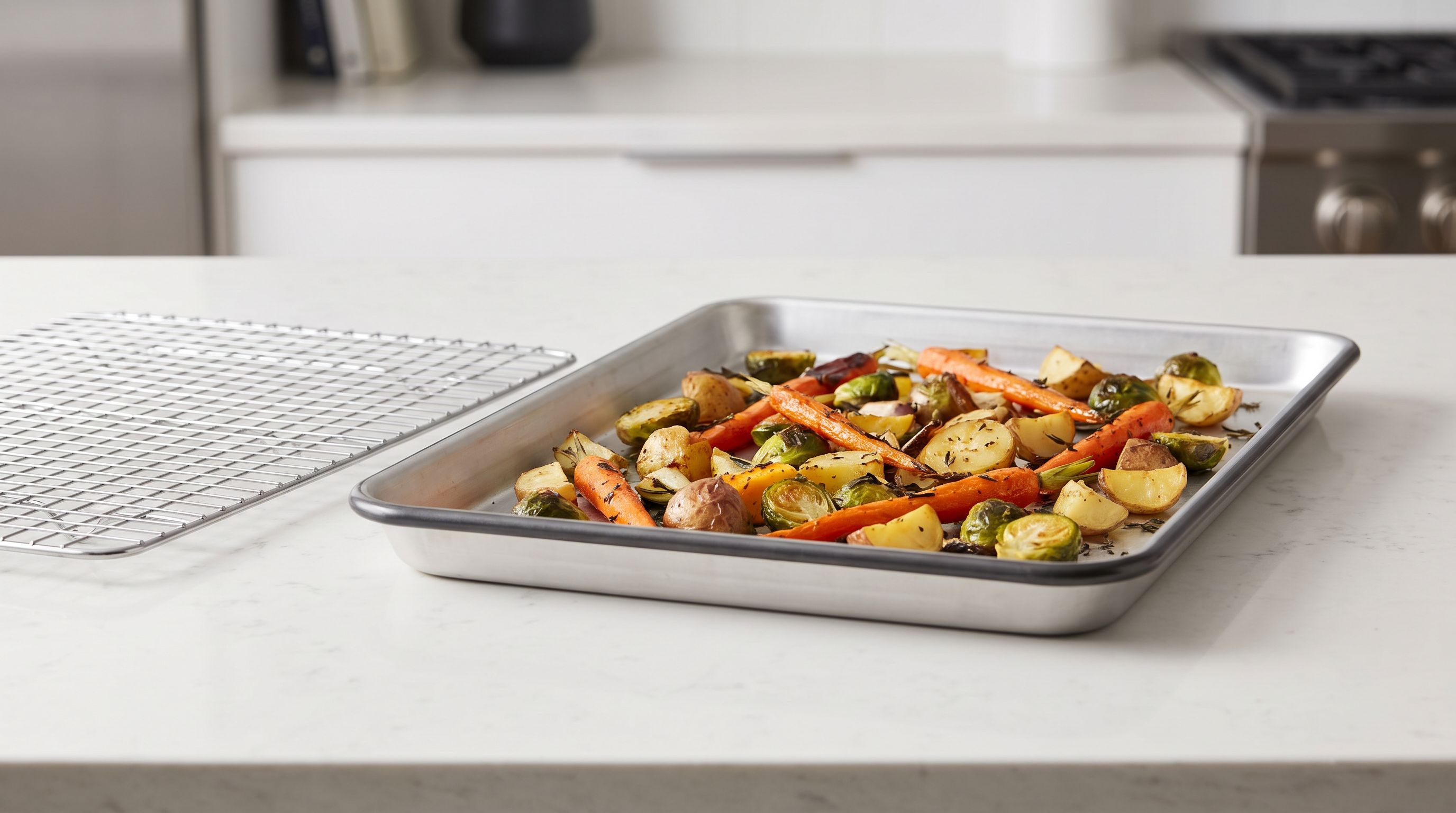
Half Sheet Pans in 2026: Why Gauge Beats Brand Name
The best half sheet pan comes down to aluminum gauge, rolled rims and oven fit. We compare Nordic Ware, USA Pan, All-Clad and Vollrath for 2026 kitchens.
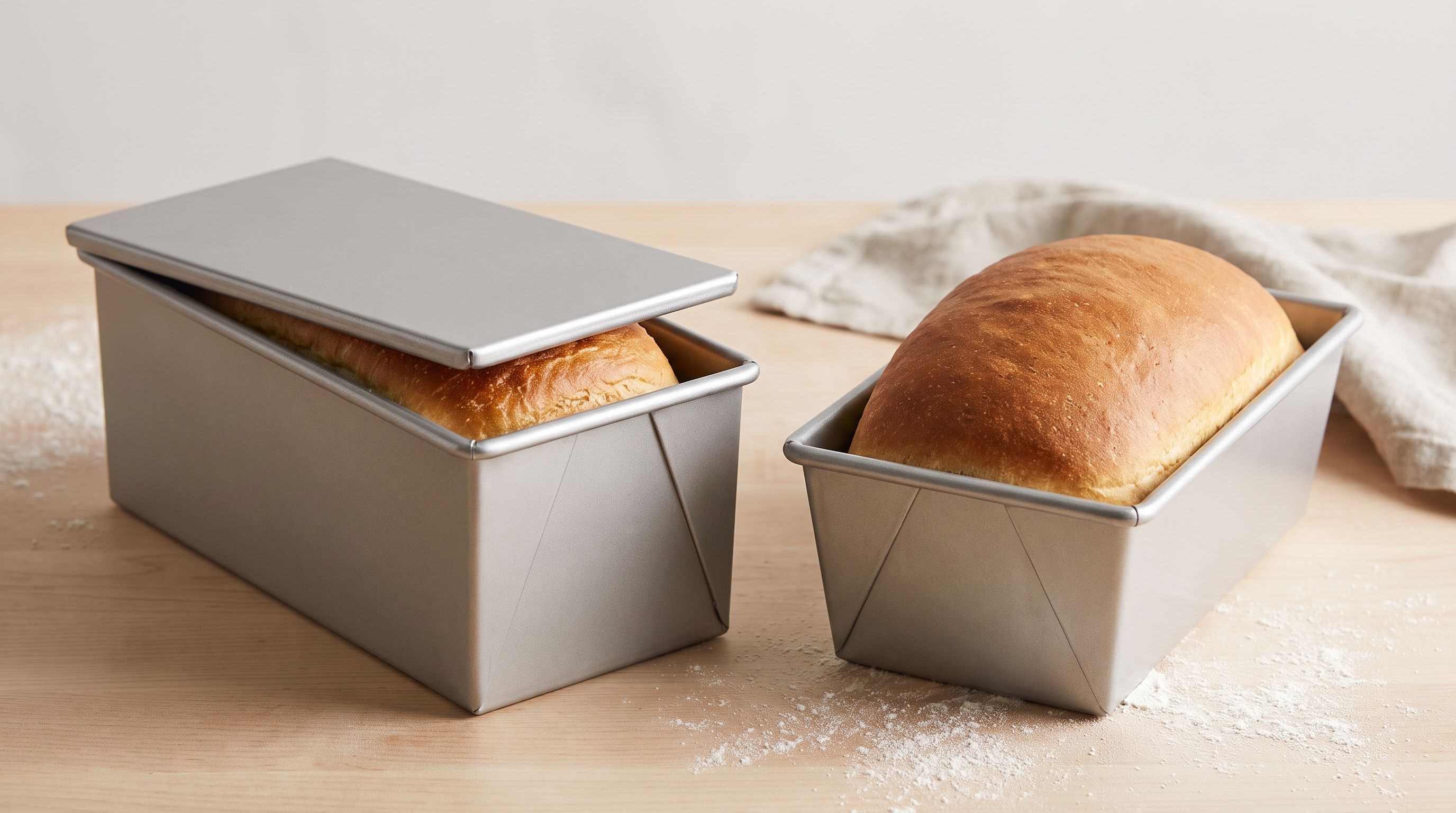
Pullman Loaf Pan vs Standard Tin: Which Bakes Better Bread?
Pullman loaf pan or standard loaf tin in 2026? We compare volume, gauge, coatings and lid behavior to help you pick the right pan for sandwich bread.
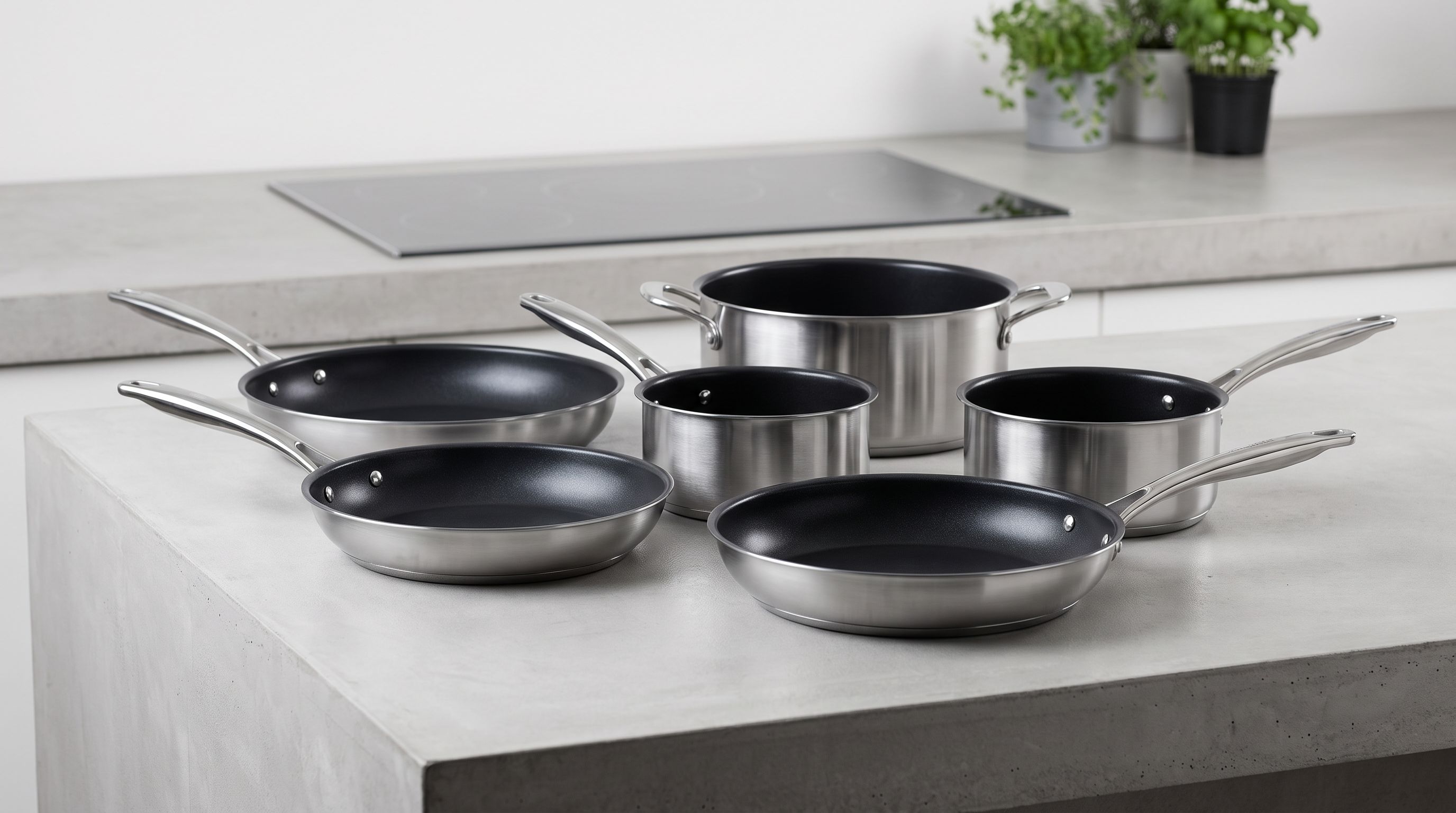
Cookware Sets Under $500 in 2026: The Piece-Count Math
The best cookware set under 500 in 2026, judged by usable pans — not padded lid counts. Cladding, oven limits, and induction compatibility compared.